

Getting a letter saying your position is being made redundant is stressful enough, but when it’s written in Dutch legalese, it can feel completely overwhelming.
With AI reshaping entire industries and companies quietly trimming their headcount, restructuring has become one of the most common ways internationals find themselves suddenly navigating the Dutch dismissal system.
Words like vaststellingsovereenkomst (settlement agreement) and transitievergoeding (transition payment) get thrown around, and suddenly you’re expected to make major decisions about your livelihood without fully understanding what any of it means.
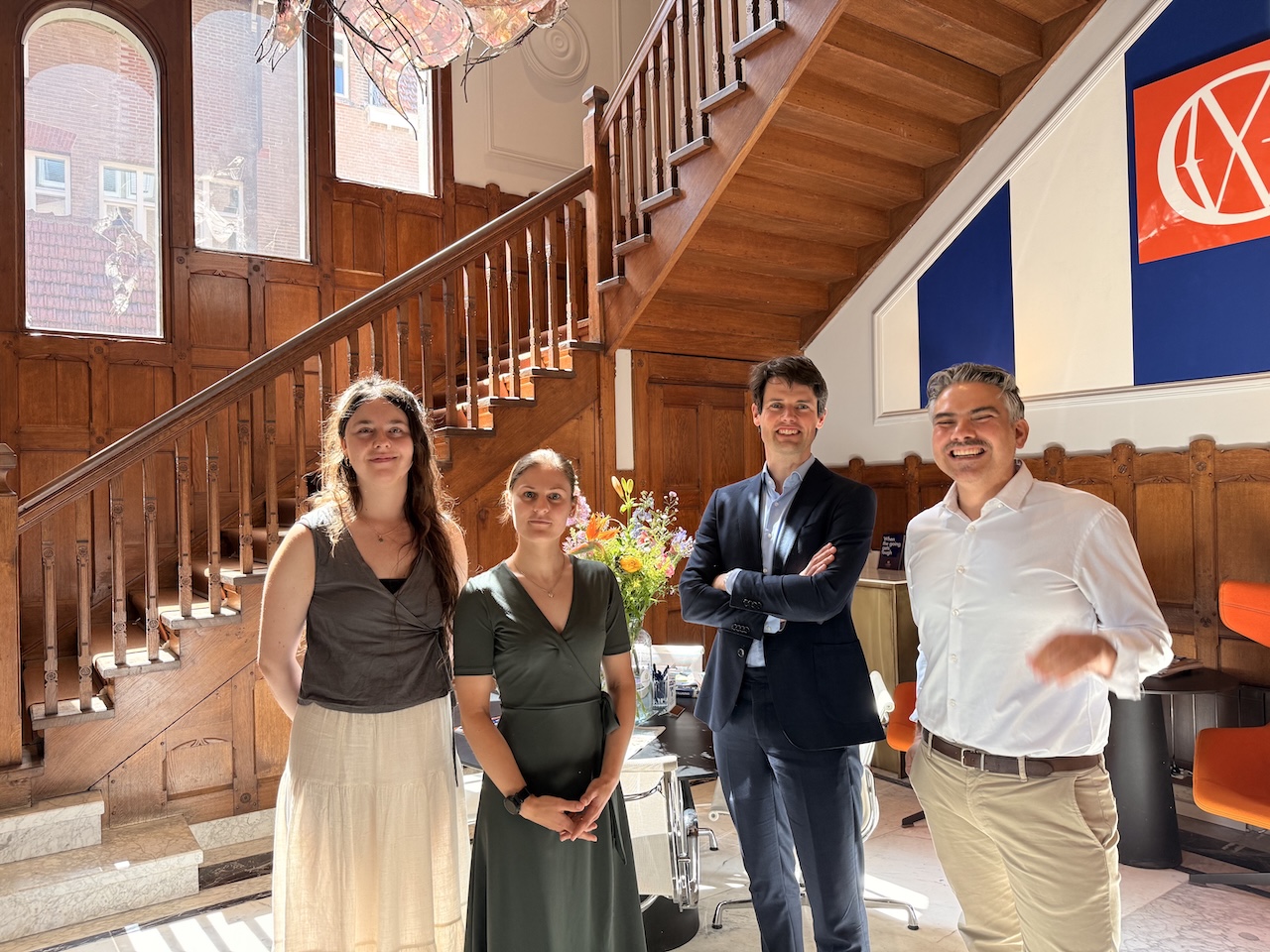
That’s why we sat down with Mark Dijkstra and Amber Willemsen, employment lawyers at GMW lawyers, to break down what restructuring actually means for internationals, what your rights are, and exactly what you should do when that letter lands in your inbox.
What does “restructuring” actually mean?
In simple terms, restructuring means a company is cutting jobs for economic reasons. As Mark puts it, it means “layoffs based on redundancy — economic reasons for companies to downsize in personnel.”
Amber adds that this is increasingly driven by AI: companies are reducing headcount because technology is taking over roles, or because their finances are worsening.
Either way, the result is the same. Positions are eliminated, and employees become redundant.
High-profile examples aren’t hard to find. Mark points to Block, the parent company of music streaming platform Tidal, whose CEO, Jack Dorsey, announced the layoff of 4,000 people out of a total workforce of 10,000, citing AI as the reason.
GMW lawyers’ role is to step in and help internationals navigate this process: reviewing whether the restructuring is legally valid, assessing any termination offer on the table, and representing employees in negotiations when the package isn’t up to scratch.
What is the role of the UWV in the Dutch dismissal procedure?
The UWV (the Dutch Employee Insurance Agency) plays a central role in the Dutch dismissal system when it comes to restructurings, and it’s one of the things that makes the Netherlands very different from countries like the UK or the US.
In the Netherlands, an employer cannot simply let you go. If you don’t agree to sign a termination agreement, the employer has to apply to the UWV for permission to terminate your contract. Only once that permission is granted can they proceed.
This is where having legal representation really matters. Believe it or not, more often than you’d think, the employer may not have everything they need to terminate your contract.
READ MORE | What are your rights as an international working in the Netherlands? We asked the experts
Part of GMW’s work, Amber explains, is checking “whether there is a chance that UWV would give permission. If so, then that impacts, of course, the negotiation position. And if we think there is a valid chance that UWV would not give permission, then we will advise on either trying to fight the dismissal and staying employed or negotiating a better package.”
In practice, some employers play what Mark calls “bluff poker.” He describes how “they say that they have the legal rationale and all the supporting documents, but then they don’t share it.” A lawyer can help you assess whether their case actually holds up.
Mark puts the underlying dynamic simply: “The weaker the rationale, the better the deal.”
What happens to your contract during this process?
Here’s the reassuring part: until a decision is formally reached, almost nothing about your employment should change.
“For a very long time, it stays as it is,” Amber explains. Your salary continues, your benefits continue, and your contract remains in force, whether you’re waiting for a settlement agreement to be finalised or for the UWV to rule on a dismissal request.
Unlike the UK system, where an employer can terminate employment unilaterally, and the employee has to contest it afterwards, the Dutch system works in reverse.

You stay employed until the process plays out. As Mark notes, this means “no salary cuts” and no premature ending of your contract before an outcome is reached.
That said, one thing does sometimes happen: employers may tell you that your position no longer exists and place you on garden leave (vrijstelling van werk). This means that they are effectively exempting you from work while you remain on the payroll.
READ MORE | 7 important things to check on your Dutch employment contract in 2026
Amber points out that this is legally contested territory. “When you have an employment contract, then you have the obligation to work, but also the right to work,” she explains, meaning employees can go to court to be reinstated, though that doesn’t always succeed.
For expats, this matters for an additional reason. Being placed on garden leave can affect your 30% ruling, and Mark notes that “there is an interest for expats to keep working during the redundancy process to safeguard this 30% ruling.” More on that below.
What is a transition payment — and are you entitled to one?
A transitievergoeding (transition payment) is the statutory severance payment you’re entitled to when your employment is terminated.
It’s calculated as one-third of a monthly salary per year of service, so as Mark demonstrates, nine years of service would get you roughly three months’ salary.
There is a cap: in 2026, the payment maxes out at €102,000 gross or one year’s salary, whichever is higher.

In most cases, this payment is included in the termination agreement. But here’s something many employees don’t realise: even if you do nothing, don’t respond to the settlement agreement and don’t contest the UWV procedure, you’re still legally entitled to it.
Mark explains that “even if you just let it happen and the employer gives notice of termination, you are still entitled to the statutory settlement.”
Most companies offer slightly more than the legal minimum, either through a higher multiplier or as part of a broader social plan.
What is a social plan, and does your Dutch employer have to offer one?
A sociaal plan (social plan) is a collective severance policy, usually negotiated between the employer and a trade union or works council.
Instead of negotiating separately with every redundant employee, the company agrees on a standard package that applies across the board.
A social plan typically includes the severance amount (often a multiplier of the transition payment, such as 1.5x), a budget for outplacement support, and sometimes a plaatsmakersregeling, a voluntary departure scheme that allows employees who want to leave to do so in exchange for a package, freeing up positions for those who’d rather stay.
Importantly, social plans very frequently include a budget for legal fees. Amber estimates this appears in around “90%, 95% of the settlement agreements that we see,” particularly in larger restructurings.
So before worrying about the cost of a lawyer, check whether your employer’s offer includes a legal fee budget. It very often does.
What about settlement negotiations? Can a lawyer help me with this?
Yes, and this is arguably where legal support makes the biggest difference.
A vaststellingsovereenkomst (VSO), or settlement agreement, is a legal document.
It covers your termination date, severance package, post-contractual clauses, non-compete agreements, secrecy clauses, and whether the wording allows you to claim unemployment benefits (WW-uitkering) afterwards.

Amber stresses that the details really matter: “It is always important to check if the way it is phrased is in your favour. For instance, whether the agreement could stand in the way of receiving unemployment benefits. But also things like post-contractual clauses, non-competes, what to do with that, secrecy clauses.”
Beyond reviewing the document itself, having someone in your corner who isn’t emotionally involved in the situation makes a real difference. Legal help means someone can step up without too much intense emotions when you may not have the best perspective on the situation.
Mark also highlights a point that surprises many employees: if you’re feeling ill or close to burnout during the process, don’t be afraid to call in sick.
“Sometimes I have clients asking me that they feel that they are sick, like from a stressful situation of burnout, that they are scared of reporting sick because they fear it might impact their legal position. The opposite is true, as sick employees benefit from statutory protection against dismissal.”
One more thing worth knowing: once you’ve signed a VSO, Dutch law gives you a 14-day bedenktijd (cooling-off period) during which you can withdraw your consent in writing, without giving any reason and without consequences. If your employer fails to mention this right in the agreement, that window extends to 21 days.
What are your rights as an expat or non-Dutch employee?
The same Dutch employment protections apply to you regardless of your nationality. But if you’re on a highly skilled migrant visa, there are some specific things to keep in mind.
The 30% ruling and the three-month clock
The three-month search period for your visa and the three-month period for your 30% ruling are not the same thing, and conflating them can be an expensive mistake.
For your visa, you have three months from your employment end date to find a new qualifying job.
For the 30% ruling, the clock starts ticking from the moment you actually stop working, which could be earlier if you’ve been placed on garden leave. As Mark explains: “You could secure your visa, but lose the 30% ruling.”
Note: Given the complexity here, Amber and Mark both caution that migration law is a specialist area and recommend consulting a dedicated immigration lawyer for detailed guidance.
Permanent residency
If you’re approaching five years of residence in the Netherlands, flag it to your lawyer during negotiations.
Mark notes that it’s sometimes possible to negotiate a longer employment end date rather than a lump-sum payment, which could help you secure permanent residency before your contract formally ends.
I’ve just been told we’re restructuring: what should I do?
If you’ve just heard that your company is restructuring, the most important first step is: don’t panic, and don’t sign anything yet.
Mark’s advice is to wait until you receive the draft termination agreement before formally engaging a lawyer, since that’s when the substantive legal work begins.

However, Amber adds important nuance: if you’re already unwell, pregnant, or close to burnout, get advice sooner. “In that case, it may be useful to, for instance, with a sick leave situation, call in sick as soon as possible,” she explains, since the timing of certain actions carries real legal weight.
The bottom line, as Mark puts it: “The latest moment that you should engage a lawyer is when you receive the draft of the termination agreement.”
Need help navigating the restructuring process? The experts at GMW lawyers have helped countless internationals in your situation.
Have you been through a restructuring process in the Netherlands? Drop your experience in the comments — your story might help someone else navigating the same situation.