

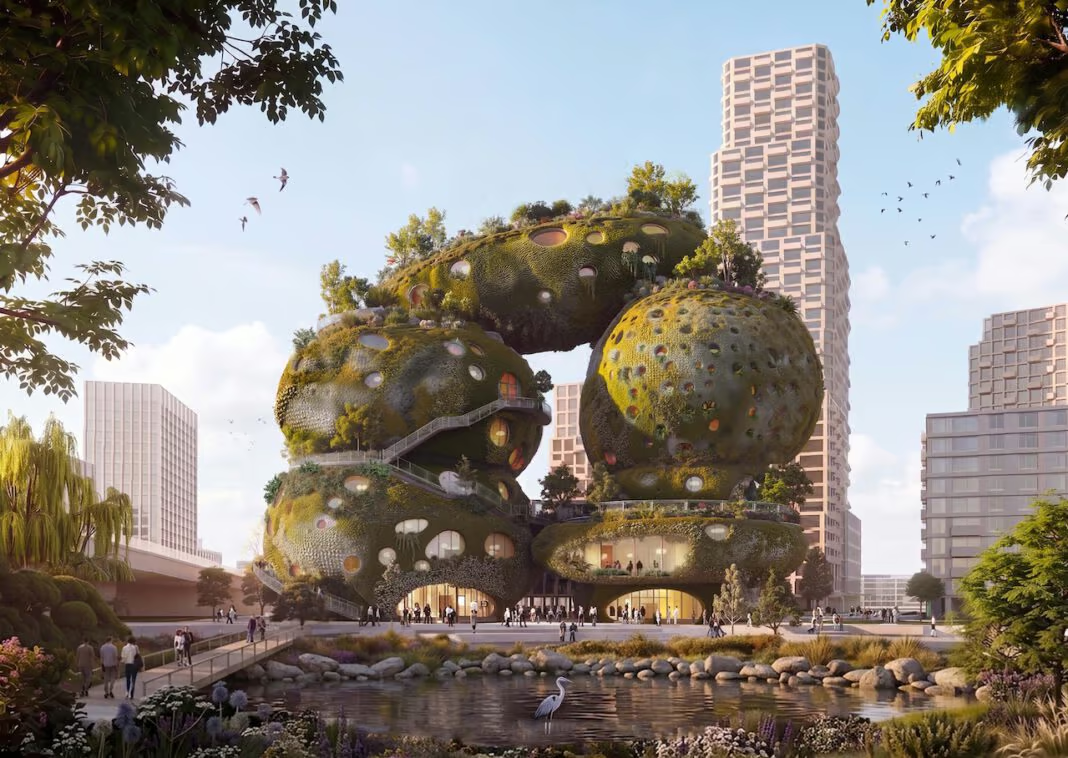

A stack of seven giant green rocks is coming to Rotterdam-Zuid, after Dutch architecture firm MVRDV won an international competition to design a €240 million sustainability landmark on the south bank of the Maas.
The winning design is called Rotterdam Rocks!, and it looks less like a building and more like something that grew there. MVRDV describes it as a stacked landscape of living rocks: rocks that breathe.
Behind it all is Shift, a social enterprise led by entrepreneur Don Ritzen. Ambitious? Absolutely. But this is Rotterdam, a city never once accused of thinking small.
What exactly is being built?
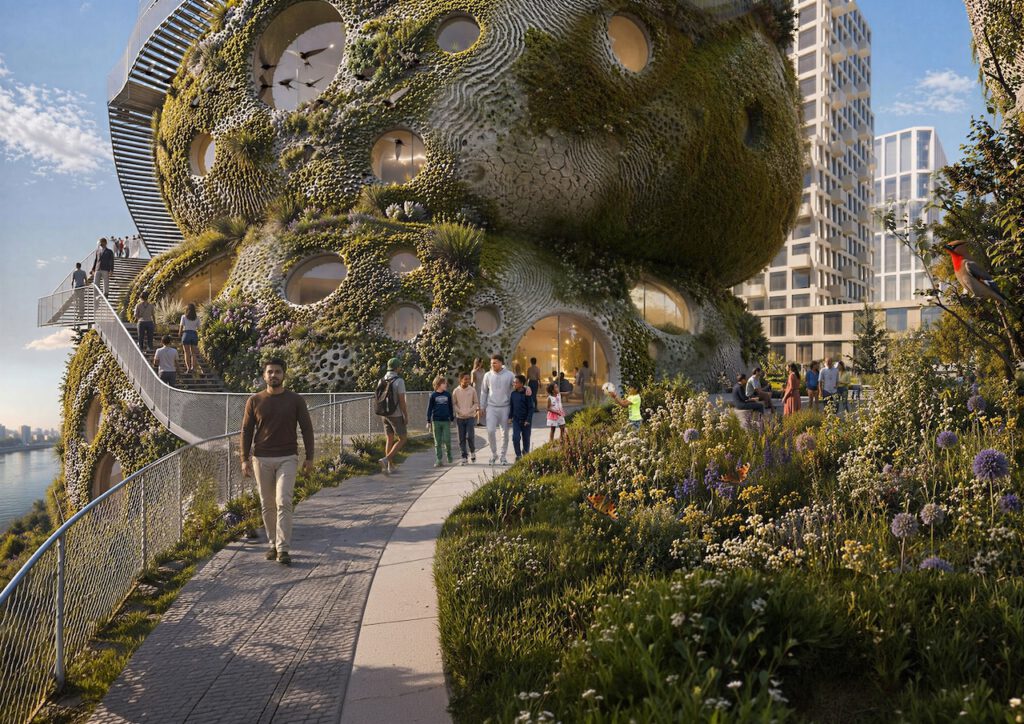
Seven stacked, porous volumes are organised into two interconnected towers, sculpted into rock-like forms with voids that pull daylight, greenery and public routes deep inside. Visitors will wander through caves and raised terraces, with trees, water and animal habitats built in.
There’s a giant exhibition space showcasing global success stories in nature, energy, travel and circularity. Add a hotel, education spaces, venues for community events, restaurants and an observation deck.
According to the AD, the complex covers 20,000 square metres and includes a 5,000 square metre experience centre called Elysium.

The building is its own experiment
Winy Maas of MVRDV calls the project a scale-up lab for the latest low-carbon construction innovations. Reused steel, lower-carbon concrete and bio-based materials all get tested here, alongside components designed to be taken apart and reused later.
Energy production, water cycles and biodiversity will be monitored in real time and shown to visitors, so the building’s own performance becomes part of the exhibition.
Why Rotterdam-Zuid?
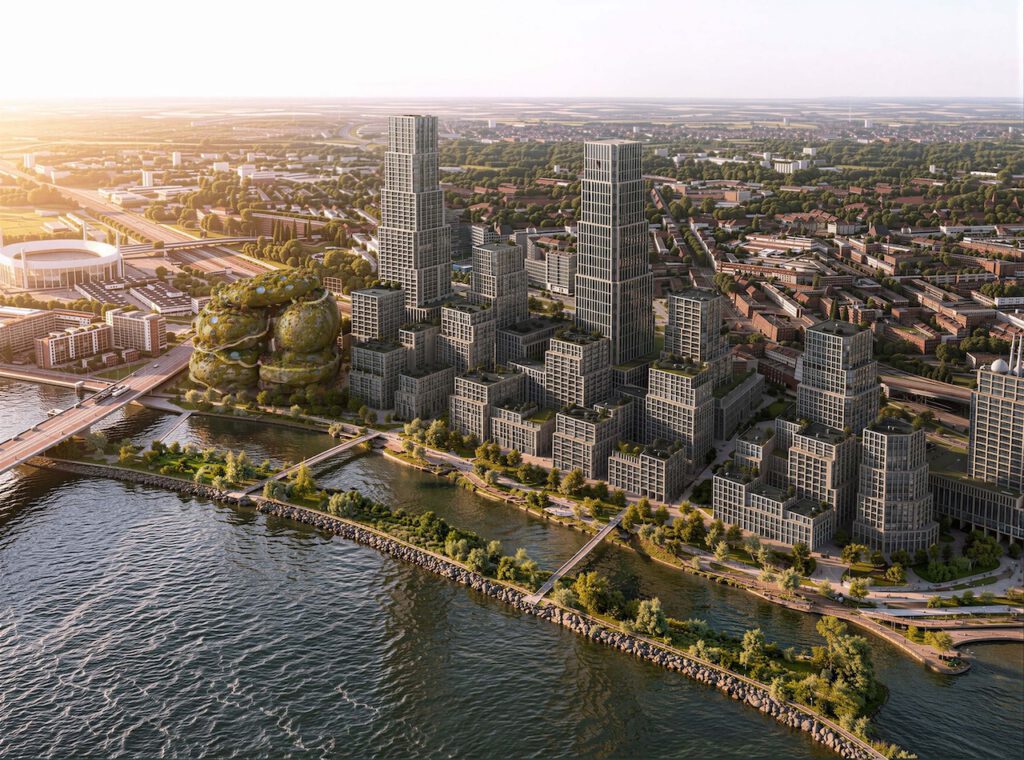
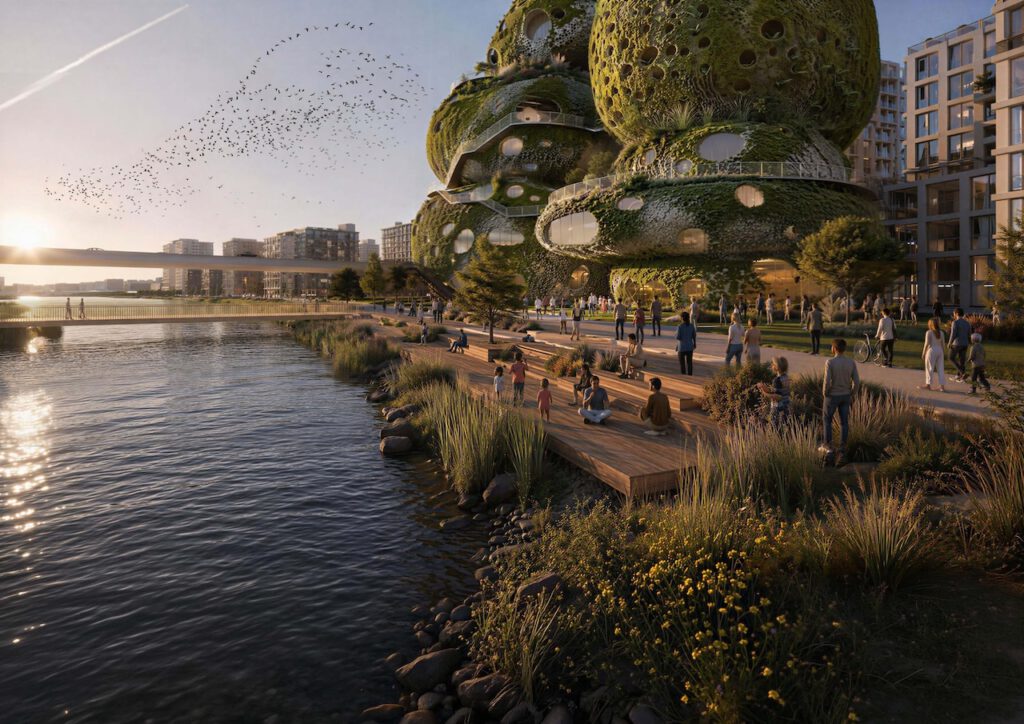
The site sits in Waterkant, a new “nature-positive” neighbourhood with almost 4,000 homes planned, plus schools and maker spaces, overlooking a new tidal park.
A jury including actress Carice van Houten praised the design for bringing joy, discovery and surprise into architecture, saying it should encourage people to rethink everyday habits.
But can a building change your habits? That’s Ritzen’s bet. He points to IPCC research suggesting 40 to 70% of climate change is driven by behaviour, and told Positive News that people need places where they feel hopeful and empowered rather than lectured.
Readers of the AD seem to like this hopeful vision, with more than 4,000 voters, 59% picked the rocky design.

When can you visit?
The plans now go to public consultation before permits are sought. Ritzen is aiming for a 2032 opening, with construction expected to take around three years.
The city that gave us the Markthal and the Cube Houses is adding a breathing mountain to its already fearless skyline. Entirely on brand.
Would you climb a giant green rock for the sake of the planet? Tell us in the comments!

what about investing this money to rebuild the degraded Dutch Healthcare System?