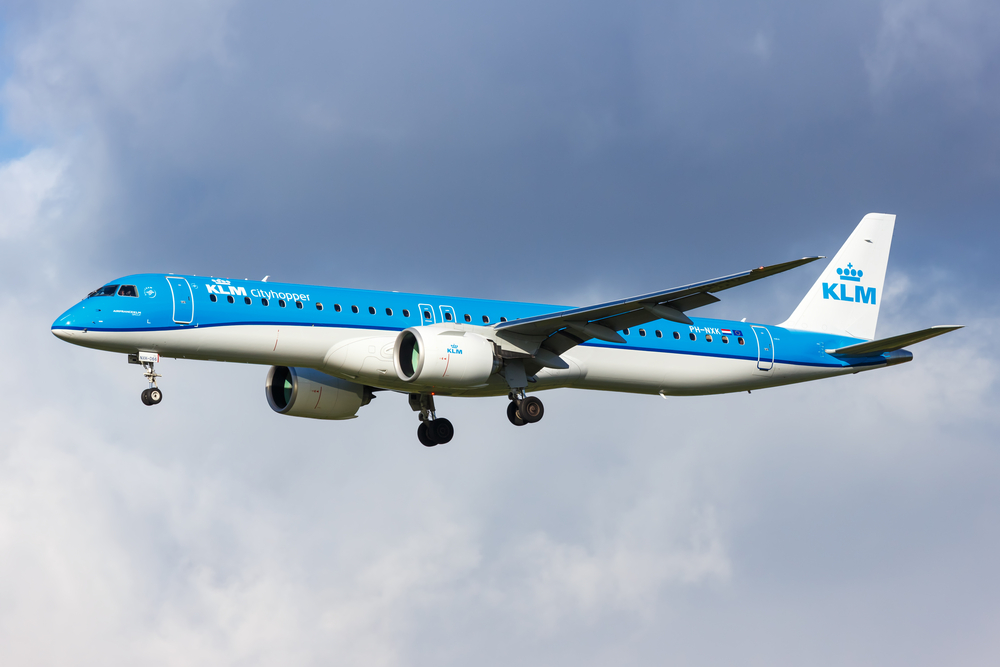

Dutch nationals cannot be repatriated home from the Middle East for now, confirms the Dutch government, citing safety risks and a closed airspace.
According to NOS, Minister of Foreign Affairs Tom Berendsen stated clearly: “If you want to bring people home, you want to do it safely. Right now, those options aren’t there.”
Given that repatriations are difficult and not legally obligatory even during the best of times, the Dutch government has ruled them out for the time being.
So what happens to those left stranded?
What the government is doing
Berendsen has said he is closely monitoring the situation for any window of opportunity to help.
In the meantime, the Ministry of Foreign Affairs is maintaining a live blog on rijksoverheid.nl with up-to-date safety information for Dutch citizens in the region.

Advice from the government details where safety concerns are greatest. For instance, specific hotels in Iraqi Erbil have been flagged as heightened attack risks.
Additionally, Berendsen is in contact with European counterparts to explore what coordinated actions might be possible, as many other European nationals are also stranded.
How many Dutch travellers are affected?
It’s unclear exactly how many Dutch citizens are currently in the region.
The ministry does not have access to a precise number of travellers, as nationals are not obligated to register with Dutch embassies when abroad.
Berendsen acknowledged there are “many” — not least because the region is a popular holiday destination.
The ministry’s crisis centre has received over 1,000 messages from people trying to find out how they or their family members can safely leave the area, reports NOS.
If you’re stuck in the region
People are advised to stay alert, follow local news, and avoid unnecessary movement until the situation becomes clearer.
Dutch nationals in need of consular assistance can reach the Ministry of Foreign Affairs’ emergency line around the clock on +31 247 247 247.
The bigger picture: Hormuz and Dutch involvement
While Berendsen stopped short of explicitly endorsing the US and Israeli attacks on Iran, he did express understanding for the strikes, citing what he called the “enormous risk and threat” of the Iranian regime.
Of particular concern is the nation’s support for Russia’s invasion of Ukraine. Additionally, Iran’s alleged nuclear weapons programme is a point of contention within international politics.
This comes amid an already turbulent stretch for Dutch foreign policy, with disputes regarding the Gaza conflict having already helped topple the previous Dutch government.
Berendsen’s bigger concern right now, however, is regional escalation.

The Iranian Revolutionary Guard (IRGC) announced this weekend that it intends to block the Strait of Hormuz — the critical waterway through which liquefied gas flows to Europe.
Berendsen called keeping this waterway open “essential,” and didn’t rule out the Netherlands contributing to its defence if asked. “We are preparing for all situations,” he said.
Are you or someone you know currently in the Middle East? Let us know in the comments how the situation looks on the ground.