
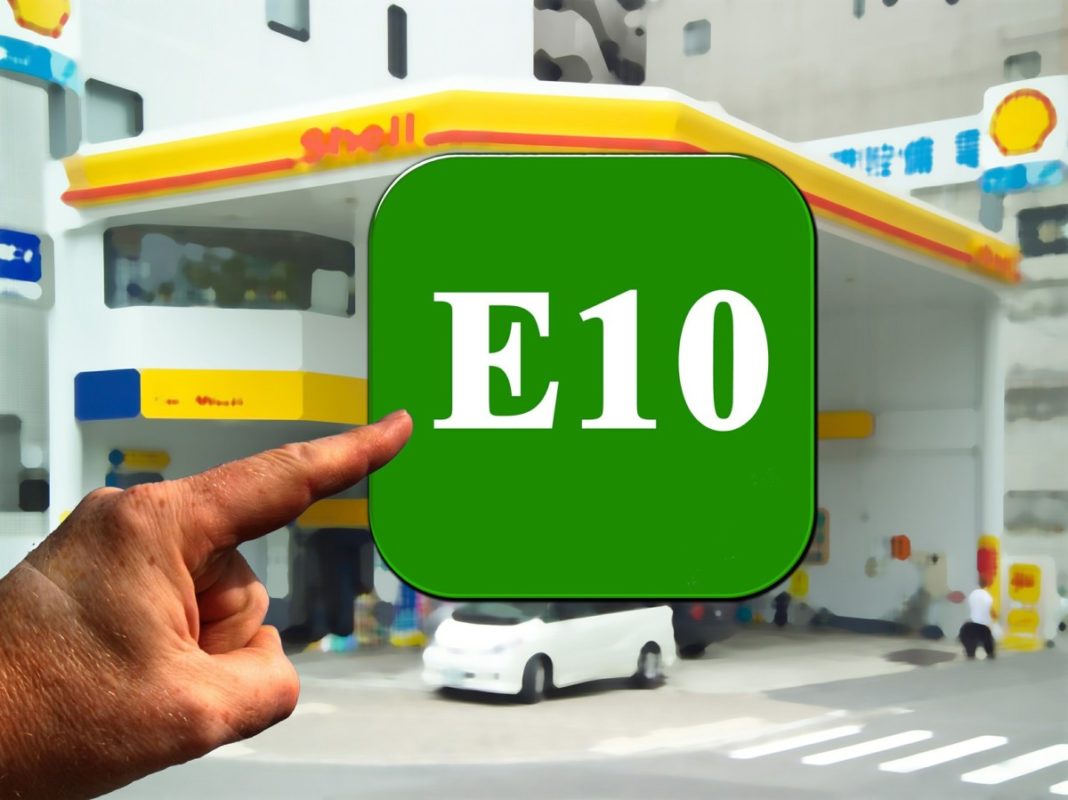

From today onwards, gas stations in the Netherlands will be legally obliged to sell E10 rather than Euro 95 fuel.
The E10 variant contains up to 10 percent sustainable bioethanol. As a result, cars that run on E10 emit 2 percent less CO2 on average, which is better for the environment. This is a Europe-wide measure. The European Union has decided that gasoline must be mixed with bioethanol, in order to decrease our dependence on fossil fuels. Bioethanol comes from sugar cane and corn.
Old cars are not compatible with the new fuel
The new fuel is not suitable for all cars, complains Bert de Boer of the Federation of Historical Automobile and Motorcycle Clubs. Around 300,000 old timers and ten thousand old motorbikes will not be able to run on the new fuel, and there are also some cars produced after 2000 which are not compatible. Bovag, an industry association, estimates that 700,000 cars will have problems with the new fuel. If drivers are unsure whether their car can run on E10, they can check on e10check.nl.
De Boer lists the main problems old timers could face if they use E10. “Rubbers and pipes can become porous. Leaks can occur as a result.” And according to him, the shelf life of E10 is also limited. “Old-timers are usually in the garage in the winter. If E10 has been in the tank for a while, a chemical reaction results in a kind of thick mess. The tank can therefore start to rust and you will therefore no longer be able to drive.”
? WATCH our new video: Filling up with #E10? The E isn't just for #ethanol… pic.twitter.com/xEMveA8ll8
— ePURE (@ePURE_ethanol) September 26, 2019
Old cars should use premium fuels
To prevent these problems, owners of old cars can still refuel using so-called premium fuels such as Esso Synergy Supreme +, Shell V-Power, BP Ultimate and Total Excellium. These will cost more than E10, about 6 or 7 cents per liter- but because oldtimer cars rarely drive more than a few thousand kilometers each year, the financial impact on the owners of these cars is not likely to be very noticeable.

The new regulation to replace Euro 95 with E10 will only apply to gas stations with more than one pump- it does not apply to the ‘pump in the village’, for example.
Will this new regulation affect you? Do you think it is a solution to the environmental crisis? Let us know in the comments below!
Feature Image: geralt/Pixabay.