


Jumbo is recalling four of its cheeses after finding that they may contain listeria, a type of bacteria that causes dangerous foodborne infections.
If you’ve bought any cheese from Jumbo in the past few weeks, double-check that you’re not chowing down on some contaminated dairy.
Which products are affected?
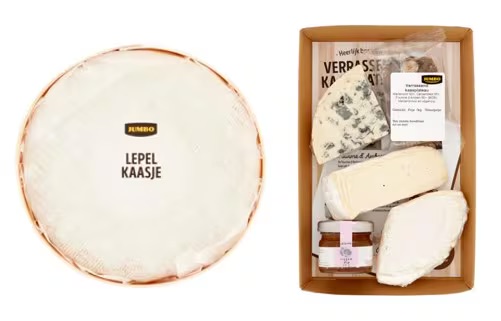
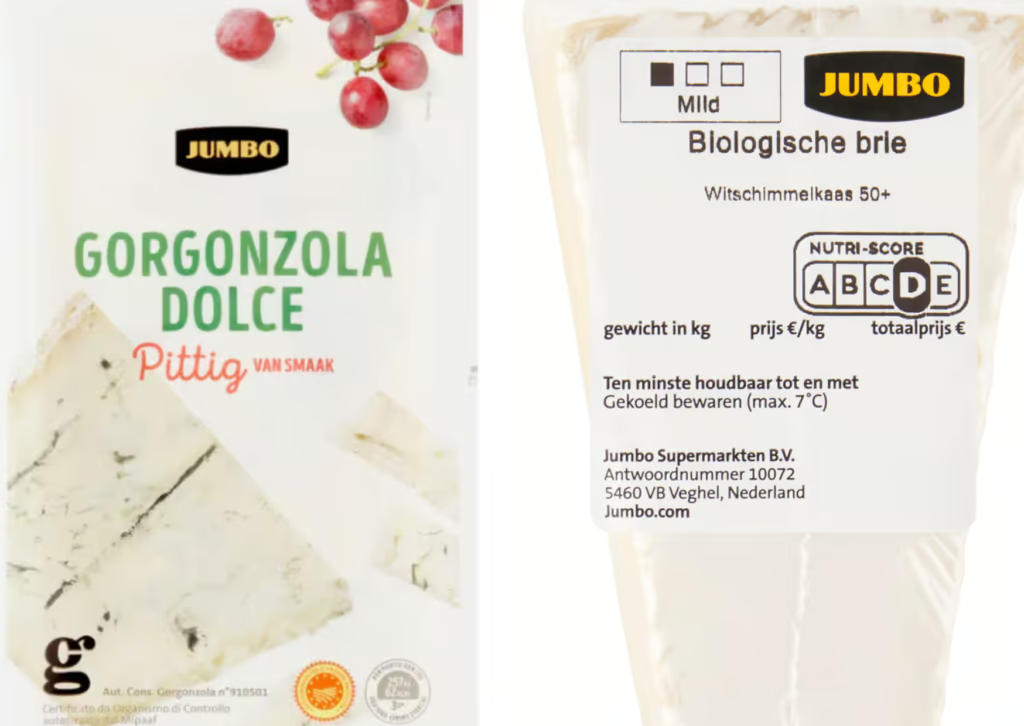
Four own-brand products are mentioned in the safety warnings:
| Cheese | EAN-code | Best-by dates |
|---|---|---|
| Jumbo Lepelkaasje | 8718452662012 | All of them |
| Jumbo Kaasplateau Verrassend | 8718452871698 | All of them |
| Jumbo Biologische brie | 2308084xxxxxxx | 01-09-2026 |
| Jumbo Gorgonzola Dolce | 8718452637508 | 03-09-2026, 08-09-2026, and 10-09-2026 |
Two of these cheeses (Jumbo Lepelkaasje and Jumbo Kaasplateau Verrassend) are new on the list of recalls, with a warning sent out yesterday, September 1.
Meanwhile, the other two (Jumbo Biologische brie and Jumbo Gorgonzola Dolce) have been on the list of recalls since last week.
Get your money back
If you’ve bought one of the affected products, you can take it back to a Jumbo near you for a full refund. No receipt is needed.

For questions, the supermarket directs you to their customer service hotline: 0800 – 0220 161. You can also contact this number via WhatsApp.
What is listeria?
According to the RIVM, listeria is an infectious disease caused by the listeria bacterium, “usually found in food, but can also be found in animals, in the soil, in water or on vegetables”.
It commonly turns up in food like:
- soft (mouldy) cheese made from raw milk,
- smoked fish,
- cold cuts,
- steak tartare,
- pâté,
- and ready-made products, such as raw vegetable salads and ready-made pancakes.
While outbreaks are rare in the Netherlands, Voedingscentrum notes that consequences for eating contaminated food can be severe, especially among pregnant women, children, the elderly, and those with a weakened immune system.
In these groups, the infection may present as meningitis, encephalitis, or blood poisoning (sepsis). Among healthy people, however, symptoms present as “mild flu symptoms, nausea, and diarrhoea”.
Want the latest Dutch news to come zooming through the internet to your inbox? Dat kan! Subscribe to DutchReview’s weekly roundup 📮