
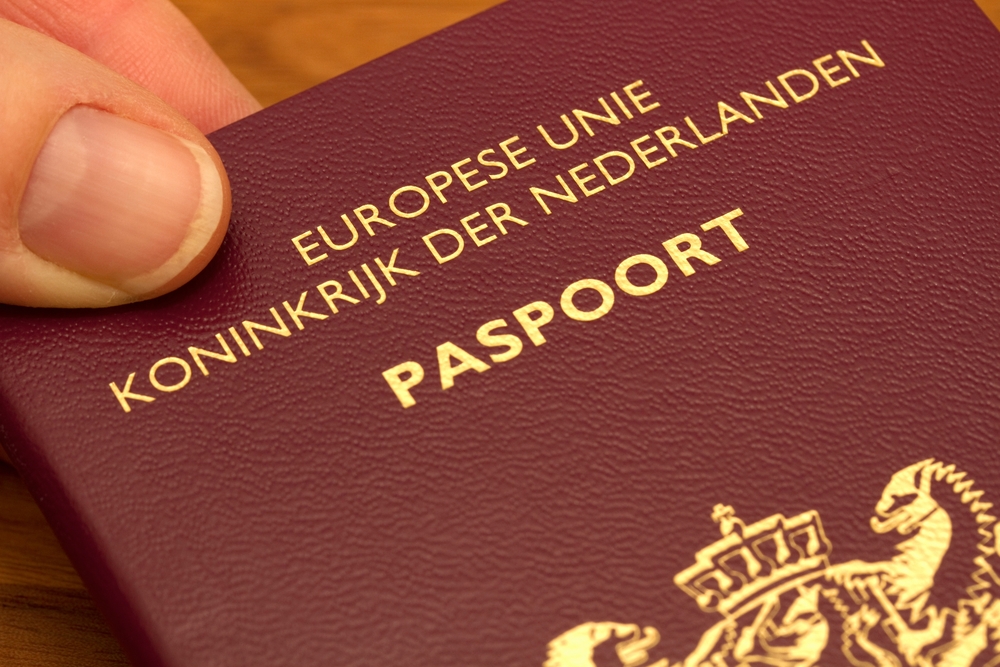

Trying to naturalise as a full-on Dutch citizen? Go for it, at least then your passport would finally be among the strongest in the world.
The Henley Passport Index for 2026 is out, and the Netherlands has been ranked in fourth place for the world’s “strongest” passport.
Being a Dutch national now means you can waltz into 185 countries without a prior visa.
However, this is no surprise
Last year, the Netherlands also ranked in fourth place. The Dutch passport has been in the top five of this index since 2006.
And anyone travelling with a Dutch partner has witnessed this privilege when it’s time to enter the queue for passport control at Schiphol.
For those of us with “weaker” passports, the queue starts about a kilometre away from the immigration officer. Meanwhile, our partners may breeze through self-service passport control.
You may have even had the following conversation with a Dutchie:
“My family has to apply for a visa to visit me in the Netherlands.”
The Dutchie looks totally confused and replies, “What’s a visa?”
This disparity may make you wonder: how exactly did this ranking come to be?
What’s the index based on, anyway?
Compiled annually by Henley & Partners, this index ranks 199 passports against 227 destinations using data from the International Air Transport Association.
The scoring is simple: one point for every country you can enter visa-free, with a visa on arrival, or via an electronic visa. Do you have to deal with government approval or pre-arranged paperwork? Zero points.
The law firm launched this index in 2006 to track the evolution of travel freedom and global mobility over the years.

And what have we learned? Contrary to the idea that the “West is the best,” we are witnesses to a changing narrative. Perhaps global mobility has more to do with diplomacy, pro-business governance, and small borders.
Winners and losers
While the US and UK used to wear the crown, the top of the podium has gone to the East.
Singapore ranked first on the list, with visa-free access to a whopping 192 countries. Japan and South Korea share second place with easy access to 188 countries.
According to a Henley & Partners press release, this “reinforces Asia’s long-standing leadership at the top of the global mobility rankings.”
Meanwhile, both the US and UK have seen a slump in passport power since their first-place position in 2014.
The US dropped from 4th to 10th place, while the UK fell from 3rd to 7th — marking some of the biggest declines.

Despite where you’re from, for the authorities, all of us are just “passport holders.”
So here’s a little summary of the passport rankings of 2026.
At the top:
| Rank | Country | Access |
|---|---|---|
| 1 | Singapore | 192 |
| 2 | Japan, South Korea | 188 |
| 3 | Denmark, Luxembourg, Spain, Sweden, Switzerland | 186 |
| 4 | Austria, Belgium, Finland, France, Germany, Greece, Ireland, Italy, the Netherlands, Norway | 185 |
| 5 | Hungary, Portugal, Slovakia, Slovenia, and the United Arab Emirates | 184 |
At the bottom:
| Rank | Country | Access |
|---|---|---|
| 97 | Somalia | 33 |
| 98 | Yemen, Pakistan | 31 |
| 99 | Iraq | 29 |
| 100 | Syria | 26 |
| 101 | Afghanistan | 24 |
Where does your country rank? Tell us in the comments!