
It’s 11:58 AM in a Dutch office, and tension fills the air. Colleagues glance nervously at their watches, clutch their lunch bags tighter, and prepare for the most sacred ritual in Dutch workplace culture: the 12 PM lunch break.
But this isn’t just about eating. It’s about social positioning, cultural identity, and the complex hierarchy that governs what you’re allowed to consume between those perfectly timed 30 minutes.
Welcome to the Netherlands, where your lunch choice doesn’t just fuel your afternoon. It defines your entire workplace persona.
The boterham supremacy
At the top of the Dutch lunch hierarchy sits the mighty boterham. The humble sandwich that rules with an iron fist. Not just any sandwich, mind you, but the carefully constructed masterpiece of brown bread, butter, and precisely arranged toppings that screams “I am a responsible Dutch adult.”
The boterham represents everything Dutch culture values: preparation, frugality, and practical efficiency. Made at home the night before or during a rushed morning routine, it demonstrates planning skills that colleagues silently admire. The classic combination of cheese and ham, or the sophisticated hagelslag (chocolate sprinkles) option, shows cultural authenticity that can’t be bought.
Those who arrive with their neat brown bag containing perfectly wrapped sandwiches occupy the highest social tier. They eat methodically, often while reading the news or checking emails, proving their ability to multitask even during designated break time.
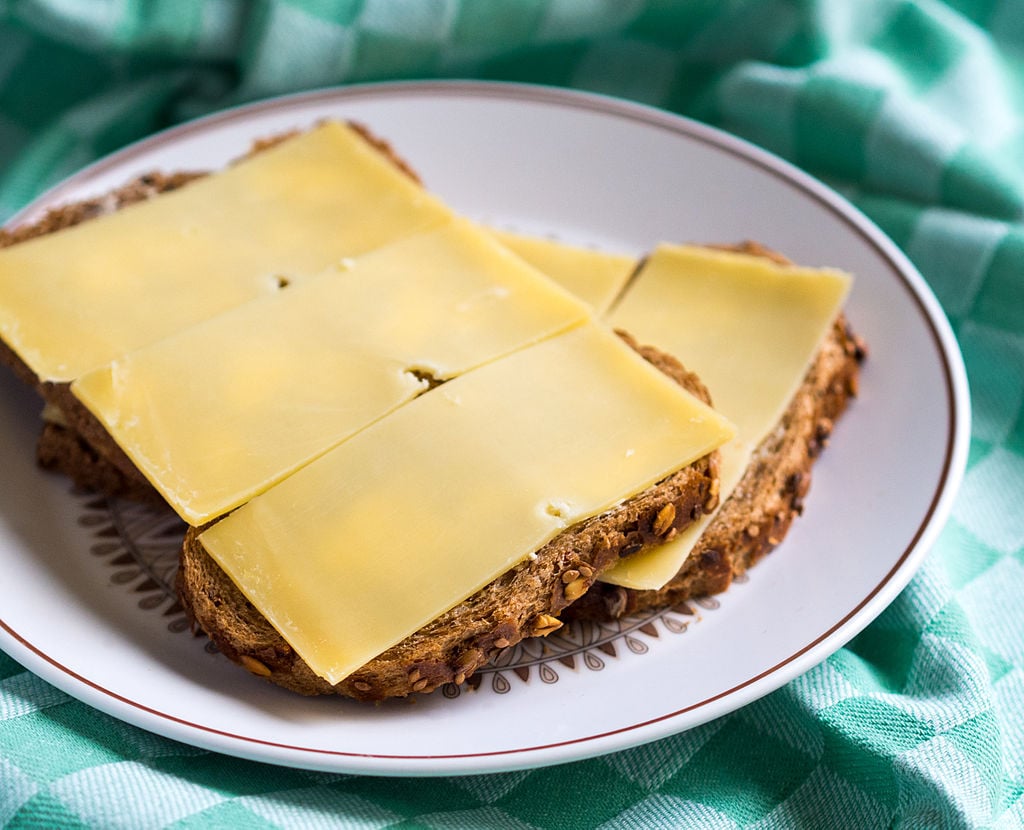
But woe to the colleague who dares to unwrap store-bought sandwiches. The polite smiles can’t hide the judgment: “Couldn’t you manage to make your own lunch?” The Dutch relationship with bread runs deeper than convenience. It’s about cultural values.
The hot lunch controversy
Below the boterham elite lies the controversial world of hot lunch eaters. A group viewed with mixture of curiosity and suspicion. These rebels heat up leftover pasta, warm soups, or commit the ultimate office sin: microwaving fish.
Hot lunch creates workplace drama like nothing else. The kitchen becomes a battleground of competing aromas, passive-aggressive notes about cleaning the microwave, and whispered conversations about “that person who always brings smelly food.” The Dutch tolerance for directness somehow evaporates when confronted with colleagues’ heating habits.
The irony isn’t lost on international workers who discover that Dutch offices (known for their progressive policies and inclusive environments) draw hard lines at lunch temperature. Bringing warm food marks you as different, possibly foreign, and definitely someone who doesn’t understand the unspoken rules.
Yet hot lunch eaters persist, driven by cultures where midday meals involve actual cooking. They cluster together, forming their own subculture of microwave etiquette and shared containers of international cuisine that makes Dutch colleagues simultaneously curious and horrified.
The salad pretenders and meeting lunch martyrs
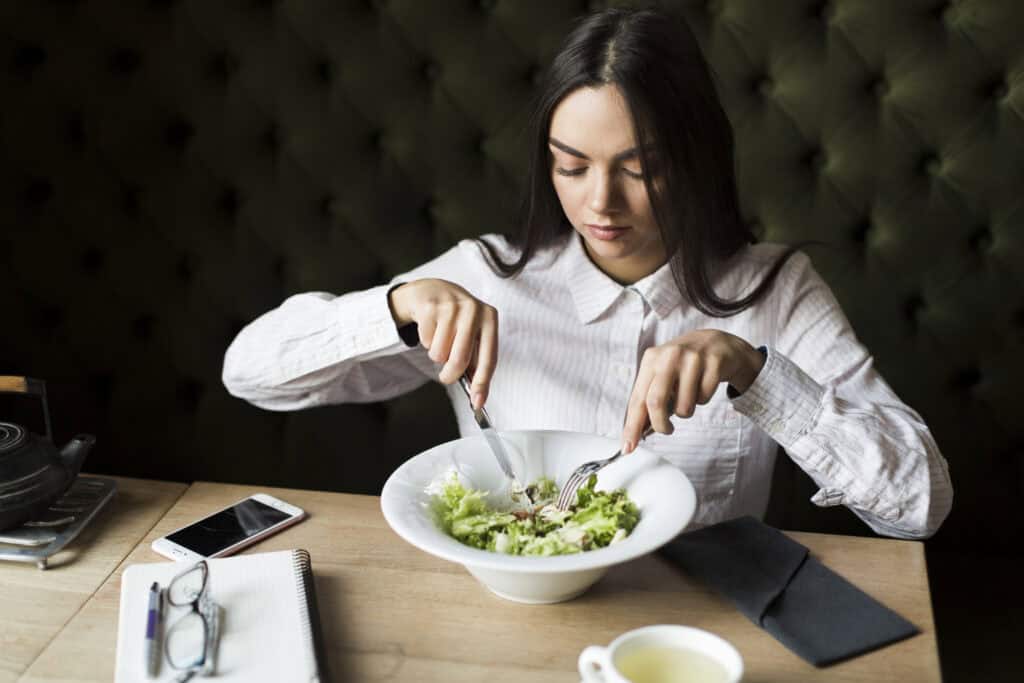
Occupying the middle tier are salad eaters: respected for their health consciousness but slightly pitied for their obvious attempts at virtue signaling. The elaborate mason jar salads and perfectly arranged quinoa bowls demonstrate effort that colleagues appreciate, even while questioning the practicality.

Then there are the meeting lunch martyrs: those tragic figures who eat hastily while typing, grabbing bites between video calls, or worse, skipping lunch entirely. Dutch culture’s emphasis on work-life balance makes lunch-skipping particularly offensive. Colleagues express genuine concern for anyone who can’t manage the basic life skill of eating properly at designated times.
The ultimate social catastrophe belongs to those who order delivery during lunch break. The judgment is swift and merciless: wasteful, lazy, and completely missing the point of Dutch lunch culture, you might as well just waste your lunchtime away. Even the most understanding colleagues struggle to hide their disapproval when someone pays premium prices for food that could have been prepared at home.
The 12 o’clock synchronisation phenomenon
What makes Dutch lunch culture truly unique is the collective timing obsession. Offices across the Netherlands empty at exactly 12 PM, as if triggered by some national lunch alarm. This isn’t flexibility — it’s synchronised sustenance that would make military operations jealous.
The punctuality extends beyond timing to duration. Lunch breaks last exactly 30 minutes, not 25, not 35. Colleagues who return early are viewed suspiciously (why didn’t you take your full break?), while late returners face passive-aggressive comments about schedule management.
This rigid structure reflects deeper Dutch values about fairness and collective behavior. If everyone takes the same break at the same time, nobody gains unfair advantages or disrupts team dynamics.
For newcomers to Dutch office culture, understanding lunch hierarchy prevents social missteps that could take months to overcome. The safest strategy? Embrace the boterham. Learn to appreciate the subtle art of bread selection, master the butter-to-topping ratio, and practice the casual unwrapping technique that signals insider knowledge.

What’s your experience with the Dutch lunch culture? Let us know in the comments!