

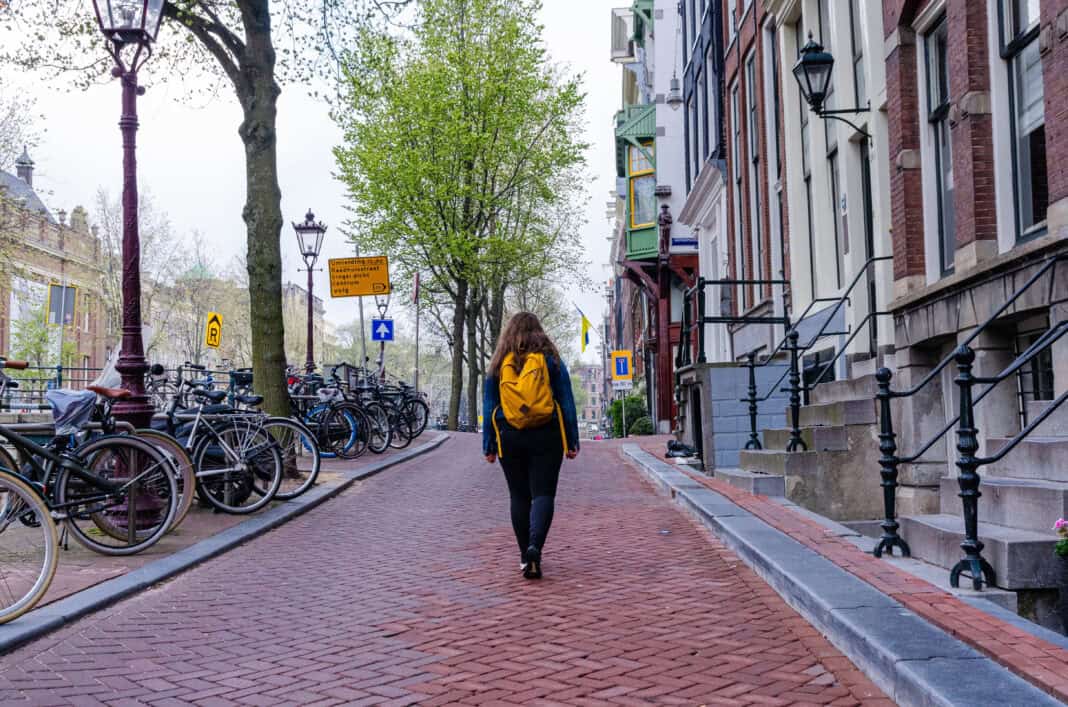
This week, the Amsterdam city council decided it’s time to stop designing public spaces with only middle-aged white men in mind — an initiative that’s 750 years overdue.
Instead, the city will be reimagined through the eyes of a young woman building a safe urban environment, as D66’s Elise Moeskops presented in a public space proposal yesterday.
Awakening the female gaze
A majority of the city council, including alderman Melanie van der Horst, supported Moeskop’s fresh perspective, according to Het Parool.
Moeskops compares young women to otters of public spaces — otters signal a thriving ecosystem, and women who feel safe make for a city that, well, actually functions properly. 🦦
What will change?
According to D66, young women mostly walk, cycle and get public transport around the city — all pretty slow ways to travel.
So, like European buddies such as Vienna or Stockholm, instead of designing everything for standard male motorists, urban planning will finally take female experiences into account.

Some key changes include:
-
Wider, well-lit bike paths with no remote dark corners 💡
-
Parks and squares with inviting seating areas 🤗
-
A street plan that prioritizes walking and cycling 🚲
A tool to measure safety
The goal is to create a city that actually welcomes people instead of subtly suggesting they leave.
To achieve this, planners will factor in all conditions — such as rain and darkness. They will also use the incredibly named Thermometer of Amsterdam Public Space.
READ MORE | 11 kick-ass Dutch women you should know about this International Women’s Day
This special tool measures people’s experience to provide hard data on the places where safety, accessibility, and social interaction are lacking in the city.
But…is it enough?
Shifting public spaces away from feeling like the concrete embodiment of the male gaze is certainly progress.

However, not all women experience public spaces the same way.
If the goal is truly safety for everyone, then Amsterdam’s vision should also consider how race, disability and marginalised identities coincide with gender.
What do you think about this new direction? Is Amsterdam on the right track, or does the city still have a long way to go?


Netherlands needs to redesing a emigration policy, not public space, to women fell safe
The disabled seem to always be ignored in every country.