
Dutch laboratories have now detected asbestos in at least 25 samples of childrens’ play sand, including kinetic “magic” sand that sticks together. Yet nothing has been officially recalled.
Last week, the AD reported that asbestos had been found in samples of loose play sand.
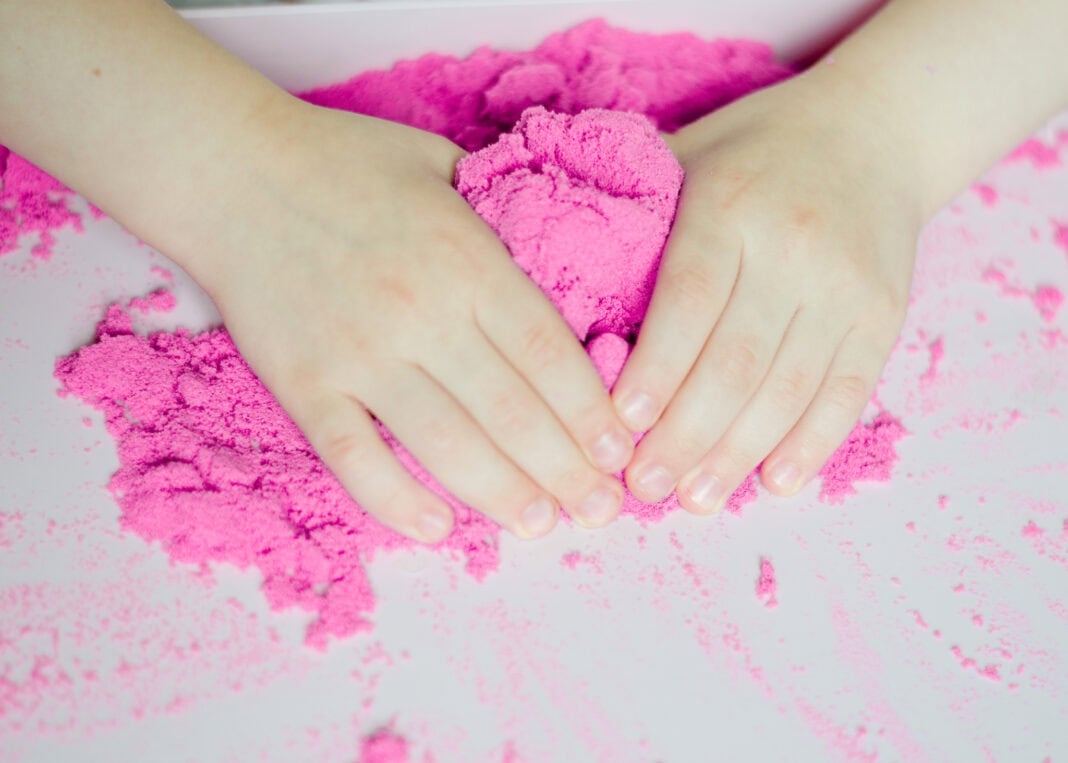
Now, testing laboratories across the Netherlands report finding asbestos in kinetic sand products too, the type marketed as cleaner and less messy for indoor play.
Found in multiple samples
SGS Search, one of the country’s major testing facilities, examined magic sand samples and found asbestos in roughly 30 to 35% of them.
Bob Vijge from the lab stressed to AD that the amounts detected were small (less than 0.1%) but emphasised that any presence of asbestos in children’s toys is illegal.
READ MORE | Contaminated baby food? Dozens of parents in the Netherlands report sick babies

According to the AD, six out of twelve loose sand products tested positive for asbestos, with three containing alarming levels of 2 to 5% tremolite, a particularly dangerous grey asbestos.
Now, the sticky “magic” sand variety (often called kinetic sand) has also tested positive, meaning the contamination problem is broader than initially suspected.
Multiple accredited labs have confirmed the findings. Nomacon, which conducted the original AD investigation, has discovered both tremolite and chrysotile (white asbestos) in additional samples submitted by worried parents and daycare centres.
Still no official recalls in the Netherlands
Despite mounting evidence from accredited laboratories, no play sand products have been formally recalled in the Netherlands.
That being said, some retailers have quietly stopped selling them “as a precaution.”
Without formal recalls, other EU countries aren’t automatically notified either. Belgium only learned about the issue because officials there read the AD article themselves.
The NVWA (Netherlands Food and Consumer Product Safety Authority) says it can only force recalls based on its own investigation, which could take several more weeks.
Are you keeping play sand away from your kids, or waiting for official guidance? Let us know in the comments.