

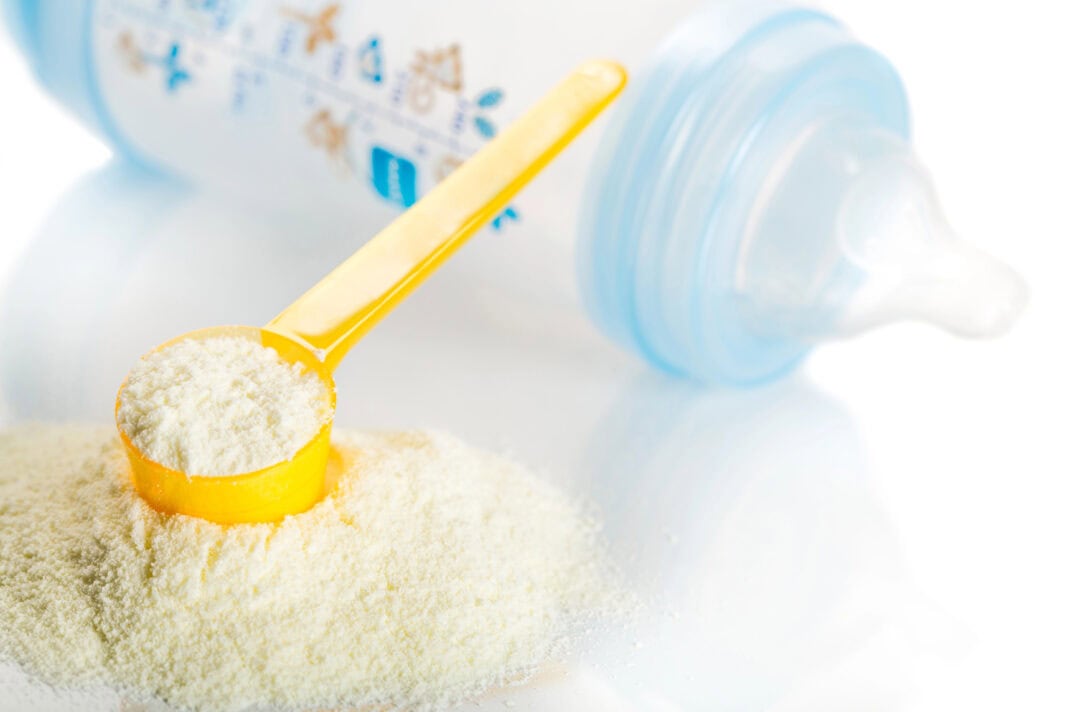
Following recent recalls by Nestlé and Danone, up to thirty reports have been made in the Netherlands from parents whose children have fallen ill after eating baby food.
Dozens of callers described to RTL Nieuws’s tip line how their children had become seriously unwell from store-bought baby food.
Nestlé and Danone issued a recall last month due to the presence of cereulide in the products, a toxic substance.
Nutrilon, a Dutch subsidiary of Danone Nutricia, issued a recall as well this past weekend in response to the incident.
What happened?
Parents calling both RTL Nieuws and the NVWA in the last few weeks reported that their children were experiencing symptoms of gastrointestinal distress after consuming the Nutrilon products.
Apparently, some children became so unwell that they were hospitalised, reports RTL Nieuws.

Celeuride ingestion can cause sudden nausea, abdominal cramping, vomiting, and diarrhea, according to the European Centre for Disease Prevention and Control.
Nutrilon’s recall applies to 14 types of baby food and 44 batches of product.
Parents have been advised by the Netherlands Nutrition Centre to be vigilant and not to use these products for the time being.
But is it too little, too late?
What is Cereulide?
Cereulide is a toxin produced by a more commonly known bacteria called Bacillus cereus, which can exist and thrive in products like rice, pasta, and dairy.
Cereulide itself is also largely heat-resistant, which makes it much harder to get rid of once it has contaminated a product, according to Reuters.

In other words, even if the parents heat up their infant formula or boil it, it’s unlikely the food would be toxin-free.
Danone dodges claims
Despite issuing a recall, Danone is tiptoeing around accountability.
In talks with the NVWA, the company clarified that no cases have been officially linked to the Nutrilon product line, and that the link is therefore unconfirmed.
According to RTL Nieuws, they also said they didn’t receive complaints from any affected parents prior to the recall.
The company also emphasised its strict safety standards and regular quality inspections.
The European Food and Safety Authority, however, seems to think more inspections and regulations are needed.

Following the first recalls, the agency established an acute reference dose for celeuride in infants, as well as concentrations in infant formula that should be marked as a potential safety concern.
Ultimately, the goal is to “help EU risk managers determine when products should be withdrawn.”
What do you think of the recalls? Let us know in the comments!
