
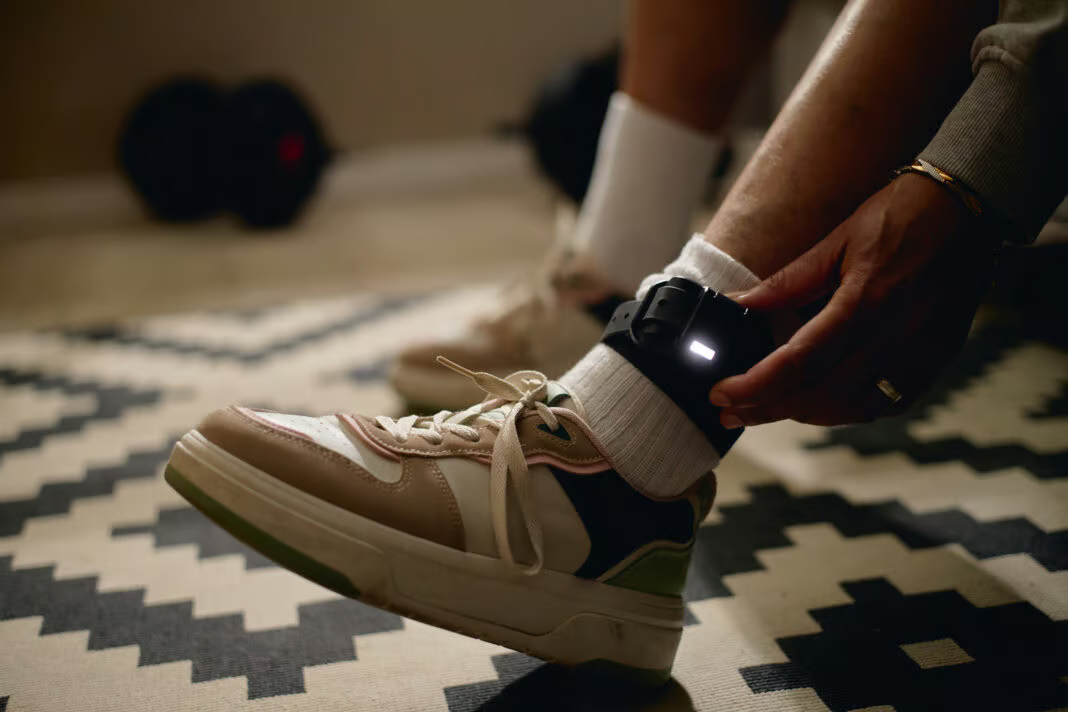

Dutch judges are a step closer to ordering people banned from drinking to wear an ankle monitor that checks their sweat for alcohol, now that a broad majority in parliament supports the plan.
The Tweede Kamer (House of Representatives) votes on the bill next Tuesday, October 13, following a debate on Wednesday afternoon. Justice minister David van Weel called it “an important step in preventing reoffending” in front of MPs, AD reports.
He was keen to stress what the alcoholmeter (alcohol meter) is not: a punishment. It’s simply a way of checking that someone sticks to a drinking ban.
Who could end up wearing one?
Courts can add an alcohol ban to the sentence of people convicted of violence fuelled by drink, or of heavy and repeated traffic offences. That happens around 1,300 times a year, the newspaper says, though the figure also covers bans on drugs.
For drivers, a second device is back on the table. This autumn, the cabinet hopes to make progress on reviving the alcoholslot (alcohol interlock), which keeps the engine off until the driver blows a sober breath test.
The Netherlands has tried this once before, from 2011 until legal objections from the Raad van State (Council of State) ended it in 2015.

Why swap a urine test for sweat?
Trial participants who wore the monitor voluntarily described it as the nudge they needed to keep away from alcohol. The government has called those pilots a success.
The appeal is easy to see. Right now, someone with a ban gives a urine or blood sample about twice a week, and whatever they drink between appointments can go unnoticed. A sensor taking a reading every 30 minutes, day and night, leaves far fewer gaps.
The catch for wearers
Living with one has real downsides. Wearers must be home at fixed hours so the monitor can upload its readings, and contact sports, swimming and soaking in the bath are all off limits. The Raad van State, the government’s top legal adviser, spells this out in its advice on the bill.
Previous wearers also mentioned itchy skin. According to AD, the device has since been made smaller, is now more comfortable to wear, and its data is kept encrypted.
Who pays, and what’s next?
Not every suggestion won the minister over. Bart Bikkers, an MP for the liberal VVD, proposed billing offenders for their own monitors. Van Weel advised against it, fearing the price tag could sway whether judges order one at all.
On Tuesday, Songül Mutluer of PRO, is also submitting a proposal. She wants the Openbaar Ministerie (Public Prosecution Service) to actively suggest the monitor when demanding sentences in domestic violence cases involving alcohol.

Even if the bill passes, it’s not yet clear when the first monitors would be fitted.
Fair way to enforce a drinking ban, or too much of an intrusion? Share your take in the comments.