

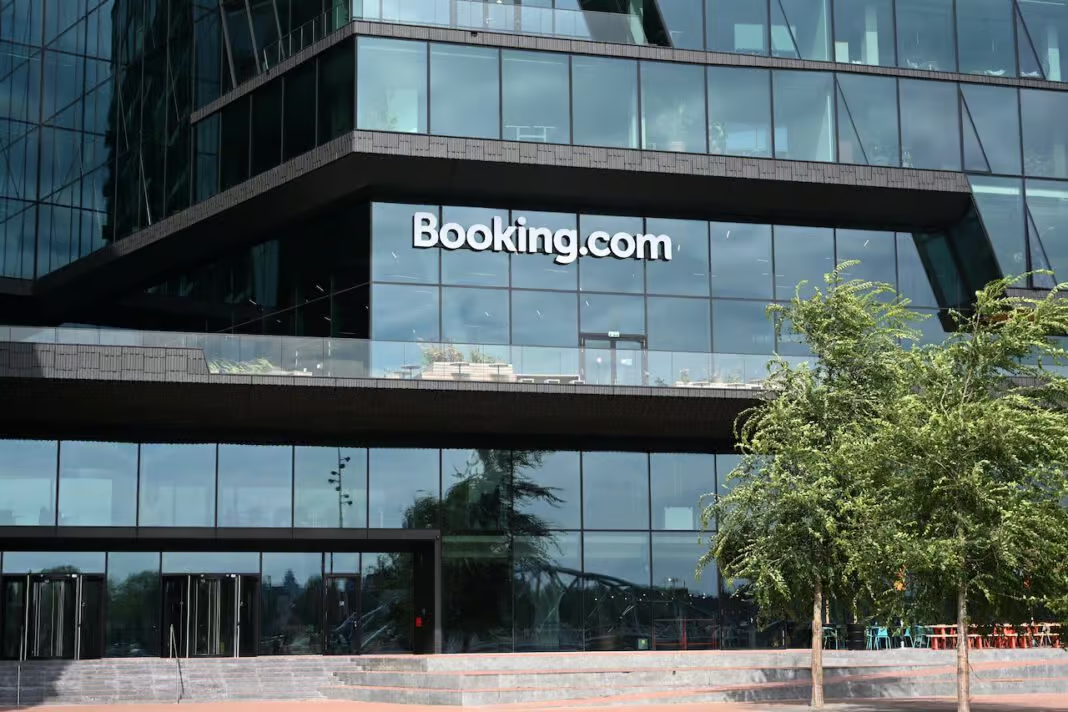

The European Commission has just opened an investigation into reservation platform Booking.com, assessing whether the Amsterdam-based company has done enough to stop fake listings and phishing scams.
Bad luck keeps rolling for Booking.com, with the latest setback following hot on the heels of a major data breach, scams, a class-action lawsuit, and even a potential employee revolt.
The European Commission’s press office announced the investigation on October 21, with plans to carry out an “in-depth investigation as a matter of priority”.
Here’s what we know so far.
Scams are rising, especially on Booking.com
In the first half of 2026 alone, the Fraudehelpdesk (Dutch fraud reporting centre) received 1,072 reports of phishing linked to booking platforms — nearly ten times as many reports as they received in 2025.
More than 90% of those reports involved Booking.com, reports NOS.

And with more people getting scammed each year, the total damage from fraud is also racking up. Reported losses rose from just over €75,000 last year to more than €82,000 in the first half of 2026.
“Europeans should be able to book their holidays without fear of being scammed,” stresses Henna Virkkunen, Executive Vice-President for Tech Sovereignty, Security, and Democracy. “The Digital Services Act sets clear responsibilities on platforms to address these risks, and we must ensure that the leading booking platform in Europe takes those responsibilities seriously.”
What exactly is the EU investigating?
In particular, the investigation will focus on three key areas:
- Potentially fraudulent and non-DSA-compliant listings on Booking.com: The Commission wants to ensure that the platform has “put in place effective measures to mitigate” potential risks from fake listings (such as “for non-existent properties, impersonation fraud, and non-compliant accommodation offers”).
- The risk of phishing scams exploiting Booking.com’s reservation and guest data: Investigators will “focus on risks related to the way reservation and guest data is shared with accommodation providers”, and whether Booking.com has “put in place sufficient safeguards to prevent data from being misused”.
- Whether Booking.com’s paid-for boosted listings are clearly identifiable as advertisements: Providers can pay a higher commission to be displayed more prominently in the platform’s search results. Under EU rules, it should be explicitly clear that these “boosted listings” are advertisements.
So, what happens now?
The Commission will keep gathering evidence by way of sending Booking.com additional requests for information and conducting interviews or inspections.
By opening a formal investigation, the Commission can also impose “interim measures and non-compliance decisions” on the reservation platform, should they feel the need to.
Even Booking.com acknowledges that scams are a growing problem on the platform. As the Consumentenbond writes, “the site advises users to always verify messages via the official website or the Booking app, and never to pay via external links or messages outside the platform.”

Want to make sure DutchReview pops up on your news feed more often? Just add us as a preferred news provider, and we’ll handle the rest.