
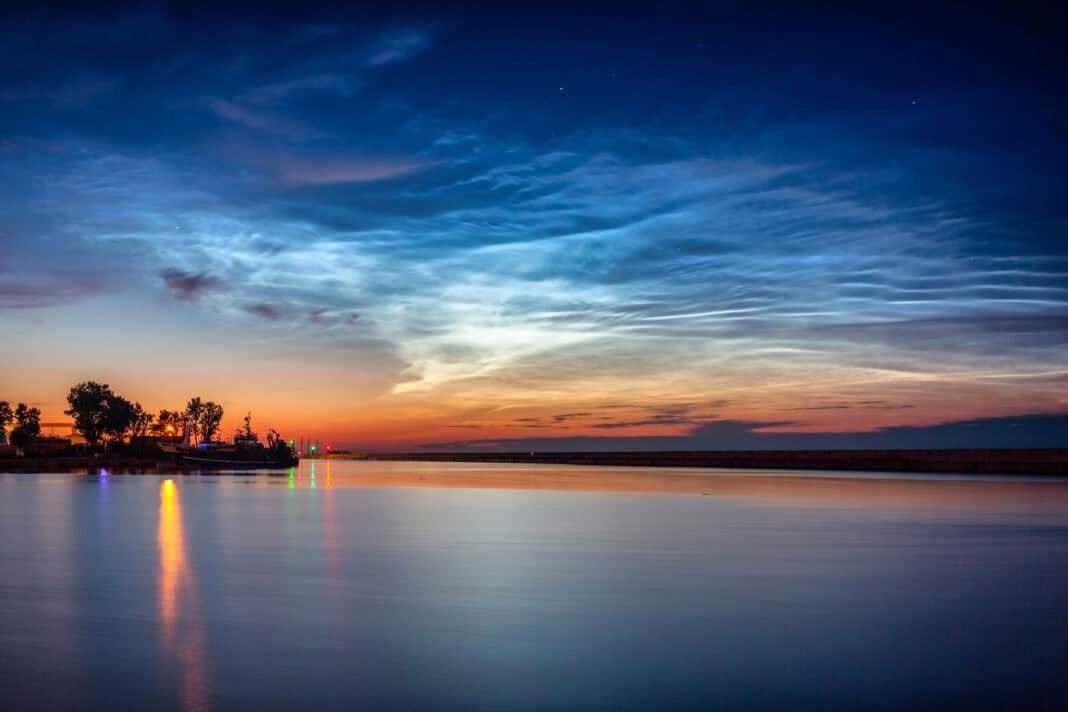

There’s a rare atmospheric treat gracing Dutch skies this weekend: lichtende nachtwolken, also known as noctilucent clouds.
These thin, silver-blue formations that shimmer in the night sky long after sunset are the highest clouds on Earth, typically drifting around 76 to 85 kilometres above the Earth.
What exactly are they?
While they may glow brightly in the sky, Space.com explains that these clouds don’t actually produce light; the glow comes from sunlight bouncing off ice crystals at that extreme altitude.
Given that there are very specific requirements for noctilucent clouds to form, their viewing window is rather short — roughly between May 20 and July 20, with the KNMI noting that the best chances fall in the weeks around the summer solstice.
With the sky clearing up this Thursday, we’re entering prime cloud-spotting time.
Here’s how to spot them
In addition to clear skies, you’ll also want a view of the northern horizon and minimal light pollution. If possible, try cloud-spotting away from big cities.

Look for a faint blue-white haze low in the sky, in a northwesterly, northerly, or northeasterly direction.
As the clouds reflect very little light, they’re typically only visible after the sun has already set for an hour and fifteen minutes (or roughly an hour and fifteen minutes before sunrise).
Can’t spot them this weekend? Buienradar meteorologist Jordi Huirne tells RTL Nieuws that the chance of seeing noctilucent clouds “is usually greatest in the month of June”, so you’ve still got oodles of time.
Want the latest Dutch news to come zooming through the internet to your inbox? Dat kan! Subscribe to DutchReview’s weekly roundup 📮