

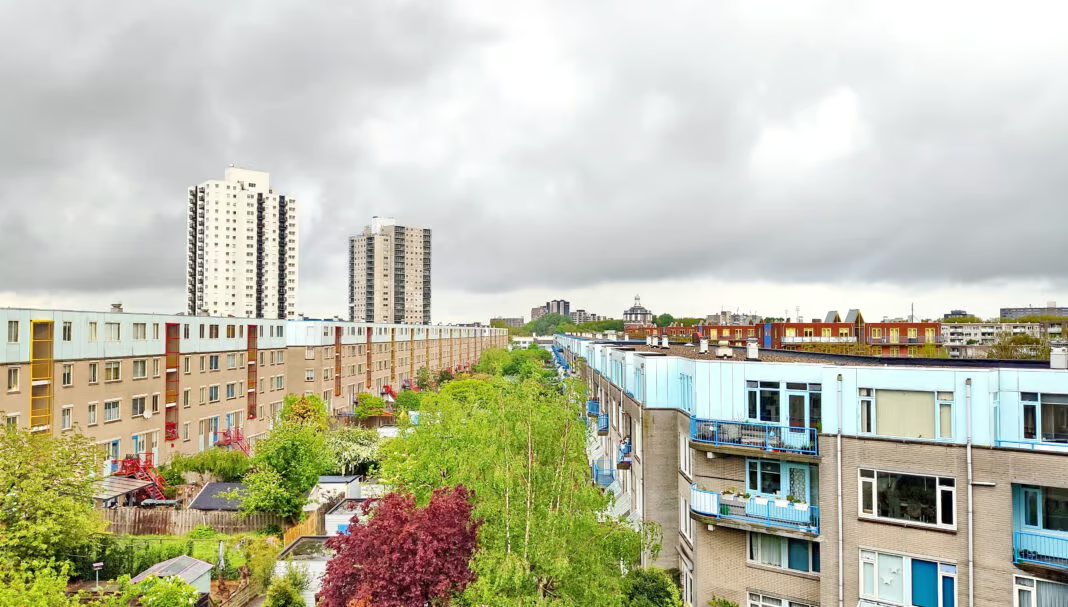

From July 23, if you’re in parts of Rotterdam’s De Esch after 11 PM without a decent reason to be there, you’re now breaking the law.
The ban applies every night between 11 PM and 5 AM, and will run for three months. According to the municipality, the measure follows years of noise and disorder caused by visitors coming into the neighbourhood from other cities.
The ban covers a designated part of De Esch, along with the Kralingse kades (Kralingen quays). Matrix signs in the neighbourhood mark where it applies.
Who does the ban apply to?
Needless to say, the ban doesn’t apply to everyone. The following people can still be in the area at night:
- residents of the zone,
- people visiting residents,
- anyone working in the area,
- patrons visiting a bar, event venue, or sports facility there, and
- police and emergency services.
If you’re a non-resident and you’re visiting someone in the zone after 11 PM, you may be stopped and asked why you’re in the area.
Residents are fed up with “persistent nuisance”
According to the municipality, visitors from outside the neighbourhood have been causing noise and disorder in De Esch and along the Kralingse quays. The problems occur mainly in the evenings and at night.

As NOS reports, the nightly ban is a last-ditch effort; Rotterdam had already tried various other measures before. Concrete blocks were placed in the area, surveillance was increased, and officials spoke to the people causing the disturbances — all of which proved ineffective.
In particular, residents point to street racing, drug and lachgas (laughing gas) use, prostitution, and noise. The problems started shortly after the coronavirus crisis and have continued for nearly three years.
“The quality of life in the neighborhood is under pressure,” Rotterdam Mayor Carola Schouten stresses. “Peace must return to De Esch, and residents must feel comfortable and safe. That is why I am exercising this authority.”
The measure is highly unusual, experts say
An area ban is normally issued to a specific individual, not to everyone who doesn’t have explicit permission “to be in the designated area”.
As Michel Vols, professor of public order law at the University of Groningen, tells NOS, he knows of no other Dutch municipality doing this. He described it as a major restriction on freedom of movement, pointing out that someone walking their dog through De Esch from a neighbouring area would technically be committing a crime.
“Why, for example, doesn’t the police enforce nuisance better instead of someone’s presence in the neighborhood?” he asks.

However, police say enforcing against the noise directly hasn’t worked. Officers need to witness the behaviour themselves and this generally stops as soon as a patrol car arrives.
Do you live near De Esch, or somewhere with a similar problem? Let us know in the comments.


Netherlands is no longer a civilized country thanks to progressive policies and en-masse imigration
These measures are proof for the fact that it is unsafe to live not only in this neighborhood but in other places as well.
Drugs are also part of the problem