
Here’s a brief history of communication technology. First there were smoke signals, then ravens, followed by posted letters, telegrams, faxes, and finally, email.
Unfortunately, the IND (the Dutch Immigration and Naturalisation Service) stopped clocking these changes after 1840. Newsflash! We are no longer living in colonial times.
Now, everyone talks about the pain of Dutch bureaucracy, but the IND’s choice to communicate using the postal system rubs salt in the wound.
After taking an (infamously) long time to process claims, a caseworker drafts a letter, prints it out, PostNL collects the letter, the letters are sorted through, the postman delivers it, and finally, when your hair starts to turn grey, you find the letter in your postbox.
And God forbid your letter was sent on a Friday. Then it would reach you by Tuesday — tops.
So, this is my plea to the Immigration and Naturalisation Department of the Netherlands: Please stop sending important correspondence by post. Perhaps dare to try that exciting new invention called “e-mail” instead?
How my anger unfolded
Back in December, I sent an online appeal to the IND about an unjustified gap in my residence status in the Netherlands.
As though my objection letter was critical to national security, the IND uses an encrypted mail service to send important documents. I followed the intricate process to a tee.
Now, if I send an online appeal, a girl expects an online response — alas, not with the IND.
A month passes. There’s no notification on any of my government portals: MijnIND, MijnOverheid, nor on my email, where I received confirmation that my email was sent.

Well-acquainted with the government body’s processing times, I decide to wait longer.
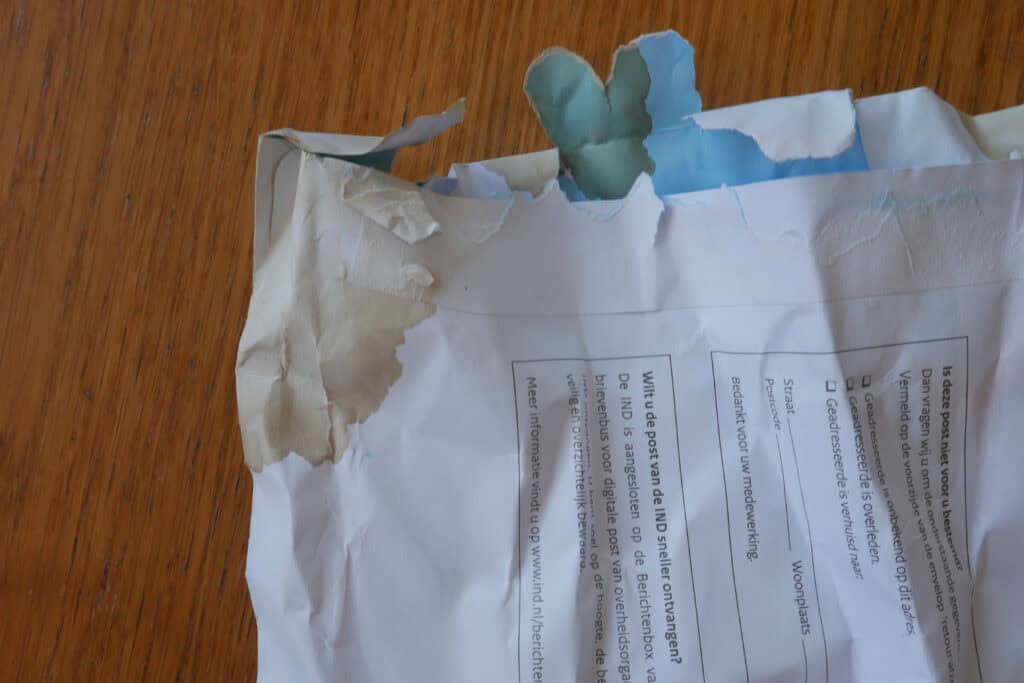
Two months later, I open my postbox to find a soggy pile of paper and ink: the official response to my appeal.

READ MORE | 7 things that the Dutch kind of suck at
The letter was dated exactly 25 days prior to the day I opened it. And it had experienced its fair share of Dutch rain.
But it gets better. The content of the letter? Not a reply to my objection, but a request to resend my appeal by post within two weeks. A deadline that had already passed.
At this point, it probably would have been more efficient to send a pigeon.
Tech-savvy government
I refuse to believe that a government that gave us DigiD, a one-stop secure login for almost every public service, cannot figure out how to send a letter online.
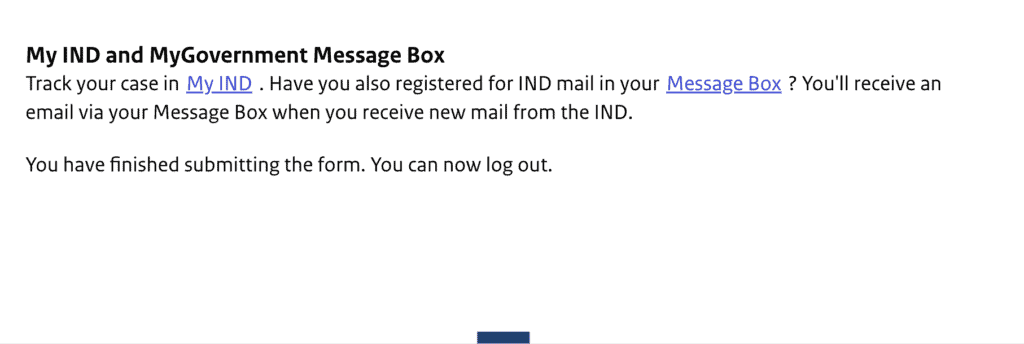
In most cases, residents can log into MijnOverheid (MyGovernment) and open the Berichtenbox (MessageBox), where official mail from tax authorities, municipalities, and other government bodies appears neatly and securely in one place. I love it.

Who banned the IND from this feature? Immigration letters are almost always sent by post and are not consistently available through MijnOverheid or even the IND’s own portal, MijnIND.
I notice that people’s opinions around immigration are regressing hundreds of years. But surely our digital infrastructure does not have to follow.
Bureaucracy is already slow. It does not need the added suspense of a letter wandering through the postal system while someone’s residence status hangs in the balance.
What the IND says about this
There was no way on God’s green Earth that I was printing my original email, signing it, stuffing it into the soggy envelope the IND posted me, and trekking to the post office on the slim chance they would reopen my case after the deadline had passed.
So I gave them a little phone call.
Luckily, the telephone operator was a sweetheart. (Sometimes when customer service reps hear you speaking English, you can kiss justice goodbye).
READ MORE | Permits and visas for the Netherlands: ultimate 2026 guide
She promised to explain my situation to the civil servant handling my case and confirmed I could scan a signed copy and upload it on the IND’s website.
When I asked why all IND letters are still sent by post, she told me, “It’s very old school, but unfortunately, it’s just the way we work… We always send written letters by post.”
I pushed further, asking why the MyIND portal exists if they don’t use it. She patiently replied, “Sometimes workers upload letters to the portal, but not all of the case owners have access to this.”
With the amount of taxes we pay in the Netherlands, I figured government bodies would run flawlessly.
However, now I see that they are as dysfunctional as any other workplace. Some staff have access to the portal, and others don’t. Some are just as baffled by the rules as we are.
Maybe next time I’ll try sending the IND a smoke signal.
How do you feel about the posted letters? Tell us in the comments.


This article lacks a lot of data that IND considers. Not every user of IND has access to MyGov. Yes, IND can split clients who have access to MyGov and no. My POV on this article, its written one sided…
Having moved to the Netherlands in 2021, with by foreign husband, it took exactly 9 months for IND issue him a residency visa. In all our communication with IND all went smoothly and timely. As a matter of fact, compared to other countries it is quite perfect.
Yes, Post.nl is lousy, delivering mail into the wrong addresses! And yes, many people ( elderly and foreigners) do not know how to handle digital mail.
Unbelievable Incompetence and Contradictions at the Dutch Immigration Service (IND)
I have decided to share my story about the Dutch Immigration and Naturalisation Service (IND), because what I experienced is almost unbelievable. Behind this story lies not only absurd bureaucracy and contradictory reasoning, but also deep sadness about how administrative decisions can affect someone’s health, emotional strength, and faith in a system that is supposed to protect people and uphold human rights.
My partner passed away, and instead of receiving a fair assessment of my circumstances, I found myself fighting an immigration system that seemed more concerned with formalities than with the reality of my life.
One of the reasons for rejecting my residence application was that I had not lived at the same address as my partner for the required 12 months. According to the IND, I had lived there for only 10 months.
Think about that for a moment. My relationship was real, my partner was part of my life, and then he passed away. Yet, a difference of just two months became a decisive obstacle in my immigration case, with consequences that have profoundly affected my life.
To make matters worse, the IND never even invited me for an interview or an in-person hearing to meet me and hear my side of the story. I was not given the opportunity to explain my circumstances directly, share my perspective, or have a meaningful conversation about the reality behind the documents. Instead, decisions with life-changing consequences were made without anyone from the IND ever meeting me personally.
And the contradictions did not stop there.
During a partner residence permit application process, the IND issued decisions that, in my view, exposed deeply inconsistent reasoning:
– In the first rejection decision: The IND criticised the applicant for NOT working during the procedure.
– In the second rejection decision: In a seemingly contradictory turn, the IND criticised the very same applicant for WORKING while waiting for a decision.
How can a government authority criticise someone for not working in one decision and then use working as a reason for criticism in another?
If these circumstances are being assessed differently, the IND should clearly explain why. Applicants deserve consistent reasoning, a fair assessment of the evidence, and decisions that make sense in the context of their individual circumstances.
This is not just about paperwork. It is about human lives.
When someone loses their partner, they are already dealing with grief. Having to fight for the right to remain in the country where they have built their life adds another layer of uncertainty, stress, and emotional suffering. The impact of such decisions can be devastating, particularly when a person feels that nobody has genuinely listened to them.
The most disturbing part is the feeling that I was judged through documents without being given a real opportunity to be heard as a human being.
An immigration authority should not simply process files. It should examine evidence carefully, explain its conclusions, apply the law consistently, and consider the circumstances of the people whose lives it affects.
I understand that immigration authorities must follow legal requirements. I am not asking for special treatment or exemption from the law. I am asking for fairness, transparency, consistency, and a meaningful assessment of the facts.
My experience has seriously damaged my trust in a system that is supposed to uphold the rule of law and protect human dignity.
How can people maintain faith in public institutions when they feel that contradictory reasoning, rigid formalities, and the absence of basic human communication can determine the course of their lives?
I am sharing my story because I believe these experiences deserve public attention. People dealing with immigration authorities should not feel powerless, invisible, or reduced to a collection of documents.
Behind every application is a human being. Behind every rejection is a real consequence. And behind every administrative decision should be a duty to act fairly, carefully, and responsibly.
This is my experience with the IND. I believe it deserves to be heard.
#IND #Netherlands #Immigration #HumanRights #RuleOfLaw #Justice #AdministrativeAccountability #ResidencePermit