RIVM has released the latest numbers regarding coronavirus in the Netherlands, with the small country now passing 40,000 infections. Yet, the daily infection, hospitalization and mortality rate continue their slow decline.
The most recent data shows that there have now been 40,236 infections in the Netherlands, after a further 445 were identified in the past 24 hours.
Sadly, a further 94 people have died in the same period, bringing the total Dutch mortality rate to 4,987.
A total of 10,951 people have been hospitalized for coronavirus since the outbreak, with a further 97 added in the past day.
Too early for an exit strategy
The Netherlands has been under an ‘intelligent lockdown’ for the past six weeks. However, RIVM experts say that it is too early to create a concrete plan to emerge.
“That is really more complex than highlighting a strategy and saying that it is the right one,” says the head of infectious disease control at RIVM, Jaap van Dissel, and Jacco Wallinga, responsible for the calculation models.
One plan could be to increase testing and do more contact tracing of infected people. But Van Dissel warns that it is a complicated virus, so contact tracing may not be enough. “We are busy with that. For example, you are trying to calculate the consequences if you take certain measures or leave them again. But there are uncertainties in that.”
People are filling the shopping streets
At the start of the lockdown, the shopping streets in the Netherlands only had around 25% of the people they would normally have. Now, that number is around 40%, according to research agency Locatus.
The data is taken from shopping streets in ten major Dutch cities using technology that counts the number of passing mobile phones. But the project leader Gert-Jan Slob told NOS that these numbers are not too much of a problem. “As long as we are at 40% of the numbers before the outbreak, and if people stick to the rules.”
However, in some shopping streets, that’s not as easy as it seems: the Nieuwendijk in Amsterdam and the Beurstraverse in Rotterdam are two examples. Slob warns that measures must be taken there to ensure social distancing measures can be followed.
Follow DutchReview on Facebook for the latest news on coronavirus in the Netherlands.
Whilst COVID-19 sweeps across the world and brings fear and panic through the Netherlands, it’s important now more than ever to search for those glimmers of light in the darkness. When we stop and take a look around us, it’s clear that people are trying to spread happiness and positivity in any way they can, and are managing to bring hope and goodness to us in bleak and uncertain times.
One person making a difference to her city and community is Cote Veragua. The Chilean born artist has not only taken to the streets of Leeuwarden to spread positive messages and mottos for Leeuwarders’ to come across on their walks, but she’s given her artistic services for free to small business owners, become the inspiration for posters that have been strewn throughout the city, and even co-created a stunning wall mural.
Artist Cote Veragua. Image: Lieuwe Terpstra
Messages to the people
What began as mottos chalked on pavements and cobblestones has become something much bigger. Cote spend her first weekend after lockdown spreading colourful and positive messages through empty streets.
“These days are a rollercoaster for everybody,” she writes in her Instagram caption, where her art is on display for all to see. “I spent a lot of time asking myself what I could do to be helpful in this moment. One of the ideas was to write beautiful sentences through our city to make people smile and remind everyone that they are not alone.”
Leeuwarden is a multicultural city that’s home to people from all over the world, so Cote wrote her messages in Dutch, Frisian and English, a choice that shows that we really are all in this together. Now you’ll find tiny supportive texts to help give you that little boost of positivity all over the city: ‘Samen staan we sterk’ covers cobblestones down the main streets, ‘Ik bin der foar dy’ on roads, the reminder to ‘bel je oma en opa’ covers the floor tiles down smaller streets, and the famous ‘this too shall pass’ lies at the foot of the Pearl of Leeuwarden, the Oldehove.
Cote even chalked a message to some of the heroes of the city in front of Leeuwarden’s hospital, “with the intention of cheering up the people who are working hard every day to keep us safe and healthy”.
With the words: ‘onze helden, die over de mensen waken, jullie zijn het die ons land beter maken’, Cote hoped to spread the positivity to the men and women who wake up every morning to help fight this virus, and she did just that. “I see how people smile with my messages, and I’ve received many pictures [of people] with the sentences that I made in the city. That’s strong enough to make me go outside every day to write something to make you smile.”
Of course, these messages aren’t permanent, instead inscribed by colourful chalks that will weather the storm for the time being, but be gone by the time life resumes to normal. This is, somewhat comfortingly, another message that shows that not everything is permanent, even in these tough times. For now, however, they’ll remain in place, as bright reminders of hope and happiness that we need now more than ever.
Helping her community
On March 30th, Cote put out a call to her Instagram followers to help reach out to the locals of Leeuwarden and promised five local businesses free window art to help send their message to anyone wandering the streets. “Remember, our locals are super important, they give movement and life to our streets. They started with a dream and now they need our support to keep going” she stated in her post.
Her idea was simple: she hoped to promote services or products that businesses were offering during the pandemic, that otherwise wouldn’t have been seen by locals without a social media presence: people who may have thought that they were simply closed for business altogether. Cote says that her “idea is to show the human side of the business and to become closer to our community, to our citizens”, an idea that has no doubt helped smaller businesses reach their whole audience during such a worrying time.
Since her call to action, she’s helped multiple businesses with her window art, including the speelcafe Stenen Tijdperk and concept store Meet Mister Fred, who both appear on her Instagram page, and her plan is to keep going.
Making waves
Clearly, Cote’s inspiring and community building artwork have made an impact on the city of Leeuwarden. So much so, in fact, that she was hired by Leeuwarden’s own marketing sector to transform one of her drawings into a poster, which is now displayed in all its glory on multiple streets in the city.
Image: Danjel Sijtsma
That’s not her only claim to fame though, because her latest mission has been to co-create a giant piece of artwork alongside 10 other Leeuwarden artists that stands tall on the NDC Media Group building’s wall.
Commissioned by Writer’s Block, a group that organises numerous events as well as the creation of graffiti and street art, Cote has been spray painting her addition to the wall’s new artwork, which spells out “we’ll meet again”. This is yet another positive message for Leeuwarders currently in self-isolation. Cote writes: “This artwork is dedicated to everybody in the world. This crisis is hard for all of us. Today we can’t meet each other, but soon that will change and that day will be memorable”.
Image: Danjel Sijtsma
Cote’s words are mirrored by Writer’s Block on their own Instagram page, as they suggest that their new installation is ‘een hart onder de riem voor de inwoners van Leeuwarden in deze onzekere tijden’, or, in English, ‘a little bit of support for the people of Leeuwarden in these uncertain times.’
They’re right. This crisis is hard on us all, and we certainly need all the support and love that we can muster up right now. But with their help along with someone like Cote offering their services to keep the spirits of her city’s people alive, these uncertain times are certainly a little easier to bear.
With thanks
Thank you to Cote Veragua, who allowed me to write this piece on her and use her words. If you would like to check out her Instagram page, you can find her here: @cotecreate. If you’d like to check out Writer’s Block Instagram page, you can do so here: @writersblockmurals
What inspiring things have been going on in your cities during coronavirus? Share some feel-good stories with us down in the comments below.
I live in Cape Town, South Africa, so you may be wondering why anyone would want to learn Dutch if they are not currently residing in the country.
There are reasons though — perhaps you want to visit the Netherlands at some point, you enjoy the gutteral g’s of the language, or you’re even thinking about moving one day.
Whatever the reason, there’s no harm in trying these. Learning Dutch, when you’re not living in the country is difficult, but not impossible. Even as a South African, knowing Afrikaans doesn’t help as much as you think.
Whether you are living in the country or not; these tips are failproof.
Find a good app
A very popular one is Duolingo. They send reminder emails that “guilt” you into practicing. It repeats what you got wrong and consolidates what you have learned. You decide what you wish to focus on and focus on spaced repetition to learn the words. Just a few minutes a day is all you need.
Read as much as possible
Go out and get books, pamphlets, newspapers or magazines and read as often as possible. Or, join some Dutch Facebook groups or read some Dutch webpages. It may be a good idea to have Google Translate on standby.
Or, as in my case, text a Dutch friend. I’m currently reading Jij Bent van Mij by Mary Higgins Clark. I found it at a second-hand store in Amersfoort in June 2019. It was intended for my daughter, who collects second-hand books, but I found a purpose for it. Then I found the word omfloerst and had to call a friend — not even Google had my back on that one!
Learn during leisure time
Watch movies and series with subtitles. I’m currently watching Women of the Night on Netflix (Keizers Vrouwen) in Dutch. I occasionally put the subtitles off, but I’m not proficient enough to go totally without subtitles. Try installing the Google Chrome extension Language Learning With Netflix to get both Dutch and your native language subtitles at once!
Load some Dutch music onto your playlist. You will get used to the sound of the words and that will help with pronunciation. You will even find yourself singing along. My personal favorite is Gers Pardoel – Bagagedrager. I don’t know all the lyrics off by heart, but I know what it all means.
These last two tips are effective if you have contact with Dutch people via telephone, WhatsApp or other forms of social media.
Use the ‘pain method’
Do not allow your Dutch friends or partner to speak English to you. This one is the hardest to do. The Dutch all speak English perfectly and absolutely love to try their skills out on you.
I have yet to come across a Dutch person who actually speaks Dutch to me — I’m usually the one who ends up asking the speaker to switch to Dutch. It is, however, very easy to simply allow them to speak English. This will not help your cause though. So, be firm and insist on it.
Talk to the next generation
Finally, “out of the mouths of babes” is the best way yet. When I was an au pair, back in the stone ages, I found my best teacher was the eldest kid. Years ago, I looked after two Dutch children for one year. Well, my little girl (whose wedding I attended in June last year) took her job as my language teacher very seriously.
I would only have to point at things, and she would tell me the word. She also very gently corrected me when I made mistakes. The kids also taught me cute Dutch songs. So, if you have access to a kid, sign them up. Children are generally eager and happy to teach and are totally non-judgemental of any errors made.
Whether you use one tip or all, some useful words and phrases are bound to stick. Oh, don’t trust just anyone to teach you though; someone is bound to add some spice to your vocabulary. I still, for 27 years, carry klootzak around in my back pocket for emergencies.
What’s your top tip for learning Dutch outside of the Netherlands? Tell us in the comments below!
Just because we are all stuck at home, minding our own business, does not mean that other people are not out there doing their, sometimes illicit, trades.
Such is the case of a van that was found with almost ten kilos of cocaine in it.
800,000 euros in cash
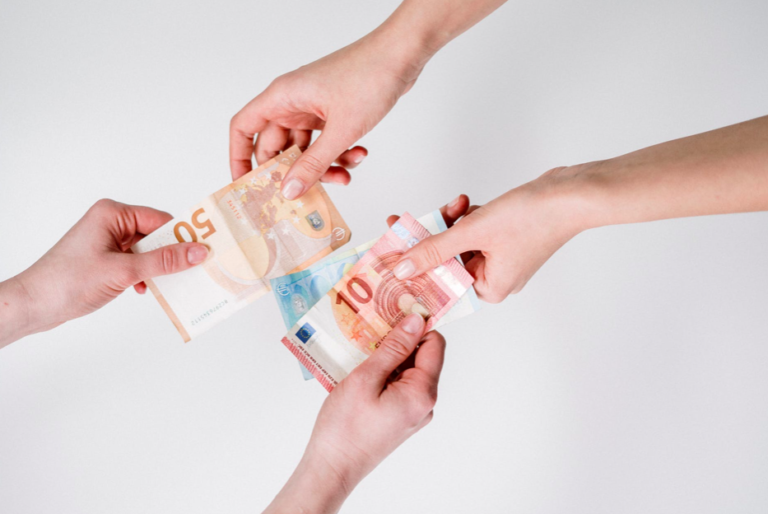
Not only did the police find in a secret corner of the van the ten kilos of cocaine, but they also found 800,000 euros in cash. Both the cocaine and the cash were in shopping bags.
The discovery was made three weeks ago but was only just made public. Police say the van was found in a warehouse alongside two other vehicles. The drugs and money were found during an inspection by the police.
The directors of the warehouse were arrested, on suspicion of drug trafficking and money laundering. They are three men, two of them aged 26 and 35 from Breda and the other one aged 39 from Zaandam.
The van, alongside the two other vehicles, as well as the cocaine, the money and six smartphones were taken by the police. The warehouse was also searched but no further evidence was found.
What’s the weirdest thing you found in a van? Let us know in the comments!
The latest count of coronavirus cases in the Netherlands has been published by the RIVM.
The RIVM reports that in the past 24 hours, there have been 475 new reported cases of coronavirus, bringing the total number of coronavirus in the Netherlands to 39,791. Additionally, there are 85 more hospitalisations. The total is now 10,854. Finally, 98 new deaths have been reported. The total mortality count is now 4,893.
ICU beds continue to free up
As of yesterday, there were 783 patients in intensive care as a result of coronavirus. That was 21 less than the day before, and the nineteenth day in a row in which the number of ICU patients has dropped.
Domestic violence victims can use codeword to get help
Domestic violence rates are higher than usual because everyone has to stay at home, so the Ministry for Health is launching a codeword system from next week onwards. Those who are struggling with domestic violence can use the word “masker-19” to get the attention of pharmacy staff, who will then put them in contact with help.
Healthcare workers lack protective gear
A professional association for healthcare workers named V & VN conducted a survey on more than 10,000 people involved in healthcare. 70% of those surveyed reported higher stress than usual due to the coronavirus, with symptoms reported including fatigue, insomnia and a feeling of uncertainty.
Over half of staff in nursing homes and in the GGD report a shortage of protective equipment, especially face masks. Another third of those surveyed report feeling pressured by managers to provide health care without wearing protective gear.
An illness that appears to affect only young people has placed several children in intensive care in the Netherlands. It is not yet clear what this illness is.
Children in six different countries have landed in intensive care with similar symptoms, over one hundred total patients recorded. In the UK, several children have died as a result of the illness.
What are the symptoms of this disease?
For those who get the illness severely enough to end up in intensive care, the complaints so far seem to be severe abdominal, stomach and intestinal complaints, often a fever, and sometimes heart and lung problems.
Similar symptoms to Kawasaki disease
Whether this illness is new, or is an existing disease, is still under investigation, according to child immunologist Taco Kuijpers of the Amsterdam UMC, who spoke with NU.nl yesterday. There are some similarities with the rare illness called Kawasaki disease. The symptoms of this illness include swollen limbs, a thicker tongue, red eyes and chapped lips, as well as those already mentioned.
The illness becomes dangerous if the blood vessels near the heart swell, but it is very treatable if it is caught in time. Additionally, most children will only get it very mildly and may not need medical attention at all.
Link to coronavirus still under investigation
But, of course, this mysterious illness may also be connected with coronavirus, which is what people are most frightened of. So far, it has seemed that most children do not get coronavirus very severely— it is far more dangerous for adults. Some of the children worldwide who have this illness did test positive for coronavirus, but others did not.
Doctors are continuing to investigate this illness, but for now, there are no concrete answers as to what it is.
Diplomatic relations with Taiwan have always proved to be a delicate balancing game. Mainland China maintains that Taiwan is de facto part of their territory. Countries that make a diplomatic move, small or big, that suggests Taiwanese independence, risk upsetting China.
Such was the case with the Netherlands this week. The diplomatic mission to Taiwan changed the name of their office from “Netherlands Trade and Investment” to “Netherlands Office Taipei”, causing fury among Chinese officials, reports NOS.
Call for boycott of Dutch products
On Chinese social media as well as on media channels of the Chinese state, there’s been calls for boycotting Dutch products. Calls have also been made to stop the exports of medical equipment from China to the Netherlands.
The President of Taiwan welcomes the name changing, calling it a symbol of more open cooperation in recent years.
Thank you @guywittich for years of dedication to strengthening #Taiwan–#Netherlands bilateral relations & cooperation. I hope you’ll take some of our world-famous Taiwan tea back home with you, because it goes so well with your delicious stroopwafel. Bedankt! pic.twitter.com/L5RJpAmL67
The name change has been defended by the Netherlands as being just a name simplification, done due to an expansion of the activities of the Dutch office in Taiwan.
The Chinese embassy in The Hague files complaint
As a result of the name change, the Chinese embassy in the Hague has recently filed a complaint over the matter to the Ministry of Foreign Affairs.
Taiwan is one of the top interests of China, and the Chinese Communist Party does not tolerate conversation or debate over the issue, as it sees Taiwan as an integral part of China.
The Global Times, a Chinese media outlet owned by the Communist Party, warned of repercussions, such as cancelling of medical equipment exports as well as ending some trade deals with the Netherlands.
However, threats of boycotts or ending medical trade has not yet been made by any official spokesperson from the Chinese government.
Should the Netherlands stand its ground with China? Let us know in the comments!
Over the past ten years, the average hourly wages of women are close to that of men, showing a shrinking gender wage gap. However, differences are still widespread.
This Friday, the Central Bureau of Statistics reported that the average gross hourly wages for women was €20 per hour, while for men it was €22, according to RTLNieuws.
Last year, the average gross hourly wage for women was 14% less than that of men, RTL Nieuws reports. Ten years ago, this disparity was 20%, signifying only a 6% difference.
If you look at the gross hourly wage median instead of the average, the difference between men and women is 7%.
More women in higher education
Since the mid-1990’s, the gender pay gap has decreased by 0.5% annually. A reason for this is likely because there are more highly educated women than men in recent years, RTL says. This is particularly relevant for women who are aged 45 or under.
Differences more prominent in other indicators
If you look at average annual wages, the differences are substantial. Men have as much as 38% higher annual wages compared to women.
In two-thirds of cases, this was due to the fact that women work fewer hours: Women work an average of 25 hours per week, while men work and average of 33 hours.
Men in higher positions
Men are overly represented in positions paying €30 per hour, whereby a quarter of all working men receive this sum. In the case of working women, this amounts to only 14%.
But if you look at net hourly wages, the number for women is higher, at €16.95, whereas for men it is €16.64, as higher income groups pay higher tax amounts.
Do the new figures say anything?
The new CBS figures do not reveal much about equal pay for men and women in comparable positions, in terms of experience as well as education.
In fields such as banking, law and insurance, the differences appear to be even more significant.
In what ways can the pay gap be improved or addressed? Let us know your thoughts in the comments.
A professional association for healthcare workers named V & VN conducted a survey on more than 10,000 people involved in healthcare.
The survey attempted to probe the mental wellbeing of healthcare workers, reports NOS.
Psychological stress
70% of those surveyed reported higher stress than usual due to the coronavirus, with symptoms reported including fatigue, insomnia and a feeling of uncertainty.
Over half of staff in nursing homes and in the GGD report a shortage of protective equipment, especially face masks. Another third of those surveyed report feeling pressured by managers to provide health care without wearing protective gear.
President of the V & VN, Gerton Heyne, called the results of the survey “harrowing”. He stated that healthcare staff are experiencing a lot of uncertainty and anxiety. “The question of whether they themselves pose a danger to their patients is eating them alive. That is an enormous emotional burden.”
Amendment to RIVM guidelines
The association wants an amend to the RIVM guideline on protective gear outside of hospitals, which they believe is based on a mentality of scarcity.
“When caregivers come into contact with someone who is coughing and sneezing in the chair, according to the RIVM guideline they do not have to wear a mouth mask if they keep a meter and a half away.” said Mr Heyne in the NOS Radio Journal 1.
While care homes and hospitals could now have the necessary protective equipment, Heyne expressed his doubts about that.”If there are indeed sufficient resources, I can only conclude one thing: those resources may have arrived in the Netherlands, but have not yet been delivered to their destination. I call on the government and employers to ensure that they are with nurses and carers end up.”
Follow DutchReview on Facebook for the latest coronavirus news in the Netherlands.
The Netherlands will follow other European countries by introducing a code word that victims of domestic violence can use at pharmacies to discretely ask for help.
Because everyone is at home at the moment, the risk of domestic violence is greater. That has been the case in other European countries as well, with France experiencing a 30% increase in reports of domestic violence since the beginning of lockdown, and Spain experiencing a 50% increase since the beginning of April.
Information campaign and extra helplines open
In the Netherlands, there aren’t any official figures on this yet, but care providers and organisations say they are expecting an increase in reports. More helplines, WhatsApp channels and chat services have already been set up, and last weekend, the domestic violence organisation Veilig Thuis set up an information campaign.
What is the code word, and how do you use it?
The code word that can be used by victims of domestic violence is ‘masker 19’ (mask 19 in English). Someone who is struggling with domestic violence can say it to a pharmacy employee, who will then put them in touch with the Veilig Thuis aid organization.
This new code word was originally supposed to be launched by the Minister for Health, Hugo de Jonge, this week, but has now been postponed til next week, NRC reports.
You can follow DutchReview on Facebook for more updates about the coronavirus situation in the Netherlands.