An afternoon update for you on COVID-19 in the Netherlands: the Tilburg patient who was diagnosed yesterday was probably not contagious when he celebrated carnival. The Amsterdam patient works at UMC, a hospital in Amsterdam, but not in a role that puts her into regular contact with patients.
Amsterdam coronavirus patient works at Amsterdam UMC
The second Dutch patient to be diagnosed with coronavirus was a woman from Diemen in Amsterdam, NOS reports. She was diagnosed this morning and is currently being quarantined at home. She works at UMC. Staff at the hospital were notified by email this morning about her diagnosis, stating that the risk of patient infection was very low: “The employee does not do patient-related work. She returned from Italy this week from vacation and even went to work on Thursday at the hospital. That day she went home immediately.”
Tilburg coronavirus patient was probably not contagious while celebrating Carnival
According to NOS, experts reckon that the first Dutch patient to be diagnosed with COVID-19, otherwise known as coronavirus, most likely was not infectious when he celebrated Carnival in Tilburg and Loop op Zand this weekend. According to the trajectory of the disease, the 56-year-old man would only have been infectious from Tuesday onwards. He went to hospital himself on Wednesday. He had visited the Lombardy region of Italy, which is experiencing a major coronavirus outbreak.
How has coronavirus’s arrival in the Netherlands affected you? Let us know in the comments below.
This time it’s a woman who had travelled recently to Lombardy in Italy, where a major outbreak of coronavirus is taking place. She has been put under isolation at home in Diemen, and the GGD in Amsterdam is investigating with whom she has been in contact. There is no link between her and the man from Tilburg who was diagnosed yesterday.
second patient with Covid-19 in the Netherlands. Person lives in Diemen near Amsterdam. https://t.co/sxQotR97CO Yesterday first patient was diagnosed in Tilburg. #Corona#Covid-19.
The GGD is making a map of the people the patient may have been in contact with to understand where it might spread to next. As the woman is only quarantined at home, and hasn’t needed to be brought to the hospital, it seems her symptoms are not too bad- that’s the guess of Aura Timen from the RIVM on NPO Radio 1.
If you’re experiencing coronavirus symptoms, don’t head straight to the emergency room or your local GP- call them first, or you might end up infecting your fellow patients.
The first person in the Netherlands to get COVID-19, more commonly known as coronavirus, celebrated carnival last weekend. He is from Loop op Zand, near Tilburg, in the south of the Netherlands.
Where is the first Dutch coronavirus patient now?
The man is 56 years old, and decided to go to hospital himself, after visiting Milan, Italy, recently, where there is a significant outbreak of the virus, NOS reports. Hospital staff soon realised that there was a possibility that the man in question had been infected with COVID-19. They tested him twice for the virus- which protocol requires to avoid false positives- and definitely has it. He was admitted to Elisabeth-TweeSteden Hospital in Tilburg on Wednesday, and is staying there in isolation. According to Mayor Weterings of Tilburg, he seems to be doing well.
Will there be more coronavirus cases in the Netherlands?
Now, anyone who has been paying attention to the south of the Netherlands recently knows that last weekend was carnival: a very strange Dutch celebration in which people dress up, listen to aggressively country music, and drink in huge crowds on the street. Unfortunately, it seems that this man also celebrated carnival last weekend, both in Tilburg and in Loop op Zand. Accordingly, there is a possibility that more people have been infected. Worried locals have been sharing carnival photos in a WhatsApp group in an effort to determine where the man was, and who might have been infected by him.
How is the Netherlands dealing with coronavirus? And should I still go to Tilburg?
Jaap van Dissel of the RIVM has nothing but effusive praise for how the hospital in Tilburg responded: “The hospital quickly recognised the virus and acted appropriately.” According to the RIVM, there is a good chance that the patient contracted the virus in Milan on his visit there, where over 650 people have been infected, with 17 fatalities.
The local Tilburg government has expressed its sympathies with the man and his family, and continues to assess what needs to be done from moment to moment. There has been no statement from the local authorities about whether people should travel to Tilburg or not. According to Prime Minister Rutte, the most important thing is for medical staff to have every resource available to them to deal with the arrival of coronavirus in the Netherlands.
Wait, what’s coronavirus again?
For those of you who have been living under a rock- which admittedly is a good strategy in these infectious times- COVID-19 emerged in Wuhan, China in late December last year. Since then it has spread to more than fifty other countries, and caused more than 2800 deaths. Coronavirus is a form of viral pneumonia, meaning that it does not respond to antibiotics. Medical authorities across the world, including the RIVM in the Netherlands, have advised people to wash their hands thoroughly and frequently, and cough and sneeze into a tissue or their elbow.
What are your thoughts on coronavirus? Let us know in the comments below.
The first corona infected person in the Netherlands is a fact. The patient in Tilburg recently visited the Italian region of Lombardy, he’s now in quarantine.
It’s a man who is now in isolation at the TweeSteden Hospital in Tilburg. The Health Institute RIVM and Minister Bruno Bruins (Medical Care) have announced this first diagnosis of the coronavirus in the Netherlands.
COVID-19 is sweeping across Europe with people diagnosed with the lung-infection in 18 of 51 European countries. Meanwhile, hundreds of people are quarantined in Germany, just ten kilometres across the border from the Dutch city of Sittard in the Limburg province.
Denmark and Estonia have joined the list of infected countries today, according to RTL Nieuws. The first Dane to be infected is a man who returned from a skiing holiday in northern Italy, Danish authorities report. Meanwhile, around 400 people in Italy have been diagnosed so far, making it the worst-affected EU country.
Meanwhile, Estonia’s first patient is an Estonian resident of Iranian descent. The man had recently returned from Iran, reports Russian news agency TASS.
Will coronavirus come to the Netherlands?
In the non-infected club is the Netherlands, waiting nervously with Ireland, Portugal, and Poland among others. However, how long the Netherlands will remain in the waiting room is unclear: Netherlands National Institute for Public Health and the Environment (RIVM) has said there is a real risk we will soon have a COVID-19 patient in the Netherlands.
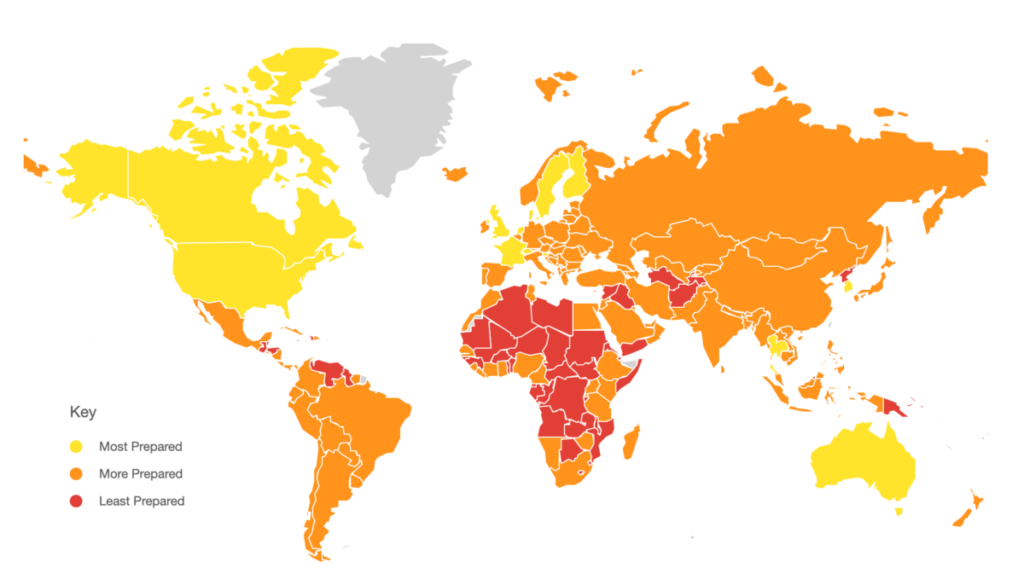
The Dutch are reasonably well-prepared in the event of an emergency, thankfully. A pandemic protocol has already been prepared and will be activated if necessary, including the deployment of quarantine areas. In fact, the 2019 Global Health Security Index ranked the Netherlands as the third-most prepared country for a pandemic in the world. However, the same index found overall none of 195 countries measured were adequately prepared for a pandemic.
What to do if you think you have the coronavirus in the Netherlands
Concerned you may be infected with the coronavirus? Firstly, don’t stress. There’s a far higher chance of having a common cold or the flu, and the symptoms are basically the same. Unless you’ve travelled to infected parts of Asia recently or been in close contact with someone diagnosed you’re more than likely safe.
You should only call the doctor if you’re also experiencing a fever of at least 38 degrees, a cough, shortness of breath, or tightness in the chest. This may still not be enough to get admitted. You must have been in a risk area or in contact with an infected person.
If these circumstances do apply, don’t go directly to the doctor. Call for a telephone consultation first and the doctor will make a decision to make a home visit. This will reduce the risk of infecting others.
Got any tips for dealing with anxiety around the coronavirus outbreak? Leave them in the comments below!
The recent triple storm combo, which managed to ruin the weekends (and cancel carnivals) has lead to many complaints.
Not all is that bad, however. If it does compensate in any way for your ruined weekend plans, the wind was so strong last weekend that it generated a record amount of electricity through windmills, RTL Nieuws reports.
So much electricity that the market price went below zero
Yep. It was so darn windy this past weekend, that the market price for electricity went below zero. Thank you storms, I guess? This happened on Sunday between 4 and 6 AM, when so much energy was produced that the cost of electricity went below 0, which meant that the companies that bought electricity also got a refund.
Negative prices happen rarely, happening twice in recent history, once last year in 2019, and in 2012.
There was an average of four gigawatts of energy this weekend being produced when the average is usually around 1.2 gigawatts. More than 30% of all electricity was produced by the wind turbines on Sunday, which is a record.
Part of the reason why we see this spike in electricity production is not just due to the winds, but due to the fact that over the past couple of years, more and more wind turbines have been added the to the energy grids.
February is always the peak month when it comes to the production of wind energy
February takes the prize in most data analyses as the month where the most wind energy usually gets produced. So for all the dark, cold, windy Dutch winter that we get, there’s at least this plus side. Not that it makes life more enjoyable, but still.
The reason why February is so windy is because of the jet stream, Martijn Dorrestein, meteorologist at Buiernadar explains. The jet stream, which is a strong wind current flowing eastwards over the Atlantic, is much more powerful during winter than during summer, due to the interaction between warm tropical air and cold polar air.
All that wind is not always good for wind turbines, however. If the wind blows too strongly, the turbines stop. This happened during Storm Dennis, as well as during Storm Ciara.
Should we pray for more storms to get cheaper electricity or should we just roll on into spring already? Let us know in the comments.
The Netherlands already has tight housing regulations when it comes to safety, but a new law will require the implementation of smoke detectors in every building of the Netherlands, reports NOS.
The decision was made on the basis that in most fires people do not succumb to the flames, rather to the smoke.
Legislation for smoke detectors in newly-built buildings since 2003
There is some precedent to this law, as smoke detectors have been installed on every floor of new buildings since 2003.
The State Ministry of the Interior and Kingdom Relations, Raymond Knops, is the one behind this push for a change of legislation, and he is supported by research on the lethality of smoke in case of fire. His choice was also advised from the fire brigade, property owners and builders and the municipalities.
The implementation period will take a long time
In order to implement the new law, changes need to be made to the existing building decree. The change will take effect on July 1, 2022, giving homeowners enough time to prepare for the switch.
Preparations are also underway to make sure there will be enough smoke detectors to provide when the switch happens, as millions of more detectors need to be available in order to successfully transition to the new law.
The municipalities will be in charge in regards to how exactly to implement and regulate the new smoke detectors, with Minister Knops stating that everyone must comply with the new regulation.
Happy with the new policy, or should the Netherlands take even more measures for safety? Let us know in the comments.
The NS is notorious for their high transportation prices. In an attempt to appease the crowds, they are planning on rolling out cheaper tickets for young people.
It’s easy to be turned off by the prospect of train travel in the Netherlands when you look at the exorbitantly high prices. Certainly, the services provided are (mostly) great, but nevertheless, for some, the prices can be an impediment from travelling across the Netherlands.
Young people between 12 and 18 years old will benefit from the new prices
NS will implement new tickets for those aged between 12 and 18-years-old, in a bid to allow greater mobility for younger people, according to NOS.
The new tickets will be implemented this summer. One of the tickets will be a day ticket worth 7.50 euros, allowing for unlimited travel for youth outside rush hour. The other ticket is a weekend card worth 15 euros, used to go to any station in the country during the weekends. Not bad NS, not bad.
To illustrate just how expensive it is to travel with a family with two children, NOS gave the following example. If a family with 2 children were to travel from Eindhoven to Amsterdam, they spend more than 80 euros (!) just one way. 160 euros to go to Amsterdam and back is surely a bit excessive. With the new changes, one way it will be 56 euros. Still quite expensive, but marginally better.
In proof of nobility and grace, NS will not make other tickets more expensive to compensate for the changes
NS is demonstrating their kindness by stating that they will not make tickets more expensive elsewhere to make up for the changes, which is of course, very beautiful on their side. Instead, they are hoping that these changes will simply lead to more youngsters choosing to go by train, as their research suggested that youngsters would like to travel more if only the trains were cheaper.
Do you travel often by train? How do you use those sweet deals to make it cheaper? Let us know in the comments.
As of now, there are 2.3 million migrant workers in the Netherlands who are unaccounted for.
What this means is that while they are registered through the RNI (non-resident’s registration) and have a B.S.N., their address is unknown, NOS reports.
Difficult to check for exploitation
Exploitation of migrant workers is not something new, and can happen quite often, especially in work in deposits, slaughterhouses and agricultural greenhouses. However, because many of the migrant workers do not have an address in the Netherlands, it is hard to verify if they are truly being exploited or not.
As such, it is also unclear if these migrant workers are still in the Netherlands, or have left for their home countries.
What is the RNI?
The way the RNI functions is for those who do not necessarily live in the Netherlands, but receive money here and therefore need a B.S.N., such as people who earn their pension from here. Therefore they do not need to have an address in the Netherlands where they are registered as a resident.
This system then makes it difficult to check out what the migrants are doing. Normally, they need to register to the municipality if they plan to stay after 4 months, but because there is no way of locating their whereabouts, chances of exploitation can be quite high.
A professor of human trafficking and globalization at the University of Tilburg, Cony Rijken, also shared her concern about the RNI, as it is a massive blind spot in the protection of migrants by making them an “invisible group”. She urges that we take into consideration the presence of these people in the country, as they are vulnerable to fraud and exploitation.
Should the government implement better policies to keep track of migrant workers in the Netherlands? Let us know in the comments.
After some free things to do in March in the Netherlands? It’s not long to wait until winter is over and we can finally get this cold spell out of the way. To prepare you for coming out of hibernation we’re bringing you some free things to do in March in the Netherlands to brighten your wintery mood!
Finances finally back to normal after those dreaded January debts? Everybody loves a freebie anyway (especially the Dutch)! The excitement is beginning to rise, as spring is coming which means we can talk about tulips, and even cheese. You heard right, it’s the perfect season for stereotypical Dutch events!
Here’s four free things to do in glorious March in the Netherlands!
WHEN: Tuesday, March 17 WHERE: Most cities in the Netherlands, especially the bigger ones!
Ah, the Irish. They sure do know how to put on a good party. Why else have an Irish pub in almost every single country!? Well in the middle of March it’s that time of year again. Large cities across the Netherlands will be holding events to celebrate this Irish-day. Some of these have ticket prices, but other Irish pubs are holding free entry events. Great if you’re not Irish and even greater if you are!
Events include Dutch and Irish singers, Irish dancing and the usual Irish boozing (basically getting extremely merry). Most cities have at least one Irish bar, so check out what events are on in your local bar and fingers crossed yours is one of the free ones. 😉
WHEN: March 27 – September 25 WHERE: Alkmaar, of course!
Yes, it’s time — the cheese markets are making a come back! The cheese market is on every Friday from 10:00 until 13:00 (and every Tuesday evening in July and August from 19:00 to 21:00).
Cheese markets are a traditional Dutch experience, with lots of different Dutch cheeses stacked on the streets and cheese hauling carriers hobbling over the cobblestones. A visit to Alkmaar includes witnessing cheese maids walking around the market and traders trading their cheeses.
There also have a variety of programs and performances on. This cheese-market tradition is said to have gone on since the 1500’s. So if you’re after a traditional asf experience, head to Alkmaar at the end of this month! One of my favourites out of all of the free things to do in March in the Netherlands.
Fields of Keukenhof
Image: susan-lu4esm/Pixabay
WHEN: late March (typically)
WHERE: Keukenhof, just outside of Amsterdam
The Keukenhof opens its doors at the end of this month (how has this come so fast)!? If money is tight, then there is a way of seeing these tulips for free. Every year, the fields surrounding the Keukenhof are layered with tulips, prepping for tulip season. This is usually the region where people grab their bikes and cycle alongside the fields with cameras in hands.
You’ll know you’re there when you see a long queue of cars. People pull over at the side of a very narrow road to take pictures and clog the road. I was one of these people and ended up sitting in traffic for at least 40 minutes.
Usually, around this time of year, area shots emerge of the tulip fields and that way you’ll know whether the tulips are ready to view. Last year I went around Keukenhof’s opening period (March) and I witnessed a few tulips, so it’s worth keeping an eye out (it varies every year due to changeable weather). If not, there is always April guys and that’s only next month!
WHEN: Saturday, March 20, 2020, 10:00-16:00 WHERE: Various locations throughout Amsterdam
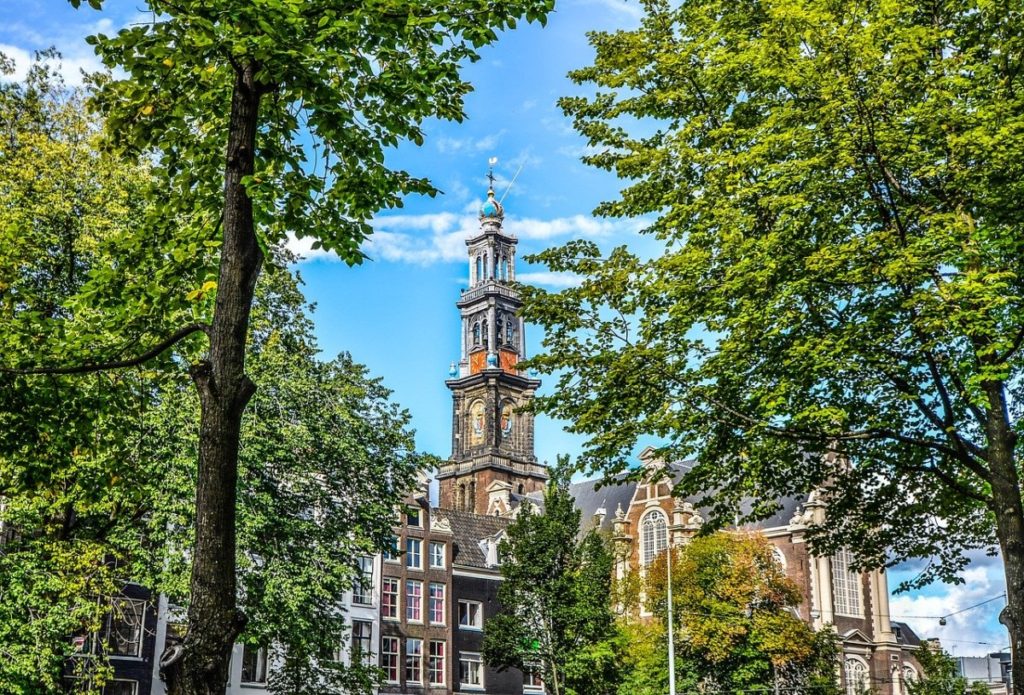
Want to see Amsterdam from above – for free? Get these stunning views on Open Toren Dag, the one special day a year when multiple towers and historical places in the Netherlands throw open their doors gratis.
This year there are 21 participants, more towers than you can climb in a day! They’re also hosting a photo and film contest, a guided walk, and some restaurant discounts! Check out their website for all the information and the digital map.
Have a great March checking out these great free events! What are you looking forward to most? P.S. – don’t panic, spring and summer are just around the corner!











.jpg)
