

It is possible to spot Dutch architecture in South Africa, thanks to the long and complicated history between these nations.
In many ways, the influence of Dutch colonialism has shaped the multi-cultural demographics of South Africa. It even produced the Afrikaans language.
But what is lesser known is that the Dutch settlers left behind an architectural legacy in South Africa that you can still see today. 🏠
Wine estates with Cape Dutch architecture
South African wine is world-renowned, with the hills and valleys of the Cape providing the perfect landscape and climate for excellent grapes.
Many of these farms were established in the 1600s by retired Dutch East India (VOC) employees — Dutchmen tired of the merchant life and ready to settle down under the warm African sun. ☀️
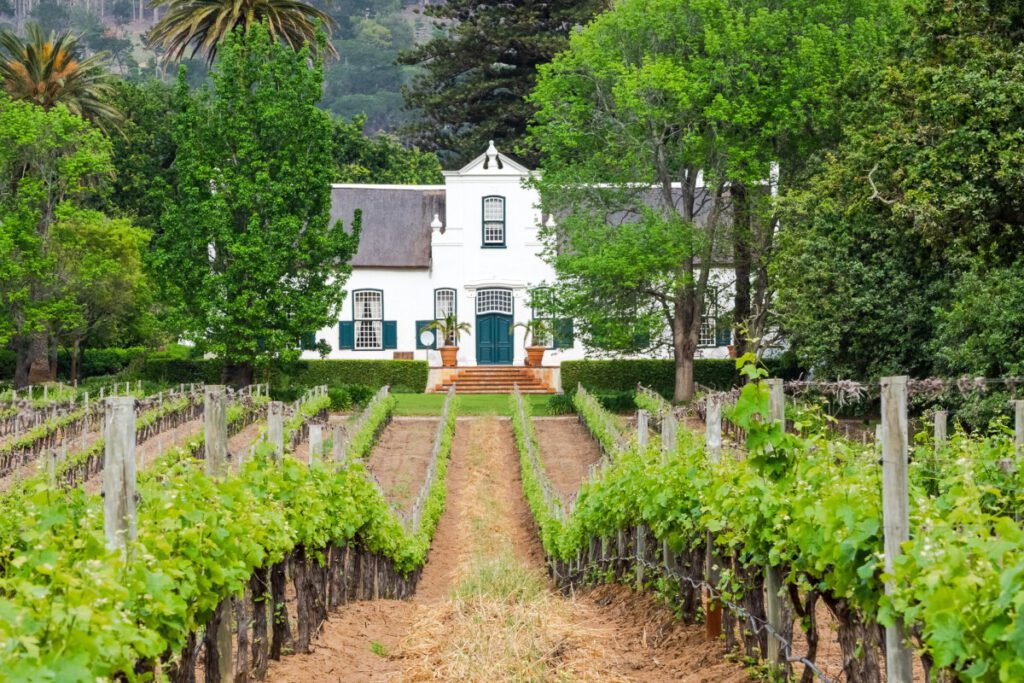
This style is known as Cape Dutch architecture, and the Dutch influence can be seen in the facades and roofs of the buildings.
Of course, these are wider than the skinny Amsterdam houses you’ll find in the Netherlands and were painted white to help keep them cool under the boiling heat.
The Dutch fort in Cape Town
The Dutch East India Company built Kasteel de Goede Hoop (Castle of Good Hope) in what is now Cape Town. Built between 1666 and 1679, the castle is the oldest surviving building in South Africa.
But this was not the first military structure built by the Dutch here.
In 1652, Jan van Riebeeck, commander of the Cape, built Fort de Goede Hoop upon his arrival. As Dutch settlers built the fort with just clay and timber, plans to build Kasteel de Goede Hoop in stone quickly materialised.
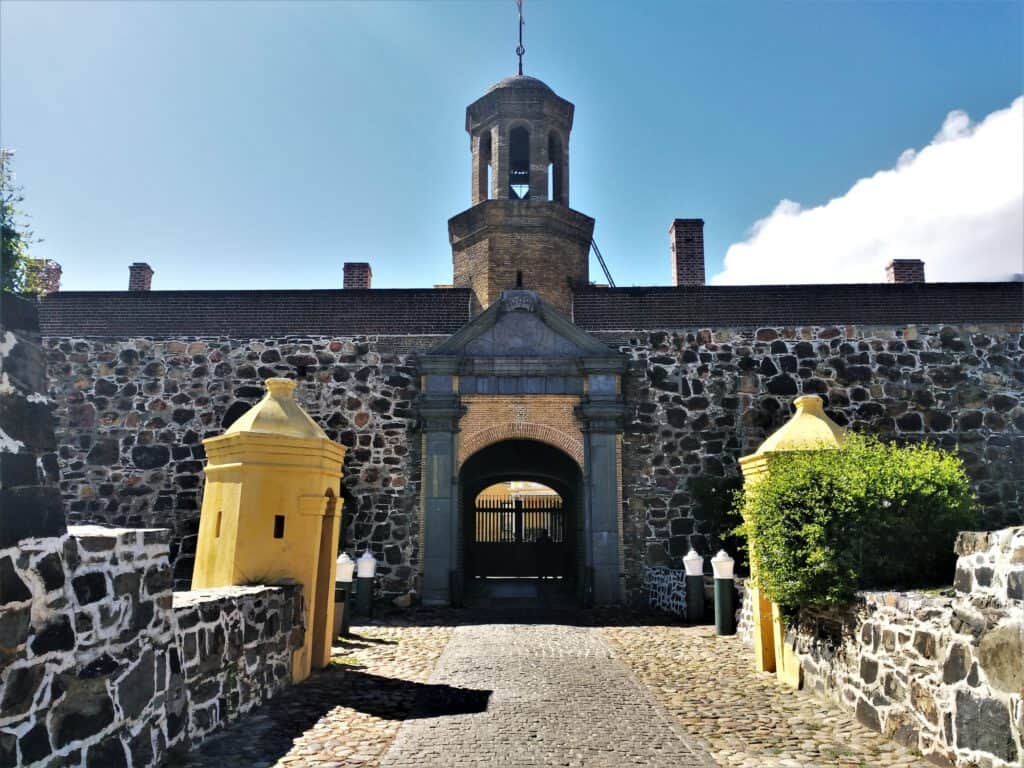
Notice the star shape of the fort? The triangular bastions are typical of other Dutch forts like Fort Bourtange in Groningen.
READ MORE | 8 carbon copies of the Netherlands across the world

Over the years, the restoration of this site has been deeply controversial. The castle represents colonial powers, which uprooted the Khoekhoe people from their homeland and forced many to become serfs on Dutch farms.
On the other hand, many Afrikaans people see Jan van Riebeeck as the founding father of South Africa.
Dutch-inspired Stellenbosch University
Below is an image of the old administrative building of Stellenbosch University (SU), which should remind you of a certain government building in The Hague. 🤔
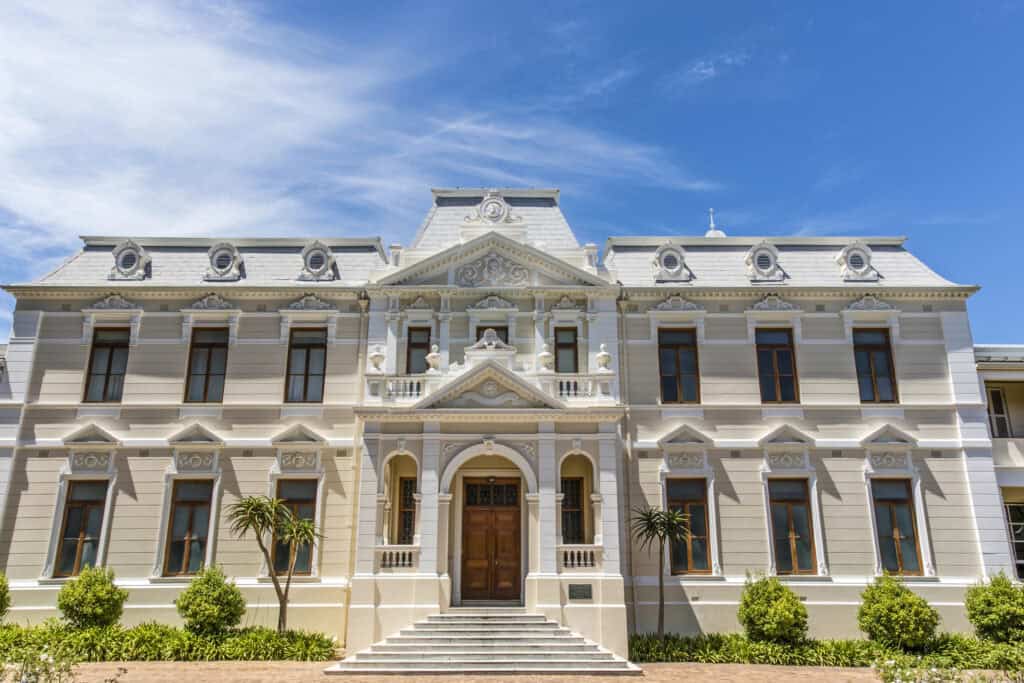
In 1679, the Dutch Governor of the Cape Colony, Simon van der Stel, established the town of Stellenbosch. He named it after himself and the bos (forest) that once stood there.
But it was only in 1866 that a secondary school known as Het Stellenbossche Gymnasium was built there. It was transformed into Stellenbosch University much later. 🎓
READ MORE | Culture shock when moving to the Netherlands: from South Africa to Holland

Stellenbosch is the oldest university in South Africa and is consistently one of the highest-ranking universities in Africa.
Fishermen’s cottages in the Eastern Cape
These humble homes along the eastern coastline of the Cape are simpler than the grand wine estates we saw earlier. The natural harbours drew Dutch fishers to the area, who built settlements like Struisbaai.
Struisbaai has the longest beach in the Southern Hemisphere at 14 kilometres long. It was a notoriously hazardous area to sail through, with at least 30 vessels wrecking there since 1673.
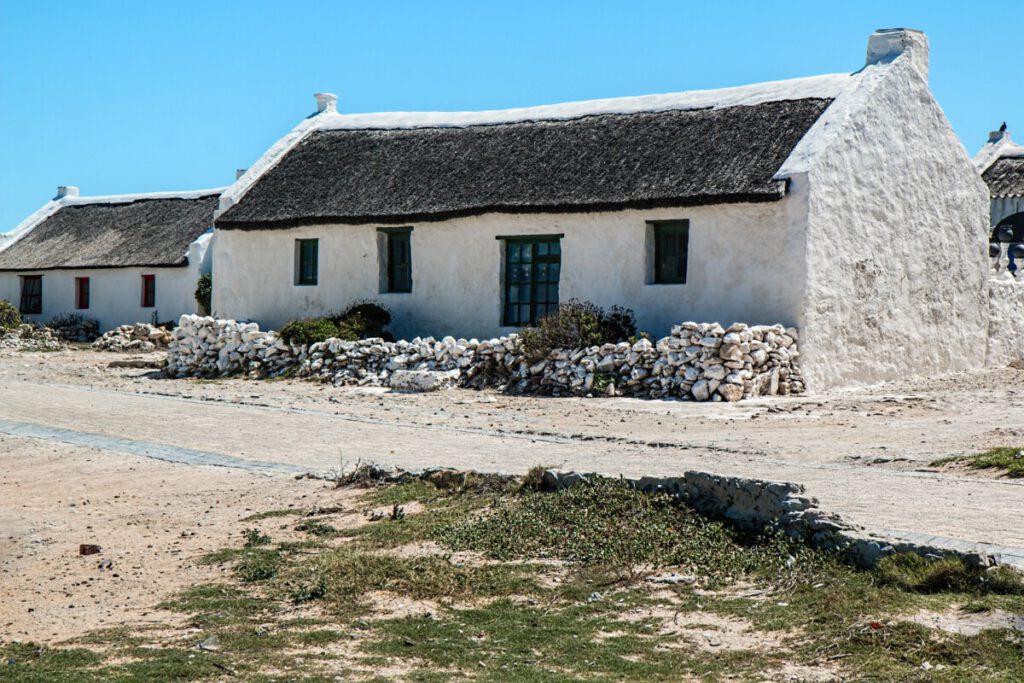
Today, Struisbaai remains a fishing town mostly untouched by the perils of urbanisation.
READ MORE | Afrikaans and Dutch: the differences and similarities
Looking at the houses, you’ll see echoes of traditional Dutch cottages, but again, painted white for the heat. Thatched roofs also help to keep the interior cool.
Bo-Kaap’s colourful houses
Bo-Kaap (meaning “above the Cape” in Afrikaans) is a residential area in Cape Town with a history of vibrant houses. It sits on a hill overlooking the city centre.
It was formerly known as the Malay Quarter because enslaved people brought from Indonesia and Malaysia by the Dutch lived here.
A mixture of Cape Dutch and Cape Georgian styles, the houses were originally painted white. But when slavery in the British colonies was abolished in 1833, and ex-slaves were finally permitted to buy property, they painted these houses in every colour of the rainbow to celebrate their freedom.
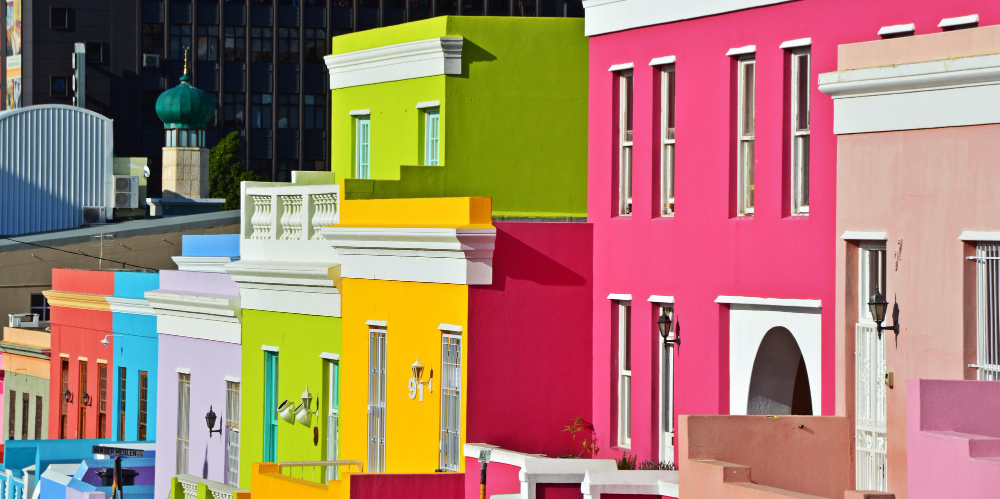
Today, Bo-Kaap is the birthplace of Cape Malay culture.
According to the South African Heritage Resources Agency, this is the oldest surviving residential neighbourhood in Cape Town. It was declared a National Heritage Site in 2019.
Whilst South African architecture is certainly unique, the Dutch influence is undeniable. These are just a few of our favourite examples of Dutch architecture in South Africa, but there are many more!
Do you know any more examples of Dutch architecture in South Africa? Tell us in the comments below! 💬