
Paying taxes in the Netherlands as an American can be daunting: after all, you’re dealing with two governments at once.
Here’s what you should know as an American tax resident in the Netherlands.
The Dutch tax system is good at what it does. It’s organised, largely digital, and, once you get the hang of it, not as painful as you’d expect.
The problem for Americans is that you don’t just swap one tax system for another when you move (sorry, guys). You inherit both.
This guide breaks down:
- what that means in practice,
- where Americans tend to get tripped up, and
- how to keep both the Belastingdienst (the Dutch Tax and Customs Administration) and the IRS reasonably happy.
The thing nobody warns you about: you still owe the IRS
Here’s the part that catches most Americans off guard. The US is one of only three countries in the world — alongside Eritrea and North Korea — that taxes based on citizenship rather than where you actually live.
Yup, every other country on earth lets you off the hook once you’ve moved. The US does not.
That means even after you’ve registered in Amsterdam, opened a Dutch bank account, and started paying Dutch income tax, you still have to file a US federal tax return every year. Your worldwide income is still reportable to the IRS, full stop.

I’ll be honest — I had no idea about this before I moved. I assumed filing US taxes was something I’d leave behind with my American health insurance premiums and obscenely large portion sizes.
Here’s the good news: filing doesn’t usually mean paying. Around 62% of Americans filing from abroad owe $0 in US federal taxes after applying available credits and exclusions.
So, ultimately, it’s more of a paperwork obligation than a financial one — but it’s one you can’t ignore.
How the Dutch tax system actually works
The Netherlands organises income into three categories, called boxen (boxes). Each box has its own rules and its own tax rate. Think of it as three separate tax returns living inside one filing.

Box 1 covers income from work and homeownership. This is where most of your tax life happens. Rates are progressive:
- up to €38,441 is taxed at 35.82%,
- income between €38,441 and €76,817 at 37.48%,
- and anything above that at 49.50%.
Yes, that top rate is significantly higher than the US federal top rate of 37%. Welcome to Europe.
Box 2 covers income from a substantial interest in a company — specifically, owning 5% or more of shares in a business. It’s taxed at:
- 24.5% on the first €67,804 of income,
- and 31% on anything above that.
Box 3 is the tricky one. This category taxes your wealth — savings, investments, second properties — not based on what you actually earned, but on what the Dutch government assumes you earned.
There’s a tax-free threshold of €57,684 per person (€115,368 for fiscal partners), so smaller savers are mostly untouched.
The expat perks you should know about
Before you start mourning that 49.5% top rate, there are two major tools that can dramatically reduce your Dutch tax burden. Plus, one that can wipe out your US bill entirely.


The 30% ruling
The Dutch 30% ruling allows qualifying expats to receive 30% of their gross salary tax-free. For high earners, it’s one of the most generous expat tax benefits in Europe.
There are a few key requirements. First, you must be on a Dutch payroll. There are two ways Americans typically end up there.
- If you’ve been hired by a Dutch employer from abroad, you may qualify directly.
- If you’re arriving via the DAFT visa and have set up a BV (besloten vennootschap, a private limited company), you can also qualify, as employing yourself through your BV technically puts you on a Dutch payroll.
For both qualifying routes, some conditions are the same: you must have lived more than 150 kilometres from the Dutch border for at least 16 of the 24 months before starting work, and your salary must meet the minimum threshold — €46,660 per year for those aged 30 or over.
The discount is for 30% of your salary to be tax-free through 2026, dropping to 27% from 2027.
From January 1, 2025, recipients can no longer opt for partial non-resident status for Box 2 and Box 3 income, which previously allowed some foreign assets to sit outside the Dutch tax scope. If you have significant investments or shareholdings, that change matters.
The Foreign Tax Credit
For Americans, the Foreign Tax Credit (FTC) is your best friend. It lets you offset your US tax bill dollar-for-dollar with Dutch income taxes already paid.
Since Dutch rates are generally higher than US federal rates, most Americans in the Netherlands can use the FTC to reduce their US liability to zero. You claim it with Form 1116.

Alternatively, the Foreign Earned Income Exclusion (FEIE) lets you exclude up to $130,000 of foreign-earned income from your US taxable income in 2025.
The FTC tends to work better for higher earners in high-tax countries like the Netherlands, but the right choice depends on your specific situation.
The FBAR and FATCA problem
These two acronyms trip up more Americans abroad than almost anything else. They’re not income taxes: they’re reporting requirements. And failing to file them can result in alarming penalties.
FBAR (FinCEN Form 114) must be filed if your foreign bank accounts — combined — exceeded $10,000 at any point during the year. Not at the end of the year. At any point. It’s filed separately from your tax return and is due by April 15, with an automatic extension to October 15.
FATCA (Form 8938) kicks in at higher thresholds: $200,000 in foreign assets for single filers living abroad, or $400,000 for married filing jointly. This one is attached to your regular tax return.
Neither of these is particularly complicated to file. They’re just easy to forget about — especially if you’re not aware they exist. Now you are.
How to file your Dutch taxes: the basics
The Dutch tax year runs from January 1 to December 31. You file your return for the previous year, starting from March 1. Filing by April 1 guarantees a tax assessment before July 1.
The hard deadline is May 1; miss it without first requesting an extension (uitstel), and you risk a penalty from the Belastingdienst.
To file, you’ll need your DigiD (your Dutch digital identity), which you can register for at digid.nl. Americans living in the Netherlands can apply for a standard DigiD once they have their BSN (burgerservicenummer, or citizen service number).
If you haven’t sorted your BSN yet, time to get it done! After all, that’s the starting point for most of Dutch bureaucratic life.
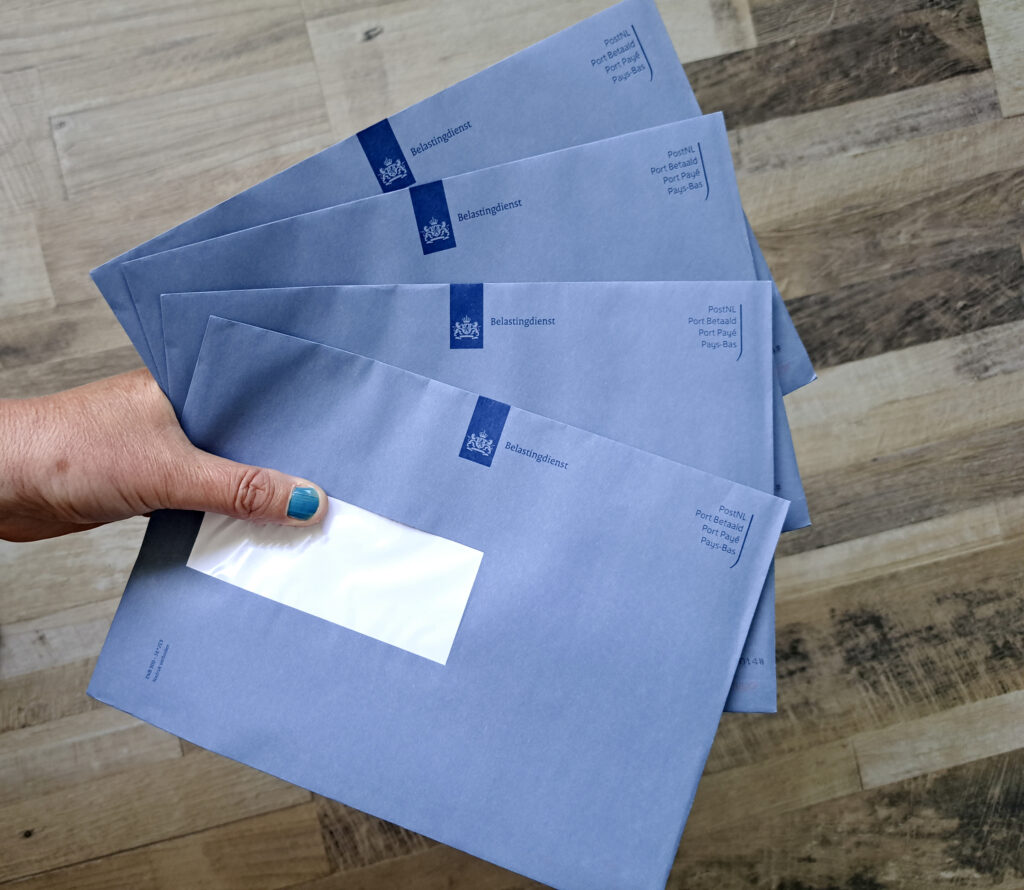
Once you’re logged in to Mijn Belastingdienst (the online tax portal), your return will be partially pre-filled with data the Dutch government already has from your employer, bank, and municipality.
It’s one of the nicer surprises of the Dutch system. For me, it was a stark contrast to starting from scratch every April in the US. Here, you just check the pre-filled details carefully, add anything that’s missing, sign digitally, and submit.
Keep in mind: if you moved to the Netherlands partway through a tax year, you’ll need to file an M-form (Migratieformulier) rather than a standard return. It covers the period before and after your arrival, and is primarily in Dutch.
How Social Security works for Americans in the Netherlands
One thing the US and the Netherlands have arranged is a totalization agreement that prevents Americans from paying into both countries’ social security systems simultaneously.
READ MORE | The ultimate guide to pensions in the Netherlands
You’ll contribute to one or the other, not both. In practice, most Americans working in the Netherlands pay into the Dutch system.
What to watch out for
A few things that tend to catch Americans out.
Timing matters for investments. Box 3 taxes your assets as they stand on January 1 each year. If you have a large investment account, that date is the one that counts.
Dutch mutual funds can trigger US penalties. Many foreign investment vehicles are classified as PFICs (Passive Foreign Investment Companies) by the IRS and are subject to punitive tax treatment. Before investing in Dutch funds, it could be a good idea to get advice from someone who understands cross-border taxation.
State taxes don’t disappear. Some US states continue to tax former residents even after they’ve moved abroad. The five most aggressive — often called “sticky states” — are California, New York, Virginia, South Carolina, and New Mexico. Each has its own rules, but the common thread is that simply moving abroad isn’t enough to sever tax residency; you usually need to formally establish domicile elsewhere first. If you moved to the Netherlands directly from one of these states, it’s worth getting advice before assuming you’re in the clear.
Should you get a tax advisor?
For your first year, it’s not a bad idea. Filing Dutch taxes as an American involves more moving parts than either system does on its own. A specialist in US-Dutch cross-border taxation could more than pay for themselves.
After that first year, once you understand the shape of your situation, you can check in again and decide whether to handle it yourself or with help.
Already navigated Dutch taxes as an American? Share what you wish you’d known in the comments below.
Frequently asked questions about taxes in the Netherlands for Americans
Do Americans living in the Netherlands still have to file US taxes?
Yes, Americans living in the Netherlands still have to file US taxes. Unlike almost every other country in the world, the US taxes based on citizenship rather than where you live, meaning that the obligation follows you abroad. The silver lining is that tools like the Foreign Tax Credit and the Foreign Earned Income Exclusion allow most Americans abroad to end up with a $0 bill. The paperwork is the burden, not usually the payment.
What is the Dutch box system?
The Dutch box system is how the Netherlands splits income into three categories, each taxed differently. Your salary sits in Box 1, shareholdings in Box 2, and savings or investments in Box 3.
Can Americans in the Netherlands qualify for the 30% ruling?
Yes, Americans in the Netherlands can qualify for the 30% ruling, but it depends on how you’re set up. The ruling is available to anyone on a Dutch payroll, whether that’s through a Dutch employer who hired you from abroad, or through your own BV if you’ve gone the DAFT route (though ZZP sole traders do not qualify). On top of the payroll requirement, you’ll also need to meet the distance rule and the minimum salary threshold to qualify.
What are FBAR and FATCA, and do they apply to Americans in the Netherlands?
FBAR and FATCA are US government reporting requirements, and yes, they do apply to Americans in the Netherlands. FBAR covers foreign bank accounts and applies when your combined balances exceed $10,000 at any time during the year. FATCA casts a wider net, covering a broader range of foreign assets at higher thresholds. The penalties for missing either can be severe, which is why it’s worth treating them as seriously as your actual tax return.
When is the deadline for filing a Dutch tax return as an American living in the Netherlands?
The hard deadline for filing a Dutch tax return is May 1 of the year following the tax year in question. Filing by April 1, though, is actually the date that guarantees a timely assessment, which matters if you’re expecting a refund. If you need more time, you can request an extension (uitstel) before May 1. One thing Americans often don’t realise: your first year here may require a special M-form if you arrived partway through the year, which is more involved than a standard return and worth getting professional help with.