
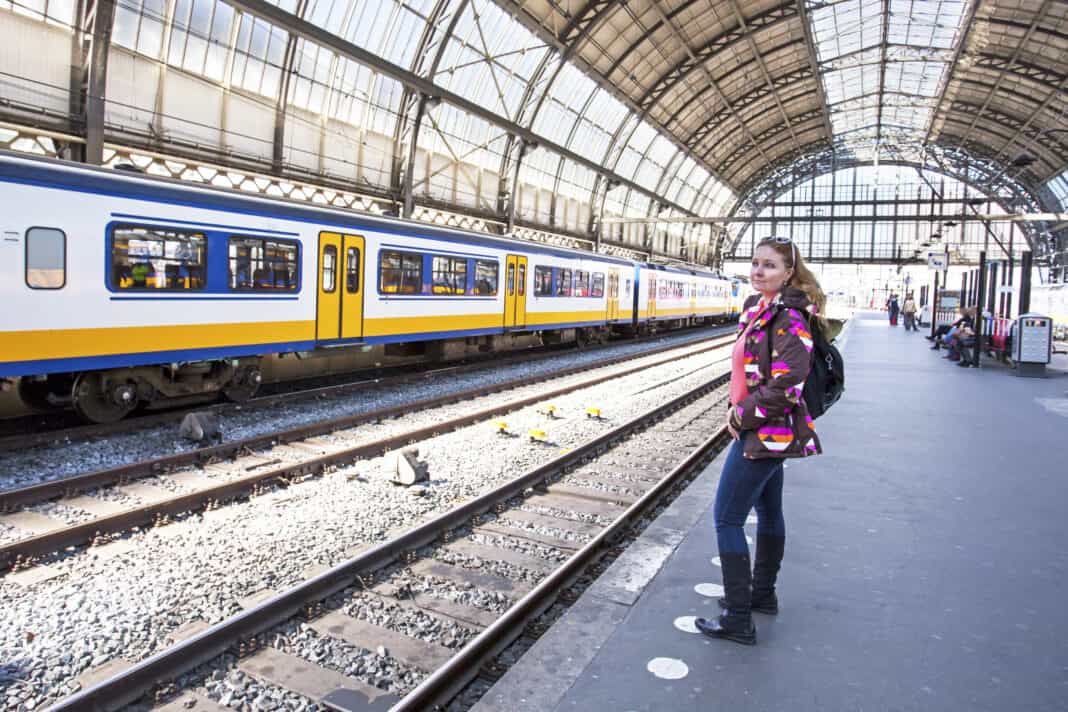
Bad news if you rely on public transport to get anywhere: on Wednesday, September 9, trains, trams, buses, and metros across the Netherlands are set to stop running for a full day.
The nationwide OV (public transport) strike has been called by the FNV, the country’s largest trade union. It’s a 24-hour action affecting pretty much every way of getting around without a bike or a car.
So before you show up at the station on Wednesday morning wondering where your train went, here’s what’s actually happening during the strike in the Netherlands and how to plan around it.
What’s shutting down (and what isn’t)
Let’s start with the big one: trains. According to NS, no NS trains will run anywhere in the Netherlands all day.
For NS train staff, the walkout runs from 2 AM on Wednesday to 2 AM on Thursday. The railway operator actually asked the union to shift the timing so that Thursday’s service could get back to normal as quickly as possible.
There’s one exception to the shutdown. The Airport Sprinter between Amsterdam Centraal, Schiphol, and Hoofddorp will still run four times an hour, so at least a flight isn’t automatically a lost cause.

International trains are largely off, too. EuroCity, Eurocity Direct, Eurostar, ICE, and Nightjet services won’t run in the Netherlands, and neither will the regional Roosendaal to Antwerp line or the Drielandentrein (three-country train) between Liège and Aachen.
If you’ve booked an international ticket for that day, check the rebooking and cancellation terms directly with NS International before you travel.
It’s not just the trains
Here’s where it gets messy for daily commuters. This is a full public transport strike, so city and regional networks are hit as well.
In Amsterdam, GVB metros, trams, and buses stop from 4 AM on Wednesday, and the pont (ferry) services across the IJ and the North Sea Canal won’t sail either. Normal service returns from 4 AM on Thursday, September 10.
In The Hague, HTM trams and buses don’t run from 4 AM on Wednesday until 4 AM on Thursday. In Rotterdam, RET buses, trams, and metros are out all day, and every metro station will be closed.
Regional operators like Arriva, Qbuzz, Keolis, and U-OV are a patchier picture. Many of their trains won’t run at all, while some bus routes depend on whether drivers turn up, so nothing is guaranteed.

The safest move is to check your specific journey in the 9292 journey planner shortly before you leave, since operators are updating their info as the day approaches.
One bright spot near Rotterdam
If you’re in the Rotterdam or Drechtsteden region, the Waterbus is your friend. It’s due to sail on its normal timetable throughout the strike, making it one of the few reliable options that day.
Not much comfort if you’re in Groningen, admittedly. But it’s something.
Don’t count on the taxi refund
In the past, if a train strike forced you into an expensive alternative, you could claim up to €25 from NS towards the cost.
Not anymore. As RTL Nieuws reported, NS has scrapped that compensation scheme, calling it complicated, labour-intensive, and easy to abuse.
The numbers help explain why. After June 2025 strikes, NS received around 180,000 compensation claims worth roughly €4 million, of which it approved about €2.8 million.

So for the September 9 strike, there’s no €25 waiting for you. If you can dust off the bike instead, this is the day to do it.
Why is the public transport strike happening?
This isn’t really a dispute with NS or the transport companies at all. It’s aimed at the government.
FNV members are protesting against cabinet plans to cut back social security, including a higher pension age, lower severance pay, and changes to unemployment and disability benefits (the WW and WIA).
The government argues the reforms are needed to keep benefits affordable, but unions say they gut the safety net that every worker relies on when illness or job loss strikes.
Interestingly, the leaked government budget suggests the cuts will be smaller than first feared. The FNV is pressing ahead anyway, arguing that around 70% of the planned cuts are still on the table.
As FNV board member Henri Janssen put it when the strike was announced, the plans undermine the livelihoods of millions of workers and their families, which, the union stresses, includes passengers too.
And this may not be the last of it. The FNV has warned that if the government doesn’t back down, more strikes could follow across sectors like waste processing, the ports, and cleaning.
How to get around during the September 9 strike
The short version: assume public transport isn’t an option and plan accordingly.
Work from home if you can, cycle if it’s realistic, or arrange a lift. If you absolutely must travel, check 9292 or the NS app right before you set off, because the situation with regional buses in particular could shift.
NS expects normal service to resume on Thursday, September 10, but it’s worth checking the journey planner before you head out that morning, just to be safe.
Will you be swapping the train for two wheels on Wednesday, or have you managed to dodge the chaos entirely? Let us know in the comments how you’re getting around.