
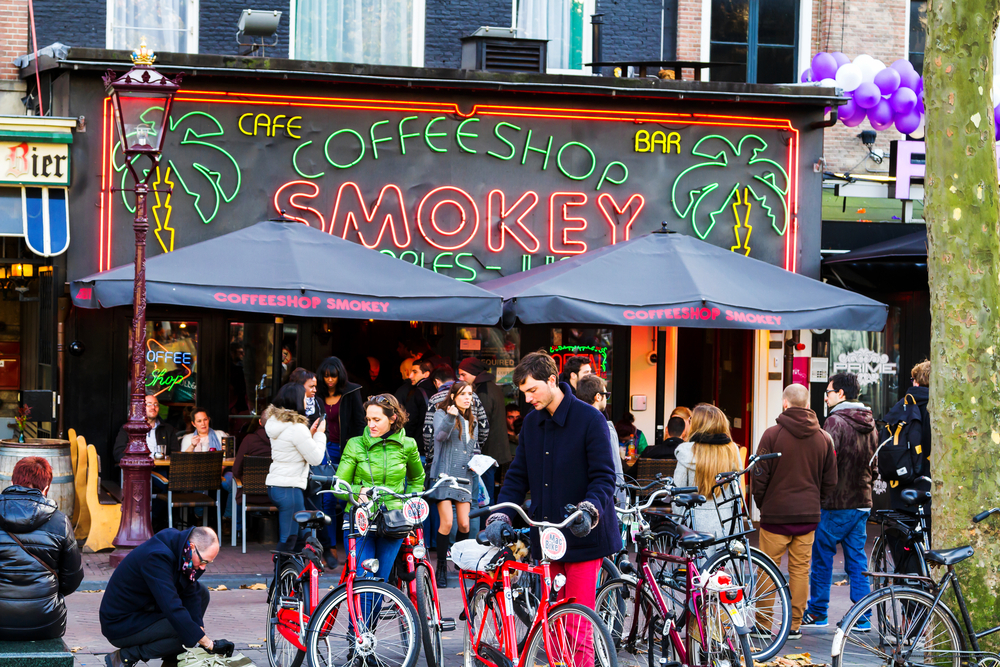

After years of talk, Amsterdam may finally ban tourists from buying weed in coffeeshops.
Remember when Amsterdam’s mayor originally wanted to ban tourists from coffeeshops? That was 2021. And 2022. The plan kept popping up like a persistent street dealer, only to fade away again.
But with municipal elections scheduled for March 18, a narrow majority voting for implementing the so-called ingezetenencriterium (resident criterion, or I-criterium) could emerge from the ballot box, reports Het Parool.
What’s the I-criterium?
The I-criterium isn’t new. It’s been Dutch law since 2012, allowing municipalities to restrict coffeeshop access to only residents of the Netherlands.
The system was introduced in southern provinces to deter Belgian, German, and French tourists from driving across the border to stock up on weed.
Today, only a handful of Dutch cities actively enforce it. Amsterdam doesn’t — yet.

The political chess match
The PvdA, currently Amsterdam’s largest party, wants the I-criterium implemented in the city centre, Het Parool reports.
D66 opposes it, while GroenLinks hasn’t committed yet, despite a plan to merge with the PvdA after the elections.
Meanwhile, the VVD and CDA want to go further and implement it across all of Amsterdam. If the votes fall right, Mayor Femke Halsema could finally have her majority.
However, experts are divided on whether it’ll work or just unleash absolute chaos on the streets.
“It’ll be a blessing for the city”
Dingeman Coumou from the residents’ organisation d’Oude Stadt is blunt. Municipal research suggests millions fewer tourists would visit if coffeeshops were off-limits, and good riddance to the party crowd.
“It’ll be a blessing for the city, I can guarantee you that,” he tells Het Parool.

Pieter Tops, emeritus professor of organised crime studies, also believes it could work, but only with serious commitment.
“The police have to be able to act effectively and have the support of local politicians, and you have to be persistent. You can’t achieve this in a year”, he tells Het Parool.
“Complete symbolic politics”
Meanwhile, Joachim Helms from the Green House coffeeshop chain calls it “complete symbolic politics.” His concern? Street dealers.
“Thousands of street dealers are standing by, ready to take over sales to tourists,” he tells Het Parool, pointing to COVID lockdowns when dealers appeared immediately with price lists.
Dirk Korf, emeritus professor of criminology, agrees. “The plan is unenforceable. Who’s going to enforce it?” he asked, predicting street trade would flourish.
He points to Lelystad: the city had no coffeeshop for years but plenty of street dealers. When the first coffeeshop opened, the dealers vanished.

Meanwhile, Maastricht, which enforces the I-criterium, now has to deal with the issue of street dealers. “Controlling that was impossible with current police capacity,” crime reporter Bas Dingemanse from De Limburger tells Het Parool.
How could this affect internationals?
The I-criterium isn’t a ban on international residents, but on tourists.
Anyone registered with a Dutch municipality’s BRP (population register) would be allowed access to coffeeshops, regardless of nationality.
That includes international students, expats, and anyone living in Amsterdam legally. The ban targets day-trippers, holiday visitors, and anyone not registered as a Dutch resident.
However, whether this tourist ban is even enforced depends on who wins on March 18.
Do you support banning tourists from coffeeshops? Tell us in the comments below!

Sarah. I appreciate dutchreview.com. Thank you.