

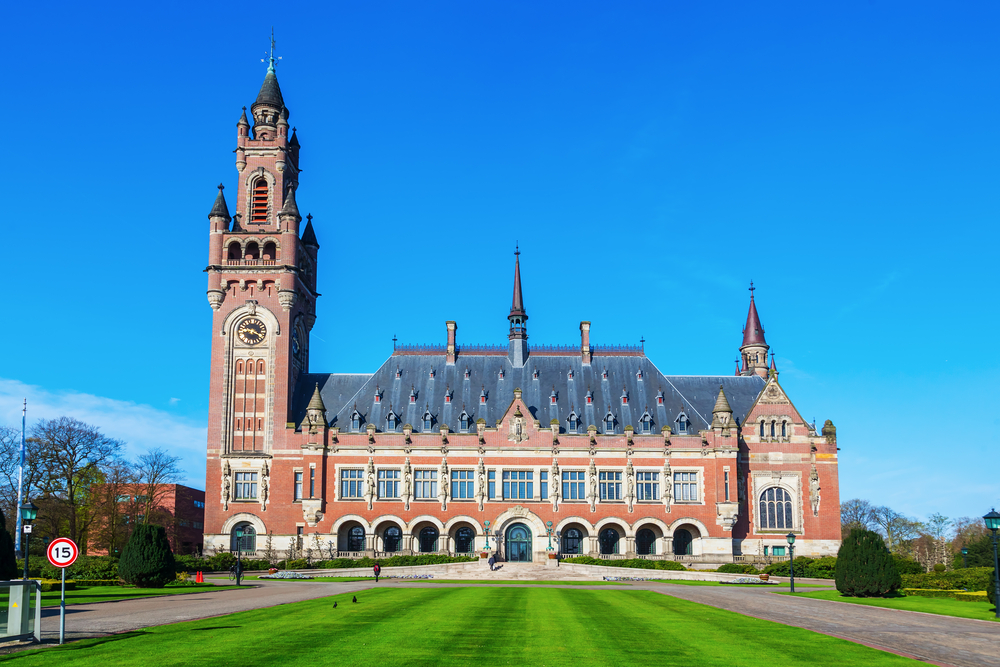

Dutch citizens are increasingly worried about the breakdown of the international legal order and have little confidence in the country’s ability to weather what’s coming.
These are the findings of the latest report from the Clingendael research institute, which polled over 4,000 Dutch citizens on potentially threatening and hopeful international developments.
The threat of the “erosion of the international legal order” rose from 21st to 3rd place compared to previous years, sitting just behind cyber attacks and physical destruction of vital infrastructure, reports NOS.
Why the sudden change?
Over the course of the last five years, the international legal order has taken hit after hit — from Russia’s 2022 invasion of Ukraine to the ongoing conflicts in Gaza and Iran. And yet, belief in the global order largely persisted.
What’s changed now, according to lead researcher Christopher Houtkamp, is the positioning of the US on the global stage.
Washington has, in his view, made power politics a part of the international modus operandi, writes NOS.

READ MORE | The Netherlands is stuck between Trump and international law following Venezuela attack
In a conversation with NOS, Houtkamp says that major powers are “taking everything they can,” which is driving public perception of them as a threat — pointing to examples like US President Trump’s threat to annex Greenland.
International law professor Larissa van den Herik echoes this, telling NOS that the “US is withdrawing more and more, while the country has always been the sponsor of the international legal order.”
Where does the Netherlands stand?
Despite the Dutch constitution containing a provision explicitly tied to the development of the international legal order, citizens remain deeply uncertain about the country’s resilience.
READ MORE | How the Netherlands became home to the international city of peace and justice
Hybrid threats spanning cyber and physical sabotage continue to rank high on the list of concerns, alongside the threat posed by Russia.
Dutch confidence in a short-term recovery of the rule of law is minimal — 63% of respondents expect the deterioration to continue.
Room for hope
It’s not all doom and gloom, though. Dutch citizens point to further European integration, digital sovereignty, and greater resilience against cyber and hybrid threats as reasons for cautious optimism.
The Netherlands has already taken some steps in this direction in the recent fight over the digital platform DigiD.
READ MORE | Here’s how the Dutch government just made DigiD’s future America-proof
Professor Van den Herik’s opinion mirrors what the Canadian Prime Minister Mark Carney argued in his viral speech at Davos: that so-called “middle powers” need to step up.
@cbsnews "If we're not at the table, we're on the menu." Canadian Prime Minister Mark Carney accused President Trump of rupturing the world order through economic coercion, and warned that the world is in the midst of a “rupture, not a transition,” as great powers increasingly use economic integration as “weapons,” and cautioned that middle powers must act together or risk negotiating “from weakness.” #canada #usa #trump #europe #greenland ♬ original sound – cbsnews
“We need to cooperate much more strongly internationally and also bring in partners outside the EU,” she tells NOS. “Think of Canada, the United Kingdom, and Ukraine.”

The priority, she says, is clear: strengthening the European Union as a power bloc.
Where do you stand in this conversation on right vs might? Let us know in the comments.


Russia’s incasion of Ukraine and “conflicts in Gaza and Iran” ?
Russia’s invasion in Ukraine and Israel’s genocide in Gaza and America and Israel’s illegal war against iran. There, ftfy