
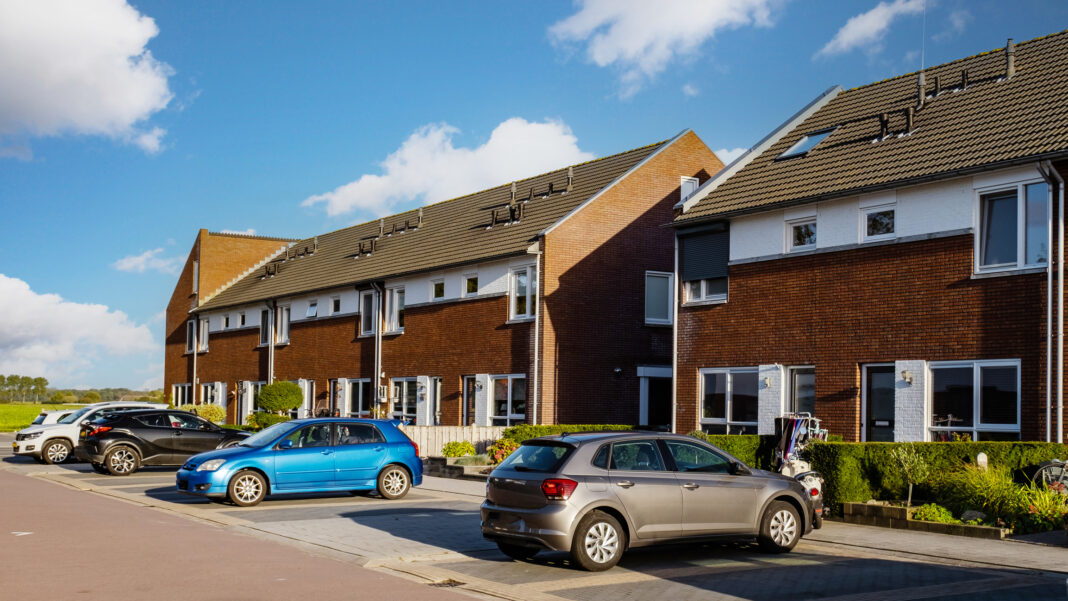
If you’ve been telling yourself, “Well, at least I’m not trying to buy a house right now,” we have bad news for you: renting in the Netherlands has officially caught up with the chaos.
A new report from rental platform Pararius shows that private sector rental prices in the Netherlands are now rising faster than even house purchase prices.
Over 42% of all private rental listings now cost more than €2,000 per month, up from 36.5% just a year ago. But wait — it gets worse.
What does renting actually cost you?
If we look at the average monthly rent in the unregulated vrije sector (private rental market), it’s officially hit €1,892. That’s an increase of €389 in just two years.
For you to qualify for a rental property, landlords typically require you to earn at least three times the monthly rent.
To put that into perspective, you’ll now need to prove a gross monthly income of €5,676 — well above the Netherlands’ predicted median monthly income of €3,625.

In other words, the Dutch rental homes are technically unaffordable for the average earner.
Where are rents the highest?
To absolutely no one’s surprise, Amsterdam holds its title as the most expensive city, with new tenants paying €28.53 per square metre.
Hot on its heels are Amstelveen and Haarlem, with renters paying an average of €24.17 and €24.05 per square metre, respectively.
However, rent is rising even faster in other cities, with Zwolle seeing a 21.1% increase in rental prices and Dordrecht experiencing an equally generous rise of 19.5%.
Things aren’t all doom and gloom, though.
Certain cities actually recorded a decline in rent per square metre, with the biggest drops in Bergen op Zoom (11.9%) and Alkmaar (7.2%).

What help is out there for struggling renters?
The people hit hardest are middle-income earners: too well-paid for sociale huur (social housing), but still falling short of what private landlords demand.
The good news is that the expanded huurtoeslag (housing allowance) rules introduced this year do let more people qualify for support.
The old rent ceiling has been raised to €932.93 (or €498.20 if you’re under 21), but you may be eligible for housing allowance even if you pay a higher rent.
The Belastingdienst (Dutch Tax Administration) outlines the following conditions:
- Your income must not be too high.
- You must not have too much capital.
- You live in an independent dwelling.
Check all three boxes? You may be able to get some assistance with that whopping €1,892 rent.
Dig what you’re reading? Get more of it! Join our WhatsApp channel or Instagram broadcast to get the latest news straight to your pocket.