

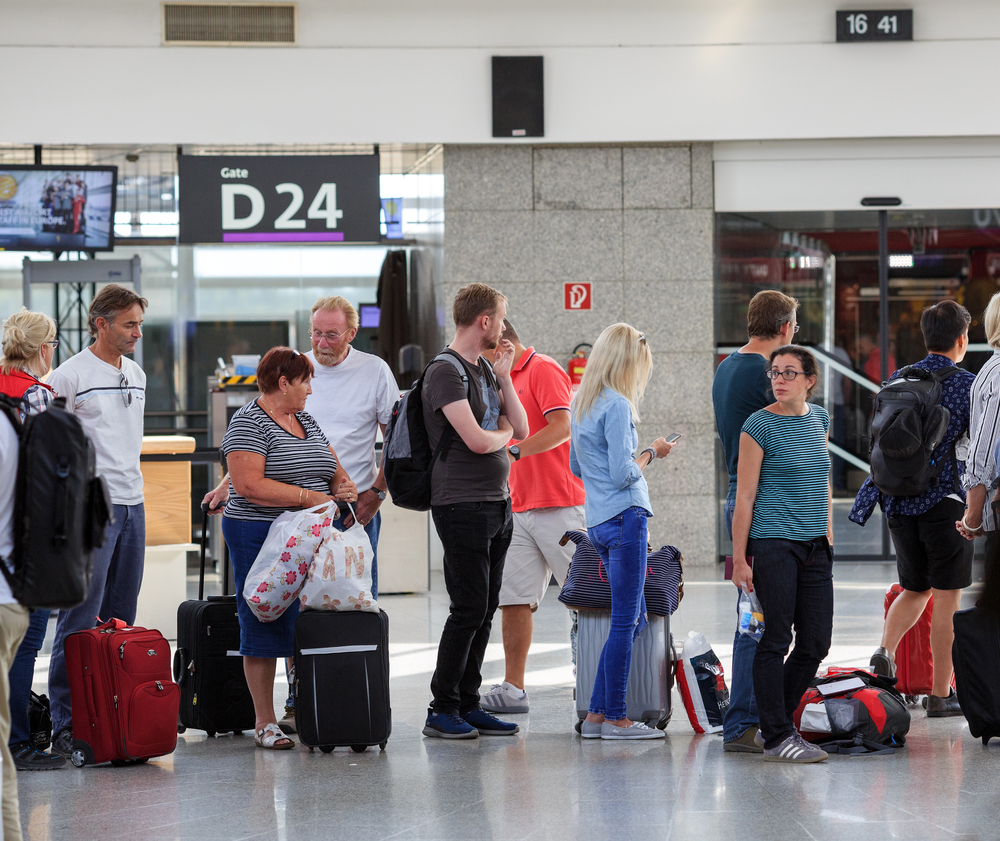

The new EU border system is turning passport control at Schiphol into a proper waiting game this summer; if you’re travelling on a non-EU passport, it could add hours to your trip.
Nobody dreams of spending their holiday standing in a queue. Yet that’s exactly what’s on the cards for a lot of travellers passing through Amsterdam this summer.
The culprit is a new European border control system that’s being rolled out. It’s already causing delays across the continent, and Schiphol, one of Europe’s busiest transfer hubs, is really feeling the squeeze.
So, what actually is this new system?
It’s called the Entry/Exit System, or EES for short. You can think of it as a digital replacement for your old passport stamps.
If you arrive with a non-EU passport, you now get registered in an EU-wide database. This involves logging your passport details, your face, and biometric information like your fingerprints.
READ MORE | EU Entry/Exit System (EES): what travellers to the Netherlands need to know

The system became mandatory on April 10, 2026. The good news? Once you’re registered, your details are stored for up to three years, so future trips should be quicker.
Current trips, however, are an entirely different story.
Why is the EES causing such long queues?
You can blame it on the rollout. Registering someone for the first time takes a few minutes, and when several long-haul flights land at once, those minutes stack up into serious queues.
Schiphol has tried to get ahead of it, installing 161 self-service kiosks, adding extra Marechaussee desks, and deploying more staff to help travellers through.
However, the airport can only do so much.
Europe’s airport and airline bodies, ACI EUROPE, Airlines for Europe, and airline group IATA, have already sounded the alarm. In a joint letter to the European Commission, they warned that waiting times for EES registration had already reached up to two hours in some places.
At peak times, they said, waiting times could even stretch to four hours or more.
They pointed to three culprits: not enough border staff, ongoing technical faults (especially with the automated e-gates), and hardly anyone using the EU’s pre-registration app that’s meant to speed things along.
Right, but what does this mean for me?
That depends on your passport. Let’s break it down:
- If you have a non-EU passport, you’ll go through the EES kiosk step on arrival. Follow the non-EU signage because it directs you there automatically. Expect this to take longer than the old stamp-and-go days, especially during arrival rush.
- If you have an EU or Dutch passport, the good news is that nothing changes. You can skip the kiosks entirely and use the eGates as usual (as long as you’re over 14).
However, EU and Dutch travellers aren’t entirely in the clear, either. When the system gets clogged, staff sometimes get pulled over to help at the non-EU kiosks, which can mean fewer lanes open for everyone.
Couldn’t they just switch the EES off?
That’s exactly what the aviation industry is asking for as a backup plan.
In their letter to Commissioner Magnus Brunner (the EU official in charge of internal affairs and migration), the aviation industry asked Brussels to confirm that countries can partly or fully suspend the EES until the end of October 2026 if queues get out of hand.

Under the current rules, that flexibility risks running out in early July, right as summer travel peaks. The industry says it needs certainty now to plan properly.
Whether Brussels grants that pause is still up in the air. For now, the safest move for travellers is to plan for delays rather than gamble on dodging them.
Are you flying through Schiphol this summer? Have you already pre-registered for EES? Share your experience in the comments below.


“hardly anyone using the EU’s pre-registration app that’s meant to speed things along.”
Possibly because it’s available for arrivals in a grand total of…… 2 countries