

The Dutch job market is already dire. Now, employed people are scared too.
In a bid to stay competitive against disappointing revenues, economic uncertainty, artificial intelligence (AI), and inflation, a lot of Dutch companies turn to “reorganisation.”
Translation: widespread layoffs. Companies need to cut costs, and according to economists, slashing the workforce is the quickest fix.
Employers warn that this is just the beginning, reports NU.nl.
Time to update your resume, perhaps?
From beer to banking: no one’s safe
By the end of last year, benefits agency UWV received reorganisation notices from 355 companies: the highest number in a decade.

“We’re in the middle of a round of reorganisation that began two years ago,” says a spokesperson for the employers’ association AWVN.
The spokesperson cites layoffs and bankruptcies across the industrial and chemical sectors, as well as in education, business services, and the financial sector.
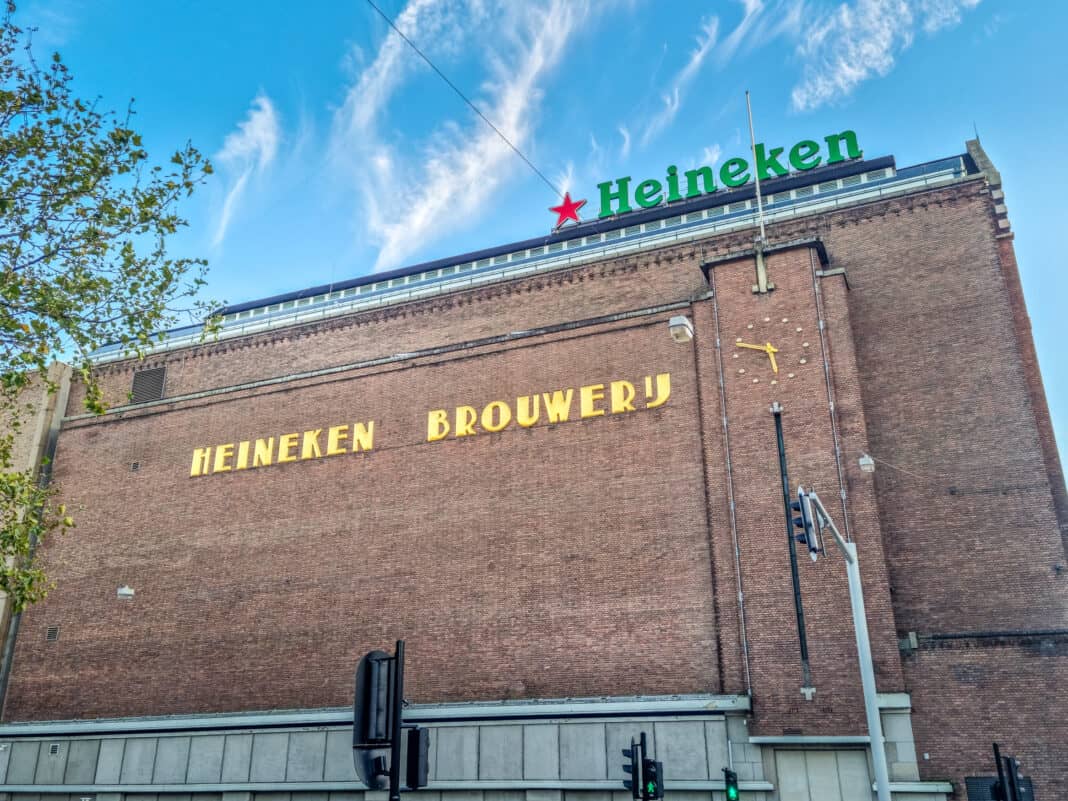
Called for an employee review? Your fear is justified. Heineken plans to cut between five and six thousand jobs over the next two years.
READ MORE | Dutch beer giant Heineken announces it’s slashing up to 6,000 jobs
Major financial institutions such as ING, ABN AMRO, and ASN Bank are also reorganising.
Chip machine giant ASML is making changes, too.
ASML planning 1,700 job cuts in Netherlands and US, despite record orders
— StockStorm (@StockStormX) January 28, 2026
$500 billion market cap
Monopoly on advanced chipmaking equipment
Record demand
Still cutting jobs$ASML $NVDA $TSM pic.twitter.com/2cGrAMjULQ

Thousands of jobs are expected to be slashed across these companies.
But why?
Contrary to the popular belief that AI is nabbing our jobs, the reality is quite complicated.
Olaf van Vliet, an economics professor at Leiden University, points out that cost savings are still the main driver.
During the tight labour market following the pandemic, companies were reluctant to reorganise. Now, after delaying too long, the cuts are coming all at once.
While companies love citing the “threat of AI,” van Vliet says there’s little proof it’s replacing workers. The reasons vary: ASML is changing management structures, while Heineken is facing declining beer consumption.
Another approach
Labour market economist Ronald Dekker from TNO takes it a step further.

In his view, reorganisations at listed companies are mainly about keeping shareholders happy.
He questions the idea that rising wages are to blame, pointing out that wage growth in the Netherlands has been modest for decades.
Instead, companies may be trying to prove they can do the same work with fewer people, inflating their “productivity” metrics. Rich investors, after all, stay rich by cutting costs.
Despite this grim article, the silver lining is that the Dutch market is still doing pretty well, as many sectors continue to struggle with staff shortages.
So if you do lose your job during the great cut of ’26, you might have a decent chance of finding a new one.
Dig what you’re reading? Get more of it! Join our WhatsApp channel or Instagram broadcast to get the latest news straight to your pocket.

Good luck, they will pay twice to re-hire.