
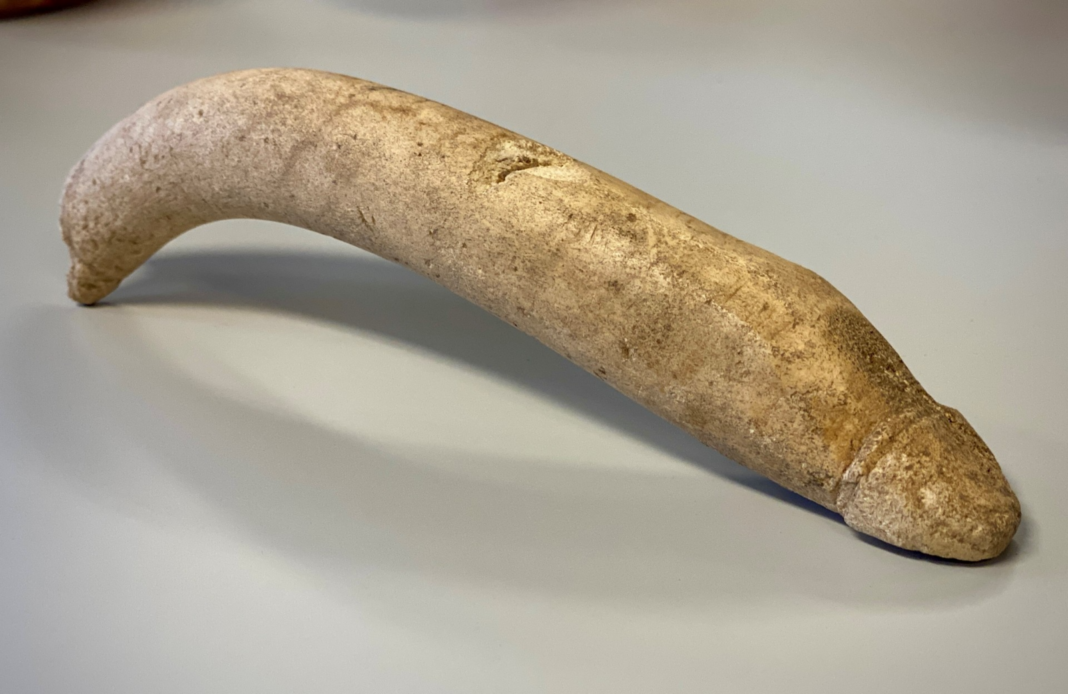

The Netherlands has begun opening archaeological artefacts found decades ago. In the very first batch, they found a 20-centimetre penis statue made of bone.
Due to a change in the Erfgoedwet (Heritage Act), provinces are now the official owners of archaeological findings. This is why 16,000 unopened boxes discovered up to 70 years ago were moved to the Province of Gelderland, which was once a part of the Roman Empire.
It will take six years and €8 million until all boxes are opened, catalogued, and repacked. The first 300 boxes have already shown some intriguing results, according to the Valkhof Museum in Nijmegen, which is in charge of the project.
An old penis
Among many artefacts is the penisbeeld (penis statue). This is a 20-centimetre, or almost 8-inch, object carved from bone.
“Romans felt no shame regarding genitals,” explained Ilse Schuuring, an archaeologist for the Province of Gelderland.
Representations of sex organs were commonly made as amulets that symbolised fertility, or hung near doorways to keep evil spirits at bay. Not far off from the penis keychains in Amsterdam’s Red Light District. The only difference is that those are probably made in China.

The Roman penis, however, was unearthed from the ground beneath Canisius College (a former boarding school) in Nijmegen. This lot of boxes is 1,800 to 2,000 years old.
There’s more
Also found among the early finds: Roman-era tableware that is nearly fully intact. Schuuring claims that the cups and bowls are unmarked: “You could eat from it straight away.”
Romans pressed patterns onto the reddish tableware using a mould. These cups show a deer leaping through a forest.
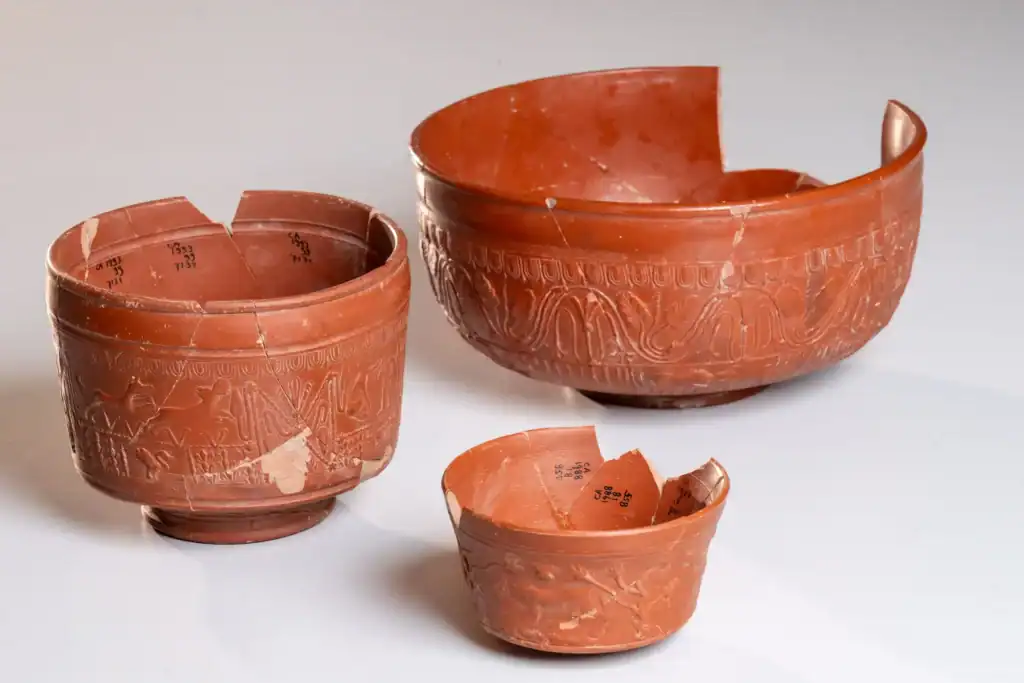
Found near a Roman army camp was a drinking cup with a happy face on it. Although it lay in a dark warehouse for most of the century, it will soon find its very own shelf in the Valkhof Museum.
Peter Drenth, Provincial Executive Member, is understandably excited. He called the collection an “enormous treasure trove,” adding that even these first results show just how rich and varied Roman life in Gelderland once was.
Dig what you’re reading? Get more of it! Join our WhatsApp channel or Instagram broadcast to get the latest news straight to your pocket.