

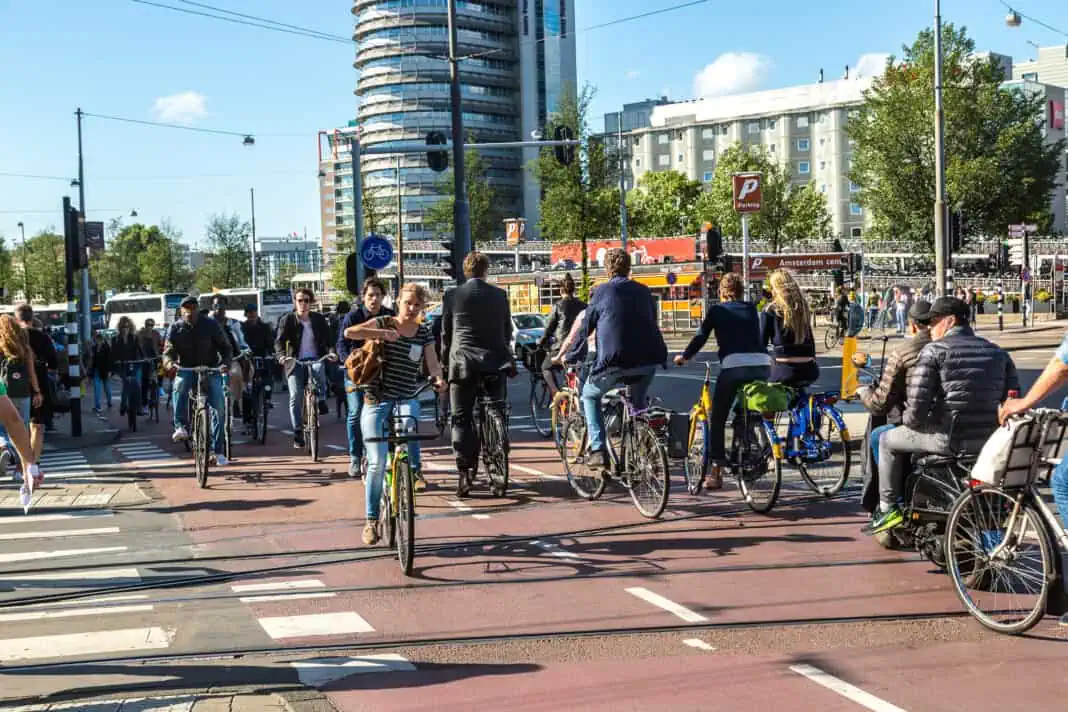
Hospitalisation figures for Dutch cycling injuries have hit a new high, with nearly 81,000 people ending up at the emergency room in the past year.
This is a 9% jump compared to the previous year and almost a quarter more than a decade ago.
Dutch safety organisation VeiligheidNL published the figures on Wednesday to coincide with Bicycle Helmet Day. The data points clearly indicate that the e-bike is the cause of the increase and that older cyclists are vulnerable.
E-bikes are the culprit
The numbers showed 14,400 cases of head or brain injuries, reports AD. Of the total 81,000 emergency visits, around 55,000 involved serious injuries, ranging from broken bones and concussions to skull fractures.
Accident rates involving regular bicycles have barely changed in recent years; instead, VeiligheidNL points squarely at the growth in e-bike use as the cause.
READ MORE | From omafiets, to mamafiets, and bakfiets — Dutch bikes, explained

As they’re faster than regular bikes, e-bikes create larger speed gaps between riders on busy fietspaden (cycle paths).
However, what’s particularly perplexing about the data is that two-thirds of all accidents involved no other road user. No collision, no car, no teenager on a fatbike — just a rider, a moment of misjudgement, and the ground.
Older riders, bigger consequences
In 2025, Dutch roads saw 281 cyclist fatalities — the highest toll since 2007. Even more sobering is the fact that 118 of those victims were in their seventies or older.
And it’s not just about the fatalities, either.
Over 40% of those hospitalised were aged 55 or above, and the over-75s account for a disproportionate share of the most serious outcomes.
The injuries among older e-bike riders tend to be severe: fractures, concussions, and, in the worst cases, serious trauma to the skull.

SWOV, the road safety research institute, is direct about the stakes. At e-bike speed, a helmetless fall can be the difference between a bad day and a fatal one.
The helmet question
Currently, just 5% of Dutch cyclists wear a helmet. The Zet ‘m Op (“put it on”) campaign, launched Wednesday by Minister Vincent Karremans, aims to push that to 25% voluntarily by 2035, AD reports.
The Fietsersbond (Cyclists’ Union) also recently began recommending that cyclists over 70 wear helmets, a move campaigners called a breakthrough.
It’s an ambitious goal, but the shift is already starting to happen voluntarily, with a quarter of cyclists over 75 now wearing a helmet.
READ MORE | 5 reasons the Dutch cycle without bike helmets
The group Doctors for Safe Cycling (Artsen voor Veilig Verkeer) says the evidence is clear. A helmet reduces the risk of serious head and brain injury by 60% and the chance of a fatal outcome by 71%.

Their immediate focus, though, is on younger e-bikers. The organisation is pushing for mandatory helmets for under-18 e-bike riders.
Do you wear a helmet when you cycle in the Netherlands? Has the e-bike changed how you think about cycling safety? Let us know in the comments.

The obvious solution would be making helmets mandatory for pedelec users only. So profiting of the increased convenience would go hand in hand with higher safety standards and a slight inconvenience in having to always carry a helmet.
One benefit of that solution would be that there is no additional threshold introduced for classical cycling.
Brilliant.