If you were hoping to bid goodbye to this year with a bang and a pop, it’s best not to be in Amsterdam for New Year’s Eve. Amsterdam city council has decided to ban consumer fireworks in the city for New Year’s celebrations.
The city’s party won’t stop though! We’re still bidding 2021 farewell with a bang as the municipality will swoop in with an alternative by organising professional fireworks shows in a number of places throughout the city. 🎆
And we all know a professional fireworks exhibit is far better than your brother’s drunken friend’s attempt.
How, what why?
After many questions surrounding the future of fireworks in the Netherlands, a recent sparkling amendment to the fireworks regulations through the General Local Regulation (APV) has been made. ✍
This means that Amsterdam’s municipality will move forward with banning fireworks in the city for New Year’s Eve where, according to RTL Nieuws, the majority of the city’s residents stood in favour of a ban due to the inconvenience attached to the NYE’s flares.
Flare enough
The decision and its amendments didn’t blow anyone away since the topic of a total fireworks ban versus a partial ban in major Dutch cities like Rotterdam or Amsterdam have been a topic of debate for the past year.
With many things that can go sideways when it comes to fireworks, Amsterdam’s municipality is “looking for a good balance between sufficient supply and manageability” according to reporting. 🧯
While the situation of fireworks in the Netherlands was previously affected by the coronavirus pandemic, similarly, all municipality plans for this year’s firework shows are subject to the health measures which apply during New Year’s Eve.
As for solo fireworks enthusiasts, the municipality also announced that it is possible to purchase fireworks at the outlets set up for the purpose. 🎉
What do you think of the latest measures concerning the fireworks ban in Amsterdam? Let us know in the comments below!
To everyone’s delight,Sinterklaas will be returning to the Netherlands this year, but with some restrictions to ensure safety for everyone, says the municipal health service (GGD).
Yep, we’re rushing up on that time of year (at least, according to Dutch stores)! In mid-November, Sinterklaas, the Dutch equivalent of Santa Claus, will be sailing to the Netherlands from Spain. 🎅🏻
We’re not sure why he’s sailing from there, we’d be quite keen on a lekker sunny trip to Spain right now. ☀️
However, things will be a little different this pakjesavond (present night) on December 5. The GGD is advising precautions for this year’s celebrations to avoid the spread of the coronavirus, reports RTL Nieuws.
What does this mean?
This means that instead of Sinterklaas’ helpers (Pieten) handing out loose gingerbread cookies, they will all be handed out in bags to children. The candy is normally just in a huge sack and the helpers would rummage through before throwing the pepernoten at the crowds. 🍬
According to Christ-Jan van Dongen, a spokesperson for GGD West-Brabant, “The more you touch the candy, the greater the risk of the candy becoming contaminated with microorganisms.” Yuck.
Stuffing ourselves with pepernoten is just going to come with one extra step. 🤷♀️
Just smile and wave, boys
The helpers are also encouraged to wash their hands frequently and to wave to kids instead of shaking hands. 👋🏼
Also, wearing hand jewellery is not advised because the GGD believes that it can be unhygienic and harbour microorganisms.
Amsterdam has decided that attendees aren’t required to show their corona passes, whereas cities like Rotterdam are requiring them. Utrecht is still making up their minds on the topic. 🤔
What do you thinkabout the rules for this year’s Sinterklaas? Let us know in the comments below!
Every year, the global magazine Time-Out publishes a list of the world’s coolest neighbourhoods as ranked by readers and verified by local editors and contributors.And, of course, there’s a Dutch one on there!
This year, Time-Out swapped their focus from the usual indicators such as food, drink, nightlife, and culture and instead zoomed in on neighbourhoods that have great community spirit, resilience, and sustainability.
In short, the neighbourhoods that made this year’s cut are ones its residents should be proud of and others should emulate for a better post-pandemic world. 🌍
Why Amsterdam-Noord
Time-Out says Amsterdam-Noord “has blossomed into a laid-back, entrepreneurial hub for those looking to escape the scrum of the centre,” and we couldn’t agree more!
It’s located on the banks of the IJ river and is home to a well of different people, events, and hip places.
However, Time-Out reiterates that it’s not just an “edgy” neighbourhood, but that “community and sustainability are important watchwords here, with many venues built and furnished with salvaged material and kitchens serving plant-based menus.”
One of the things highlighted about Amsterdam-Noord is that the neighbourhood is also great if you want to live in the capital. More than just a cool place to visit, it has lots of green areas and quaint family homes.
What do you think of this ranking? Tell us in the comments below!
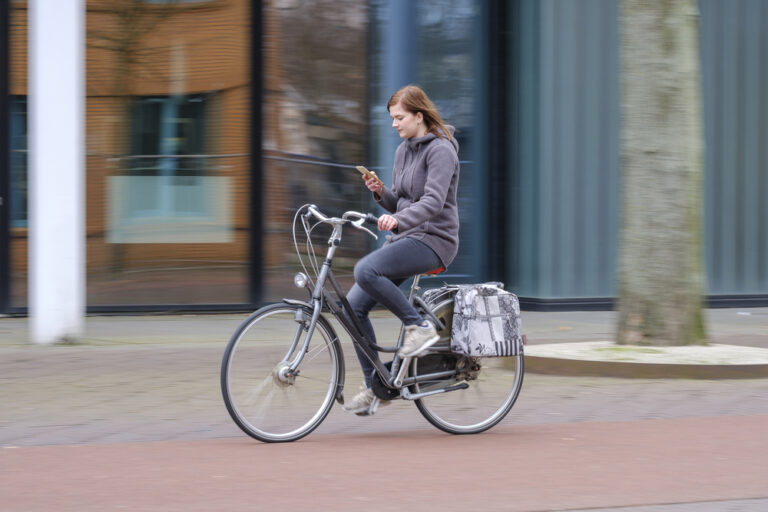
New numbers show that more than 850 people per week are fined for cycling while on their mobile device, reports NU.nl.
If you’ve ever been cycling in the Netherlands, you know it has its perks: the infrastructure is great, cars generally yield for cyclists, and the country is as flat as a pannenkoek — so there are no hills to conquer.
In July 2019, the Netherlands introduced the ban on cycling while holding your phone. Initially, the accompanying fine was €95, but it has later increased by a whopping €5.
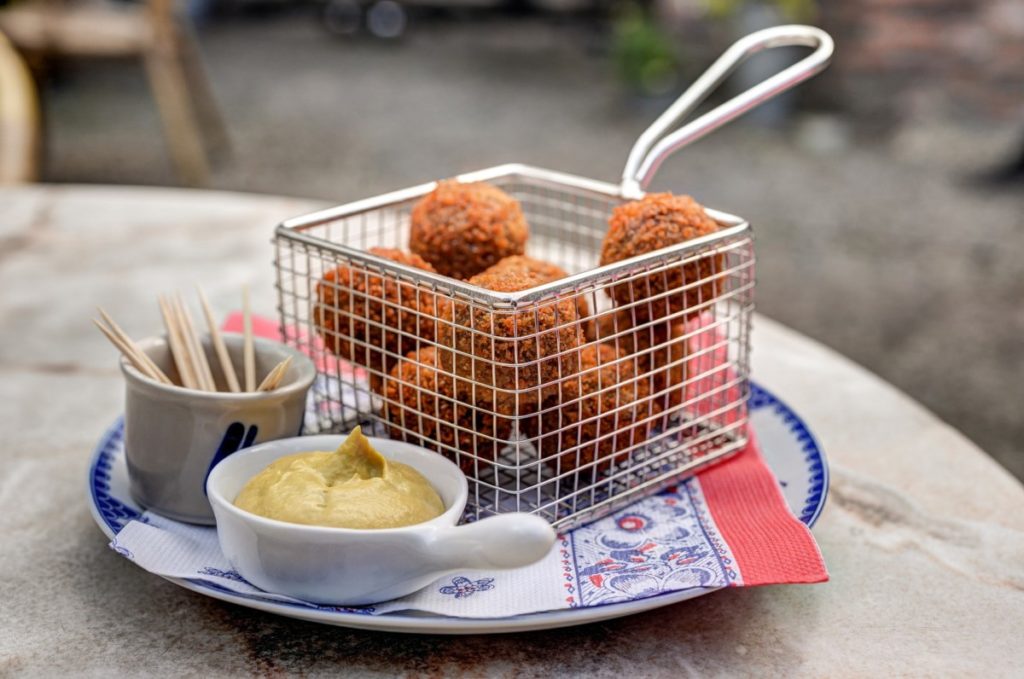
While that €5 increase may not break the bank (although we’d prefer to spend that money on a serving of bitterballen) the important thing is whether the ban has changed anything on Dutch cycling lanes.
However, that’s unclear. But at least the municipality made some cash, right? 🙃
NU.nl reports that the registration of bicycle accidents in the Netherlands isn’t detailed enough to provide any conclusions on whether traffic safety has increased since 2019.
Nevertheless, numbers from the Directorate-General for Public Works and Water Management (which also deals with traffic issues) show that the number of people using their phones while biking did decrease between 2015 and 2021.
These results are also vague though because the Directorate-General disclosed that the numbers can be based on chance depending on what day they’ve been counting and that, sometimes, there is in fact an increase.
Due to the coronavirus lockdowns and curfew in the past year and a half, the numbers have also deviated from what’s normal says Agnieszka Stelling, who specializes in cyclist behaviour and works at Institute for Road Safety Research (SWOV).
Fewer fines in the winter
On average, one third more fines are dished out in the summer months than during the winter.
The cause is likely seasonal. People simply don’t pull out their phones while cycling in the rain or wearing winter gloves. Seems logical enough. 🤷♀️
Do you see a lot of people in the Netherlands cycling while using their phone? What do you think of it? Tell us in the comments below!
Finally! Some good news for us this Friday morning — the Dutch cabinet is working on plans to evacuate more Afghans to the Netherlands than they had previously calculated.
Initially, the outgoing parliament estimated that in addition to the interpreters, only about 70 Afghans would be eligible for evacuation to the Netherlands. According to various sources from The Hague, this number is now seen to be between 1,000 and 2,000 people, The NOS reports.
Who is entitled to come to the Netherlands?
At this point, the plan is to bring anyone who has worked in visible public positions for Dutch organisations after January 1, 2019, to the Netherlands. This is around 900 people, including their immediate family members.
In addition, any Afghans who have worked for at least one year for the Ministry of Defense or Europol over the past 20 years are also entitled to come to the Netherlands. Several hundred people are included in this category.
Human rights organisations can also nominate people for evacuation. These nominations will then be assessed by the Ministry of Foreign Affairs.
Remaining Dutchies
There are also still 300 Dutchies in Afghanistan who need to be evacuated. 🇳🇱
In the end, however, the Netherlands is reliant on the cooperation of the Taliban in order to actually be able to bring these people to the Netherlands. Several other European countries are slowly evacuating people via Qatar and Pakistan.
What are your thoughts on the cabinet’s plan to bring more Afghans to the Netherlands? Tell us in the comments below!
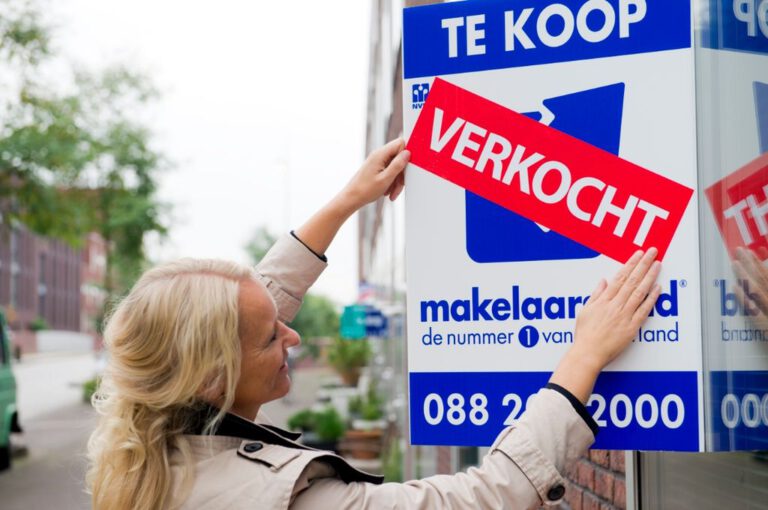
By the end of last month, 16,500 houses were for sale on the Dutch market. That’s 44% less than last year, meaning the lowest number ever recorded at the end of a quarter.
NVM (the largest association of real estate owners and appraisers in the Netherlands) says to NU.nl that the overheated market means that the gap between homeowners and home seekers is widening.
Are we surprised? 🙄
Better bid now — but only above asking price
If you’ve been lucky enough to find a suitable house on sale in the Netherlands, you better lock it down fast. Homes are only listed for approximately 23 days before finding new owners!
That’s the shortest amount of time houses have been on the market ever. 🏃♂️
But not only do you have to bid fast, but you also have to overbid the other hopeful (desperate?) new homeowners. On average, buyers paid 8.6% more than the asking price in the past three months — echt!
The difference between asking and selling price is largest for terraced houses: landing at 10.7%, and lowest for detached houses with an average of 4.1% difference.
Shocked by the prices offered, real estate agent and chair of the NVM Housing Department, Lana Gerssen, told NU.nl that she consistently sees buyers bidding “top prices to trump other buyers.”
What do you think of the Dutch housing market? Tell us in the comments below!
It is not hard to picture: you have just arrived in a new city, a new country and a new everything. You have no idea where you can take your little one to burn some energy so that he/she sleeps and preferably doesn’t burn down the house — I mean, so they can have some fun, of course!
Luckily, if you happen to live in The Hague, there are plenty of places where your young kids can run free and have an awesome time.
Koningsplein — perfect for both young and old
A great location near the city centre, Koningsplein is essentially a very big roundabout in the heart of a cute neighbourhood (which happens to have the same name). The speeltuin (playground) features swings, slides and some other more complex equipment (those are for older children).
You can also play ping-pong, have a soccer match or enjoy a good read from the little mini library available to everyone. It has a lot of space and a huge fence all around it, so you can rest assured that the children will not run away (or at least not that easily).
Paleistuin — for the picturesque playground
The Palace Garden was originally landscaped at the request of Frederik Hendrik (son of William of Orange) for his mother in the seventeenth century. It rests behind Noordeinde Palace (the King’s workplace) and right next to the Royal Stables.
We’re loving the vibes here. Image: Oseveno/Wikimedia Commons/CC3.0
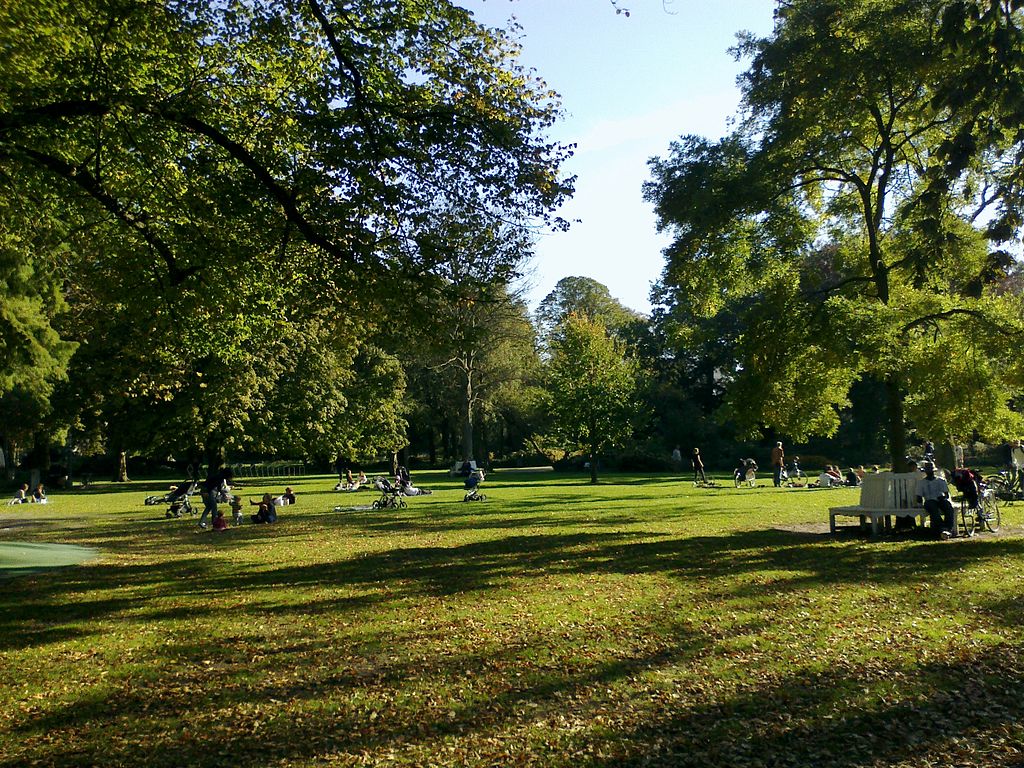
Nowadays, it is a public park open every day from sunrise to sunset where you can find a cute playground, a pond, loads of space to run around and have a picnic (when the weather allows it, duh) and perhaps even a quiet bench in the sun while your small human enjoys.
Scheveningen bosjes — for the accessible nature
This one is not precisely a playground (although it actually has one somewhere in there), but the real appeal is just walking around a giant forest and recharging in pure nature.
While you do this, your offspring can also have a great time in the scooter, mini-bike or just strolling around. If you manage, you can even drink your morning cappuccino and relax beneath the trees. Mommy approved seal of approval.
Madurodam — for the interactive attractions
The theme park where you can visit the Netherlands in miniature and discover Dutch culture and heritage. All of this with interactive attractions and a couple of playgrounds that turn out perfect for a day of family fun!
Take a walk among the most beautiful palaces, canals and even Schiphol Airport in one single day. You can also have your child’s birthday party here. Granted, it is not the cheapest of spots, but it is worth it (ok maybe once or twice, let’s not get carried away).
Prins Hendrikplein — fun for the parents and the kids
Whenever you find that cosy area you just keep going back to, that is when you know you have found something special. This is the case for yet another great area in the heart of one of the coolest neighbourhoods, Zeeheldenkwartier.
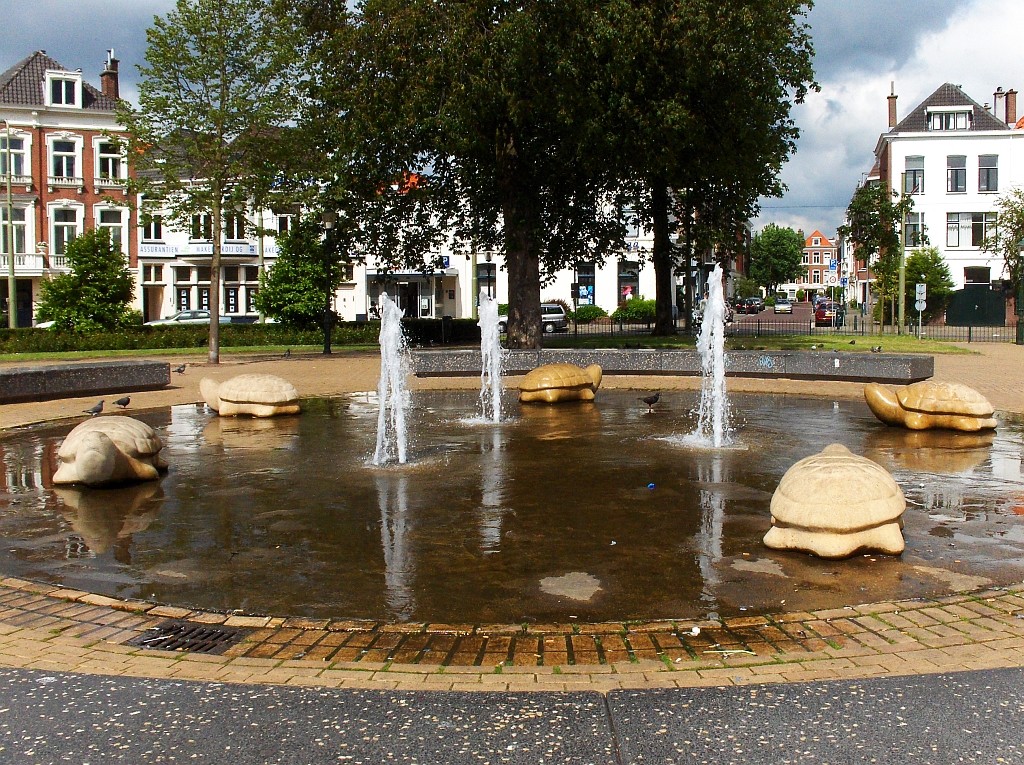
It features a big fountain in the middle where kids can have fun getting wet (only during the “summer”, clearly); and has plenty of room for them to play around.
There is a small farmer’s market on Thursdays where you can find bio/organic products such as fruit, nuts, cheese and eggs. Perhaps a downside is it is not fenced.
Zeeheldentuin — for the pirate ship!
A couple of blocks next to Prins Hendrikplein, in Tasmanstraat, you can find a small hidden gem called Zeeheldentuin (the garden of the heroes of the sea). It is basically the front of a building turned into a medium-sized garden, that also has an orchard, a picnic area and a playground space with a wooden pirate ship that can easily blow any toddler’s mind.
Open every day, everyone is invited to go in and play with all the toys just lying around. Mommy approved seal of approval+!
Beach clubs
Even though this does not refer to a specific place, I wanted to leave some room to tell you about that magical time during July and August where you can hang out in beach clubs (provided you always bring a sweater just in case).
A lot of them have slides, tumblings and swings out in the sand for the little ones to enjoy while the not so little ones toast to another great summer alongside the Dutch coastline. Do not forget to bring jackets and blankets as well; it can get pretty chilly and windy no matter how warm the day starts. All I can say is gezellig.
There are probably many more sweet spots for you and your kids to discover in this beautiful city, so I will just keep looking!
What are some of your favourite places for kids in The Hague? Tell us in the comments below!
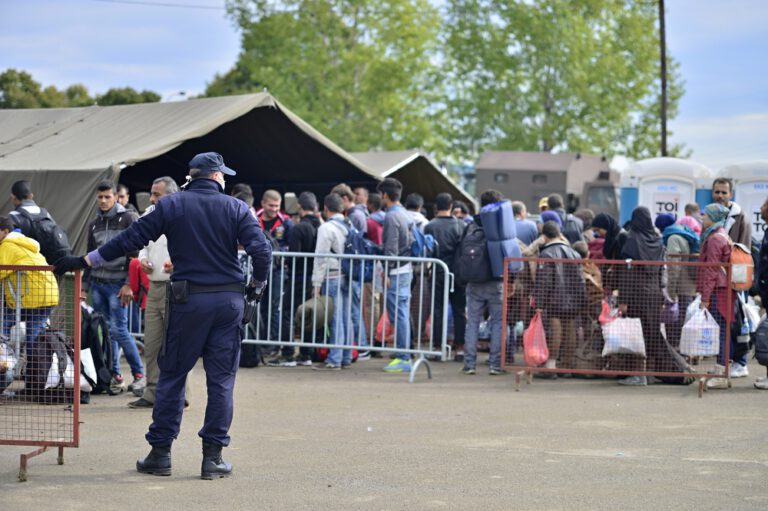
Last night, the shelter at Ter Apel centre for asylum seekers in the Netherlands reached maximum occupancy as people were forced to spend the night sleeping on chairs.
Managed by the Dutch Central Agency for the Reception of Asylum Seekers (COA), the Ter Apel centre in the province of Groningen is the first place where asylum seekers are registered when they arrive in the Netherlands.
According to State Secretary Ankie Broekers-Knol, the exact number of people who had no place to sleep last night is not known as the “exact number doesn’t really matter, it just shouldn’t happen,” Broekers-Knol says according to RTL Niews reporting.
Last week, COA sounded the alarm that they’re heading towards an imminent emergency shelter crisis scenario due to a peak in applications and a slowdown in settling those who already received their residence permit due to the Dutch housing shortage.
Currently, there are 11,000 approved status holders at COA locations waiting to be moved to a normal home.
Hotels and holiday parks
Reporting by NU.nl indicates that COA is seeking alternative methods to solve the overcrowding crisis by turning to hotels and holiday parks for the reception of asylum seekers.
While it’s unclear what COA is requesting from holiday parks, hotels were asked if they can accommodate 30 asylum seekers and provide three meals a day for the duration of two weeks.
For the time being, defence locations in Amsterdam and Ede will be used to support the reception of asylum seekers since the Goes centre, which opened last week, has already reached maximum occupancy — along with all other centres through the Netherlands.
Follow DutchReview on Facebook and Instagram for the latest news from the Netherlands!
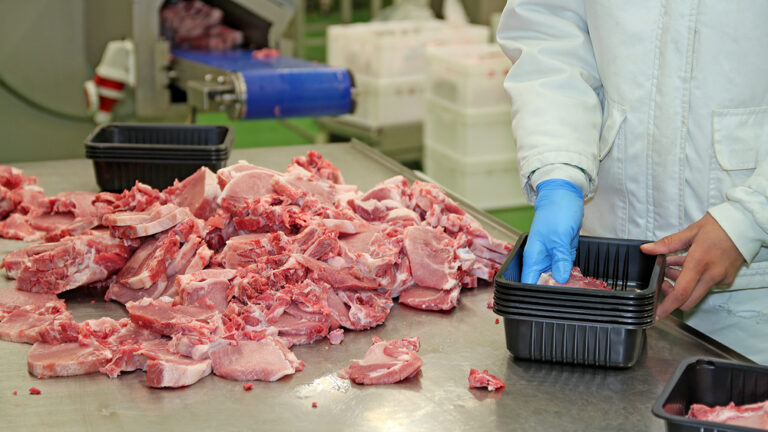
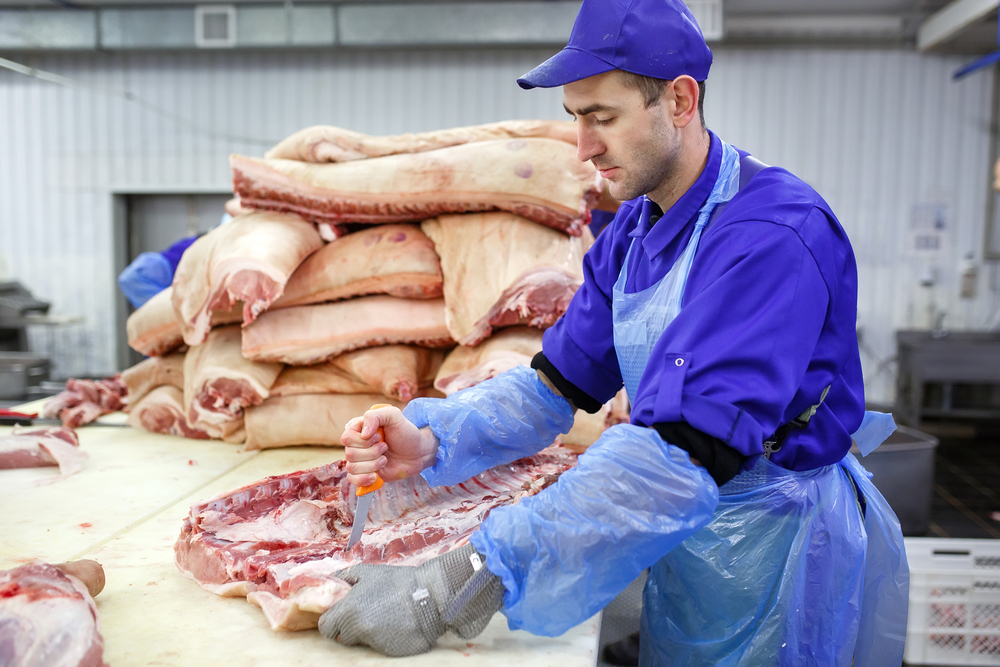
A The Guardian exposé has revealed the appalling situation of precarious workers in the European meat industry, including at Dutch meat plants.
In 2020 (no introductions needed), meat plants across Europe came under scrutiny for frequent COVID-19 outbreaks.
From some companies not having the data to trace the spread of the disease, to the extreme vulnerability of some workers, there was something clearly wrong with the way cheap meat was being supplied to the Netherlands’ supermarkets.
Unscrupulous practices
But why were some Dutch meant plant workers more vulnerable than others? And why were they more at risk when it came to COVID-19? The exposé, for which officials, labour experts and workers were interviewed, point to the practice of hiring workers through agencies.
The Dutch meat industry offers some great Dutch delights — but at what cost? Image: Rudy and Peter Skitterians/Pixabay
Subcontracted workers don’t enjoy the protection of employed work, which leads to exploitation and rights abuses. Most are migrants from countries where wages are low, and some can’t read and/or are unaware of their rights.
They are also more present in European meat plants than anywhere else in the developed world, according to the assistant general of the International Union of Food Workers quoted by The Guardian.
Precarious workers
Living as a precarious worker means making up to 50% less than other employees performing the same job. It also often means not having parental leave, sick pay, and living in cramped and shabby accommodations. How could they socially distance or stay at home when with COVID-19 symptoms?
The living situation of migrant workers in The Netherlands was exposed on Dutch TV in an episode of Dany’s Wereld. The programme also alerted to the culture of fear that prevents migrants from speaking up about the abuses they undergo.
International vs. Dutch
A Romanian working at a Dutch meat plant interviewed for the exposé painted a very different picture compared to workers who are directly employed. These workers perform the same functions, but enjoy more rights, stability and hours. They are also mainly Dutch.
This was backed up by The Guardian’s investigation, which uncovered many allegations of migrants working under abusive conditions in The Netherlands.
In 2020, the Dutch government released a report highlighting the poor regulation and lack of inspections at agencies. With 49% of migrant workers in the Netherlands employed through agencies, the scale of the problem seems unprecedented.
Workers are often in a vulnerable position and their bosses know it. Image: davit85/Depositphotos
The Guardian reports that although not all agencies victimise migrant workers, some deliberately target them. Their reliance on agencies for housing, healthcare, and transport costs puts them in a position of extreme vulnerability, Dutch NGO FairWork also found.
Some agencies go as far as declaring bankruptcy to avoid paying workers, only to later pop back up under a new name.
Where do we go from here?
Before giving in to the famous Dutch thirst for bureaucracy and call for better regulation, the German model should be considered: a total ban on all forms of subcontracting in the meat sector. Exercising our power as consumers and pressuring supermarkets to act is always a valid avenue too.
Although the work that needs to be done at the political level goes without saying, a more personal reflection seems fitting here too. No, I’m not going to lecture you on the environment and cows’ crazy high methane emissions. I will however share one of the exposé’s interviewees, Martijn Huysmans, assistant professor at Utrecht University School of Economics, brilliant point:
“In Dutch stores, you can see what kind of life an animal has had – we have a star system for animal welfare. But ironically, you can’t see what conditions people in the slaughterhouse were working under.”
What are your thoughts on the Dutch meat industry? Tell us in the comments below!
Good news! The Netherlands has turned orange (our colour!) on the European coronavirus map. Orange is the second-lowest warning colour behind green. 🥳
Every Thursday, the European Centre for Disease Prevention and Control (ECDC) publishes a coronavirus map with the number of positive tests per 100,000 people in different European countries.
The map has four colours, from the lowest risk rate to the highest: green, orange, red, and dark-red. The Netherlands has taken a step in the right direction, changing from red to orange — meaning we’re not high-risk anymore!
We may soon have some green provinces
And unlike Kings’ day, the plan isn’t to wear only orange. The ECDC reports that Groningen, Drenthe, and North Brabant are on the edge of being green — which indicates low-risk.
Friesland improving and Limburg struggling
This week, the number of positive tests has decreased by 23%, the largest decrease in the Netherlands.
This is reflected in Friesland where just over 1,000 residents have tested positive for coronavirus in the past two weeks, RTLNieuws reports. This means that there are 159 new cases for every 100,000 Frisians.
However, the southern province of Limburg is not doing as well. In the last two weeks, Limburg has had almost 2,000 positive tests, which amounts to 175 cases per 100,000 people.
The amount of positive cases is also increasing in Gelderland and Zeeland.
What do you think about the Netherlands turning orange? Let us know in the comments below!