Home Blog Page 598

Dutch Outbreak Management Team to discuss using facemasks in public spaces

0

The Outbreak Management Team (OMT) will be meeting today to discuss the usage of face masks in public spaces in order to prevent the spread of the virus.

They have been asked by the Cabinet to research how face masks can be widely used in order to prevent the spread of the virus, RTL Nieuws reports.

This comes after the number of new coronavirus cases spiked last week.  A survey also revealed that a majority of Dutch people are in favour of wearing a face mask in public indoor areas.

A press conference may follow later today with the recommendations and policies from the OMT. There are concerns that the Dutch are also less compliant with coronavirus rules. In areas where the 1.5-metre distance can’t be respected, such as on shopping streets or in stores, a face mask may offer vital protection against the virus.

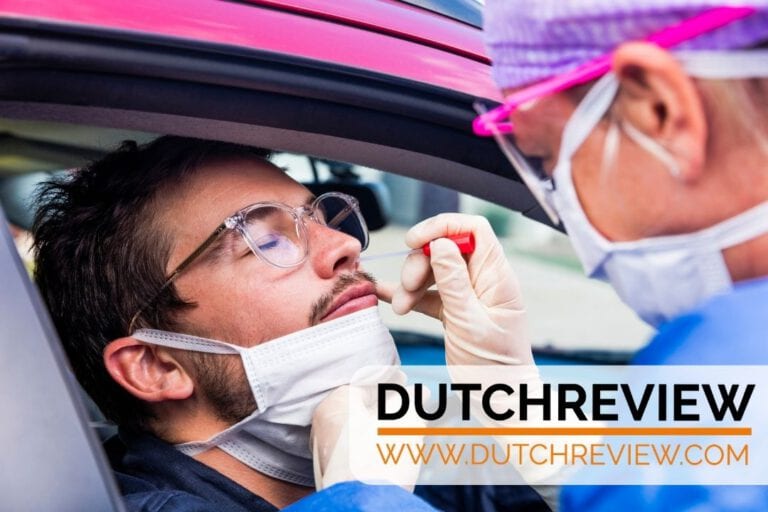
The Cabinet has also asked the Outbreak Management Team to look into the possibility of testing people who come from high-risk areas, even if they have no health complaints. This way, those who test negative will also need to spend less time in quarantine upon arrival in the Netherlands.

Follow DutchReview on Facebook for the latest news in the Netherlands.

Feature Image: DutchReview/Canva


Potential shortage of coronavirus tests in autumn

0

There might be a shortage of coronavirus tests in the Netherlands by autumn.

Currently, there are 20,000 tests being conducted on a daily basis in the Netherlands. RIVM estimates that there will be a need for 70,000 daily tests by autumn, meaning that the testing capacity needs to be extended considerably, reports RTL Nieuws.

Autumn is usually the season where people report common cold symptoms. Because of this, more tests will be needed then to take into account all the people who will want to get tested.

Over the past few days, it has become clear that the GGDs cannot test everyone within 24 hours. More staff has been deployed to aid with the testing, but this has not been possible everywhere throughout the Netherlands. In South Holland, it can take up to 72 hours before the result of a test is known.

Three months of test supply

Laboratories currently need to keep stock of tests for three months at a time. However, there’s uncertainty if that will be enough by the time autumn starts and the testing capacity needs to be expanded.

Follow DutchReview on Facebook for the latest news in the Netherlands.

Feature Image: DutchReview/Canva

Dutch murderer catches coronavirus in Peruvian prison

0

Joran van der Sloot, a notorious Dutch criminal known for the murder of a Peruvian woman, has caught coronavirus in prison. 

His family has asked for help from the Dutch embassy in Peru, reports RTL Nieuws. Direct contact was made with the prison in which der Sloot is located, in the Peruvian town of Juliaca.

While the prison has not confirmed officially that he has COVID-19, der Sloot talked with his family on the phone and reported all the main symptoms. He is apparently not receiving any medical care.

The prison in which he is located has a localized outbreak of coronavirus, with four other prisoners and seven guards catching the virus, according to a local advocacy organization. One prisoner has already died from the virus.

Van der Sloot is also suspected in the involvement of the disappearance of the American Natalee Holloway in Aruba in 2005.

Dutch embassy cannot do much

A spokesperson from the Dutch Ministry of Foreign Affairs stated that there is not much they can do about the situation, as it is the responsibility of the prison itself to take care of the prisoners. In the meantime, the best the Dutch authorities can do is monitor the situation from afar.

Follow DutchReview on Facebook for the latest news in the Netherlands.

Feature Image: Aruba Police Force/Wikimedia Commons 

Leiden pharmaceutical company begins clinical trials of coronavirus vaccine

0

A Leiden-based pharmaceutical company, Janssen Vaccines, has begun trialling a coronavirus vaccine on humans. Janssen Vaccines is owned by Johnson & Johnson.

Originally, the clinical test phase of this vaccine were only set to begin in September, but because of “encouraging preclinical data and collaboration with authorities” they have been able to start sooner with testing the vaccine on humans, NOS reports.  At the moment, the potential vaccine is being trialled on 1045 healthy adults in the US and Belgium, aged 18 to 65.

This part of the testing process does not actually evaluate if the vaccine protects against coronavirus, but rather checks what the side effects of getting the vaccine are. In September, the potential vaccine will  be tested to see if it stops people from getting coronavirus, or at least protects against serious cases of the virus.

According to the head of Janssen’s vaccine programme, Johan Van Hoof, the next phase of vaccine testing will require a lot more people to be recruited. If the results of the next phase of testing are encouraging, then we could expect to see a vaccine available to the general public in early 2021: but of course, that’s a best-case scenario.

There are currently 163 potential coronavirus vaccines underway around the world, of which 23 are being tested on humans. A Chinese vaccine and one from the Jenner Institute in Oxford, England, are the most advanced in the testing process. They produced encouraging results when tested on humans.

You can follow DutchReview on Facebook for more updates on coronavirus in the Netherlands. 

Feature Image: Abuzer van Leeuwen/Supplied. 

Majority of Dutch people want to continue working from home

According to a survey conducted by the ANWB union (Royal Dutch Touring Club), 67% of Dutchies want to continue working from home even after the crisis ends.

This comes as three in five working people that want to continue working from home for at least two or more days, reports RTL Nieuws.

The union considers that employers need to accommodate this shift by developing an official work-at-home policy. That way, it will also solve traffic congestion problems. By doing so, people can also travel more comfortably without delay.

Representative sample

The AWNB has stated that they have conducted their research on a representative sample for the whole Dutch population. Among other findings, 21% of respondents stated that they would like to go to the office every day of the working week. On the other hand, 67% of Dutchies, who already had experience working at home, would prefer to keep it that way. The survey also showed that 71% of respondents believe that the option to work from home more depends entirely on the attitude and policy of their employers. Furthermore, 57% of the respondents wore sweatpants or less while working from home (this was not part of the survey, but it’s safe to assume).

If you would like to know more about working from home in the Netherlands you can read more here.

Should there be a nation-wide policy for working at home in the Netherlands? Share your thoughts in the comments!

Feature Image: Free-Photos/Pixabay 

Discrimination centre: racism against black people is widespread in Amsterdam region

0

According to research by the discrimination centre in Amsterdam, anti-black racism is widespread and underreported in the region.

In the Netherlands, racism is catalogued in research as “discrimination on skin colour/ origin”. Because of this, it remains an underestimated problem, Het Parool reports.

Underreported and underestimated

In recent years, the phenomenon of racism has started to be registered in Amsterdam. According to the research, one in five reports on discrimination comes from people of African or Afro-Caribbean descent.

Vincent Verkoelen, director of the Discrimination Center for the Amsterdam Region (MDRA), states that “The size of this category is so large that it justifies specific investigation and registration.” He continues by saying that anti-black racism should receive as much administrative attention as other forms of discrimination. “While some forms of discrimination are much smaller in size, they are very much zoomed in on. Anti-black racism has never been treated or registered separately.”

Many forms of racism against black people

Black people in the Netherlands suffer discrimination in ways that are well-known, such as the association with slavery and Zwarte Piet. There are more subtle discriminations as well, such as the ones related to hair. “Hairstyle discrimination is a form of institutional racism where straight hair is considered superior,” Verkoel explains. “In the US, a law was passed in 2019 prohibiting discrimination against natural hair, such as Afro’s and braids.”

There have been more than 100 reports of anti-black racism in Amsterdam in 2019. It comes in many shapes, from young children using the n-word in mostly white classes with a couple of black students, to black customers being refused service in restaurants.

The report concludes that as long as anti-black racism is registered the same as other forms of discrimination, it will be impossible to successfully tackle.

If you would like to know more about racism in the Netherlands, you can read more here. If you would like to get involved in anti-racism movements in the Netherlands beyond just social media, check out this article.

Follow DutchReview on Facebook for the latest news in the Netherlands.

Feature Image: Supplied


Weather forecast: tropical air with 30 degrees incoming

After weeks of Dutch summer with showers and clouds, it seems that the weather gods have finally smiled favourably on the Netherlands.

Later this week, tropical air coming from Spain will bring temperatures of up to 30 degrees in some areas of the Netherlands, Weerplaza reports.

Last week’s weather forecast predicted that we will have to wait until mid-August for some sweet summer weather. However, as we’ve already gotten used to, expect the unexpected when it comes to weather in the Kingdom of the Netherlands.

Starting from today the temperature will gradually rise across the country. There are still chances for some localized showers today and tomorrow, but overall, both the temperature and the sun will be ever more present this week.

By the weekend, the tropical air from Spain will reach our shores. Friday and Saturday might have temperatures of up to 30 degrees in the south-east of the country. While we’re at it with good weather, check out some beaches to go to in the Netherlands.

Throwback to last year’s 40 degrees

A year ago, for two days, there were 40 degrees in the Netherlands, a record for the time. A thermometer in Deelen rose to a temperature hard to believe for the Netherlands, 42.9 degrees Celsius. It is not yet certain if the temperature really went that high, as another thermometer nearby registered 39 degrees. Research into the issue will hopefully bring an answer by winter, reports NOS.

By comparison, this summer has been comparatively mild. Nevertheless, meteorologists note that even if there are still just four weeks of summer to go, we cannot really anticipate what will happen and that the weather can change suddenly.

Do you think we’ll have a heatwave similar to last year this summer? Let us know your thoughts in the comments!

Feature Image: ny_sonseca/Pixabay

Over half of Dutch people want face masks to be mandatory in public indoor areas

0

Over half of the Dutch population believes face masks should be mandatory in public indoor areas.

These results come from a weekly poll conducted by Maurice De Hond. The idea of mandatory face masks seems to be echoed throughout the entire political spectrum, except for far-right political parties. For example, respondents from CDA and PvdA show overwhelming support for mandatory face masks ( almost 65%). On the other end, Forum for Democracy and the PVV showed less enthusiasm, with 40% and 36% support respectively.

Part of the reason why support for face masks in public indoor areas has gone up can potentially be explained by the surge of coronavirus cases of last week.

The survey showed that 41% of respondents feel that some of the relaxations of the coronavirus measures (which started on 1 July) should be reversed. Politically speaking, more than half of the supporters of ChristenUnie, GroenLinks, CDA, SP and 50Plus want the relaxation to be stopped. Half of the supporters of FVD and PVV want the relaxation to continue.

Last Friday, the TV program EenVandaag also conducted their separate poll on the issue, reporting that two out of three people believe that face masks should be mandatory in public indoor spaces in case coronavirus infections continue to rise. Last week, the mayors of Amsterdam and Rotterdam have also called for research into implementing mandatory face masks in some settings.

Follow DutchReview on Facebook for the latest news in the Netherlands.

Feature Image: DutchReview/Canva


Reunited: foreign lovers may now return to the Netherlands

1

People with Dutch partners which were separated by the coronavirus crisis may now return to the Netherlands.

Starting from today, the entry ban has been relaxed for foreign lovers that have Dutch partners but were unable to come due to coronavirus travel restrictions. The Netherlands, like other European countries, has closed its borders to people from outside of Europe who do not have an essential reason to be here.

There are certain conditions, such as that they prove they have a long-lasting relationship, according to RTL Nieuws.

Upon coming to the Netherlands, they must declare that they had a relationship for at least three months, in which they’ve seen their Dutch partner regularly. If they come from a country that falls under the orange code of risk, they are advised to enter quarantine for 14 days.

Coming to the Netherlands and want to know more about the situation of the coronavirus here? You can read more about the current coronavirus measures in our weekly updated guide. You can also read more if you want to know about travelling to, from and inside the Netherlands during the current crisis.

Follow DutchReview on Facebook for the latest news in the Netherlands.

Feature Image: papagnoc/Pixabay

The work-life balance in the Netherlands is the best in the world

According to the 2019 OECD Better Life Index, the Netherlands is the best country in the world for managing their work-life balance.

The country overtook its rival Denmark in 2018, and is still in first place. In the end, the Netherlands scores 9.5/10. On the other end of the scale with 0/10 is Turkey. So what does this mean exactly?

What is work-life balance anyway?

Work-life balance in the Netherlands is measured by how people juggle every aspect of their life, such as work, personal commitments, parenting and other activities. This is very difficult when you work and when you are a parent (something which governments tend to assist with). Being able to effectively manage that affects your well-being tremendously.

Working

A massive part of what work-life balance is how much time you are spending working. Of course, working a lot and working really long hours is bound to take an effect on your health, both physically and mentally. According to OECD better life index, only 0.4% of employees work these long hours in the Netherlands, which is the lowest rate (the average is actually 11%). Youth rates of employment are also excellent, as the Netherlands has a low rate of youth unemployment, leading to lower levels of child income poverty that means that childhood satisfaction is amazing (it’s over 93% satisfaction for 11-15-year-olds).

Parenting

Although parenting dynamics are changing throughout the world, the Netherlands is dealing with it very well. Despite most women now working and dealing with childcare, their work-life balance is excellent. Parental education rate, fertility rates and employment rates are higher than the OECD average. The Dutch female employment rate of 69% is much higher than the average OECD of 60%, although lots of women in the Netherlands work part-time. Women also work on average two hours more at home than men do.

Other factors

In the Netherlands, the community is a big thing — 90% of Dutch people say that they know someone who they could count on if they were in crisis, which is higher than the average. In terms of politics, the Dutch engage well, with the Dutch voting rates being 12% higher than the average. In terms of other factors, the Dutch devote around 16 hours of their day participating in leisurely activities, eating (the best thing ever) and sleeping (also the best thing ever).

…and that’s not the only thing that makes the Netherlands great. Take a look at 7 other things that make us a great country (and great people).

What do you love about living here and the work-life balance in the Netherlands? Let us know in the comments!

Feature Image: Sebastian Voortman/Pexels
Editor’s Note: This article was originally published in October 2018, but was fully updated in July 2020 to bring you the most up-to-date information.