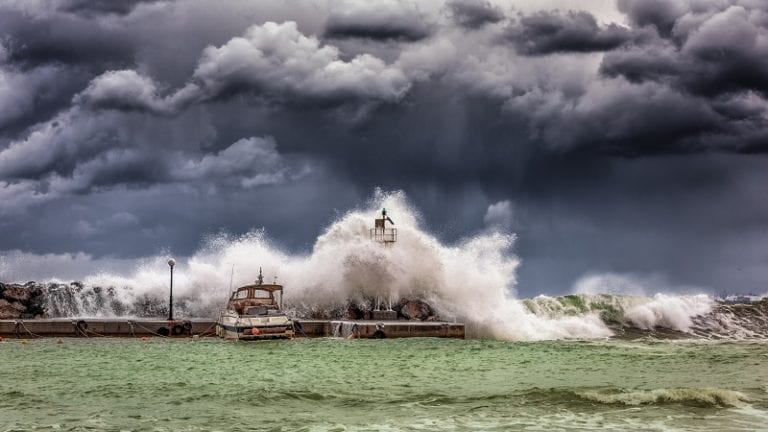
Storm Ciara has mostly passed now, but it seems our streak of high winds and rain have not quite passed.
It seems we will have to wait some more for some calm spring weather, as new storm might emerge by Sunday, Buienradar reports.
Nameless storm last night
Last night, another storm occurred, yet it was nameless, unlike the recent Ciara. It was also significantly weaker, reaching only 98 kilometres, compared to the heavier Ciara which had winds of up to 129 kilometres. According to Buienradar, a storm is given a name in the Netherlands, Ireland and the United kingdom only if it reaches code orange. As such, last night’s storm will not be registered.
Windy and rainy for the rest of the week
Unfortunately, the weather does not seem to significantly improve in the following week. Expect your typical mix of hail, the occasional sunshine peaking long enough only for you to miss it when it is gone, as well as potential wet snow in some places. The wind force will also remain substantial at the coasts, reaching level 8, while being level 5 inland. Fun!
Storm Dennis knocking on the weekend
While it is not yet completely clear as of now, it seems we will have another named windy visitor next weekend. The weather will tease us by becoming somewhat better on Friday, but don’t worry, there is no calm after the storm, just more storm. As such, on Sunday we might see Storm Dennis coming on our doorway. We might also get 15 degrees Celsius in some areas in the south next weekend, so I guess we’ll have to wait and see what happens.
What is your weather forecast for this week: first days of spring or last days of winter? Let us know in the comments.
parkrun. No, this is not a spelling mistake, that is how you write it, no capital. This name with no capital letter befits the casual and warm nature of this movement. And a fun movement it certainly is: with over six million registrations, parkrun is the biggest, weekly, free fitness event of its kind. The best news is, on Saturday, 29th of February, at 09.00, the Netherlands becomes the 22nd parkrun country!
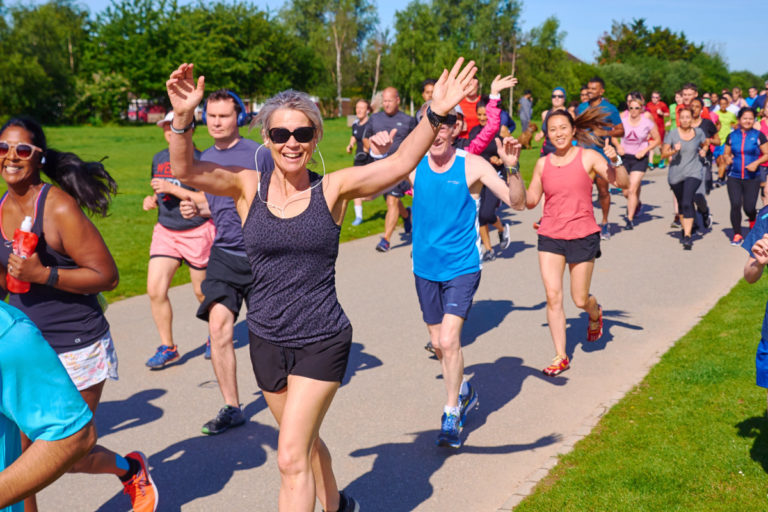
But I digress. So what is parkrun? It is a free, weekly, timed, five kilometre event completed at your own pace. It happens every Saturday, in over 2000 locations, across 21 countries, and is open to anyone, whether you sprint, run, jog, walk or volunteer. (As a side note, all parkrun teams always welcome more volunteers, so please put your hand up to help.)
parkrun is a social event to get people moving but also to connect with others in their community regardless of age, race, religion, language, gender identity and fitness. Even in our volunteer group of Haarlem parkrun we have a mix of Dutchies and internationals, which is, as an added benefit, is a brilliant way to improve my Dutch language skills!
Picture this, but with less hills. Image: parkrun/supplied
Amsterdamse Bos and Leiden (Kagerzoom) parkruns will launch on 7th of March, and we here in Haarlem, plan the inaugural Schoterbos event to towards the end of March. Enthusiastic teams in Amsterdam, Den Haag and Arnhem proposed more parkruns to follow. Keep an eye on parkrun Nederland’ssocial media channels for updates.
Do I have to be super-fit?
Absolutely not! In our volunteer group in Haarlem for instance, we recently did a test run, and some of our runners did it sub-20 minutes, (I know, right?!) whereas others took up to 30 minutes. I was not running this time around as I was photographing the runners, (that is my story, and I am sticking to it!) but if I were running, it would’ve taken me anything between 35 and 40 minutes. Yes, I am a novice and a slower runner. And that brings me back to the ethos, parkrun is for everyone!
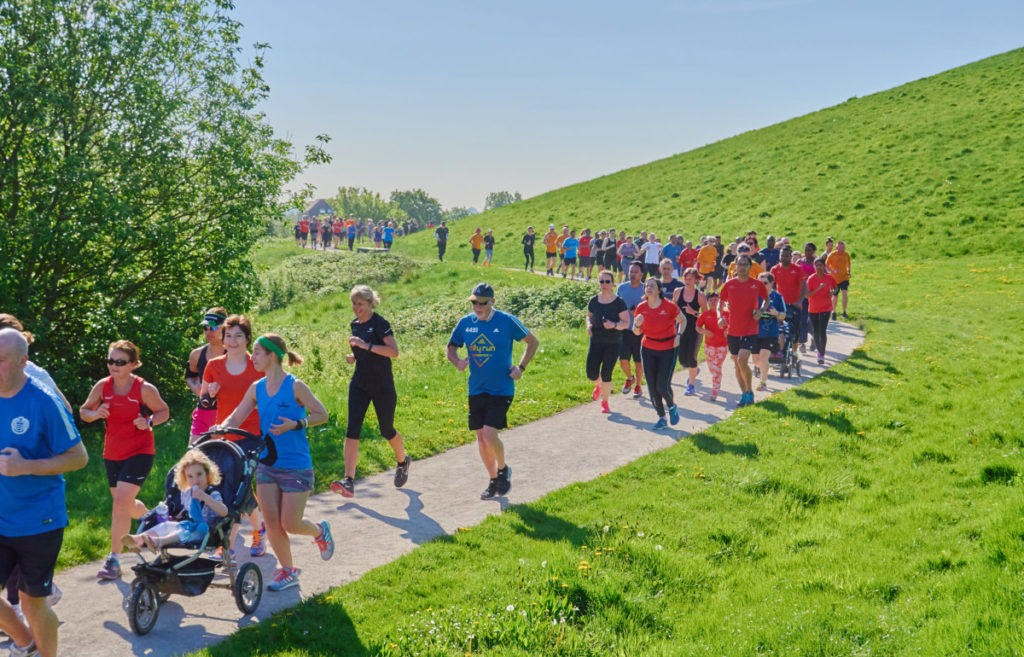
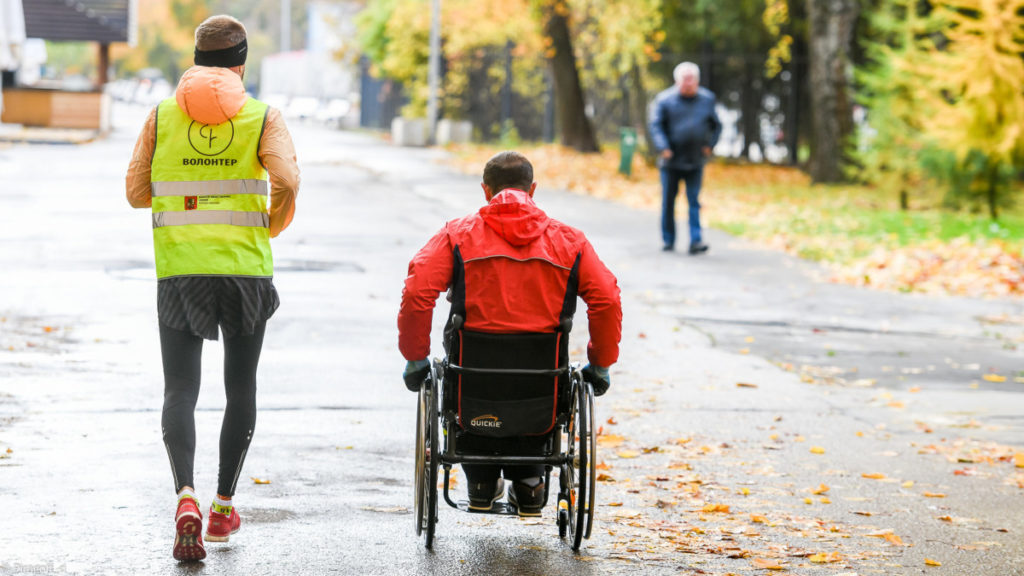
Being a bit of an on/off runner myself, I joined the group for motivation to run a few times during the week, so that I can go full tilt on parkrun day. On the flip side, even when I make excuses all week, I still feel comfortable to join in on a Saturday, as I can just as easily walk it. Apart from the exercise, I love the inclusive and fun atmosphere. Most locations are accessible so that wheelchair users and visually impaired runners with guide runners can join in. Parents often find their way back to fitness, either walking and running with buggies.
parkrun is for everyone. Image: parkrun/supplied
A worldwide movement with a British base
So what exactly is it about parkrun that keeps people coming back for more? It started back in 2004, in Bushy Park, London, when founder Paul Sinton-Hewit and a few mates, 13 runners and five volunteers to be exact, decided to share their joy of running. Paul once said in a BBC interview, “We go out of our way to make sure people can join this party to be part of the community and to find the things that have been missing in our society for a very long time.”
It’s more than a race; it is a community event, run by local volunteers for their peers living in their community. Its popularity seems to grow organically, and it can be addictive! Many regular parkrunners get a bit cranky if they do not get their weekly fix. One of the better vices to have, wouldn’t you agree?
And that’s the beauty of it. You only register once for free, and then you can run at your local parkrun, or any other parkrun in the world. Just show up with your barcode. You probably will be allowed to run even if you forgot your barcode because after all, you made an effort to drag yourself out of bed and parkrunners are a forgiving bunch. Still, as that is guaranteed to be your fastest run ever, you never, ever want to forget your barcode. No barcode, no results!
I am rather fond of the official line, “parkrun is all about participation and inclusion. It does not matter how fast the participants are. They are encouraged to run, jog, walk or volunteer accompanied by friends, families, children or even dogs.”.
Good vibes and good times. Image: parkrun/supplied
It takes all of 30 seconds. You’ll receive an email with your unique barcode, but you can also click on the link on your profile to download the barcode. You receive six copies, but you need only one at the event. At the time of writing, you can register at six locations across the Netherlands. If your home event is not live, you can register at another site and change it later.
#2 Print out your barcode
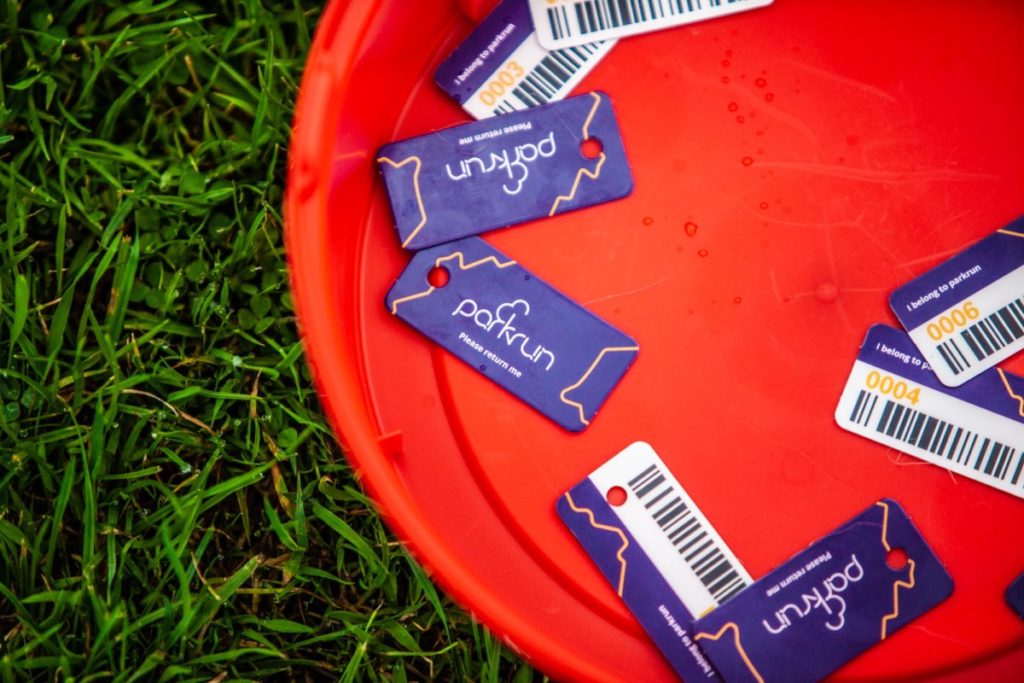
A green tip on printing the barcodes. At this moment, we cannot scan a screenshot of the barcode on your phone. So, if you don’t want to print out barcodes continually, you can also laminate it, put it in one of those conference badge holders or order a nifty tag or a wristband from parkrun, which you can use every week.
Your barcode gives you access to any parkrun, anywhere. Image: parkrun/supplied
#3 Choose a location, any location
Always keep an eye on your chosen parkrun’s social media channels to ensure it is going ahead and for any important updates.
#4 Show up
Arrive on time, barcode in hand, and the volunteers will guide you through the process and to the start.
#5 And go
…as fast or as slow as you want!
#6 Finish up
Remember to scan your barcode at the end, so that your results can be processed.
#7 And enjoy the social benefits!
Feel free to meet up for a coffee or tea afterwards. Have I mentioned parkrunners are social butterflies?
Got a hankering to help out? The best way to get involved is to join your local parkrun and have a chat to the volunteers on the day or send them a message via their event pages or social media channels.
When setting up a new event from scratch, you collaborate with the team at parkrun headquarters. I’m always amazed by how quickly they answer our questions, no matter how silly some of these seem.
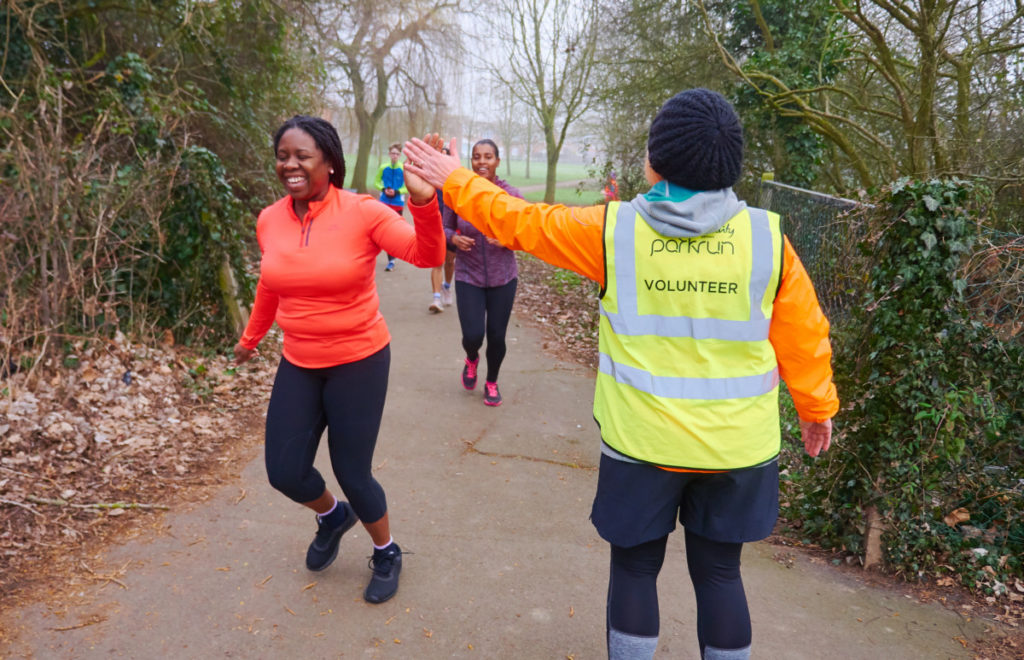
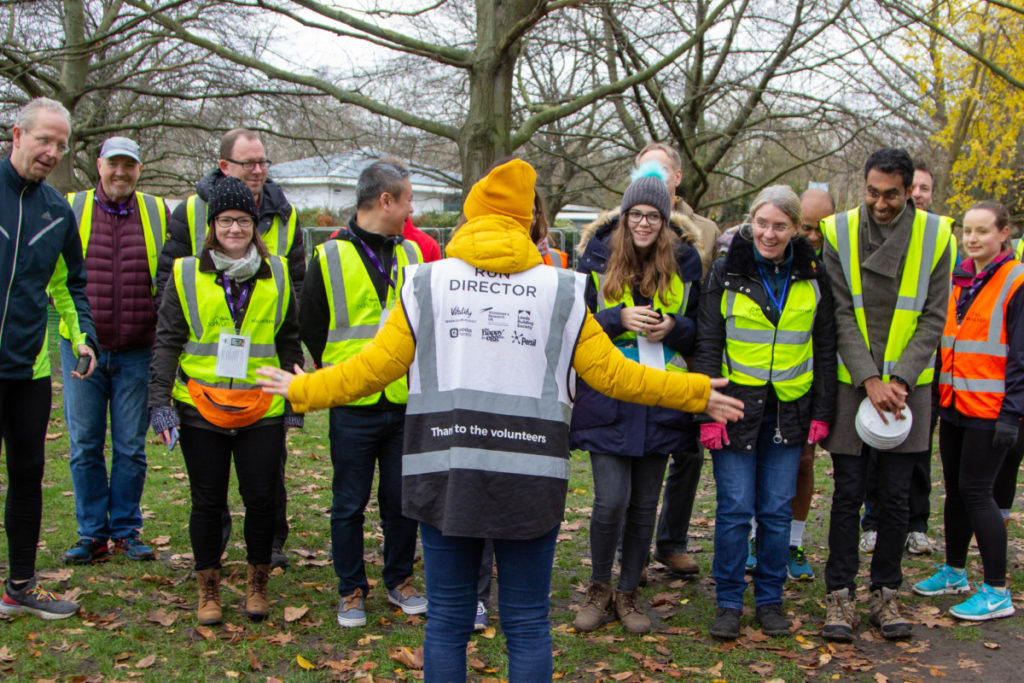
parkrun is entirely run by volunteers. Image: parkrun/supplied
Behind the scenes of parkrun planning
To start up a new event, you need a core team, which is led by an event director and is dependent on a volunteer coordinator to recruit more running feet. It is invaluable if one volunteer takes ownership of using social media as a PR tool long before the event launches.
Finding the best course which ticks all the required boxes can be tricky. Our Haarlem team took weeks of testing various locations, drawing up routes, and retesting these. Many animated discussions followed, primarily via WhatsApp, generating enough energy to power a small country before we got sign-off on a location. Don’t forget to gain permission from your municipality! After confirming a site, more official paperwork and test runs follow to ensure the inaugural parkrun runs smoothly. Pun intended!
During an event, there are many roles to choose from, and the volunteer coordinator schedules these beforehand. The event director oversees everything, and the run director ensures a specific event runs smoothly and safely. Other roles are timekeeper, pacer, finish token, funnel manager, results processor, barcode scanner, lead bike, marshalls, tail walker and photographer. What a team!
Will parkrun be a resolution to tick off your 2020 list? Let us know in the comments below!
If you fancy sushi, lights and Japanese cherry blossoms, be sure to keep the weekend of May 30 free because you’re in for a treat! The Japanese Light Festival will take place in Rotterdam this year.
Although the exact location isn’t known yet, what is known is that you’ll be able to experience a Japanese tea house, pop inside an arcade hall with Japanese games galore, and even try your hand at Japanese karaoke.
And of course, there will be sushi.
Lots of it (yesss!)
Where do I sign?!
Adding to the excitement, there will be a surprise location on water, details to be announced later. You can follow the official Facebook event for more information, and tickets can be purchased here.
You might want to be quick – over 46,000 people have already showed interest in the two-day event (and counting!)
Stay tuned, you won’t want to miss this one!
Will you be attending? Let us know in the comments!
An official White House photo depicting American president Donald Trump as more starkly orange than usual has resulted in a Twitterstorm. The hashtag #orangeface is trending on Twitter – and a response by a Dutch Twitterer has seemingly offended the American president.
The photo was taken by William Moon when the president returned from Charlotte, North Carolina to the White House South Lawn. It depicts the president’s hair, swept back, to reveal a bold tan line on this forehead.
We don’t want to prompt any tweets from @realDonaldTrump, but the reveal was, well, revealing about the Presidents tanning and/or makeup habits.
@realDonaldTrump returns to the White House from Charlotte, North Carolina. Photo by William Moon at the South Lawn of the White House on February 7, 2020 pic.twitter.com/n1a1Z93LrJ
Maarten van der Linden, a Dutchie who responded to the photo, tweeted ‘OMG America, your president!’ using the hashtags #toomuchmakeup and #orangeface. His tweet was liked over 14,000 times and shared over 2,500 times.
The American president couldn’t help himself – here’s what he responded to van der Linden:
More Fake News. This was photoshopped, obviously, but the wind was strong and the hair looks good? Anything to demean! https://t.co/t8ptYMCYHf
Tweet translation: How many followers do you get if the US president with more than 72 million followers get your quote tweet? Amazingly little: About 500.
(Thoughts and prayers to the White House staffer who decided that was the perfect photo to post on Twitter.)
What’s your #orangeface response regarding the photo? Leave your answer in the comments!
People of Asian appearance in the Netherlands are experiencing a surge of racism as a result of the coronavirus outbreak, according to NOS. A petition has recently been set up to raise discussion and to urge the media to take initiative in order to appeal to politicians.
Attacks against Chinese have emerged in several ways. For instance, Wageningen, ‘Chinese die’ was scrawled in an elevator within a student complex and a Chinese flag on a student’s door was reportedly torn up, according to linda.nl.
A song that goes too far
More widespread is a satirical song on Radio 10 titled Voorkomen is beter dan Chinezen (translates loosely to ‘Prevention is better than Chinesing’) by artist Toon from Rotterdam.
The song caused public outcry, and for good reason. The song is offensive in several ways – for instance, one of the themes includes not eating ‘Chinese food’ anymore to prevent coronavirus.
The song prompted Vincent Yeers and Hui-Hui Pan to start a petition, we zijn geen virussen, (‘we are not viruses’) in response. ‘Enough is enough.’ they write, questioning why people would connect a serious virus with people of Chinese background and with Chinese culture: ‘would we also laugh if the song was about cancer?’ They wrote. ‘This affects not only those who are Chinese, but also Dutch people with an Asian background.’
So far so good. The petition has been signed over 26,000 times, with over 21,000 signatories in the Netherlands, showing that things that cross the line simply won’t be tolerated.
DJ Lex Gaarthuis, who was responsible for broadcasting the song has apologised, calling it ‘an error in judgement’ although at this point it doesn’t do much.
Have you experienced racism as a foreigner in the Netherlands? Are you (part-) Chinese and have encountered bullshit reactions? We’d love to hear your answer in the comments.
A recent report by the Central Bureau of Statistics, commissioned by the Ministry of Economic Affairs, looked at how much is the Netherlands able to get and keep foreign talent in the form of highly skilled migrants, NOS reports.
The Netherlands has always been a cosmopolitan country, and highly skilled migrants have played an important role in its society, culture and history since the Dutch Golden Age. How is the country faring nowadays in this matter?
What do the statistics say?
The report shows that over 4% of the Dutch labour force is formed of highly skilled migrants, with an average number of 383,000 people, who are either highly skilled or are general international job seekers.
There’s been an overall increase if one looks at the trends over the past 15 years, with an increase from 2,7 to 4,2% of the highly skilled migrants working in the labour force.
In comparison to nearby countries, the United Kingdom has a share of their respective labour force made out of 9% highly skilled migrants, while Belgium has a share of 7%. The top of the list Luxembourg, where a whopping 25% of the labour force is formed out of highly skilled migrants. The lowest-ranked on the list is Finland, with only 2%. The Netherlands comes only as second lowest, after Finland.
What do the highly-skilled migrants in the Netherlands do?
A majority of the highly skilled migrants work in the service sectors, in jobs ranging from managerial positions to technicians. Two-thirds of them work at a high-level professionally. As with the general trend within the Dutch labour force, many of them work independently, with the highest percentage of independent highly skilled migrants in the report, at 20%. A lot of the independent workers can usually be found in commercial services.
Places of origin of highly skilled migrants
The report shows that quite a lot of the migrants come from outside Europe. South America is one of the highest places of origin of the migrants, usually Suriname and the Antilles, which is understandable given the colonial past of the Netherlands with these countries.
Overall, the country wishes to implement new policies to attract even more foreign talent, in order to have an impact on research and innovation in the Netherlands.
Should the Netherlands do more to attract foreign talent? Let us know in the comments.
If you were preparing a week of doom given storm Ciara’s grand entrance yesterday, you can take a breath. The worst has already passed.
Congratulations, we’ve made it through storm Ciara. It wasn’t that bad right? Or maybe it was and you’re now sitting in a shelter because the roof is gone (#neverforget then). In any case, let’s have a look at the aftermath of storm Ciara in the Netherlands.
Windy conditions continue
Strong wind will continue throughout the week, and Code Orange will be replaced with a milder Code Yellow for today. The weather forecast also rain for the remainder of the week.
Traffic and other transportation issues
This morning, the worst bit of rush hour has passed- but traffic continues through out the Netherlands – you can keep track of it here.
Of course, the storm has also had its impact on trains- with the high-speed trains diverted temporarily. This won’t cause major issues, but rather minor delays.
Cancellations at Schiphol
According to NH News, over 200 flights from Schiphol Airport were cancelled yesterday, and cancellations will continue today and likely for the rest of the week.
This flight wasn’t able to land at Schiphol at had to return to Madrid:
Grote paniek aan boord van dit vliegtuig dat wilde landen op Schiphol vanavond. Door de storm lukte dat tot vijf keer toe niet. Het toestel keerde daarom terug naar Madrid. https://t.co/N2jIujC2sRpic.twitter.com/1etiiIIJSB
Interestingly (on the bright side maybe), many of flights in countries that that did make it up in the air hit record times due to windspeed. A KLM flight from New York to Amsterdam reached an hour and a half earlier than expected, according to NOS.
Has Ciara affected you? Let us know in the comments!
Fast trans-Atlantic travel was only possible if one could take a Concorde aircraft, which would get you over the Ocean in 3 and a half hours. The Concorde has long been decommissioned, but it seems that for a brief moment super speedy passage over the Atlantic ocean was possible again. Thanks to Storm Ciara herself!
Flights over the Atlantic can last between 7 and 8 hours, depending on the weather conditions and the speed of the aircraft. Some planes were in luck, however, as they benefited from the stormy wind given by Storm Ciara, as NOS reports.
Record-breaking flight over the Atlantic
A flight from the British Airways managed yesterday to break a record of speed on the route between New York and London, . It managed to make the normally long flight in just 4 hours and 56 minutes.
Met storm Ciara in de rug kon je vannacht in minder dan 5 uur van New York naar Londen vliegen. Doe je normaal 7/8 uur over! pic.twitter.com/ftVmDVEmzR
Another British flight, on the route between Boston and London, managed to finish the flight in only 4 hours and 47 minutes, a record-breaker for that route also.
Some KLM flights were lucky to ride with the storm too. KLM Flight 644 managed to get from New York to Amsterdam one and a half hours before its scheduled arrival.
Breaking: @KLM flight 644 reached an incredible ground speed of 819 mph — faster than the speed of sound — over Newfoundland on Friday night. ✈️
The Boeing 747 was flying in an extremely strong 260 mph jet stream! Thanks to Captains Bakker and Best! pic.twitter.com/Rs9ggzP5cK
The main reason why these planes have managed to cross the Atlantic so fast is because of a weather phenomenon known as the jet stream. They are fast-flowing and narrow air currents located high in the atmosphere, and they are often taken into consideration by airlines. If a plane follows a jet stream, not only does it get to its destination faster, it also cuts down on fuel costs. Of course, as you might have noticed, all these flights were going from west to east. If a plane would now try to fly towards New York from Amsterdam, it wouldn’t be a surprise if it took 12 hours.
Excited for the storm to come? Send us any footage you find on DutchReview.
Welcome to the big stormy day! Storm Ciara has just entered the Netherlands and you might be wondering what’s going on and if the Dutchies are keeping their cool. Let’s have a look at how the Netherlands is reacting to Ciara.
Writing this after lunch, things may very well change quickly (storms be stormy after all), we’ll try to do our best to update you.
Orange Code already in force on Wadden and in North Holland
The KNMI has already declared code orange earlier. The warning is especially valid for the Wadden-islands and Noord-Holland and soon for other regions as well. Code Red is next, let’s see if we get that today. Look here at the KNMI site for the current status of Ciara in the Netherlands.
132 flights have already been cancelled at Schiphol. Yesterday, as a precaution, KLM decided to keep forty planes on the ground, and another twelve were added this morning. Easyjet, Lufthansa, Eurowings, British Airways and Flybe will also partly keep their planes on the ground. Schiphol advises travellers to keep an eye on their flight information and to stay in contact with airlines. Passengers may postpone their flights free of charge at some airlines, including KLM.
Whether more flights will be cancelled today due to Ciara, a spokesperson for the airport could not yet say. “We look at that from moment to moment.” reported the NOS.
Schiphol advises travellers to check the current flight information or to contact the airline where they have booked their flights.
Flights between Rotterdam and London cancelled
Rotterdam The Hague Airport has cancelled four flights. It concerns flights to and from London, which either were to arrive or to depart the airport.
No more ferries to and from Texel
The ferry service between Den Helder and Texel is blocked since noon. The ferries to Terschelling and Vlieland are also not going out this afternoon, as announced by shipping company Doeksen.
If you’re thinking about just staying at home and watching football all day long (well, I was). Bad news; all Dutch football games have been cancelled.
We’ll keep you posted about Storm Ciara in the Netherlands. In the meantime, if you spot or shoot some awesome stormy video’s or pics. Send them to DutchReview!
Although I was raised in the true Greek fashion with all the discipline, weirdness (and awesomeness) that comes with that, I was English-schooled. Every tradition, song, game and fairytale I ever remember being taught in primary school was British.
I remember learning about Good King Wenceslas but being completely unfamiliar with snow, monarchs or winter fuel (in sunny South Africa)! I always imagined that I channelled Fatty in Enid Blyton’s Famous Five adventures because we were both so serious about our food. In short, I spoke English, thought in English, and expressed everything in a British way.
For most emigrants with British heritage or for English-speaking Europeans (like myself), it would seem unfathomable to emigrate to a country that is not…well, Britain. And I’m sure that Brits feel (equally) inappropriate about emigration from their beloved UK to a non-English speaking country. It seems utterly justifiable to say that it’s not the logical choice…
Brexit or bust?
As one feels the escalating pressure and urgency to make a life-altering decision such as emigration, one starts by grabbing onto whatever is safe and familiar. When our emigration journey began in August 2019 my bright red safety vest in the sea of choice was, of course, Britain.
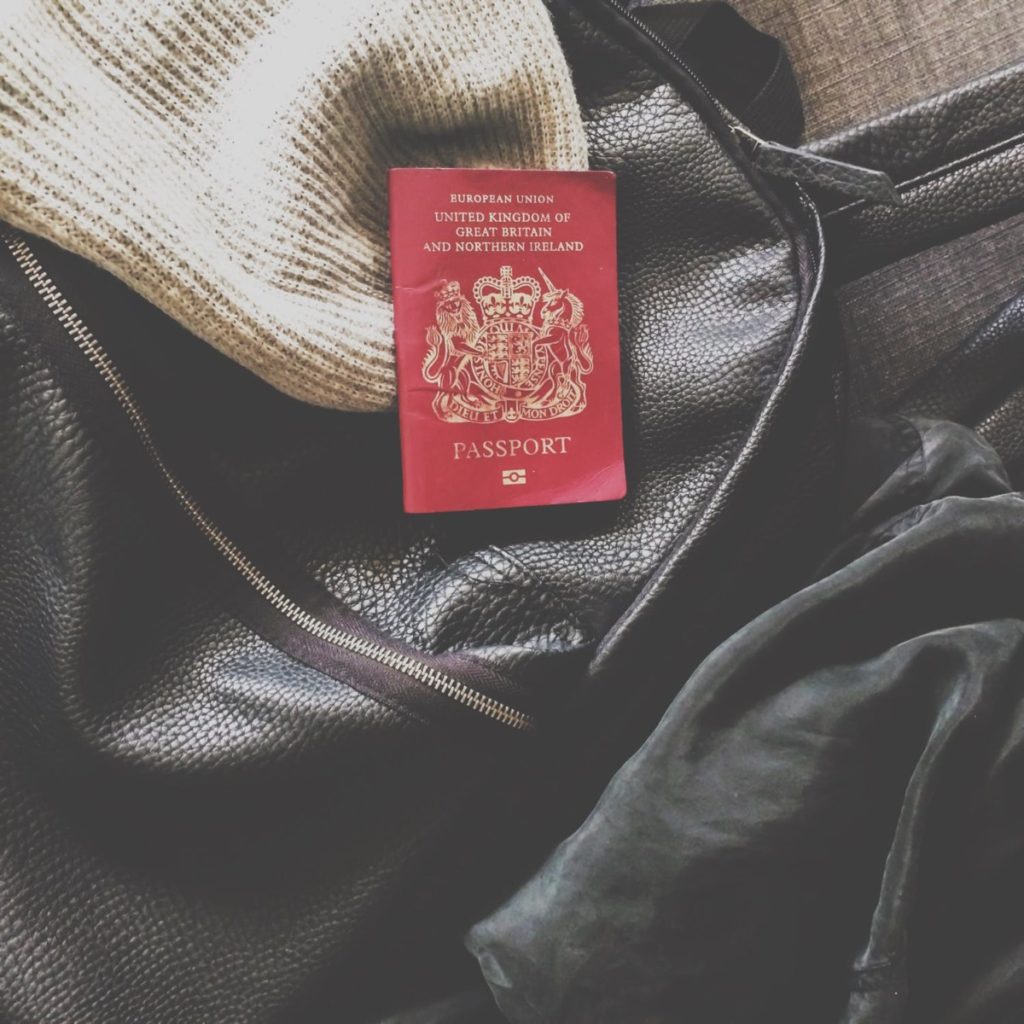
Before Brexit this passport was much more powerful. Image: Sam Johnson/Pexels
However, the prime consideration was the reality of a looming Brexit. If not the UK, where to then? Because of this reality (did the Brits really have to vote?) we then had to imagine which alternate shoe would fit us best: learning to speak Spanish (hola!), French (je ne parle pas Francais) or Dutch (dank u, vaarwel)?
The Dutch had already landed…hallo daar!
As Afrikaans speakers (thanks to Jan Van Riebeeck and the VOC Dutchmen who strategically established a European colony in 1652) we South Africans are sufficiently able to understand written Dutch today. And so, after being an ‘emigration outsider’ and non-contender until then, the Netherlands had tactfully stepped into view as a possible destination.
However, my fearful thoughts still looped day and night and sounded like:
“Should we close the door on England?
Can we possibly adjust to Holland?
What if we miss the window altogether?”
As if the Afrikaans card wasn’t enough of an arrow in the quiver!
A ‘Top Ten’ prodigy
What does a crazed, frustrated, Dutchie-wannabe do best? Research! The more I delved into all things Dutch, the more gems I discovered about the small, flat, wet country. The more I cross-referenced and explored, the more Netherlands kept popping up on Top Ten lists! This little country was wicked and ticking all the right boxes…
The Netherlands proudly stands at shoulder height with much larger countries like Germany, UK and Canada for personal safety, access to advanced education, health & wellness, environmental quality, personal freedom, etc.
According to the WHO, a well-functioning healthcare system requires steady financing, a properly-trained and adequately paid workforce and well-maintained facilities, thus earning the Dutch a place in the top five (whoa!)
Healthy economy
Netherlands is the best economy in Europe thanks to (play it again, Sam) its excellent infrastructure, high-quality IT facilities, stable government policy, highly educated workforce and excellent healthcare
Life first, work second
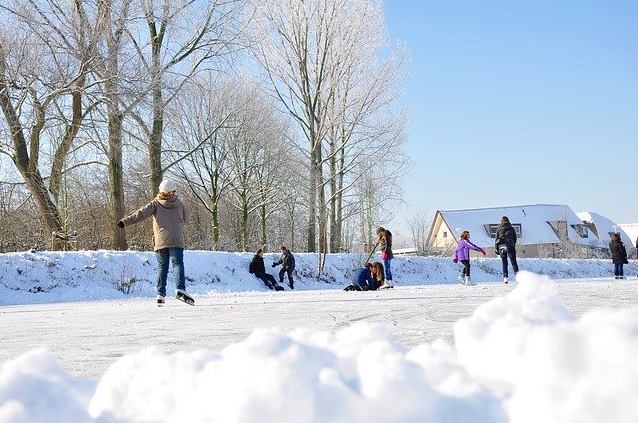
More work-life balance means more time for the good stuff in life. Image: J. Ketelaars/Pixabay
Netherlands takes FIRST place for work-life balance. Consider moving to a place where people juggle their work vs personal life very well – they don’t work very long hours and spend more time being happy (leisure, sleeping and relaxing)… my kind of Eden!
Smart approach to education
The quality of Dutch education is among the best in the world. Dutch universities are acknowledged worldwide for offering high-quality, affordable education in an international, open-minded country.
English pros
This is my personal favourite… as a non-native country, Netherlands ranks number ONE in English proficiency! Out of a hundred countries, and for the past nine years, Netherlands has ranked in the top three! The fact that English is compulsory in the Dutch school system, coupled with the fact that the Dutch don’t dub their foreign TV shows… makes the Queen’s English rock on!
For a small country, Netherlands sure as heck packs a mighty punch…
Whatever Dutch topic I researched, Google kept spewing positivity back at me. The Netherlands was good news after more good news (like good news squared) – it amazed me that it wasn’t on everyone’s Top Go-To list! Why is the country of tall people, no mountains and poplar trees overlooked when compared with other emigration destinations like UK and Spain?
All signs point to yes
When my own neighbours moved to the Netherlands last year, I became even more aware of this mighty little country…and with every step my former neighbours are taking (I’m definitely not stalking them) I’m learning and liking more about the Dutch and their extraordinary ways.
As I’m not yet living in Holland, my emigration dream has taken better shape since I’ve joined the Facebook page (er, lifeline)South Africans in The Netherlands. These fellow countrymen continually affirm that the Netherlands was the right choice..!
As for that fact, I’m certain of it! If you’re an English speaking expat, don’t be put off – take the plunge, take the first step! Does anyone else still need convincing (I can help you)? The Netherlands is a good choice for South African expats, or any other expat for that matter…
Brexit happened on Friday 31st January, and although it’s a time of (either) joy or sorrow for Britons, it has (by default) given us our new home destination.
Have you taken the plunge and made the move to the Netherlands? Still considering your options? Tell us your story in the comments below!








_(2).jpg)