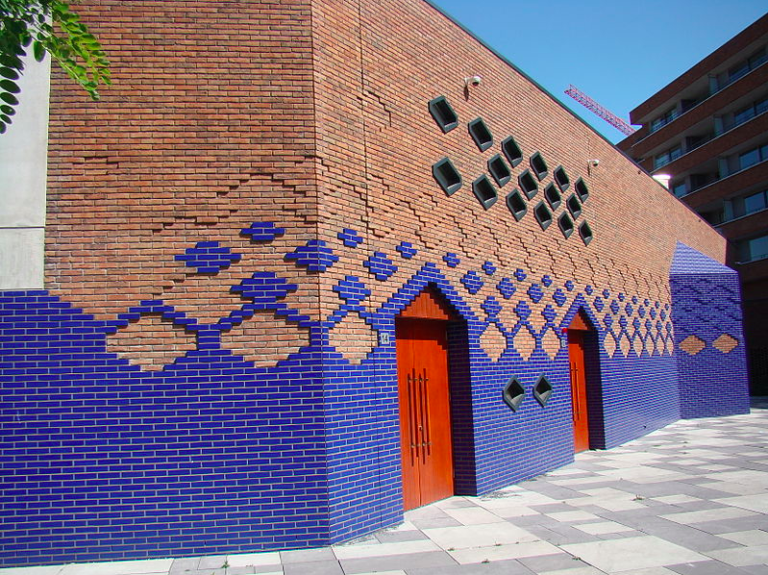
The Blue Mosque in New-West Amsterdam wants to become the first mosque in Amsterdam to amplify their call to prayer with loudspeakers. This would only apply to the Friday call to prayer.
On their Facebook page on Tuesday, the Blue Mosque announced that they wanted to amplify their Friday call to prayer. Their reason for doing so is to normalise Islam, and to make it a more visible part of Amsterdam “Amsterdam, the most tolerant city,” is the perfect place to do this for the first time, according to the main Imam at the mosque, Yassin Elforkani.
Twitter, of course, had plenty to say about the development. Stephen de Wijn says that those who don’t live near the mosque should pay attention to what the nearby residents think- which appears to be mainly positive.
Misschien moet iedereen die niet in #Amsterdam (Nieuw-West) of in de buurt van ‘n #moskee woont zijn PVV-gevormde mening voor zich houden. Wellicht vinden de mensen in de buurt het wel lekker; “hé, is het al zo laat? Bijna het #vrijdaggebed gemist”. #blauwemoskee#liveandletlive
In the same post, the mosque says that they want to talk to local residents about this decision. The meeting will be this Sunday at 5pm in the mosque. Some people who were asked in the street about this change by AT5 said they would need to get used to it. Others were positive about the change.
Would you say Amsterdam is a tolerant city? Let us know in the comments below.
According to a comparison done by the World Economic Forum (WEF) the Netherlands now has the most competitive economy in Europe. Worldwide, only Singapore, the United States and Hong Kong are more competitive.
The Dutch economy has achieved this status because of its agile economy, which is the result of “an entrepreneurial culture, flat organisations and growth of innovative companies”, according to researchers quoted by nu.nl.
How did the Netherlands become the best economy in Europe?
“There are more and more innovative companies in the Netherlands that realise growth and embrace disruptive technologies and new business models,” says Henk Volberda, professor of strategic management at the University of Amsterdam. “Dutch companies have also become much less hierarchical and can more easily adapt to economic dynamics.” The Netherlands also scores high thanks to great infrastructure, high-quality IT facilities, stable government policy, a highly educated workforce and excellent healthcare (though maybe that is about to change, with 11 hospitals failing a financial stress test).
Lack of innovation is a problem
Despite all this good news, there does seem to be a problem with innovation in the Netherlands- it is only the tenth most innovative country in the world. Germany, the US and Switzerland occupy the top three spots in this ranking. And why is the Netherlands not as innovative as other countries? According to Volberda, both the government and the business community are not investing enough in research.
Skilled workers are going abroad
There is also a problem with the labour supply in the Netherlands. Companies have problems finding highly qualified staff for higher positions. Many highly qualified Dutch people are moving abroad to work, where they can earn more money. According to Volberda, this mismatch between supply and demand inhibits economic growth. This can be partly helped by teaching children about business and innovation in schools.
What is coming next?
Financial changes may be coming, as the current monetary policy of the European Central Bank has reached an end. This policy was to push interest rates further down to stimulate the economy, but it seems that this policy is no longer working. Given that developed economies like the Netherlands benefitted the most from this, it will be interesting to see what effect the change will have.
What do you think about the Dutch economy being the best in Europe? And what can we do to improve innovation? Let us know in the comments below.
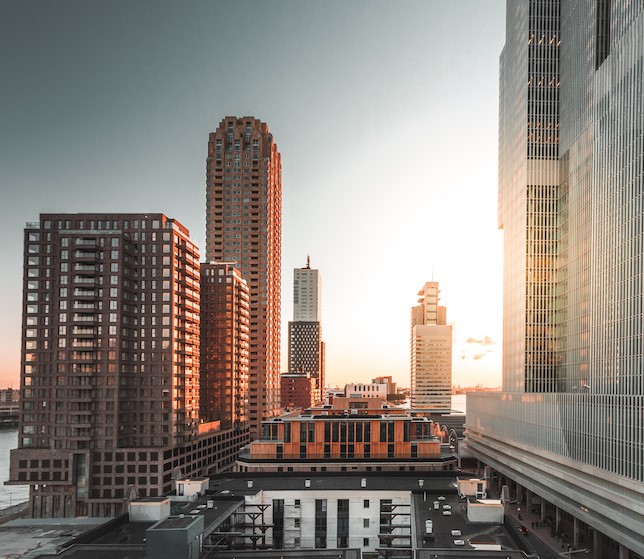
Feature image: @lifeof_jochem/instagram. If you want to see more of @lifeof_jochem’s photos, check out the awesome photos he took for our Rotterdam photo report! They really show the amazing urban planning and skyline of Rotterdam.
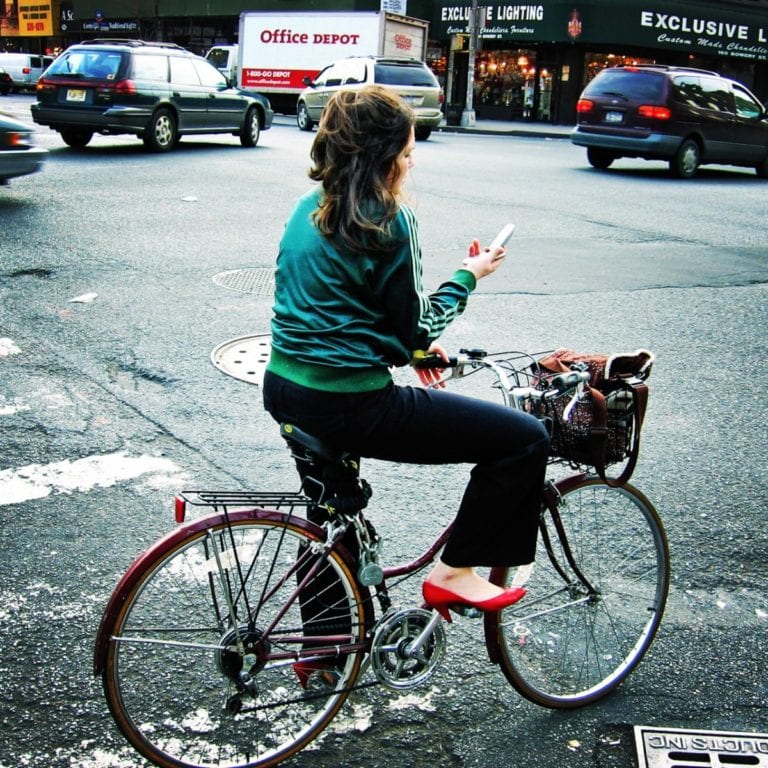
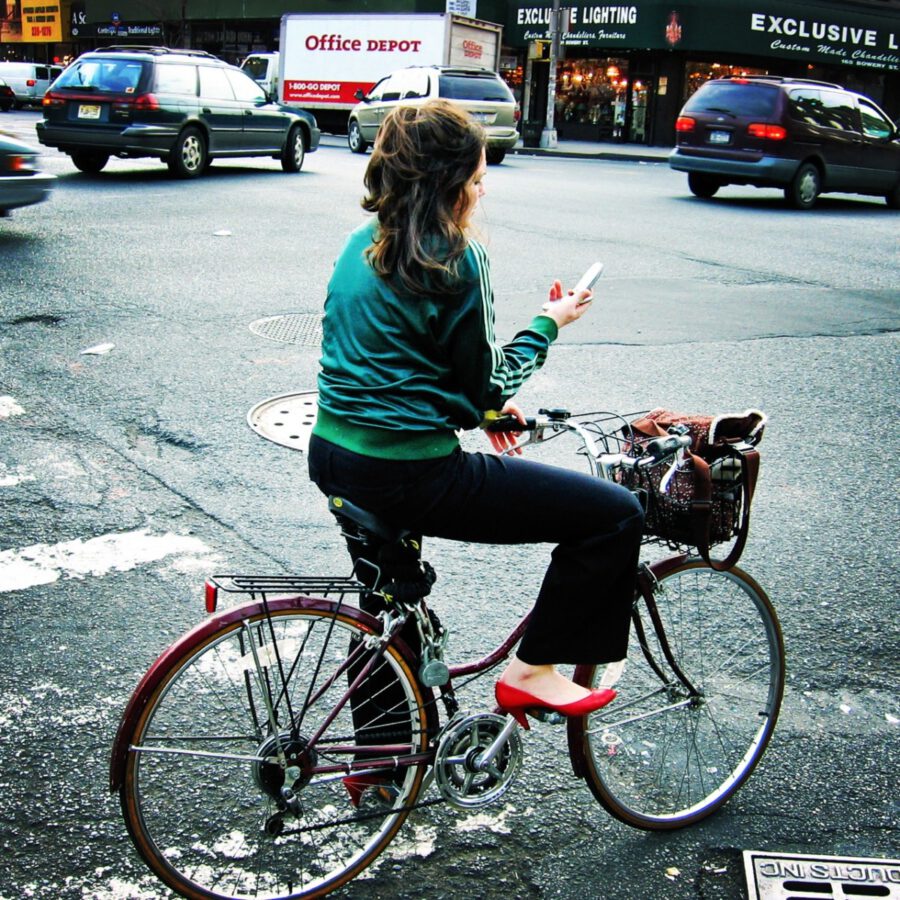
Having the world at your fingertips is nice and all, but sometimes it’s good to look up and observe the world around you. You don’t want to be looking at your phone, especially when you’re on your bike or driving your car, when something exciting is happening – like, you know, avoiding oncoming traffic or banging into a tree. But it seems like some people never learn a lesson.
A total of 9248 fines have been imposed in only the first two months of decreeing a ban on using phones while on the bicycle. 44,540 fines were imposed from May to August for using the phone while driving a car, twice as high as last year, reports NOS.
However, there was a total of 2,974,497 traffic violations (especially for speeding) from May to August, 8 percent less than the year before.
The fines for cyclists for using their phones is 95 euros. For motorists it’s a hefty 240 euros as a error from them could have far worse repercussions. The traffic fines are reviewed every four months by the Ministry of Justice and Security, the police, the Public Prosecution Service and the Central Judicial Collection Agency.
Egbert-Jan van Hasselt, a traffic police officer, regarded these numbers as “quite substantial”. He said on News & Co, an NPO Radio 1 program, “People focus less than before on the road. That is really a new phenomenon.”
The ban on using phones while on your bike was started from July 1. They had a major publicity campaign where they hoped to get more attention to a growing problem. But of course, as Van Hasselt says, one campaign is not going to change a lot. People have to take it upon themselves to pull away from the screen not just for their own safety, but for the safety of others as well.
So enough of DutchReviewing (among other things) on your phone when you’re on your bikes! We love ya, but we also want you to be safe.
Have you stopped using your phone while on your bike since the ban or have you been a naughty rebel? Let us know your stories of living outside of the law or even if you haven’t in the comments below!
Researchers from Eindhoven University of Technology have been granted 2.9 million euros from the Horizon 2020 EU programme to build a prototype for an artificial womb. If successful, the technology will provide babies with artificial respiration.
The artificial womb is a game-changer
Babies born prematurely that are put in incubators often suffer long-term complications because their lungs and intestines are not fully developed and vital oxygen and nutrients cannot be absorbed. But the incubator does not successfully save every child and at present, one million babies die worldwide due to prematurity.
Baby in an incubator. Source: Jacoplane/Wikipedia
The artificial womb mimics biological conditions and envelopes the baby with fluids that allow the nutrients and oxygen to be absorbed properly.
Guid Oei, a professor at the Dutch university and gynaecologist at the nearby Maxima medical centre, told the Guardian, “when we put the lungs back underwater then they can develop, they can mature, but the baby will receive the oxygen by the umbilical cord, just like in the natural womb.”
Oei continues, “with each day a foetus of 24 weeks continues to develop in an artificial womb, the chances of survival will increase. If we are able to prolong the foetal development of these children in the artificial womb to 28 weeks, we will have reduced the most serious risk of premature mortality to 15%.”
Professor Guid Oei presenting an artistic impression of the artificial womb. Source: Bart van Overbeeke/Eindhoven University of Technology
How long will it take to build?
The team working on the prototype hope to launch the artificial womb in clinics in five years time. If they succeed, it would be the world’s first.
3-D printed babies
Oei said that he and his colleagues will harness the capabilities of 3-D printing to develop their prototype and print babies to trial in the artificial womb. The babies will be fitted with sensors that enable the developers to align the artificial womb with the experience of being inside a mother’s womb. For example, the sound of a mother’s heartbeat will play in the artificial womb.
“When they are in this environment, they just feel, and see, and smell, and hear the same sounds as when they are in the womb of the mother, Oei told the Guardian.
The moral dilemma
Some scientists have queried the ethics of such a prototype. Elizabeth Chloe Romanis, a lawyer at the University of Manchester, has questioned what babies should the artificial womb first be tested on? and how do we know what the long-term implications might be?
She told the Guardian, “the law treats foetuses and babies very differently, so how does the subject of the artificial womb fit in? Is it possible to turn off the artificial womb, and in what circumstances? It is clear that the legal and ethical issues emerging from the technology must be talked about now, in advance of the artificial womb becoming a reality”.
Eleven hospitals in the Netherlands are not in a good financial position, which threatens to jeopardise care. Smaller hospitals in particular are struggling with higher debts and dwindling buffers.
11 hospitals fail stress test
The financial situation of these eleven hospitals became apparent following the results of a stress test by BDO Accountants. This test was based on the financial reports of 2018, and academic hospitals were not included. The test says nothing about how well hospitals are performing medically, according to NOS. Stress tests are usually computer simulations applied to institutions (like hospitals) on the basis of their past record to see how they would cope with a future financial situation.
Five have failed test three years in a row
Five of the eleven hospitals in question have failed the stress test three years in a row. At the bottom of the list is the LangeLand Hospital in Zoetermeer. Furthermore, the financial situation of the Haga Hospital in The Hague, the Maas Maas Hospital Pantein, the Zaans Medical Center, the Twente hospital group, the Canisius-Wilhelmina Hospital in Nijmegen and the Limburg Zuyderland are worrying, according to the report.
Half of Dutch hospitals scored an 8 or higher
However, on the plus side, there are three fewer hospitals in the danger zone than last year. And half of Dutch hospitals are scoring an 8 or higher on this stress test. Overall, the hospitals got a 7.4 on the test, in comparison to a 7.1 the year before. Nevertheless, according to BDO, there is still a “risk of care” though not an acute one, especially when some hospitals are repeatedly failing stress tests year after year.
Rising insurance costs and profits for insurance companies
What do you think about Dutch hospitals failing financial stress tests? And what has your experience of Dutch healthcare been thus far? Let us know in the comments below.
The weather in the Netherlands does love to play tricks on you because this weekend, even though it is autumn, we will be experiencing some pleasant summer temperatures. Looks like the weather never got the memo that: HEY, IT’S AUTUMN IN THE NETHERLANDS.
The dreary clouds outside right now may make it hard for you to believe, but Saturday is primed for the temperatures to rise to 20 degrees in most parts of the country, reports RTLNieuws.
Summer temperatures this weekend? Can I go enjoy the outside again?
In short, no. In long, nooooooo.
The temperatures are going to get warmer as we go towards the weekend with temperatures being 16-17 degrees on Friday, and reaching a toasty 20 degrees over the weekend. It’s going to be warm, but that doesn’t mean the sun is going to come out and play, especially on Friday. On Saturday and Sunday, you might be able to enjoy the sun. But the clouds and rain are also expected to literally rain down on your parade, reports Weeronline.
You might be able to spot a few rainbows on the weekend, but the humidity might be high.
Oh, well! What about next week?
Do you even have to ask? The temperatures are going to drop again, so enjoy it while it lasts. Autumn in the Netherlands is all rain and clouds, so we can’t expect more now, can we?
What do you have planned for the weekend? Let us know in the comments below!
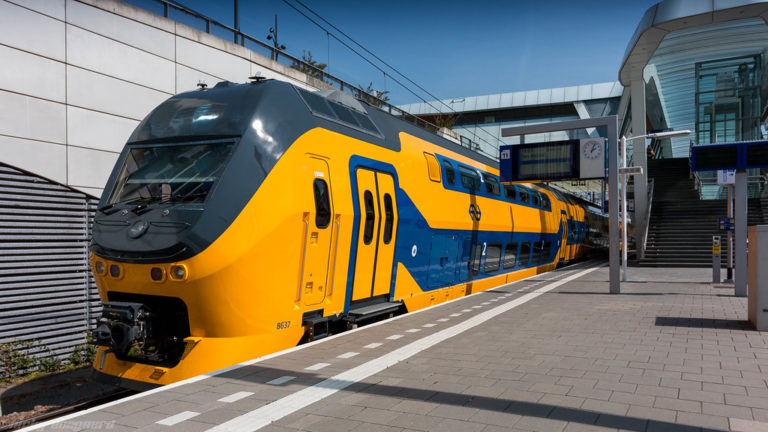
To increase rail capacity and transport more passengers, NS will be trialling a self-driving train later this year. The train will be tested on the Lelystad and Zwolle route but no passengers will be on board during the trial.
Four FNV Spoor executives travelled to London earlier this year to see how the self-driving trains operate and were pleased with what they saw. Weir, a train driver told the Guardian that self-driving trains are “different – I wouldn’t say aggressive – it’s a little unnerving at first. We drivers err on the side of caution but know the limits it can go to.”
Automated operation created through a computer digital system will memorise train routes but a driver will still be on board to intervene if necessary. Ultimately, when the technology is developed and secure enough, this will allow trains to depart in shorter succession and transport more passengers, which is necessary to keep up with the demand. It is not yet known how this will affect the jobs of train drivers.
This study is being conducted by the Dutch Association of Doctors for Pulmonary Diseases and Tuberculosis (NVALT). They are conducting a survey of 1100 people who use e-cigarettes. The reported health complaints include coughing up blood, severe asthma, and one patient ending up in intensive care.
What are e-cigarettes?
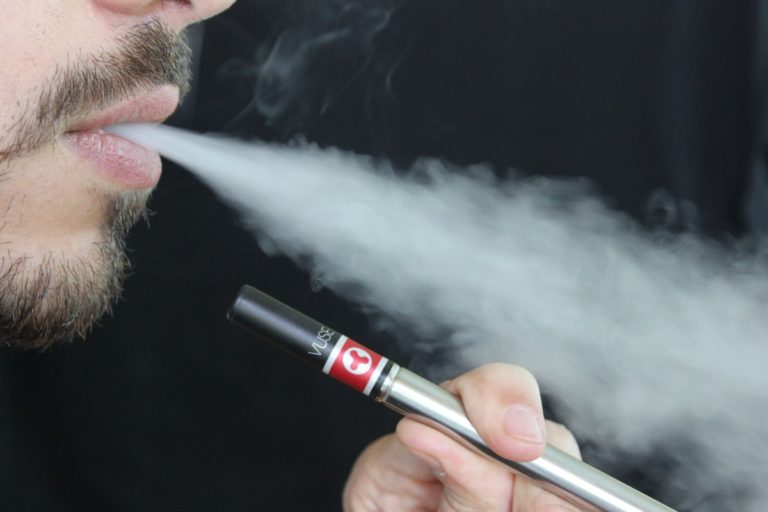
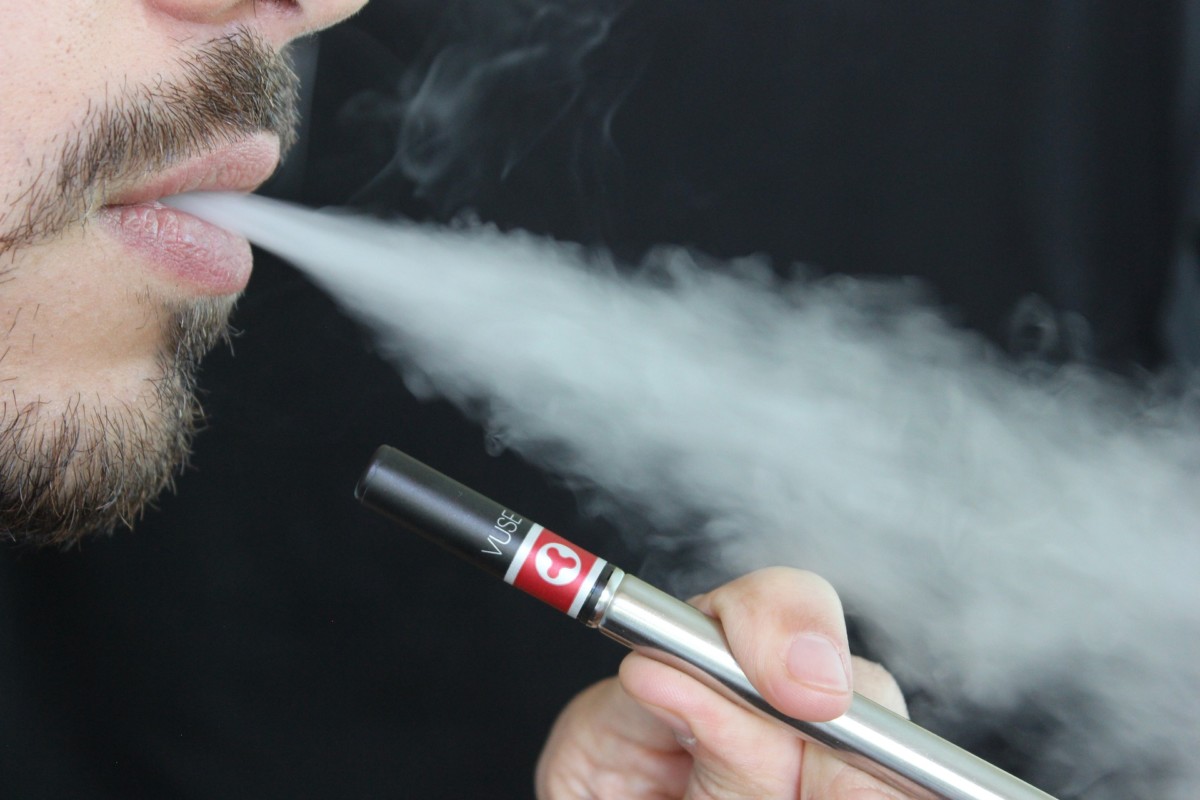
E-cigarettes or electronic cigarettes is a device which runs on batteries. It heats up a liquid solution which may or may not contain nicotine, which then turns into a vapour that can be inhaled (thus the word vaping). They can look like normal cigarettes, cigars or pipes. Some of the devices can also look like pens or flash drives, and they can either be disposable or refillable.
With the results of the ongoing study, the NVALT is convinced that a total ban should be implemented as soon as possible. The chairman of the association, Leon van den Toorn said on NOS Radio 1 News, “Because of all the alarming reports that are out there and the already known harmful effects on the respiratory tract in the chronic term, we should now stop it.” He continued to say, “We’ve had the same thing with regular cigarettes. We think we should raise a warning finger right now and not in twenty years’ time if the damage has already been done.”
These discussions have also been happening in the US where hundreds of people have a lung disease that is said to have been caused by the use of e-cigarettes. Many have succumbed to it.
Recently, Mayo Clinic released a study in The New England Journal of Medicine which showed that lung tissue damage is caused by direct exposure to noxious chemical fumes, instead of an accumulation of lipids causing a rare form of pneumonia. “It seems to be some kind of direct chemical injury, similar to what one might see with exposures to toxic chemical fumes, poisonous gases and toxic agents,” says Brandon Larsen, M.D., Ph.D., a surgical pathologist at Mayo Clinic Arizona, and a national expert in lung pathology.
Is a total ban on e-cigarettes possible in the Netherlands?
State Secretary Paul Blokhuis of Health said to AD.nl that a total ban cannot be issued at the moment as he has to adhere to EU rules. However, he does want to do everything he can to reduce smoking and e-smoking.
Van den Toorn said, “We see that the State Secretary is very actively involved in this and that he is looking at what measures are possible to work on a total ban. We understand that this is not arranged so quickly in practice.” He also said that different associations in Europe will join together to try and get rid of e-cigarettes and vapes.
Do you use e-cigarettes? If you’re having any problems and need to go to the doctor, then do it now! Are you in favour of a total ban? Let us know in the comments below!
When one decides to go abroad, there are many factors to consider: where to live, the best places to go out, the culture and values, cost of living, the public transport system and of course, the culinary delights (or horrors) that a country has to offer.
If you’re like me, then you love food. Eating is not merely a matter of survival. Yes, my friend, it’s an experience.
Food brings people together. It’s an opportunity to have hilariously inappropriate conversations complete with sexual innuendo over some borrelhapjes. Food can bring about that twinge of nostalgia for that time you were on your heavenly vacation in some exotic faraway land. If you’re exceptionally hungry, food can restore you back to a normal state from the crazed grumpy person you were before you ate. Delicious nutrition can turn your mood from sour to sweet in a matter of seconds.
“Tasty” treats
Speaking of sweet, if you’ve got a sweet tooth, then you will certainly want to dive into the wonderland of sweets that whatever country you’re in has to offer. You know, get some sugar into your blood and start bouncing off the walls like a five-year-old child. Being a Canadian, I’ve had unrestrained access to junk food. So naturally, I’d want to discover how the Dutch satisfy their sweet tooth.
If you live in the Netherlands, you’ll have come across or will come across the infamous drop, otherwise known as the Dutch version of black liquorice for all you English-speakers. You’ll see these candies everywhere: at the Albert Heijn in your neighbourhood, the HEMA around the corner, the market down the street and even in pharmacies.
But don’t be fooled, these “tasty” treats are anything but ordinary. If you’re brave enough, you can even try the various eccentric drop flavours and their accompanying shapes. I shudder at the thought of those atrocities. But, to the Dutch tongue, these candies are undoubtedly super lekker!
To the foreign tongue, however, it’s something that needs preparation. If you’re trying to look pretty or half-way decent, beware, your face will distort into something that resembles a constipated gremlin or anything that doesn’t look human.
When a foreign person eats drop
The science behind the Dutch drop
Let’s take a look at this through a somewhat-scientific lens, shall we? Why do people either love or hate black liquorice? Well, according to this interesting NBC news article, it could actually be that people are born with an inherent liking or a disliking towards black liquorice. It looks like in addition to being really tall, your undying love for drop is running through your veins, Dutchies!
Let me drop some more knowledge on you (sorry, couldn’t resist). Did you know that there are actually health-related dangers when it comes to eating black liquorice? It could even cause heart problems if consumed in high quantities. Somehow, I don’t think this would deter Dutchies from consuming a shitload of drop. They are world-class pros when it comes to biking in dangerous situations so why would a little candy be any cause for concern?
So many different kinds of drops to not enjoy. Image: Angelbattle bros/Flickr
If you do feel a little worried, I have some good news. It’s somewhat contradicting but black liquorice is known to possess some health benefits too. In Chinese medicine, it is used to treat a variety of ailments.
Having a Dutch drop? Nee, dankjewel!
Whatever the case may be, I’m sure as hell avoiding drop like the plague. Ever heard of the saying, once you go black, you’ll never go back? That doesn’t apply here, at least not for people who weren’t born the natural ability to enjoy this cornerstone of Dutch cuisine.
The first time (and last time) I had drop was at work. My co-worker had an assorted bag of candy and offered some to me. I happily accepted, unaware that it also contained this strange Dutch variety of black liquorice. Unfortunately for me, that’s the one I chose. I immediately scrunched up my face in disgust and spit the half-chewed candy into the garbage followed by a “Bleh!”. Needless to say, my co-workers found my reaction amusing.
Well, regardless of whether or not you like drop, we can rejoice in the fact that generally speaking, most of us love candy, sweets, treats, sugar…whatever. I think I’ll just be sticking to stroopwafels from now on.
What about you? How do you like the Dutch drop? Let us know in the comments below!
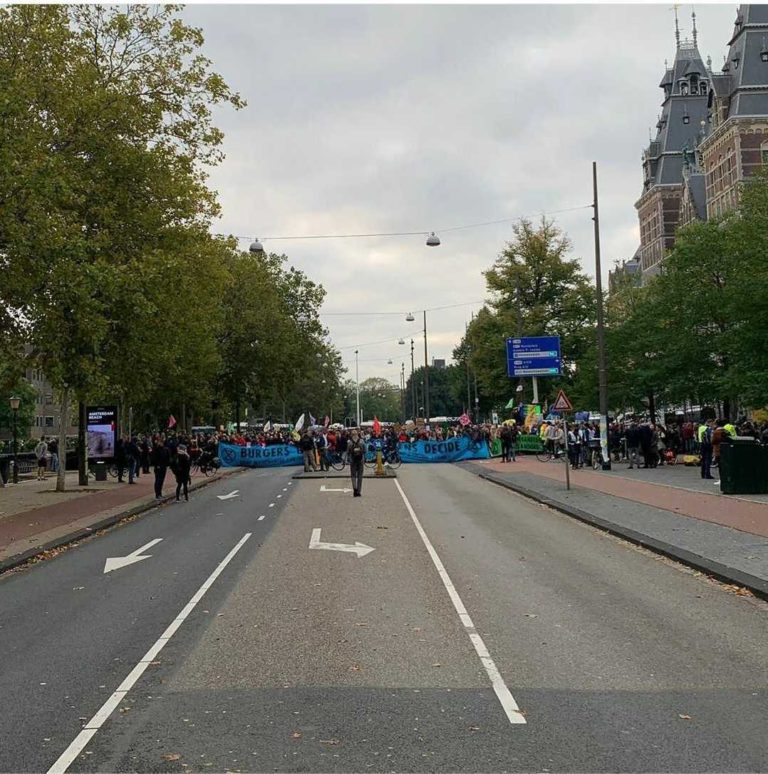
Police have announced to take traffic delays and nuisance into account for commuters who need to pass through the Stadhouderskade at the Rijksmuseum in Amsterdam as environmental activists have blocked that busy traffic junction, reports NOS.
“Our government has been aware of this problem for 30 years and they are continuing to do nothing, so at some point, the time for friendly questions and petitions is over,” says one of the activists from Extinction Rebellion to NOS, the organisation that is behind organising this act of civil disobedience.
Enkele honderden klimaatactivisten hebben ondanks het verbid van de gemeente de Stadhouderskade geblokkeerd bij het Rijksmuseum. Zeker 50 tentjes staan op straat. De ME doet vooralsnog niets, op enkele aanhoudingen na. #ExtinctionRebellion#klimaat#Amsterdampic.twitter.com/Mmgx6a3Gvm
The municipality had initially banned this blockade from happening, but the activists want to use ‘civil disobedience’ to bring attention and put pressure on the government. “We use civil disobedience to force the government to do something about the climate,” says a spokesperson for Extinction Rebellion.
There have been some arrests but they don’t seem to be going anywhere – the demonstrators have pitched tents and everything! The police have asked them to move to Museumplein but they have not responded. They want to continue this protest for the whole week and is part of an international campaign. Similar protests are happening in Berlin, Paris, Sydney and London.
Klimaatactivisten omsingeld door ME. Politie roept ze op weg te gaan, anders worden ze gearresteerd. Betogers geven hier vooralsnog geen gehoor aan. #ExtinctionRebellionpic.twitter.com/v8hEd741KK
There won’t be any more activists joining them though – the police have blocked off the area around the Rijksmuseum. So take note commuters – you can’t go through Stadhouderskade, but Museumplein is free of traffic nuisance.
Do you have to go through these areas for your commute? Or are you at the protest? We want to see how it looks, so send us some pictures in the comments below!