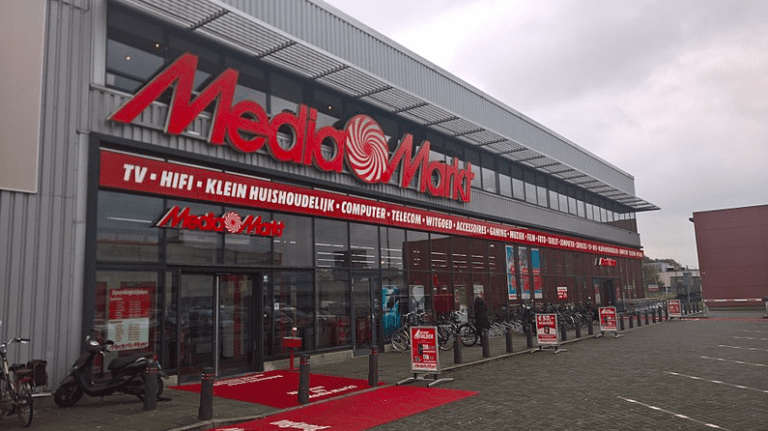
On Thursday, two people were injured in an overexcited crowd outside a MediaMarkt store in Leidenschendam. According to police, hundreds of people had gathered outside the store.
The injuries occurred at the entrance to the store, where the large crowd had to funnel in through the narrow gates. According to nu.nl, people pushed and shoved each other while trying to squeeze through the gates.
Dutch people love free things
So why were these people so excited about the new MediaMarkt store? I mean, vacuums and blenders are great, but they’re not exactly exciting- I think we can all agree on that. It turns out that the reason the crowd was so excited to enter the new store was the fact that the first 100 people to enter the store would get free earphones worth 115 euro. Dutch people love free things- love them dangerously, in fact.
A huge mall is being built in our city, we can see it from our balcony, and today a new electronics shop opened. The 1st 100 visitors received free earphones (value $ 125). Several injured…. Humans. ?#BlackThursdayhttps://t.co/fOGPnfZ0c6
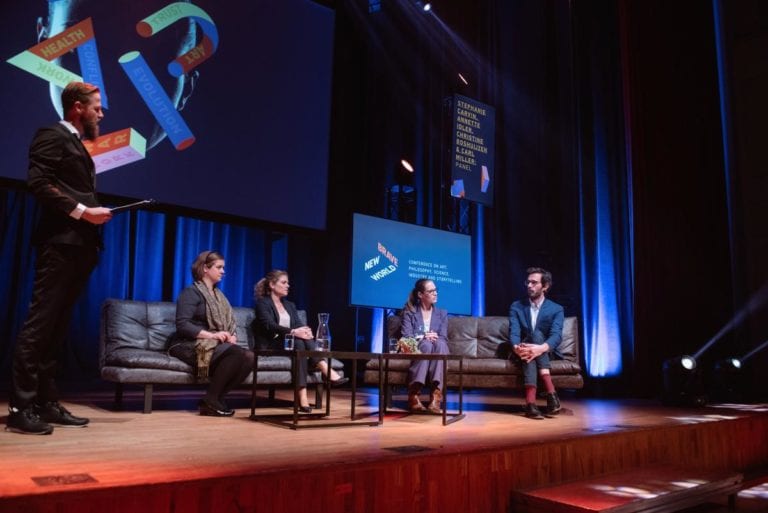
Brave New World is a conference held each year in Leiden to investigate how future technology will shape human life. It’s a fascinating collision of philosophy, culture, society, storytelling, science and technology that is graced by lots of fascinating speakers each year.
If you’ve been wondering how advances in science and technology will affect your business, how the government behaves, or how you go about your daily life, this is a conference you can’t miss.There are over twenty speakers at this year’s event, and of course we can’t talk about all of them in this article. But there are a couple that I really wanted to bring to your attention, particularly if you were humming and hawing about whether or not to go. You can get your tickets here!
A robotic speaker?
First of all, there’s BINA 48. If you’re thinking, wow, what sort of person has a name like that, you’re not wrong to be curious. BINA 48 is actually a robot, who presents as a black female, and who is based on the wife of biotech entrepreneur Dr. Martine Rothblatt. BINA 48 will be joined by Bruce Duncan, M.Ed. Director of the Terasem Movement Foundation, who will introduce her and explain how the experiment is progressing to the audience. Super exciting- I don’t think many of us will have come across such a humanlike robot before, so the presentation BINA 48 is well worth a visit.
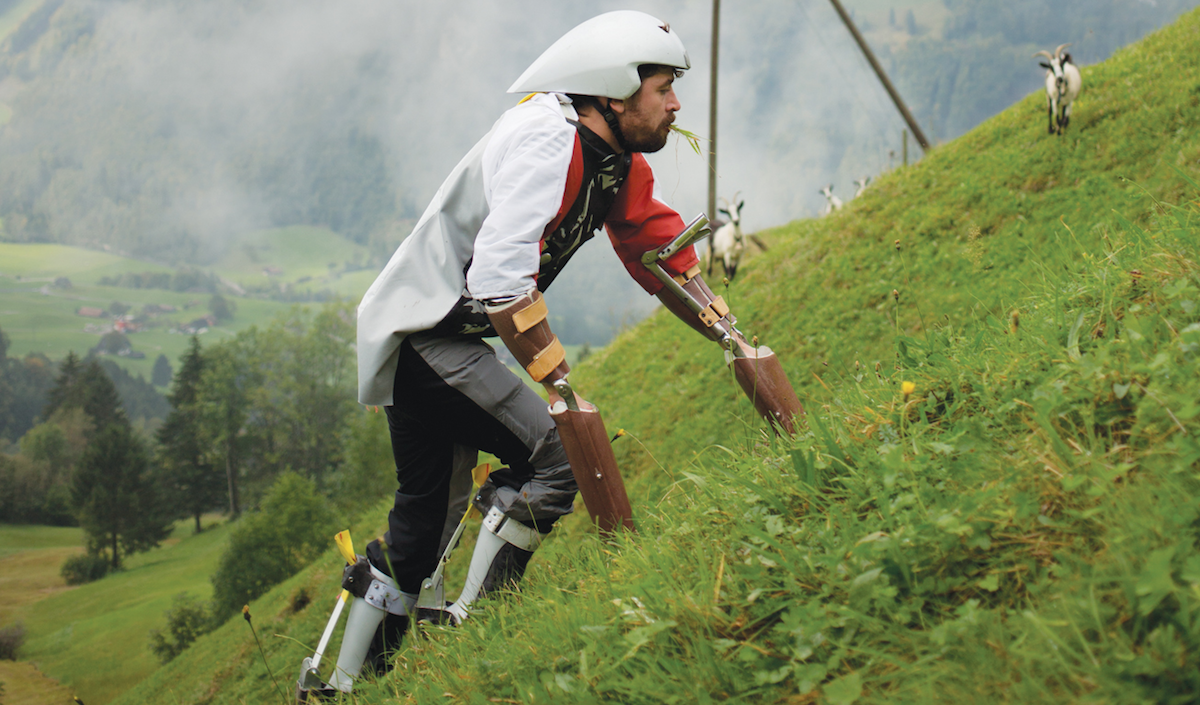
Thomas Thwaites lived as a goat in the Alps. Image: Brave New World
Goat Man comes to Leiden
Moving onto a speaker who is at least a little more human: Thomas Thwaites, otherwise known as Goat Man. In 2016, Thwaites used prosthetic technology to become a goat- he lengthened his arms and gave his legs “hooves”, and most disturbingly, attached a rumen, the first part of a grass-eating animal’s digestive system, to his chest. He ate grass, hung out with goats (admittedly, goals) and generally tried to escape from “the angst inherent in being a human”, in his own words. I, for one, am so excited to hear him speak and get more details of his life as a goat.
James Bridle explores a New Dark Age
One last speaker you should definitely pay attention to is James Bridle, an artist and writer. He writes about culture, networks and literature for publications like The Guardian, Wired and The Atlantic, and has had his artworks exhibited worldwide and on the internet. He has also written a book, called “New Dark Age”, which explores how artificial intelligence, computers and the internet are currently affecting our daily lives and the ways we think.
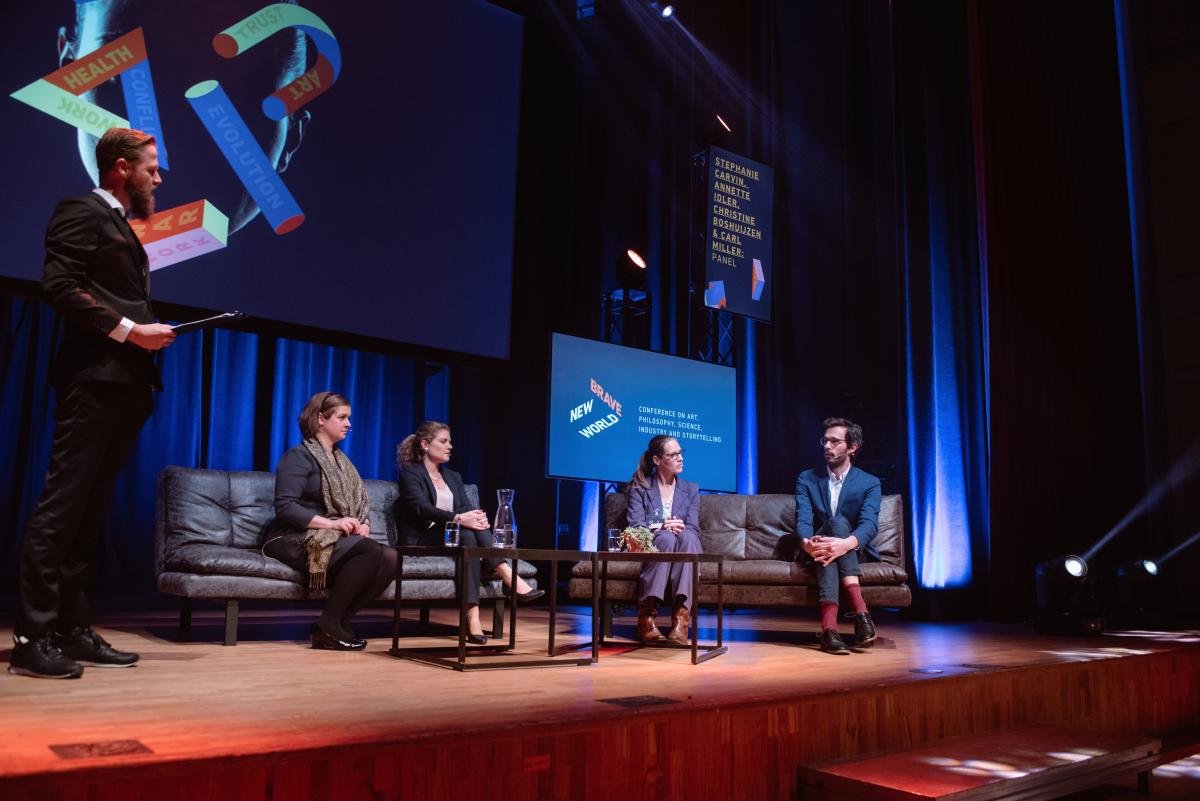
Each day there will be panel discussions on various topics at Brave New World. Image: Brave New World
What will the conference look like?
So, what can you expect from the programme at the conference? It takes place on the 4th and 5th of November, and begins each morning at 9am with registration. Events take place in a couple of forms: there are individual talks by some speakers, and panel discussions on other topics, such as “The Future of Sex and Reproduction” or “What can we learn from animals?”. There is, of course, a break for lunch, and an interactive session where you can meet and network with the other people attending the conference.
There’s more: The Beyond Human Festival
If this sounds exactly up your street, and you’re feeling sad about it only being two days long, fear not. There is actually a week-long event accompanying Brave New World called Beyond Human. This is the first year this additional festival is happening, and promises to give us a glimpse of the future of humans. It will go from the 4th to the 10th of November, so during and right after the conference.
The Beyond Human Festival will be full of interactive exhibits. Image: Brave New World
Bumper Ballet, Games and Politics, and so much more
The festival will have events like Bumper Ballet– which is like any fairground ride right up until the point when the computer takes over the steering controls. It will be going on every day of the festival from 9am to 6pm on the Cultuurplein. From 9 to 5 each day there will be an exhibition called Games and Politics, in which you explore the political potential of video games. And there is so much more- I’m pretty glad that the festival extends well beyond the conference: this way, everything can be fitted into your schedule. Most events are completely free, with the exceptions of the Brave New World and Smart Culture conferences.
Both the festival and the conference will be a fascinating and engaging- but they will also be important. It’s easy to forget how important technology is to humanity now, even as we spend all day typing words and scrolling. Paying attention to how this will play out in the future is crucial to both our quality of life and to our very existence. We may not end up as goats in the Alps, or as robots, but our lives will continue changing at the breakneck pace we’ve experienced for the last fifty years. So: be there, or be square (literally).
So, will you be going to the Brave New World conference? Or will you stick with the Beyond Human festival? Let us know in the comments below.
Holland is an attractive destination for students who want to study abroad. One reason for this status in the international learning community is quality. Wageningen University & Research, University of Amsterdam, Delft University of Technology, Leiden University, Erasmus University Rotterdam – these Dutch schools are among the best higher education institutions in Europe. Times Higher Education ranked Wageningen University & Research on the 59th position in its World University Rankings 2020.
Although these schools are much more affordable than U.S. and UK universities, an additional source of income is always welcome for students. They may get scholarships and loans, but some of them may need to work throughout their higher education.
What if a student wants to travel through Europe during their vacation? What if they need to pay for essay writing assistance or they want to go out with their friends as frequently as possible?
You’ll find great opportunities for work and study in the Netherlands.
Thinking of working and studying in the Netherlands? Don’t worry, you have a lot of options! Image: Анастасия Гепп/Pixabay
It may not be crazy expensive to study in Holland. However, when you realize that the Dutch student culture is based on nightlife, you won’t want to miss out on the fun. Even the smallest cities have an impressive nightlife. Staying social takes money, so you’ll need to earn it.
Let’s see how you can do that.
Figure out the regulations
The Dutch government imposes some restrictions as to who can work in the country. It’s easier for EU citizens. All they need is Dutch health insurance and a BSN. The BSN (Burgerservicenummer) is a unique number that each Dutch citizen has. As soon as you start your studies in the Netherlands, you’ll need to obtain your number.
If you’re a non-EU citizen, you already obtained Dutch health insurance before coming here. You’ll need the BSN, just as EU citizens do. But you’ll face another important requirement: a work permit. The government will issue this permit only if a company that hired you applies for it. The company has to be registered in the Immigration and Naturalization Service of the Netherlands.
If you want to work and study in the Netherlands, you have a lot to figure out. Image: Free-Photos/Pixabay
This is a complex requirement that not all foreign students can get. But if you get hired by a company registered in the IND, it shouldn’t be a problem.
An internship is a way to avoid getting the work permit. You’ll sign an internship agreement. But of course; keep in mind that internships pay less.
Try freelancing
You are allowed to be self-employed in the Netherlands. You won’t need a work permit for this, so it’s the perfect opportunity for a foreign student to get money.
International freelancing sites offer various jobs for an essay writer, graphic designer, programmer, photographer, and any other profession that can be done remotely.
Freelancing is by far the most flexible way to work and study in the Netherlands. Image: William Iven/Pixabay
Did you know that many students hired useful essay services when they can’t handle their assignments? If you’re doing well with your studies and you have some extra time on your hands, you can complete an extra programming, graphic design, or writing assignment. You’ll get paid for offering tutoring and homework help to students from all around the world. Businesses also need writers and other types of freelancers.
If you freelance, keep in mind that you’ll have to pay taxes. Get well informed; you don’t want to get in trouble with tax authorities.
Choose a part-time job
Between school and parties, are you sure you can handle a full-time job? Most students can’t. The Dutch educational system is challenging. No professor is going to cut you some slack just because you’re a foreign student who works. You have the same responsibilities as any other student, so that’s your priority.
A part-time job will take anywhere from 10 to 15 hours per week. You can easily fit it in your daily schedule without lagging behind on studying material.
Once you graduate, it will be easier to find a full-time job at a company that applies for your work permit. Until then, education is your priority.
You work and study in the Netherlands very easily with a part-time job. Image: JesseMcFly/Pixabay
Find the balance
Are you a productive person? Can you attend all lectures, complete all assignments, do some studying, and still have extra time on your hands? An average student is overwhelmed by the studies themselves, so they don’t even think about getting a job.
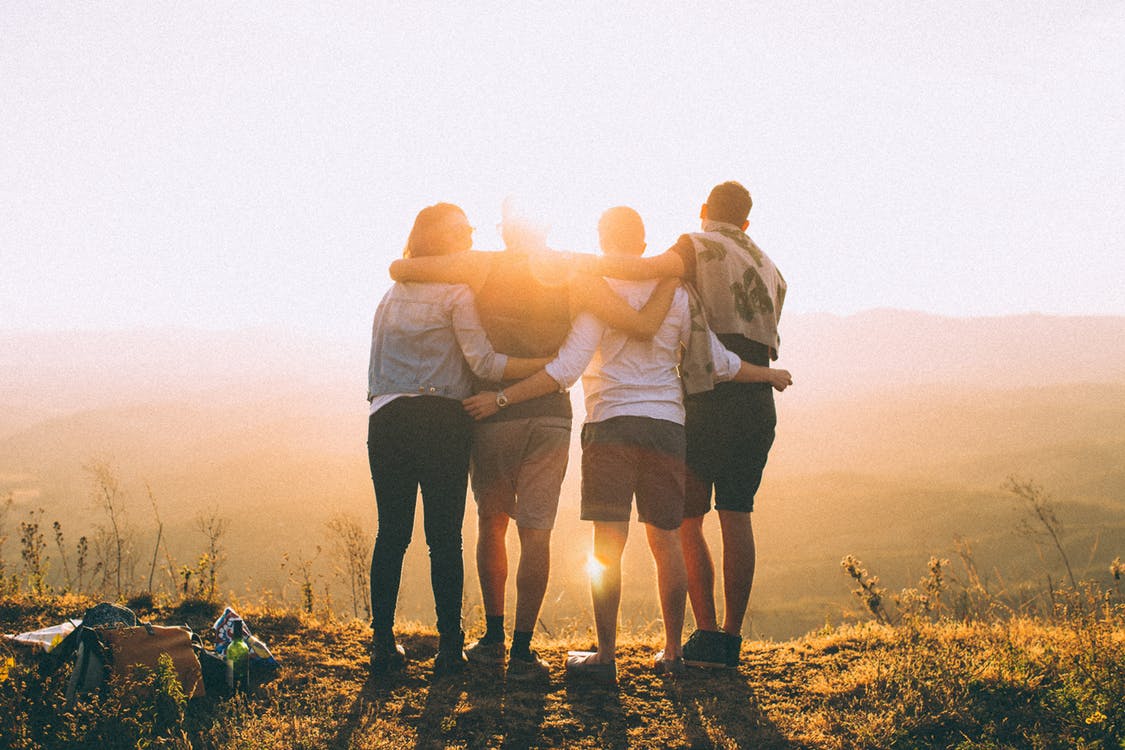
Friends will always get you through! Image: Helena Lopes/Pexels.com
But if you can be more productive than average, fitting a part-time job is no big deal. You can freelance for an hour or two per day and do most of the studying during weekends. You’ll still have time for socializing. When in Holland, it would be a shame to miss out on the parties.
You should only find the balance. Making monthly, weekly, and daily plans will help with that. Use your favourite to-do and note-taking apps, so you won’t forget any assignments and work responsibilities.
Good luck!
Do you work and study in the Netherlands? Do you have any other tips? Let us know in the comments below!
Sad times for the Middle East and world peace once again as the Turkish army has been attacking northeastern Syria and the SDF since yesterday morning. This area was under the control of Kurdish forces, who played a major role in beating Isis. Most Dutch people and politicians are also shocked by Trump’s betrayal and Turkey’s cynical attack.
Turkish troops were able to enter the area due to a shocking withdrawal of American forces, as a result of a phone conversation between Trump and Erdogan on Sunday. During this conversation, Trump betrayed the Kurds to Erdogan. Since then the world has expressed its disgust at this act of betrayal.
Yesterday there were airstrikes and artillery barrages aimed at previously US-backed Kurdish forces by the Turkish army, as they advanced into the area. According to the Syrian Observatory for Human Rights, eight civilians were killed. The Kurds have been a critically important ally for the West in the fight against Isis, and even now guard most of the prisons with Isis members in them.
Not a clumsy tweet, or a distasteful joke, or a shady business deal. Just a deliberate, calculated betrayal of an ally; leaving them to be massacred in exchange for a few votes in the Rust Belt. Shameful. https://t.co/qmqgTGokat
Trump mildly criticised the assault, releasing a statement saying, “The United States does not endorse this attack and has made it clear to Turkey that this operation is a bad idea.” However, as usual, Trump had a quick change of heart later in the day. He justified allowing Turkey to attack the Kurdish area by saying the Turks and the Kurds had been fighting each other for centuries, and “[The Kurds] didn’t help us in the second world war, they didn’t help us with Normandy … but they’re there to help us with their land.”
The Kurds did not have a government to provide formal support during World War II. This is because we went back on our word to give them their own country after WWI, and instead divided their population into three separate countries, with a minority status in each country.
Dutch politcians condemn this move and not even the Republicans back him
The move has been widely criticised, both within the US (by both Republicans and Democrats) and in the global community. The UN Security Council will meet today to discuss the invasion, but their response is probably not going to be in the Kurds’ favour, as both Russia and the US support Turkey. The Netherlands has condemned Turkey’s actions, with the Minister for Defence, Ank Bijleveld, saying that Turkey is taking “irresponsible risks” with the safety and stability of the region.
I condemn Trump's reckless decision to abandon our Kurdish allies to their fate at the hands of Turkish President Erodogan.
The President of the United States should not make significant national security decisions impulsively, by tweet, after a single phone call. https://t.co/WvY6U4HVo6
Kurdish people in the Netherlands are planning a week of protests in response to the attacks, and to Trump’s withdrawal of support to them. Demned, an organisation of Kurds in the Netherlands, will be demonstrating at the Malieveld in The Hague on Saturday. They want the Dutch government to take concrete actions in defence of the Kurds in North-East Syria, rather than just talking about it. A spokesperson for the group says, “talking about it is what is mainly happening now. But that doesn’t scare Turkey.”
Dutch MPs have said on Monday that Europe must do everything in its power to stop the offensive, and some MPs are now discussing the imposition of economic sanctions on Turkey. This is unheard of, as Turkey is a part of NATO, and therefore officially an ally of the Netherlands. They fear increased refugee flow from the area, as well as a revival of Isis. The Dutch Foreign Minister Stef Blok has summoned the Turkish envoy, as well as condemning the invasion.
Nederland veroordeelt het Turkse offensief in Noordoost-Syrië. Ik heb de Turkse ambassadeur laten ontbieden. Roepen Turkije op de ingeslagen weg niet te vervolgen. pic.twitter.com/Xjnczqqm4i
The EU has also condemned the invasion and urged Turkey to halt it, saying that the idea of establishing a safe zone to which refugees could return was unlikely to become a reality.
The Dutch politicians and other Europeans just bark and don’t bite
Trump might be a traitorous moron and Erdogan a vicious dictator. But the Dutch, French, British, Germans and all other politicians who now are all about sanctions and ‘condemning statements’ which never really came through for the Kurds.
Even when the US asked them to put troops on the border between Syria and Turkey, the Europeans sleazed their way through all kinds of political talk in order not to commit serious military resources to defeating Isis and protecting their brave Kurdish allies. And even now you can count on them doing nothing, maybe a economic sanction here and a nice new hospital for Kurds there, but nothing that will significantly help the situation there.
The Netherlands might be even worse hypocrites than the other European nations, as they’ve actually helped out the jihadist-groups that are now aiding Turkey with their invasion.
Zal iemand onderstaande pick up-truck de komende tijd spotten in de beelden van de aanval op N-Syrië? Op deze foto’s die Nieuwsuur en Trouw wisten te bemachtigen staat een van de exacte trucks die NL leverde aan de Sultan Murad Brigade. Sultan Murad doet mee aan Erdogans inval. pic.twitter.com/gGsPpxUv7d
Still, Europeans showing no backbone is nothing new and doesn’t make the betrayal of the Kurds by Trump (or Erdogan’s attack) any less of disgrace.
As always with any war nowadays, this is also an online narrative-battle. Show some support with the #TrumpBetrayedTheKurds hashtag, or mail or tweet to your local politician.
A study by ING’s Economic Bureau has shown that the Dutch are using 26 million pieces of plastic food packaging each year. This is more than in previous years, largely due to population growth and the rise of individually packaged meals.
If you break that statistic down, that means 1500 pieces of plastic food packaging are used by each person each year- so about four per day. These things really add up!
Plastic is used in the food industry because it is lightweight and cheap to produce. Plastic manufacturing costs have barely risen over the last decade, according to NOS. When it comes to food, plastic has the advantage of increasing the shelf life of food and drink, ensuring food safety and being easy to transport and use.
Plastic and the environment
However, plastic is a massive problem for the environment. It takes hundreds or thousands of years to break down. Even then it continues to pollute the environment as micro or nano plastics. A lot of it ends up in the ocean, so we were super happy to see that The Ocean Cleanup successfully gathered up its first plastic from the sea with its plastic catcher. It is also the main source of litter in the streets, and harms wildlife if they come into contact with it. Amsterdam is encouraging people to go plastic fishing in its canals to deal with the problem.
Sad news: The Dutch consume 26 billion plastic food packaging annually. If we want to stop the plastic pollution, we must also stop producing new plastic. #plasticsouphttps://t.co/1VgBLq99df
Consumers are becoming more aware of the negative aspects of plastic packaging, and have been asking supermarkets for alternatives. We even have a guide on how to reduce plastic use in the Netherlands. However, the situation is complicated, because alternatives such as glass take a lot more energy to produce and are heavier.
According to ING, the food sector can have a major impact on the situation by using lighter packaging- for example using foil instead of plastic lids, putting holes in the packaging, and no longer packaging individually. Furthermore, more plastic should be reused, and only recyclable types of plastic should be made afresh. Earlier this year, the Dutch government created a “plastic pact”, vowing to make all plastic recyclable by 2025 (though it’s not clear whether this target will be met).
Have you noticed how much plastic packaging is in Dutch supermarkets? And have you been trying to avoid it? Let us know in the comments below!
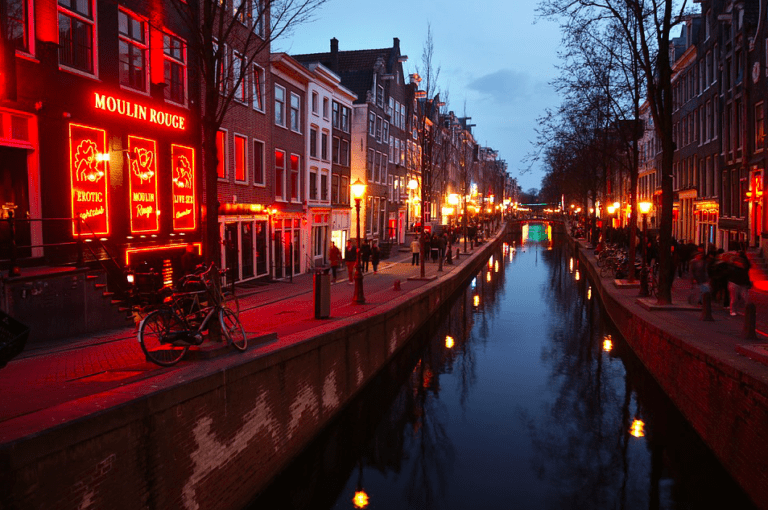
The email addresses and other details of 250,000 members of the Dutch prostitution forum hookers.nl have been accessed by a hacker, who intends to sell the data. This site is used by those who visit sex workers to share tips and experiences.
NOS has verified the website’s security breach after a tip by an anonymous source. A reporter posed as a potential buyer, and was given a sample of a thousand email addresses, which they did not pay for. They verified these email addresses by using the “forgot password” function on the website. The data held by the hacker includes email addresses, names, still-protected passwords and IP addresses.
The hacker’s price is 300 US dollars
The hacker is asking 300 US dollars from those who want to buy the data from him. According to NOS, he says that he abused a large data breach in a commonly used forum software. Hooker.nl has confirmed the data breach and will send its members an email about it later today.
Of course, this is sensitive information that could definitely be used to blackmail members of the forum. It’s for this reason that the hacker is so sure he will be able to sell the information: “Certainly people want to buy it, bro”, he says. Some people may be open about the fact that they visit sex workers, but many people on the website have used nicknames, indicating that they do not want their identity known.
Details of sex workers also accessed
Just as worryingly, the email addresses of sex workers and escorts have also been accessed by the hacker, as they too are active on the forum. They may also want to remain anonymous- the people in their surroundings may not know what their job is, for example. Sex workers have already come under fire from the Christian Youth Party, who presented a petition to criminalise sex work to the Dutch lower house last April. However, in other countries where sex work has been criminalised, sex workers have suffered increases in violence, and STI rates have risen. In short, it would be a disaster for women.
The website has stated that “we are not happy about [the data breach]” and that it understands that hookers.nl is a website members definitely don’t want their data accessed from.
Reminiscent of Ashley Madison breach
If all of this sounds familiar, that’s because a similar situation occurred with the adultery website Ashley Madison four years ago. A hacker published the personal data of members of that site and very serious consequences ensued: members were blackmailed, marriages broke down, and even some suicides were reported. However, the hacker feels no remorse for what he has done: “It’s only about three hundred thousand users,” he said to NOS’s undercover reporter. “Tens of thousands of websites are hacked every day. I’m not the devil. It’s not a question of whether your website is hacked, but when.”
What do you think of this hack? What do you think the websites should be doing to protect the identities of its visitors? Let us know in the comments below.
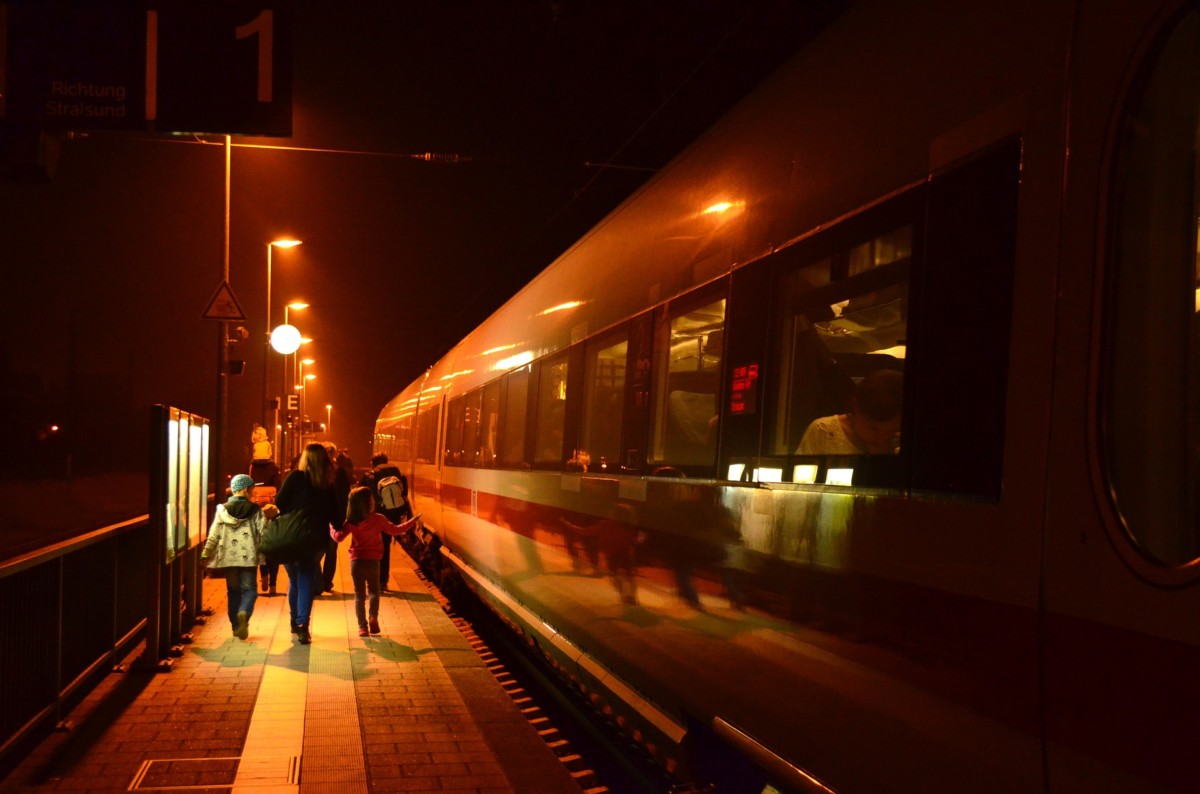
By this time, next year, you will have the option of taking a night train which will run every day from Amsterdam to Munich and Vienna. Taking a night train from Amsterdam to Vienna will be around 14 hours, and you will arrive in the beautiful city before 10 am. That means that you can wind down and sleep, and have a whole day extra to explore!
We see a lot more people taking international trains in the Netherlands, with 13% more people climbing on board this summer as compared to last year. The State Secretary Van Veldhoven wants to see more people doing this and as such set aside 7 million euros to finance this particular project to take off next year for the NS and the Austrian ÖBB, reports NOS.
According to Van Veldhoven’s market research, other train companies are unable to offer international trains like these before 2023. However, they are still going to be aiming to provide us with a plethora of options to choose from then!
She said to NOS that she wants more people (two million more) opt to travel by train within Europe. We did have night trains between Amsterdam to Munich and Zurich three years ago. However, they were stopped as the number of passengers kept declining. But with the increase we saw this summer, she remains hopeful!
Have you taken a night train before? Or would you switch from air travel if the option becomes available? Let us know in the comments below!
Employers and employment agencies may soon have to pay a fine of 4500 euros if they are found to be discriminating against applicants. A study by the Ministry of Social Affairs shows that people with a migration background have a lower chance of being hired.
This is stated in a bill introduced by the State Secretary of Social Affairs Tamara van Ark. Van Ark wants employers to record in writing the ways they avoided discriminating against potential employees on the basis of background, age or gender. This would apply to both internal and external vacancies.
If the employer cannot provide this, the Ministry of Social Affairs inspection can intervene by giving a warning, and then a fine, if no changes are made. Their misconduct will also be made public, according to NOS.
An applicant with a migration background has a lower chance of being hired
A study commissioned by the Ministry of Social Affairs shows that employers do still discriminate. For example, applicants with a migration background still have less chance of being invited to an interview than other applicants. Employers discriminate significantly less than in 2015, though.
The study placed 707 CVs of men and women of different backgrounds and ages on the internet, and examined how many calls and emails they generated.
On the positive side, this revealed that there is no discrimination at this stage on the basis of gender or age. This was not the case in 2015, when the survey was last conducted. However, a migration background still has a negative effect on an applicant’s prospects.
Discrimination lessened because of lower labour supply
With companies in the Netherlands complaining that they cannot find highly qualified applicants for advanced roles, discrimination may be reduced.
This situation has already benefitted older people, and seems to also slightly benefit those with a migration background. This sounds good on the surface, but Van Ark is worried that if supply goes up again, so will discrimination.
Employment agencies most at fault
Temporary employment agencies are most often at fault when it comes to discrimination, reports de Volkskrant. According to another study by the Ministry, 40 percent of the discriminatory requests from potential clients are being honoured.
Researchers visited employment agencies and posed as potential customers looking for workers – but they requested people without a migration background. Only one third of agencies said this request was against the law.
Discrimination in the Netherlands
Although the Netherlands has a reputation as a land of tolerance and inclusion, discrimination in the Netherlands is still present, especially during the employment process. A study published last year showed that employers engaged in name discrimination during the selection process. Applicants with non-Dutch sounding names got interviews 9 percent less of the time.
From this week until 4 November, the bill is available online for citizens to examine and give feedback on. Afterwards, it will go to the Council of State for a response, and finally it will be submitted to the House of Representatives.
Have you ever felt discriminated against in the Netherlands? And what do you think of this new fine system? Let us know in the comments below.
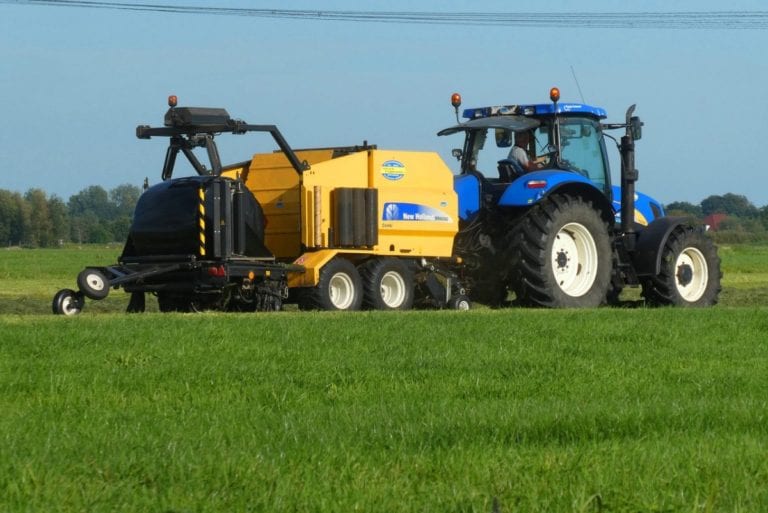
Chaos ensued around The Hague last week as farmers took to the streets to protest the fact they are being targeted as main polluters of the nitrogen crisis. They have planned another demonstration for October 16 and intend to protest “until our demands are met”, spokesperson Sita van Keimpena from the Farmers Defense Force action group told NOS.
Who is protesting?
The Farmers Defense Force have rallied more people to take part the protest which will cause an even greater disruption to normal traffic routes. Demonstrators will protest at the Binnenhof in The Hague and predict a mass turnout.
Fishermen will also attend the protest which will increase numbers. Van Keimpena told NOS “they don’t know what the future holds for them. The North Sea is being filled with windmills, they have less and less room for fishing”.
The protest might include camping out
The protestors will be bring tents and overnight gear with them as they are determined to see change. They are dissatisfied with the results from October 1 and want to make this one bigger and more serious. “Now we come back, but with more vehemence” Van Keimpena tells NOS.
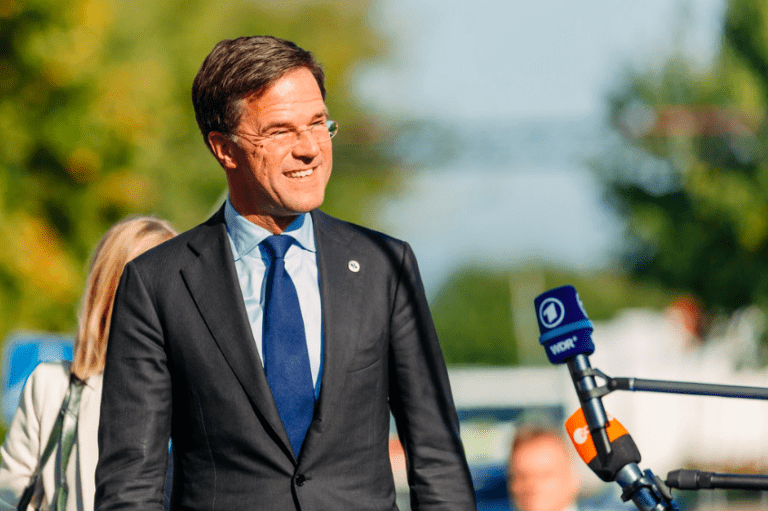
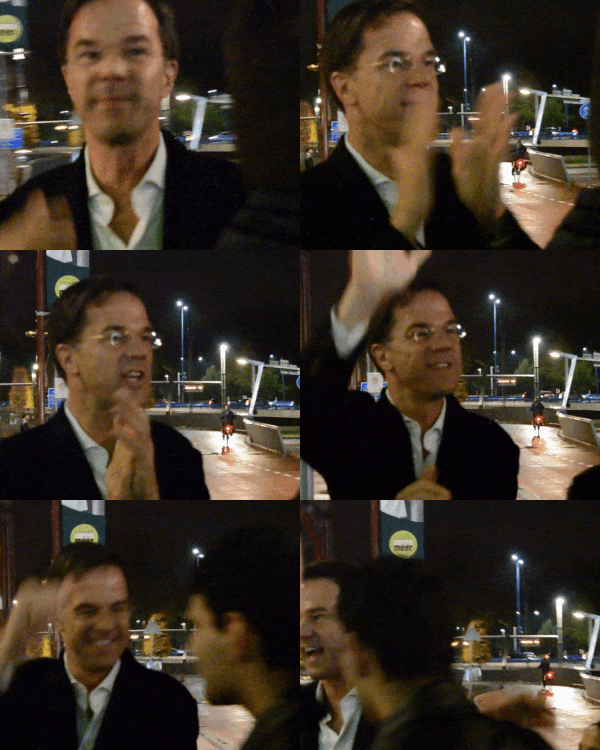
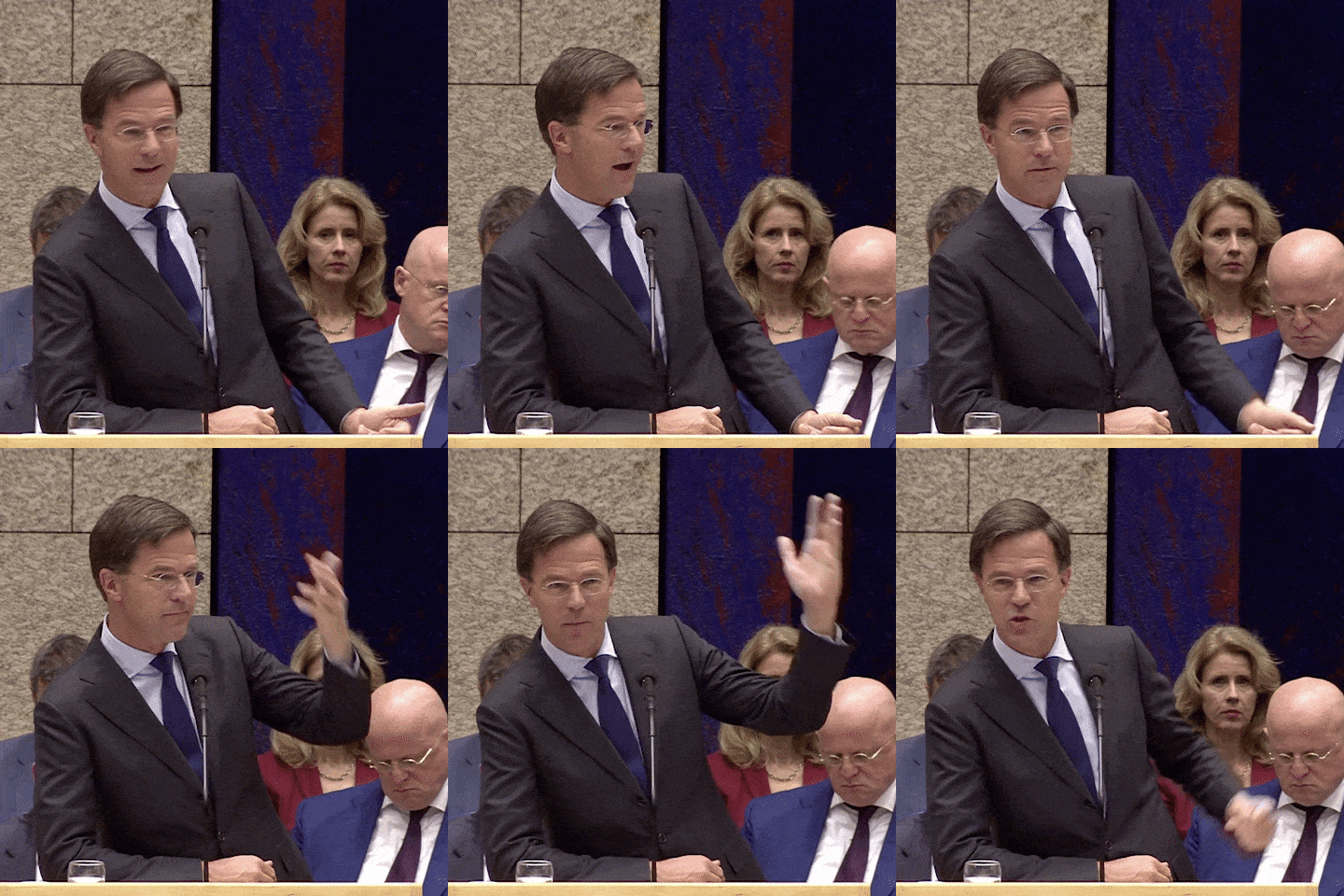
Students have announced that they will be sending Mark Rutte, Prime Minister of the Netherlands, a Tikkie for their student debt.
We’ve all been there. You log on to DUO and see that disgusting large number staring back at you. All that debt. Panic ensues. You question your life choices, your reason for existence. You emotionally eat an entire tub of Ben and Jerry’s, which puts you further in debt.
But what if there was a simple way out?
Like sending a Tikkie to Mark Rutte, for example.
60,000 students to send a Tikkie to Rutte
Well, now you can. Students who began studying in the academic year 2015-2016 have organised a Facebook event entitled “Massaal Tikkies naar Mark Rutte sturen met onze studieschuld” (or “Send Tikkies en masse to Mark Rutte with our study debt”). By now, well over 60,000 current and former students have shown their support to the Facebook event by clicking “Going” or “Interested”.
What is Tikkie?
If you don’t know what a Tikkie is- first of all, you clearly don’t have Dutch friends. Tikkie is an app commonly used in the Netherlands to share costs. For example, if you go out to dinner with a friend and they pay, they will later send you a “Tikkie” for the amount you owe them. It makes paying people back simpler, and it’s also the perfect example of Dutch efficiency and stinginess coming together.
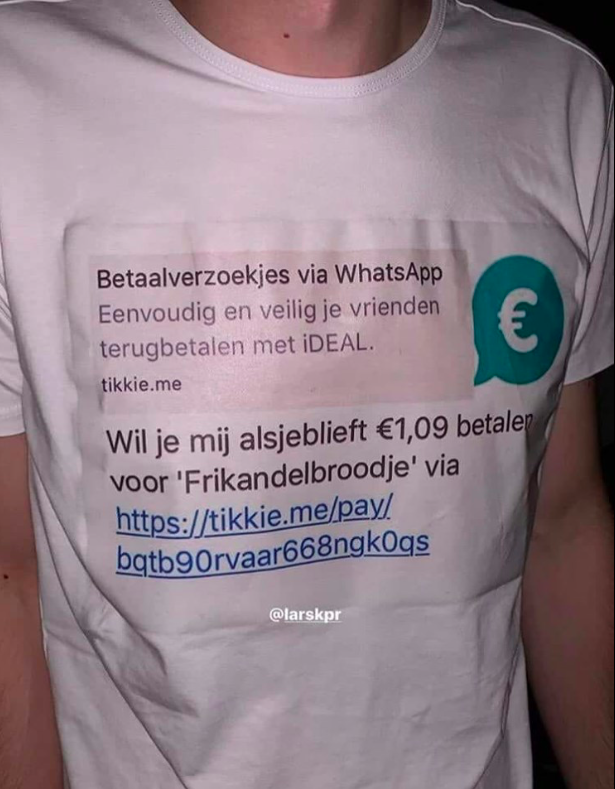
ENGLISH: Will you please send me €1.09 for a Frikandelbroodje via Tikkie? @LarsKuuper
19.3 billion euros of student debt nationwide
Students who began university in 2015-2016 suffered the worst of the change in student financing- they studied in the period after the basic grant was abolished, and before it was reintroduced. On Monday, the Central Bureau of Statistics (CBS) announced that the total student debt of (former) students this year is 19.3 billion euros. This is 1.9 billion euros more than in 2018.
“Breakdown generation”
Chairman Alex Tess Rutten of the National Student Union (LSVb) called it “irresponsible that we saddled young people with such a debt”, according to Hart van Nederland. She announced on Monday that it is time for the government to abolish the loan system and to compensate for this “breakdown generation”. The new loan system was introduced in the 2015-2016 academic year as a replacement for the basic grant. The average study debt then increased from 12,400 euros (in 2015) to 13,700 euros this year.
Rutte’s response
The VVD has reported that they have already received dozens of Tikkies, mostly for the maximum amount of money the app allows you to request- 750 euros. A spokesperson for the VVD says it is “great to find that students are so involved in their future and make their voices heard in this original way”. It is not yet clear that the VVD itself will respond to the student campaign through policy changes.
What do you think about this hilarious campaign? Will you be sending a Tikkie to Rutte? Let us know in the comments below.