

How much do you actually know about Papua? If your answer is “not much,” you’re not alone. Wereldmuseum Leiden’s bold new exhibition is here to change that.
Tijd voor Papoea or Time for Papua is the first major showcase of the museum’s extraordinary Papuan collection in sixty years.
With 400 objects drawn from the world’s largest collection of artefacts from Western New Guinea, this unique exhibit brings together artefacts of the past and contemporary art. Why? To introduce you to Papuan culture and the challenges it faces.
Why it’s time for Papua
Papua has one of the richest and oldest living cultures on the planet, with roots stretching back some 45,000 to 50,000 years.
Papuans were among the world’s first farmers. They built sophisticated trade networks spanning hundreds of kilometres, exchanging nutmeg, pearls, bird-of-paradise feathers, and rare timber for bronze, porcelain, and textiles from as far afield as Vietnam and China.
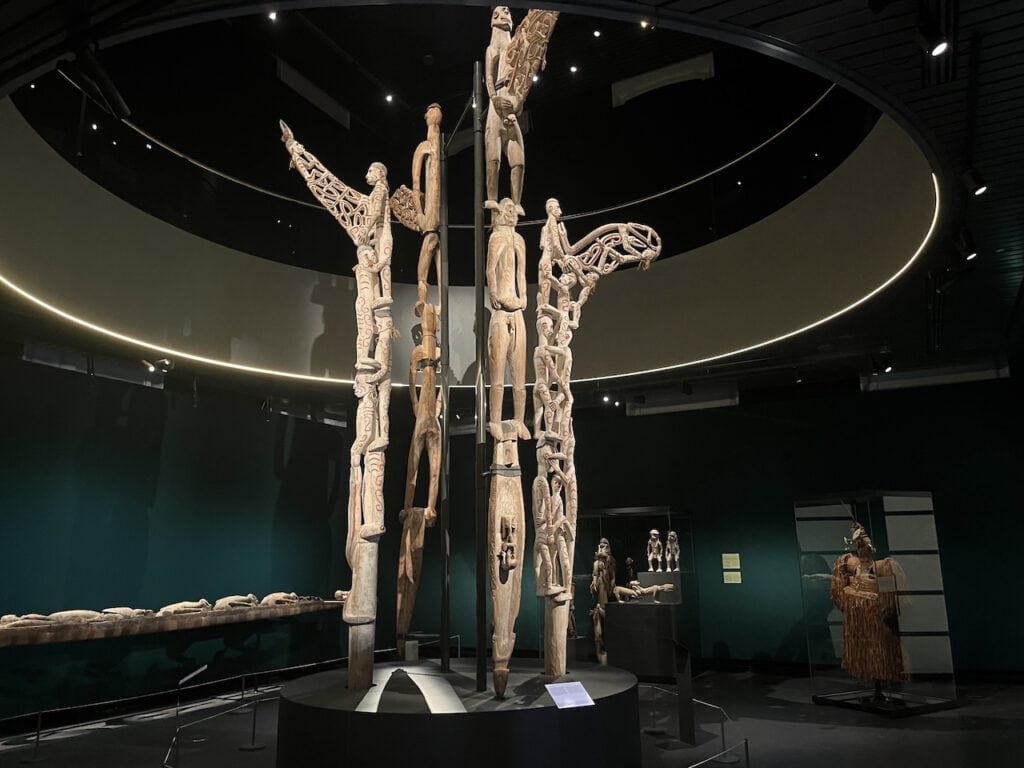
Their woodcarving, weaving, and body ornamentation traditions have had a lasting influence on art and design worldwide.
And yet, the culture is too often reduced to a vague, “primitive” image that bears little resemblance to reality.
READ MORE | The museum town of the Netherlands: 13 great museums to visit in Leiden
Tijd voor Papoea was developed in close collaboration with Papuan communities, Dutch-Papuans, filmmakers, and contemporary artists. This exhibition offers visitors a rare opportunity to experience an authentic picture of Papuan culture.
An exhibition of extraordinary breadth
The 400 objects on display at Wereldmuseum Leiden span millennia of Papuan art and craftsmanship.
From early bronze axe blades brought to the Sentani Lake region by Dongson traders from Vietnam before the first century CE, to intricately woven textiles, carved ancestor figures, and ceremonial canoes.
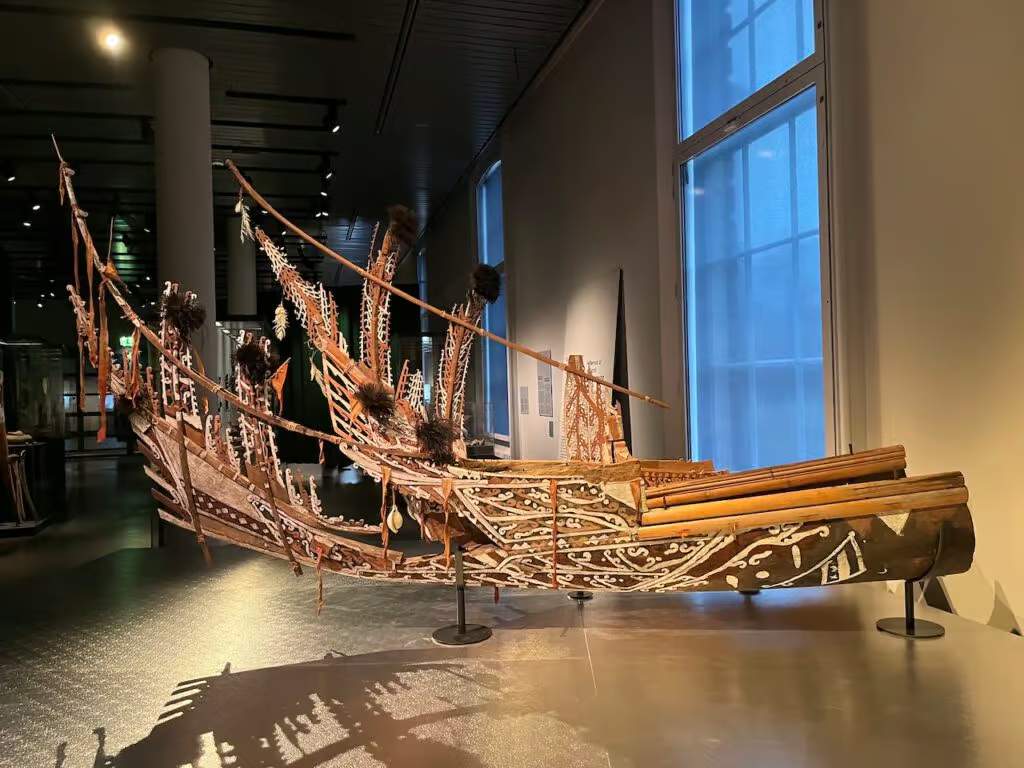
And contemporary work sits alongside these historical pieces throughout.
For example, Papuan Voices, a network of filmmakers from Western New Guinea, produced short films for the exhibition, each exploring the theme of time from different regional perspectives.
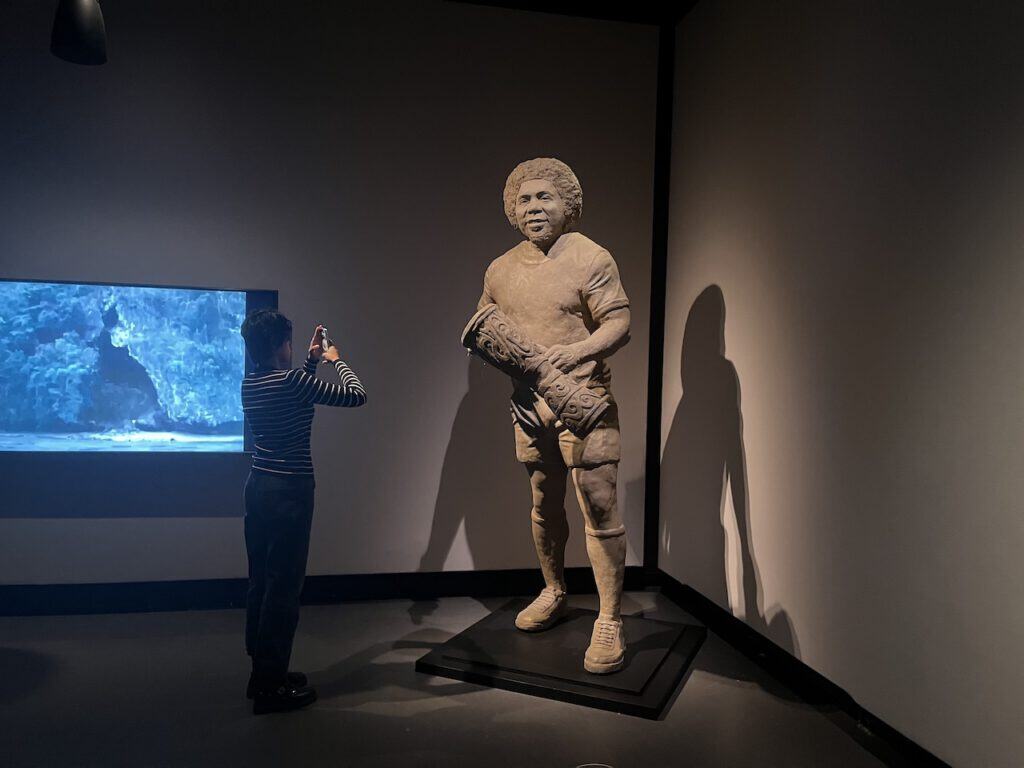
Artist Dicky Takndare, currently a resident at the Rijksakademie in Amsterdam, created new work for the show centred on the anthropologist and cultural leader Arnold Ap.
One of the most quietly affecting pieces is Voorouder uit het Vondelpark (Ancestor from the Vondelpark). Created in 2000 by Asmat artists Roman Omomá and Rufus Sati, it’s a traditional ancestor figure (kawe) carved from a fallen tree in Amsterdam’s Vondelpark.
Past and present, Papua and the Netherlands, folded into a single object.
Time, ancestors, and a different way of seeing the world
Speaking of past and present, a central thread running through Tijd voor Papoea is the Papuan concept of time. And it fundamentally reframes how you see every object in the room.
In many Western traditions, time is viewed as a straight line, with past, present, and future neatly arranged. For Papuan cultures, it doesn’t quite work like that. Time is fluid, cyclical, and alive.
Rather than being distant historical figures, ancestors are an active presence in everyday life, capable of manifesting through nature, rituals, and the objects people make and use.
In this context, a carved figure isn’t just an artwork. It’s a living link in an ongoing relationship between the living, the dead, and the world around them.
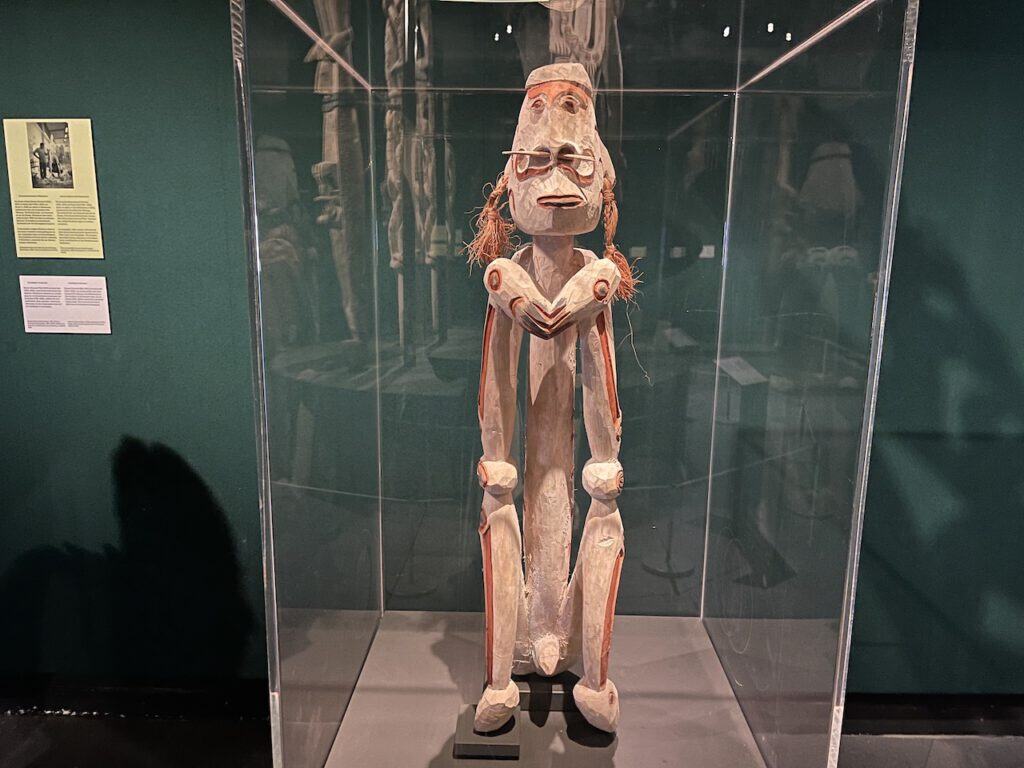
This understanding also raises a quietly provocative question at the heart of the exhibition: what happens when objects made within that cyclical view of time are removed from their context, placed in a Western museum?
Contemporary art that demands recognition
Alongside this celebration of Papuan art and its worldview, the exhibition doesn’t shy away from a harder story.
Colonisation arrived in Papua in successive waves. There were Christian missionaries, then plantation economies, then large-scale mining, including what became one of the world’s largest gold and copper mines.
Each wave brought disruption to Papuan landscapes, rhythms, and ways of life.
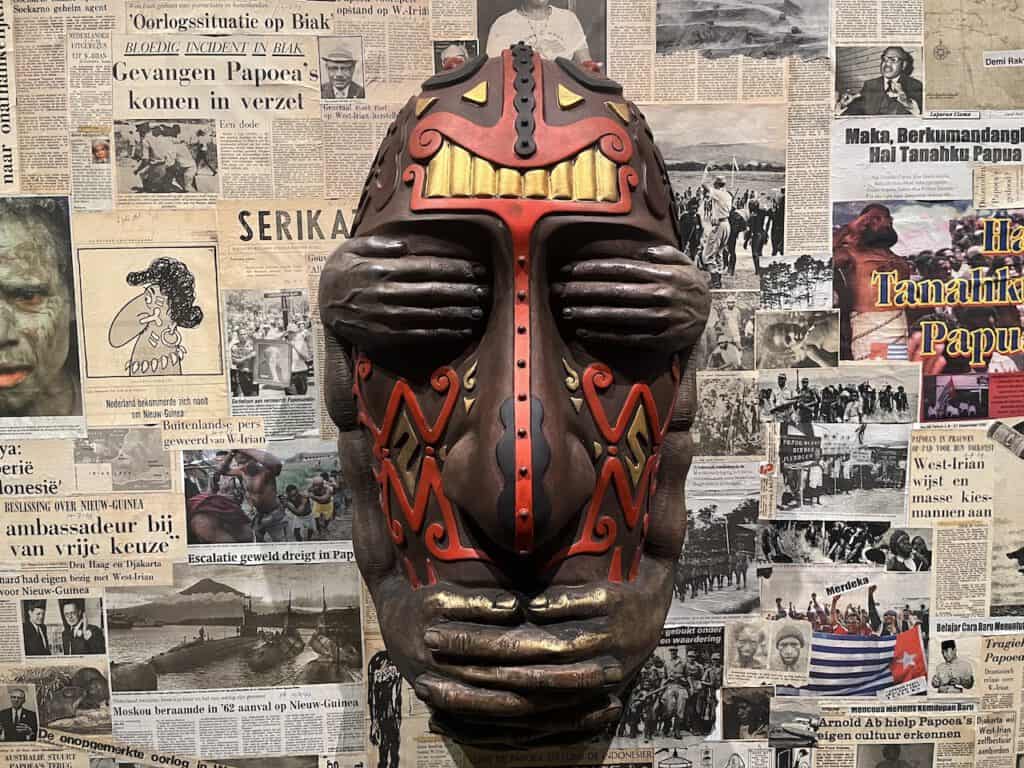
Spread throughout the galleries, and pointing to this disruption, are seven large-scale paintings by artist Kevin van Braak and the Udeido Collective from Papua. These are part of their series Hidden Faces of Papua (2025).
The recurring motif across the works is the mask, which references how issues affecting Western New Guinea tend to remain hidden from the international view.
In distributing these artworks throughout the exhibit, urgent, contemporary political art is placed in direct conversation with artefacts from the colonial era that gave rise to the crisis in the first place.
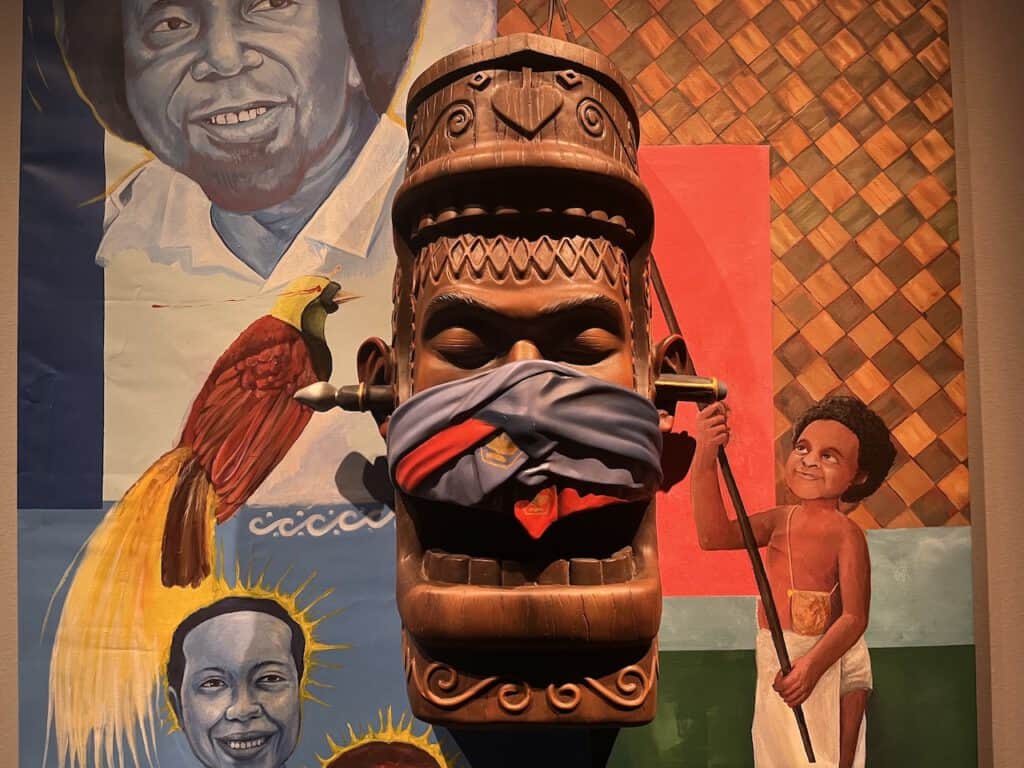
But even here, the emphasis is on Papuan creativity and resilience. These works are not simply a documentation of loss. They are also evidence of a culture that demands its narrative be heard.
I’m intrigued! How can I visit?
Tijd voor Papoea is on display at Wereldmuseum Leiden from February 13, 2026, until January 3, 2027. The exhibition is available in both Dutch and English.
The museum is open Tuesday through Sunday, from 10 AM to 5 PM. During national school holidays, it’s also open on Mondays. Tickets can be purchased on the Wereldmuseum Leiden website.
And keep your eyes peeled! A full programme of events runs alongside the exhibition, including artist talks, lectures, weaving and plaiting workshops, and family activities.
Will you be making the trip to Leiden for Tijd voor Papoea? Let us know in the comments below!