
In many countries, a loyalty card is a boring bit of plastic that lives at the bottom of your bag alongside a receipt from 2019.
In the Netherlands, things are different. Your Albert Heijn Bonuskaart is basically a personality test in barcode form. The moment you reach the checkout at your local Appie, your entire life philosophy is laid bare in a single scan.
Whether you’re a keychain veteran or a wide-eyed expat still figuring out why your broccoli is suddenly €1.79 without that little card, there is no neutral Bonuskaart personality. There is only what yours, or the lack thereof, says about you.
And yes, the Albert Heijn knows too. So let’s get into it.
The minimalist rebel without a Bonuskaart
Ah, this person. They arrive at the checkout, scan their items and go straight for the pin machine. No awkward scramble through their bag to find their Bonuskaart. No Bonuskaart at all, in fact.
What this signals: I don’t want Big Supermarket tracking my every wedge of Gouda. What it also signals: I forgot to get one, and now I’m too far in.

The no-card stance is a bold move in a country where korting (discount) is practically a love language.
The Dutch are famously attached to saving every possible cent, so voluntarily paying full price for your hagelslag carries a certain anarchic energy. Respect, honestly. But also, why are you like this?
The fully integrated keychain veteran
This is the Bonuskaart in its purest, most honourable form: a slightly scratched, slightly faded piece of plastic that has lived on a keyring since forever and has absolutely earned its place there.
What this signals: I’ve been here long enough to know the drill. What it also signals: I respect the two-for-one deals. Deeply. Personally.
The keychain veteran knows exactly when the broccoli is discounted (Mondays), which yoghurt is on offer this week, and has probably reorganised their entire dinner plans around a timely price drop on chicken thighs. They are, in the most wholesome way possible, extremely Dutch.
The digitally superior app-only operator
This is the person who, when asked for their Bonuskaart, smoothly produces their phone and scans it with a slight air of superiority.

What this signals: I optimise everything. What it also signals: My screen brightness is always set too high at checkout, blinding everyone.

The Netherlands is, by now, a deeply cashless and app-driven society, a fact evidenced by everything from the iDEAL payment system to using platforms like 99Bitcoins.
The app-only Bonuskaart user fits neatly into this world. They are efficient, paperless, and mildly smug about it.
The opportunistic expat, aka “Can I use yours?”
Picture the scene: you’re standing in the queue at Albert Heijn, you do not have a Bonuskaart, and you are looking at a €4.79 price tag on something that is clearly meant to cost €3.49. So you do the only reasonable thing — you ask the person behind you.
What this signals: I just moved here. What it also signals: I refuse to pay €1.30 more than I have to on principle.
The best part? This is genuinely fine in the Netherlands. Strangers lend their Bonuskaart without drama, without offence, without even much of a pause.

It’s a small act of pragmatic generosity that says a lot about Dutch culture: there’s no sentimentality about it. The discount should be had. Alsjeblieft (Here you go).
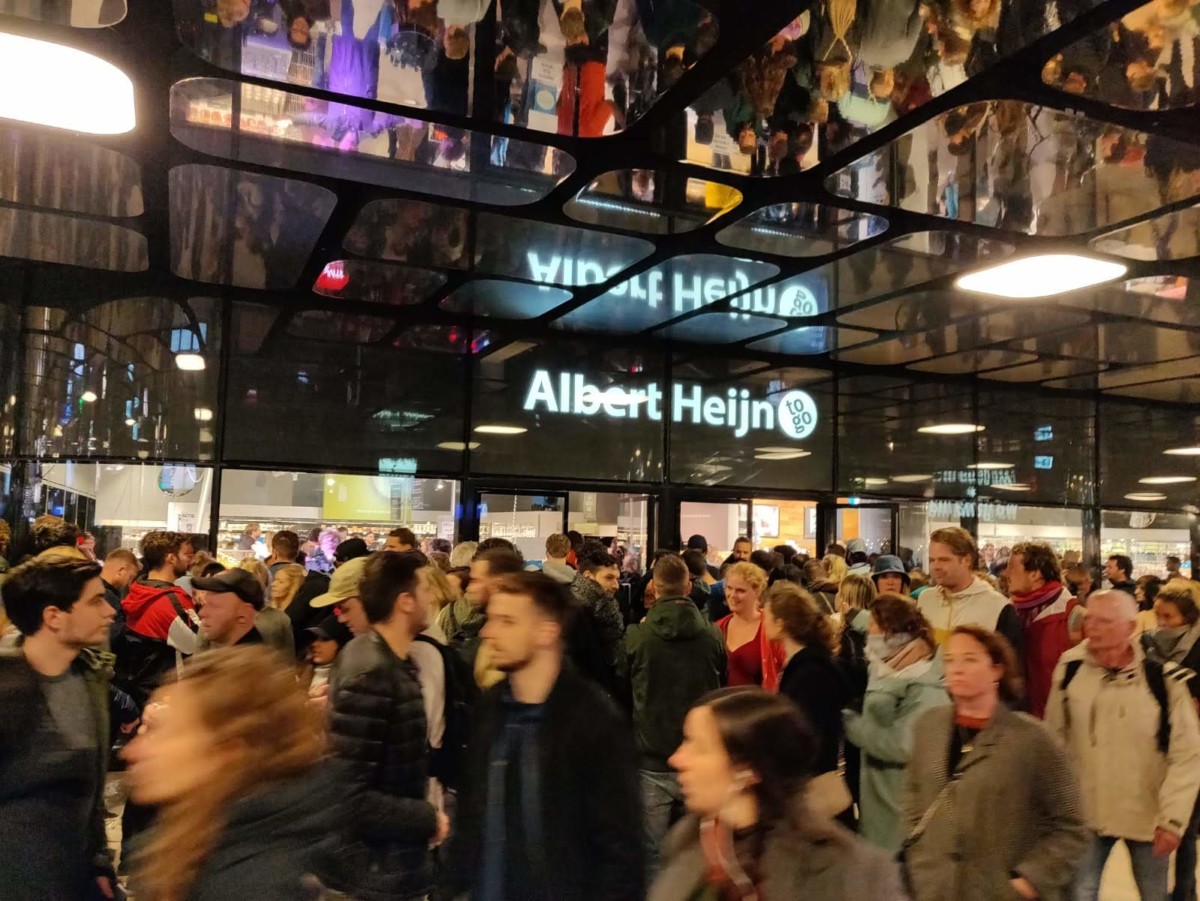
Now, if you’re new and have been getting by on borrowed Bonuskaarten, don’t panic. Getting set up in the Netherlands is a process, and the card is genuinely one of the first things worth sorting.
The anonymous cardholder: strategic and slightly mysterious
You might not know this exists, but the Bonuskaart can actually be used anonymously, without registering your name, email, or entire digital identity to Albert Heijn’s systems.
What this signals: I want discounts, but not surveillance. What it also signals: I’ve thought this through more than most people.
This person has done their research. They’ve weighed the kortingen against the data collection, made a deliberate choice, and are quietly winning on both fronts. The anonymous Bonuskaart holder is playing a long game that very few people even knew was possible.
What’s actually hiding behind the Bonuskaart?
We like to make fun of the Bonuskaart, but if you take a step back, you’ll realise that all this is about more than a supermarket loyalty card. It’s a window into a distinctly Dutch set of values.
Planning. Frugality. Efficiency. The quiet, deeply satisfying pride of saving €1.12 on a block of cheese.
The Dutch approach to money is famously no-nonsense. There’s a reason the phrase “going Dutch” exists in the English language, and it’s not because the Netherlands is known for throwing cash around.
The Bonuskaart isn’t just about saving money. It says: I pay attention. I plan. I do not pay full price for yoghurt if I absolutely don’t have to.
So what happens when you are at the checkout? Are you the keychain veteran? The app-optimiser? The person sheepishly borrowing a card from a stranger while the queue grows behind you?
Wherever you land, know that in the Netherlands, this is serious business. The Bonuskaart is not a trivial bit of plastic. It’s a social contract, a lifestyle commitment, and a minor source of national pride.
Which Bonuskaart type are you? Let us know in the comments below! 🧀

Is it real info?