



Dutch police and prosecutors are rolling out a penalty points system before the end of this year, aimed at the roughly 30,000 drivers who keep breaking traffic rules (no matter how many fines land in their letter box).
Points will land on top of whatever fine you’ve already been served with. Reach six points within a year, and you’re added to an official list of repeat offenders.
The plan was reported by RTL Nieuws based on information from the police, the Openbaar Ministerie (Public Prosecution Service), and the Ministry of Justice and Security.
Here’s what will earn you a point
Texting behind the wheel or driving without a seatbelt costs one point plus the usual fine.
Meanwhile, two or three points apply to serious offences that go before prosecutors or a judge, including drunk driving, driving without a licence, or causing a serious crash.
READ MORE | Dutch traffic fines are going up again: here’s how much more you’ll pay

The exceptions to the rule are offences caught by a flitspaal (speed camera), which don’t generate any points at all. However, you may want to ease up on the accelerator, as speeding fines can run up to hundreds of euros.
What happens once you’re on the list?
At present, police, prosecutors, and the ministries of Infrastructure and Justice are still ironing out the finer details.
The ministry has indicated a CBR course could follow, referring to the driving licence authority that already runs mandatory courses for dangerous drivers and those with DUIs.
Police also want to track offenders using smart cameras that read number plates. That’s legally awkward, since officers can’t simply follow people without specific suspicion, and the police say privacy questions are part of the ongoing discussions.
“In any case, we are going to actively seek them out,” Frits Lindeman, the police’s traffic project leader, tells RTL Nieuws.
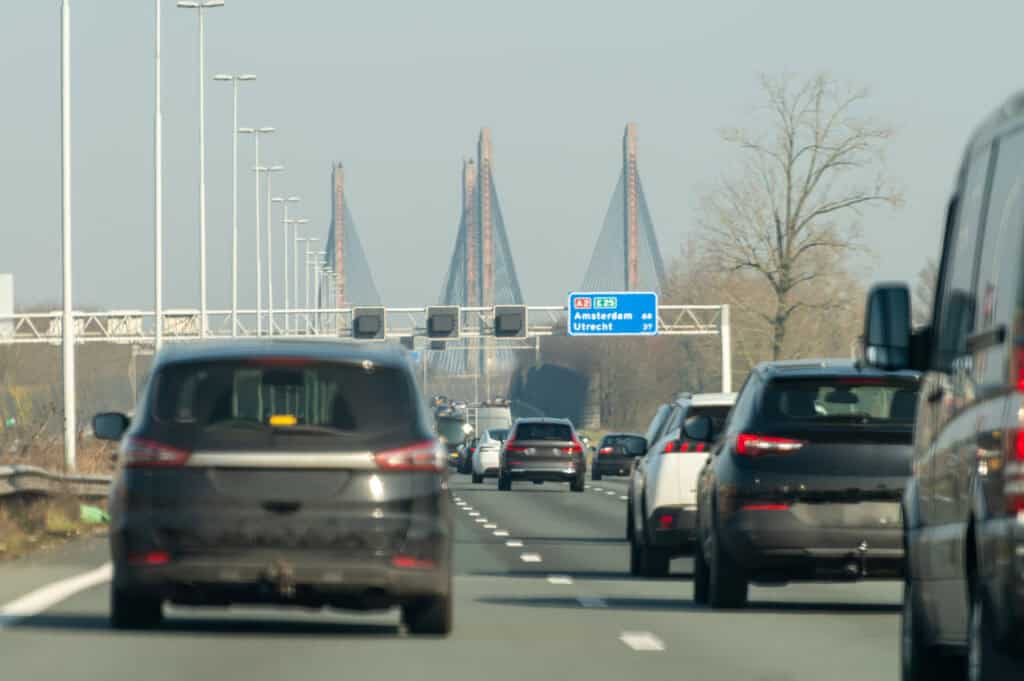
The point system is aimed at repeat offenders
Drawing on data from Statistics Netherlands (CBS), the national statistics agency, RTL Nieuws calculated that 29,720 people would have hit six or more points last year under the new counting method.

The group skews heavily young and male, with women comprising only 5%. Of the total group, one in eight has a previous traffic conviction, and one in three has “problematic debts”. In 2025 alone, 2,650 offenders were under the age of 18.
However, experts aren’t convinced the plan will work
Researchers at Utrecht University and the Vrije Universiteit found that warning letters sent to repeat offenders made no difference. In their words, “stronger measures, particularly license suspension or revocation, were by far the most effective.”
The Netherlands already runs two points systems. One applies to drivers who’ve held their licence for under seven years, which catches plenty of internationals working through the Dutch licence process, and another covers drink and drug driving.
It remains to be seen whether adding a third points system will affect the behaviour of repeat traffic offenders.
Do you think the new points system will be a success, or do you reckon there’ll be no change? Share your thoughts in the comments below.
