

The Dutch court has ruled in favour of Greenpeace in their case against the Dutch state, meaning the Netherlands must take more concrete action to reduce nitrogen emissions.
The judge says the government has not been proactive enough in achieving its nitrogen goals for 2025 — and if it doesn’t act now, the 2030 goals might not be met either.
That is why a €10 million penalty must be paid to Greenpeace if the government doesn’t significantly reduce the nitrogen balance by 2030.
One step forward, 20 billion steps back
According to the NOS, the judge indirectly condemned the current government for not only being too slow in achieving its nitrogen emission goals but also for reversing previous measures.
READ MORE | The easy guide to the Dutch nitrogen crisis, farmers’ protests, and more
Prime Minister Schoof’s cabinet has taken the previous government’s €24.3 billion budget to reduce the country’s nitrogen balance and cut it by almost €20 billion, leaving only €5 billion.

Since a large part of nitrogen emissions come from livestock farming, and the Netherlands has a big agricultural sector, the Dutch nitrogen balances are some of the highest in Europe. Other big nitrogen contributors are transportation and industry.
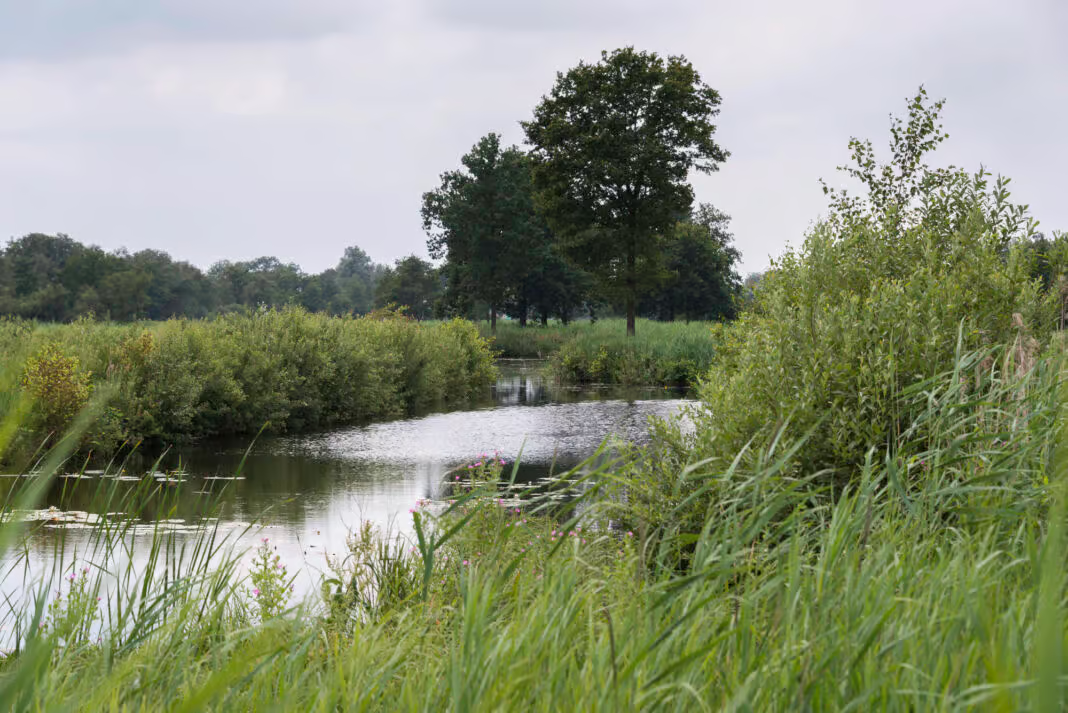
The court also emphasised that protecting Natura 2000 areas is a top priority.
By 2030, 50% of these protected areas must no longer suffer from nitrogen overload. Currently, only 28% meet this standard, but the court believes the goal is achievable with the right policies.
A bittersweet celebration
The government can appeal to the ruling, but they must already get to work in the meantime.
Meanwhile, Greenpeace welcomes the verdict, labelling it as a “celebration for nature” that brings clarity.
“The celebration is bittersweet, however,” they remark, “as it should not have taken a court intervention to achieve.”
A bumpy road ahead
The government will have to work hard to comply with the court’s ruling.
Since the agriculture sector needs to be significantly reduced, the government has allocated some budget to buying out farmers. These buyouts were planned to be voluntary, but some forced buyouts may also be necessary.
A major issue in all this can be posed by the BBB (Farmer’s Party), which controls the Ministry of Agriculture.
The party has been a vocal opponent of tough measures against the agriculture sector in the past and does not support forced farm buyouts.
What do you think of this ruling? Step in the right direction or completely unrealistic? Share your thoughts in the comments.