

At first glance, Italians and the Dutch seem worlds apart, shaped by different histories, climates, and habits, but what’s less often explored is what unites them.
Because yes, the differences are obvious. But the common ground? Now that’s the juicy part no one talks about.
So what connects them? Let’s take a closer look at the things Italians and the Dutch have in common, and yes, it’s more than just a mutual love of coffee.
1. They’re both serious about sport (and even more serious about winning)
When it comes to sport, especially football, some people watch it. Others live it. And no one does “living it’’ quite like the folks from Italy and the Netherlands.
Italians don’t sit through matches quietly. They stand, pace, and passionately shout at the television as if the referee were personally ignoring their advice.
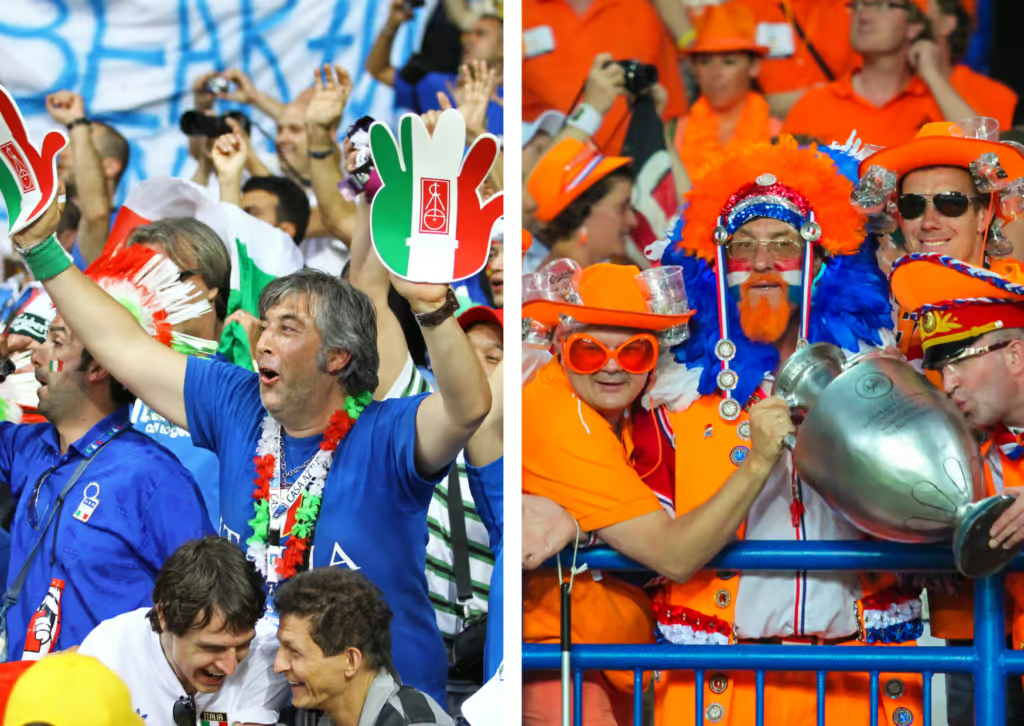
Over in the Netherlands, things are no less intense. Streets flood with fans dressed in vibrant outfits, and even the most low-key neighbour suddenly goes wild with Oranje fever.

What unites them? Passion, absolutely, but also a fierce determination to win. Neither side is fit for a friendly match.
2. There’s no chatting without food and drink
Different cuisines, same unspoken truth: nobody’s starting a proper chat with an empty stomach. Call it an aperitivo or a borrel; either way, bites are the social glue.
In Italy, the table overflows with wine, olives, and enough cured meats to make dinner feel optional.
Meanwhile, in the Netherlands, it’s a more relaxed affair, a borrelplank with cheese cubes, bitterballen, and biertjes that turn even the quietest guest into a storyteller.
READ MORE: What is borrelen? The Dutch art of going for a drink with co-workers
Whether it’s a sunlit piazza (read: Italian square)or a canal-side terrasje, the rule holds strong: once the snacks show up, the conversation gets real.
3. Everything’s a reason to party
If there’s one thing these two countries know how to do, it’s celebrate anything. A royal birthday? Absolutely. A successful harvest? Break out the confetti.
In the Netherlands, King’s Day turns the country into a sea of orange, with street DJS playing everything from house music to those unexplainable Dutch tunes everyone knows by heart.
Down in Italy, it’s all about the sagra: a local festival where food is the guest of honour, wine flows like water, and there’s a 98% chance of clapping along to a folk dance led by your aunt’s neighbour’s cousin.
The setting may differ, but the spirit’s the same. You can eat, dance, and make memories you’ll only half-remember.
4 . They’re both from “the best place ever”
Ask an Italian or a Dutchie where the best place is, and you’ll get a passionate TED Talk, with food tips and strong opinions, mostly about how everywhere else in their own country gets it wrong.
Tuscans boast about their Renaissance art and throw some shade at Rome being “a bit much.” Campanians keep it simple: they gave the world pizza and nonna’s legendary glare.
READ MORE | Things I wish Italians would learn from Dutchies (and vice versa!)
The Dutch get just as proud. Limburgers praise their white gold (yes, asparagus) and rare Dutch hills. The Frisians point to Friesland, proudly apart, with its language and more lakes than you can count.
Wherever you land, every local swears they’ve won the postcode lottery.
5. Small talk is not their love language
Pleasantries? Pass. Let’s skip to the good stuff.
A conversation in Italy might start with warm greetings, but it will quickly shift to existential matters, family gossip, and what you’re doing wrong with your tomato sauce. Politeness is there, but so is plenty of unsolicited advice.

In the Netherlands, small talk gets skipped entirely. “You look tired” isn’t rude; it’s just… accurate. Opinions fly freely, feedback is unfiltered, and silence? Totally allowed, sometimes even preferred.
Turns out, the Dutch and Italians are just two sides of the same straightforward coin — one delivers it with emotion, the other with precision, but both always keep it real.
6. Their stubbornness should be studied
Another thing they share? Being convinced they’re right, and no, they’re not here for your counterpoints.
In Italy, this comes loud and proud. Bring up politics, football, or the right way to make ragù, and prepare for a passionate lecture with dramatic hand gestures and a slightly raised voice. 🤌
In the Netherlands, the delivery is calmer but no less confident. They’ll hear you out, nod thoughtfully, then carry on as planned, fully equipped with facts, charts, and confidence.
READ MORE: Odd Dutch quirks: things Dutchies do, but won’t ever admit to
Changing minds isn’t on the table. You’d have better odds arguing with a brick wall in both countries.
7. They’re both obsessed with the weather, despite having no control over it
Of all the things out of their control, weather ranks first. It’s the daily headline, the trusted excuse, and the ultimate shared enemy.
In Italy, it’s pure drama. It’s either too hot, too rainy, or not sunny enough. Forecasts are checked religiously, then immediately questioned.
And beware the dreaded colpo d’aria, the mysterious breeze blamed for everything from sore throats to life choices.
The Dutch treat complaining about the weather like a national pastime. Rain, wind, or suspicious sunshine spark nonstop Buienradar checks. People bike through storms, arrive soaked, and still complain about the drizzle.
When the sky acts up, both countries are emotionally invested in its betrayal.
Are you a Dutchie with an Italian enemy? Or an Italian trying to mesh your Dutch friends with your Italian friends? Well, here are seven reasons they might just get along.
From dramatic weather obsessions to the fine art of digging in their heels, these two cultures share more quirks than most would guess beneath all their evident differences.
Admitting it, though? That might take a bit longer… on both sides.
Spotted more unexpected connections? Drop it in the comments; we’re all ears.


What do the Netherlands and Italy have in common? They were opposite ends of the Middle Kingdom of king-emperor Lothar, the original Blue Banana.