

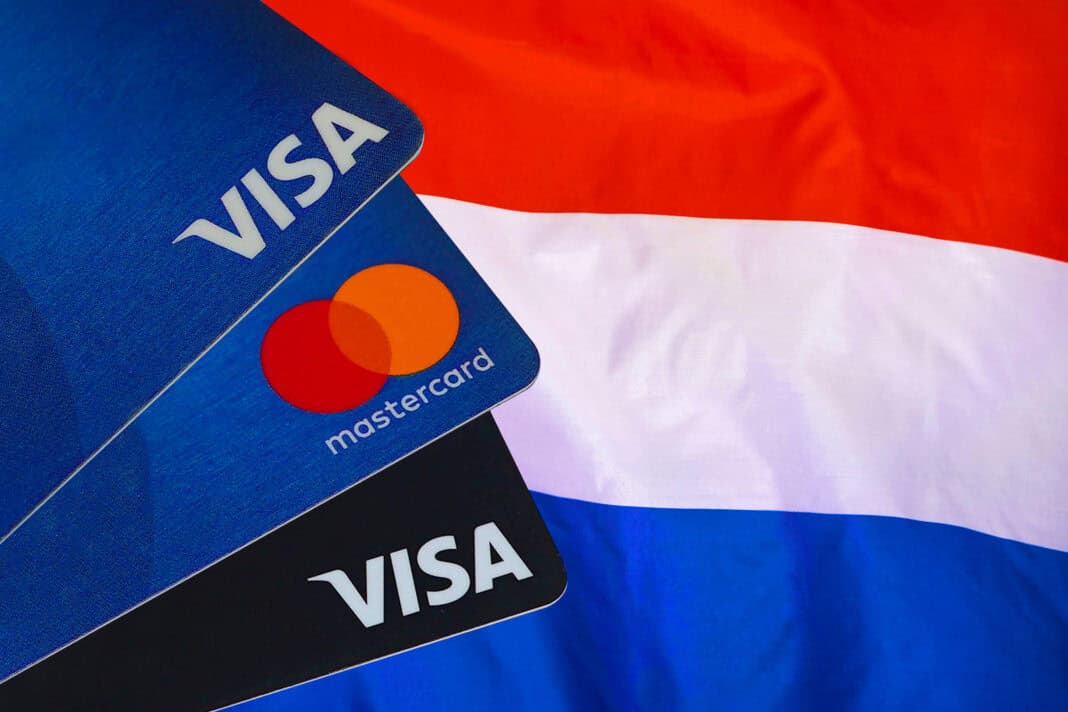
Every bank customer in the Netherlands is getting a new debit card. But what exactly is changing, and do you actually need to do anything?
Many internationals will be ecstatic to hear that the baffling debit card system of the Netherlands is being modernised and replaced with a more useful alternative.
The old Maestro and V PAY cards that Dutch residents have used for years are being phased out, replaced by Debit Mastercard and Visa Debit cards.
Finally, you’ll be able to pay on international websites without jumping through six or seven hoops!
So what can the new card do that the old one couldn’t?
The most significant upgrade is that the new cards work far more like the bank cards you might be used to from your home country.
They can be used anywhere Mastercard or Visa is accepted — which means far fewer awkward moments at foreign checkout counters.

You’ll also be able to pay online using just the card details. Unlike the previous cards, the new ones will have the more globally used style of a 16-digit card number, expiry date, and a CVC or CVV security code.
READ MORE | Dutch savings accounts: Best interest rates in the Netherlands in February 2026
Previously, online payments in the Netherlands largely depended on iDEAL (which is itself being phased out in favour of Wero).
The new card also enables deposit payments — useful for things like car rentals — and recurring subscription payments.
Is it the same as a credit card?
Not quite. The key difference is that money comes straight out of your bank account — there’s no credit facility.
So, if the funds aren’t there, the payment won’t go through (seems logical, right?)

It’s also important to note that the new debit card also doesn’t come with purchase insurance, which credit cards typically offer for 180 days after a purchase.
READ MORE | The best credit cards for expats in the Netherlands
However, online payments with the new card are covered by a chargeback policy, meaning you can dispute a payment if you don’t receive what you ordered. This is also known as a ‘delivery guarantee.’
This protection doesn’t apply to iDEAL or Wero payments, so it’s actually a step up for shoppers if they use the new card details when paying online.
When will you get yours?
That depends on your bank. As RTL Nieuws reports, smaller banks have moved faster. Triodos Bank and Knab customers already have the new cards, according to the Consumers’ Association.
READ MORE | The best banks in the Netherlands for internationals in 2026

For the big four:
- ING began replacing expiring cards in November and expects most customers to have the new card by the end of this year, though no exact timeline has been given. For ING customers, the CVC code won’t be printed on the card itself. You’ll need to find it in the ING app.
- Rabobank has been issuing new cards since 2024 on a natural expiry basis, with no estimate on when the full rollout will complete.
- ABN AMRO started the transition in mid-2025. The bank estimates it’s currently at just over 10% of customers, based on the five-year card expiry cycle, and is looking into whether it can accelerate the rollout.
- ASN Bank expects its rollout to be complete by October 1, with roughly 418,000 of its 3 million customers already using the new card. You don’t need to request the upgraded card, it’ll arrive automatically when your current one is up for replacement.
Happy shopping!
Have you already received your new debit card? Let us know in the comments whether it’s made paying abroad any easier.


Sadly, we still rely on U.S. controlled payment networks, sending Mastercard and Visa billions of euros every year. Why doesn’t Europe have its own strong, unified payment system? And even more puzzling: why is Europe unable to move away from Visa and Mastercard entirely in favour of modern mobile‑based payments? If China managed to do it, Europe should be capable as well.
There are already European developed alternatives that work extremely well at a national level. For example, in Poland the BLIK system allows people to pay in physical stores, online shops, and even withdraw cash from ATMs using only their mobile phone. No hefty Visa or Mastercard fees. The money stays within Europe.