Early this afternoon, the outgoing Prime Minister Mark Rutte and outgoing Health Minister Hugo de Jonge will give a press conference on new coronavirus measures — and they’re expected to be tight.
As of Friday, a curfew is likely to be in place between 8:30 PM and 4:30 AM. In addition, the number of guests allowed in a home at once will be reduced to just one, reports RTL Nieuws. At a funeral, the previous 100 attendees will be reduced to 50.
In a letter to the Lower House, De Jonge explained that extra measures are “necessary in the shortest possible term,” reports NRC.
Travel bans
Banning all flights to the Netherlands from the UK, South Africa and South America is still on the table due to the spread of the COVID-19 mutation in these areas. The cabinet has also investigated restricting travel within the Netherlands, as Germany has done, but so far this is not feasible.
Curfew
Exact details on the curfew will be decided upon this morning, but it is likely that the only exception to the rule will be for hospital visits and other emergencies. As with the other measures, the curfew would provisionally be in place until February 9.
The Outbreak Management Team (OMT) predicts that once the curfew is implemented, home infections will be reduced by 10%.
Press conference
Around 1 PM today, the cabinet will announce their decision in a press conference. While many ministers who were previously against curfews have now changed their minds, there are still some who believe this is not the way to go. Regardless, the new strain of coronavirus is pushing Dutch politicians to make measures stricter.
What do you think of the expected new measures? Tell us in the comments below.
The future is looking bleak for the rail company Eurostar. Without government support, the effects of the coronavirus crisis could leave the company bankrupt by spring, meaning the new prized fast trains to London will be no more. “A catastrophe is possible,” says Jacques Damas, CEO of Eurostar.
Several factors have played into the recent sharp decline in rail passengers: the more contagious variant of coronavirus, the negative test requirements imposed on passengers, and increasing border controls due to Brexit, reports AD. The number of travellers has now fallen by an incredible 95%.
Eurostar is a private company, so they don’t receive aid from the government, leaving them in “very critical condition,” according to Cristophe Fanichet, CEO of French rail company SNCF (co-manager of Eurostar). Without government assistance, by April, the train company will no longer be able to meet its payment obligations.
But the company’s appeal for government aid doesn’t look promising. “This is a French company in England, so the British are not helping, and the French are not helping because it is in England,” Fanichett told reporters.
So long, fast trains
It was just this past fall that the direct train from Amsterdam to London was introduced, and with great enthusiasm. Because Great Britain is not part of the Schengen zone, new ticket and ID-check terminals had to be built in Amsterdam and Rotterdam. This latest addition has meant that people can travel directly to five other countries: The UK, Belgium, Germany, Switzerland, and France.
But now facing bankruptcy, this high-speed international travel is on the line. Daily trips have been already been drastically reduced, and last year, the timetable for the train from Amsterdam to London was temporarily shut down completely. Many travellers have yet to redeem vouchers for cancelled trips.
Do you think Eurostar should receive government assistance to prevent bankruptcy? Tell us your thoughts in the comments below.
The RIVM has released this week’s coronavirus infection numbers and while they continue to drop — this is not enough. Experts fear that the new variant of the virus could make matters worse.
This week saw 38,776 people become infected with coronavirus. This is almost 10,000 cases fewer than last weeks figure of 48,398, however, the question is whether this decline remains too slow.
Hospitalisations
This week also saw hospitalisations drop to 1,348 compared with 1,503 last week. The number of people in hospitals remains an issue for experts. They fear that hospitals may quickly become overwhelmed should the new variant take hold, as it did in the UK.
Deaths
A total of 608 people died from coronavirus this week. This marks a slight decrease in the number of deaths, which stood at 743 last week.
Press conference concerning new measures announced
Earlier today, the Dutch cabinet announced that it would hold a press conference concerning new coronavirus measures on Wednesday at 1 PM.
Little is known of what will be said, but it is expected the cabinet will touch on the issue of a night curfew, visitor restrictions and geographical limits.
Curfew and stricter measures inevitable, experts say
According to experts, stricter measures in the Netherlands are still necessary. They believe that whilst the number of coronavirus infections is slowly going down at the moment, the British variant continues to circulate and this could lead to another rise in numbers.
“Although the lockdown does work, we expect that with only the current measures the infections will increase again because of that British variant,” epidemiologist and behavioural scientist Esther Metting tells the NOS.
Health economist and epidemiologist, Koen Pouwels, conducts large-scale coronavirus research at Oxford University. He believes that the Dutch need to get ahead of the new variant while they still can — and the only way to do this is through stricter coronavirus measures.
“You have to take a measure that reduces the number of contacts. That could be a curfew.” It could also be a reduction in the maximum number of guests allowed per household. Two guests are currently permitted per day but Pouwels says, “I think that’s quite a lot because, in theory, you can infect 14 people per week.”
Variant on the rise
Metting also tells the NOS that the incidence rate of the variant is on the rise. Of those who test positive for coronavirus in the Netherlands, a random selection is tested for the new variant of the virus. The number of these samples that test positive for the variant has now risen.
“In the Netherlands, we test randomly for the British variant and you can see that in three weeks the presence of the variant has gone from 1 to 12%,” Metting says.
Follow DutchReview on facebook for the latest news and coronavirus updates.
The Dutch cabinet has announced that a press conference will be held tomorrow afternoon to discuss new coronavirus measures.
The conference will be held early tomorrow afternoon, Minister for Health, Hugo De Jonge has announced. Whilst the minister did not indicate exactly what new measures will be discussed, it is likely the topics of curfew and a visitor restriction will be addressed.
Dutch corona conference planned for tomorrow, with extra lockdown expected. “The cabinet is heading towards introducing a curfew and restricting visits and meetings. Geographical limitation is also an option… with residents allowed to move in a limited radius around their home” https://t.co/m4THUR3WPM
Experts believe stricter measures and curfew inevitable
Dutch experts are now saying that stricter measures in the Netherlands are to be expected in spite of a reduction in coronavirus infections. This is due to the continued circulation of the new variant of coronavirus throughout the country, they say.
“Although the lockdown does work, we expect that with only the current measures the infections will increase again because of that British variant,” epidemiologist and behavioural scientist Esther Metting tells the NOS.
Health economist and epidemiologist Koen Pouwels conducts large-scale coronavirus research at Oxford University, he believes the Netherlands needs to get ahead of the new variant in order to avoid a situation similar to that of the UK. “The advantage for the Netherlands is that it can keep an eye on the new variant,” says Powels.
Continued spread of the variant
The cause for concern stems from a noted increase in the number of people who test positive for the new variant in the Netherlands. Experts have been testing random samples from positive coronavirus tests. They found that the percentage of these positives that can be attributed to the new strain has significantly increased.
Epidemiologist and behavioural scientist, Esther Metting, explains this to the NOS. “In the Netherlands, we test randomly for the British variant and you can see that in three weeks the presence of the variant has gone from 1 to 12%.”
For this reason, it is likely that the Dutch cabinet have decided to take action — even if it’s just through words. What comes next will be determined tomorrow.
Do you think extra coronavirus restrictions are necessary? Tell us your thoughts in the comments below!
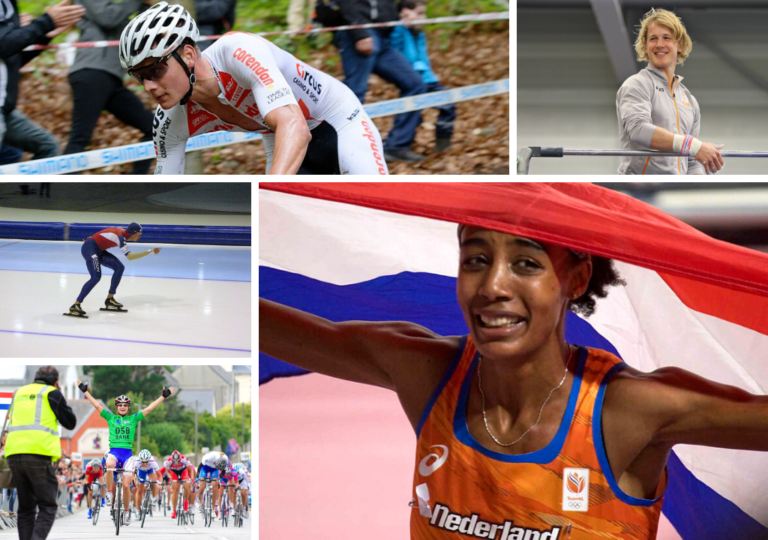
The Netherlands, like every country, has a string of god-like Dutch sporting legends. Want to impress Dutchies with some local knowledge? Having these names in your arsenal will certainly score you some approval points.
Of course, you may just be a sports-junkie in need of that sweat-drenched adrenaline fix, and you’re wondering which names will forever echo down the halls of Dutch sporting glory. Well, you’ve come to the right place. Here are five names (individuals-only) to get you started.
DeVliegende Hollander (the Flying Dutchman, obviously) is a Dutch gymnast, qualified doctor, and an absolute beast on the high bar with arms that are probably wider than your legs. Despite suffering from chronic sinusitis throughout his career, he has an impressive array of medals and victories to his name.
He’s currently the only gymnast to win three high bar titles, and his gold at the 2012 Olympic Games in London was the first Dutch gymnastics medal since 1928. NOS stated at the time that 2.7 million people tuned in to watch his Olympic routine on television, while their livestream of the event had issues when another 200,000 people tried to view it online.
Best sporting moment: His 2012 routine at the Olympic Games in London, with Dutch commentary.
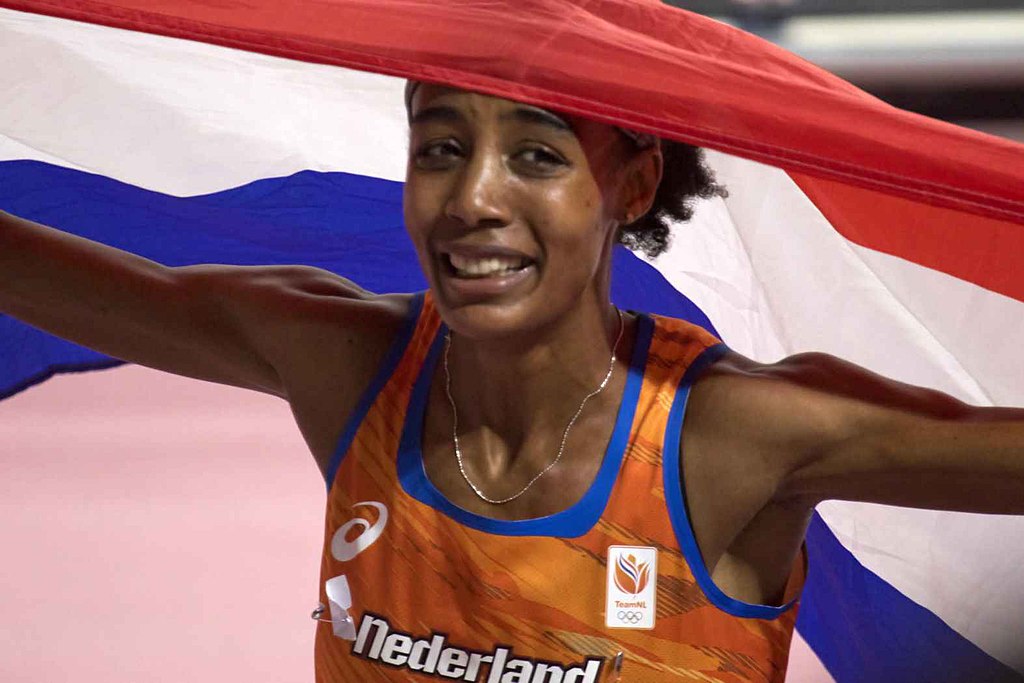
As is the state of modern athletics, middle-to-long distance runner Hassan’s unbelievable performances at the 2019 World Championships in Doha were overshadowed by her work with coach Alberto Salazar and accusations of doping.
Her response? She said in an interview, “I thought: I am a clean athlete, and I’m going to show the world what clean means. I wanted to show what hard work can produce.”
True to her word, she did. In Doha, she became the first athlete ever (male and female) to become world champion in both the 10,000-metre and 1,500-metre distances. Her scintillating 1,500-metre race was a championship record, a Dutch record, and a great watch.
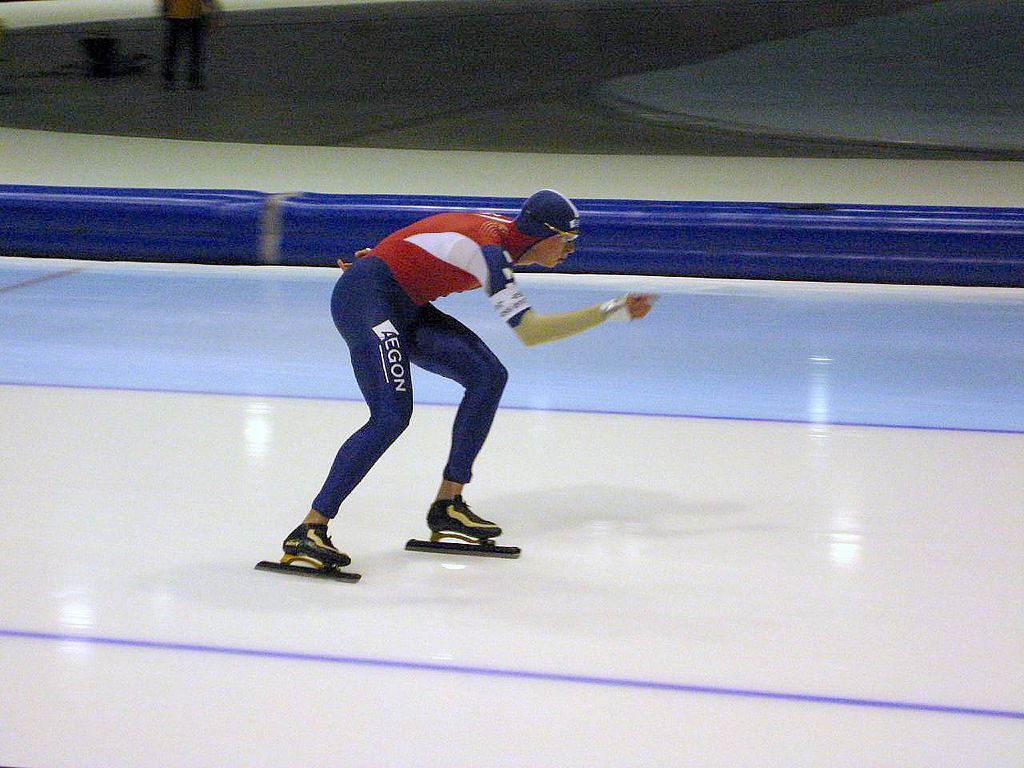
The Dutch love schaatsen, and so does Sven. He also really, really, really likes winning and happens to be good at it, so it’s no surprise that the Dutch adore Sven Kramer.
Take, for example, his 5000-metre men’s race win at the 2018 Winter Olympics that saw him become the most decorated racer in speedskating history, and the first male athlete to win three gold medals in a row for a single speedskating event at the Winter Olympics.
His gold in 2018 came with an Olympic record time, his gold in 2014 came with an Olympic record time, and his gold in 2010 came with, yes, you guessed it, an Olympic record time.
However, Olympic gold in the 10,000-metre men’s race has proven to be elusive, and the Dutch have become so emotionally invested in this anomaly that his infamous disqualification in 2010 (despite winning) was described by a broadcast technician as “a national trauma.”
Whatever you do, don’t say a bad word against Sven.
Best sporting moment: Lots to choose from, so how about we focus on understanding the trauma?
I’ll try and keep this brief, but you need to understand that it’s very difficult.
Women’s cycling, like many female sports, is yet to truly get the recognition and respect that it deserves, but the Dutch are still producing fantastic talents such as Vos, along with Anna van der Breggen, Ellen van Dijk, and Annemiek van Vleuten.
Marianne Vos, however, is a class apart. She has been compared with cycling legend Eddie Merckx to the extent people call her “the Cannibal” (Merckx’s nickname), and is often described as one of the finest athletes of her generation. It’s easy to see why, with her incredibly successful career covering not only road cycling — but cyclo-cross, mountain biking and track cycling too.
She is known for singing in the peloton, has a cat called Sjekkie that is present for all her races, and comes across as so lovely and humble in interviews. She just loves the sport, loves winning, and really wants to raise the profile of women’s cycling. You don’t even need to like cycling to see her as a fantastic role model.
Best sporting moment: Tja, one isn’t enough. Take a look at this video instead.
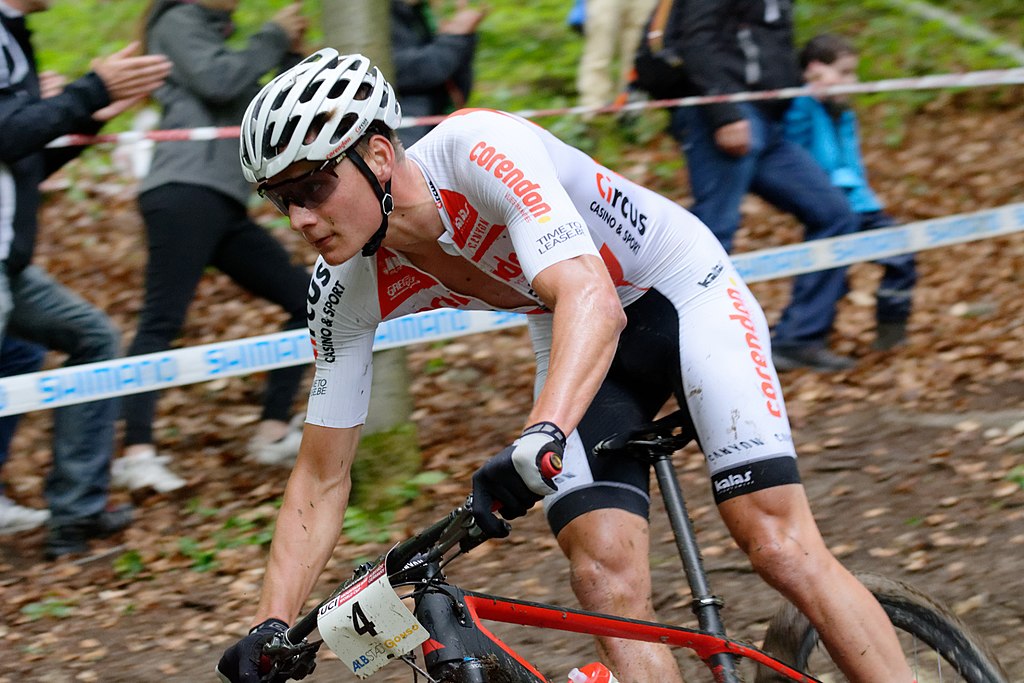
As with women’s cycling, the Netherlands have a whole host of incredibly talented male cyclists that could well be included in this list. But in 2020, there is one name that is currently getting all the fans a bit giddy: Mathieu van der Poel.
At 25 years of age, the Flying Dutchman (of course) is the third generation of professional bike racers in his family, and although he is very new to the highest level of road racing (and is yet to race a Grand Tour), he has already proven to be incredibly strong and talented in both cyclo-cross and on a mountain bike, shown most notably by the fact that in 2018 he was the Dutch National Champion in all three disciplines.
However, it was his win and superhuman performance in the Amstel Gold race in 2019 that really offered a glimpse of his potential to set the men’s road cycling scene alight, wherein an extraordinary last kilometre he somehow managed to finish first. Again, you don’t even need to enjoy cycling to appreciate it. It was pure sporting brilliance.
Best sporting moment: Obviously the kippenvel-inducing Amstel Gold Race in 2019.
So there you have it, a quick top five Dutch athletes to get you started. Who should be included on the next list? Tell us in the comments below!
Feature Image: DutchReview/Canva
Editor’s Note: This article was originally published in April 2020, and was fully updated in January 2021 for your reading pleasure.
As the new variant of coronavirus continues to circulate in the Netherlands, stricter measures remain on the table — and the call for action from some experts is getting louder.
“Although the lockdown does work, we expect that with only the current measures the infections will increase again because of that British variant,” epidemiologist and behavioural scientist Esther Metting tells the NOS.
“In England, the variant was introduced in October and in a short time, half of the infections were caused by it,” explains Metting. “In the Netherlands, we test randomly for the British variant and you can see that in three weeks the presence of the variant has gone from 1 to 12%.”
New mutation 30% more infectious
Health economist and epidemiologist Koen Pouwels conducts large-scale coronavirus research at Oxford University, where he has worked for the past two years. He explains that although the new variant is not more harmful to an infected person, the real threat lies in its greater contagiousness.
“We have been taking thousands of corona tests per day on humans since April 26,” says Pouwels. “Our study is based on 1.5 million samples. The latest important finding is that the new variant is 30% more infectious than the old one.”
This is actually less contagious than was previously thought. Initial studies estimated the strain to be 40 to 50% more infectious. “But it is still a lot more contagious than other variants, and that really presents a major problem,” says Pouwels. In relative terms, he says the variant is “more dangerous for the population than, for example, a variant that is 30% more deadly.”
Stricter measures needed
By February, the OMT experts expect the new variant to be dominant in the Netherlands. While the “regular” strain is expected to ebb to a relatively low level by March, without additional measures, what would be a decrease in the infection rate will, in turn, be an increase with the more contagious variant.
This is why experts say tighter measures are necessary. “You have to take a measure that reduces the number of contacts. That could be a curfew,” says Pouwels.
Reduce the number of contacts
It could also be a reduction in the maximum number of guests allowed per household. Two guests are currently permitted per day but Pouwels says, “I think that’s quite a lot because, in theory, you can infect 14 people per week.”
In England, the new variant has been so infectious in recent weeks that no visits to other household are allowed at all, and singles are permitted to form a “bubble” with one other household. “Studies show that if people stick to this to some extent, it can already be quite effective,” says Pouwels.
Government can’t wait
England was late in identifying the presence of the more contagious variant, which caused a rapid rise in the curve. “The advantage for the Netherlands is that it can keep an eye on the new variant and a situation like the one in England can still occur,” says Pouwels.
Metting says it’s a risk for the government to wait for the numbers to convince people of the need for additional measures. “Let the government, which is always late, be on time with extra measures,” says Metting.
“That could be the curfew, a ban on visitors, a distance restriction around your house. Or better support for people who must isolate at home after a positive test because the roads are not quiet enough yet.”
Do you think stricter measures are needed in the Netherlands? Tell us your thoughts in the comments below.
It came as fast as it went: for less than 24-hours the Netherlands turned a dazzling white.
People across the Netherlands jumped on the opportunity for a snow day from reality. Snowmen were built, children sped on sleds, and cheeks turned red from laughter (and the cold, it was really, really cold).
We’d also like to take this chance to pay our respects to the weather gods because dayummmm, that was some good, crunchy, packable snow.
Wanna relive it all again? Here are some of the top snaps from snow in the Netherlands in 2021.
Let’s start of this journey with a super gezellig shot of Amsterdam.
Amsterdam police have arrested 143 protesters during an illegal demonstration in Museumplein in the city centre.
Authorities estimate around 2,000 people flocked to the event to protest against the current coronavirus measures, Prime Minister Mark Rutte (who resigned his cabinet on Friday), the media, and vaccines.
The Amsterdam municipality did not approve the Museumplein location for the event, which was organized by ‘Nederland in Verzet’ (translation: Netherlands in Resistance). The Westerpark was offered as an alternative location with a cap of 500 people, but was declined by event organizers.
Demonstrators showed up to the original Museumplein location anyway, ignoring repeated warnings by police officers on location. The protesters also refused to practice coronavirus measures, such as keeping 1.5 metres distance from each other or wearing a face mask.
In response, an emergency warrant was issued to break up the event. Police deployed water cannons and dogs.
Protesters fought back by throwing fireworks and stones. Some carried melee weapons or wore fighting gloves. The municipality says that about 200 to 250 people were “clearly out for the confrontation.”
“We are the Netherlands,” the demonstrators chanted, emphasizing that they had come to protest “out of love.”
Of the 143 protesters arrested, 15 remain in jail facing charges of open violence. The remainder were arrested for failure to follow a police order and will likely be fined.
Minister of Education Arie Slob has announced that primary schools and childcare will remain closed until at least February 8.
The cabinet did investigate the option of opening earlier but has determined that it will not be possible, reports the NOS.
Minister Slob says it’s a “great disappointment for the children, parents, teachers and childcare workers.”
The minister explains that “We follow the OMT advice.” Because the number of infections is still high and there is uncertainty around the spread in children, “It didn’t give us the boldness to open the schools earlier.”
Support for parents
The added stress on families with school children is being considered along with this decision. Consultations will take place this week about the possibility of paid care leave for parents who are homeschooling while working from home.
According to Slob, “We are discussing this with employers and the social partners.” While coronavirus leave is primarily the responsibility of employers, the minister says they are “prepared to make a financial contribution to this as a cabinet.”
PO Council in favour
The PO Council, the umbrella organisation of Dutch primary schools, is concerned about the effects of the long school closure on the children but supports the cabinet’s decision. “The safety of students and teaching staff is always paramount.”
What do you think of the cabinet’s decision to keep schools closed until February 8? Tell us in the comments below.










.jpg)

.jpg)
