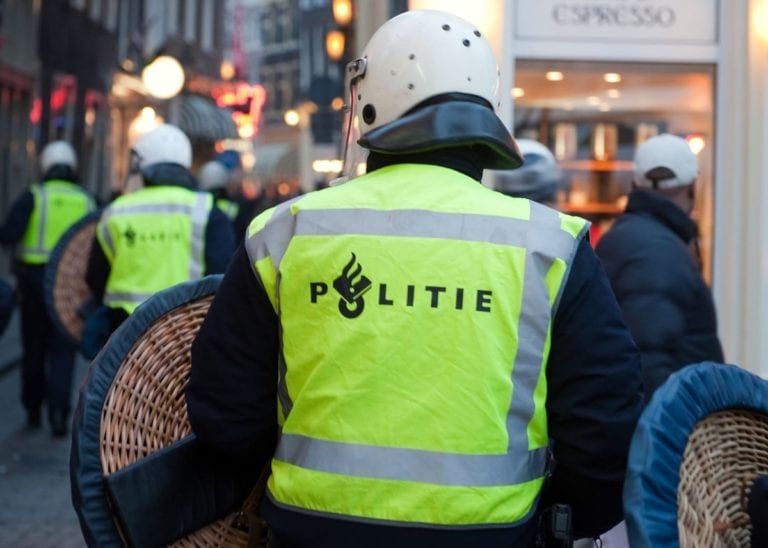
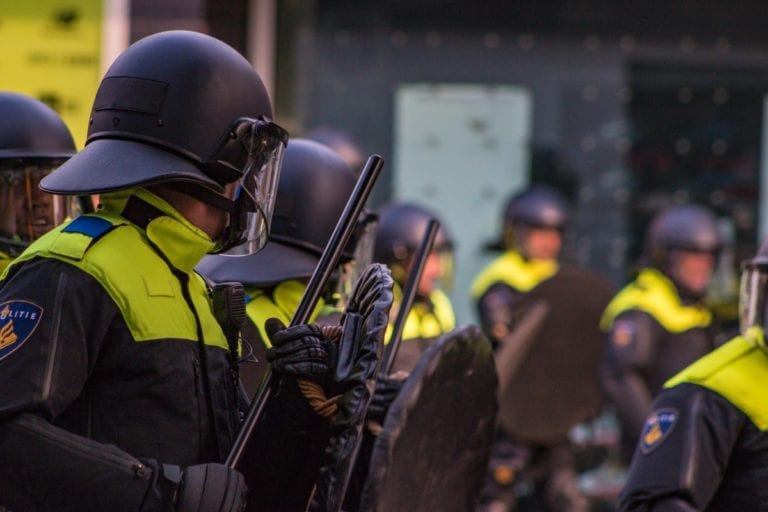
Last night marked the third night of rioting against the implementation of curfew throughout the Netherlands. The riots have dominated both Dutch news and world news — Dutch mayors, MPs and Rutte are not impressed.
Abroad, certain news agencies are likening the riots to a war zone. One German news paper, Bild captioned the news piece “Bürgerkrieg”, meaning “Civil War,” with an image of protestors clashing against police.
The German newspaper took its inspiration from the Mayor of Eindhoven, John Jorritsma, who claimed, “we are on our way to civil war in this way,” in response to Sunday night’s riots.
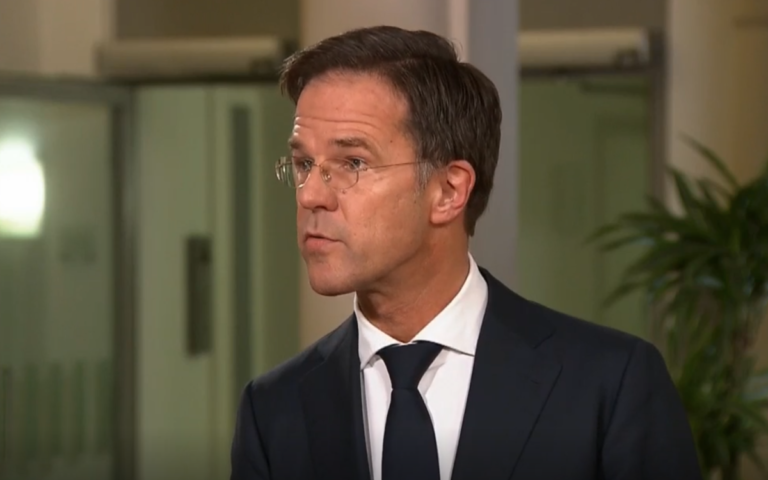
Speaking to press outside his office on Monday morning, Rutte gave his opinion on the riots. “This has nothing to do with protest, this is criminal violence and we will treat it as such.”
News of the riots made their way to the Arab broadcaster Al Jazeera, which offered the headline, “‘Criminal Violence’: Dutch PM deplores COVID lockdown riots,” inspired by the Outgoing Prime Minister’s quote.
Curfews have been imposed in The Netherlands for the first time since WWII.
The French newspaper, Le Figaro, adopts a slightly different angle and instead focuses on the fact that the Dutch are rioting against a measure that is far less strict than France’s own curfew.
In France, a nationwide curfew has been in place in many areas since the beginning of the outbreak of coronavirus. Last week, the start time of the curfew was brought forward to 6PM.
As a result, the French newspaper’s take on the Dutch riots focuses on the accountability that Dutch people must begin to adopt when battling the virus. “The curfew is intended to prevent a total lockdown, while the Dutch have not had to account for their movements since the outbreak of the pandemic,” the paper writes.
Mayors and MPs express outrage
Dutch mayors have expressed their disgust at the riots that broke out across the country for a third night in a row. Last night, Rotterdam saw considerable damage and looting at the hands of some rioters.
Mayor Aboutaleb of Rotterdam has responded to the events, describing the rioters as “shameless thieves, I cannot say otherwise.” The mayor had to consider using tear gas to control his city’s citizens. “I had to threaten with the use of tear gas, a far-reaching measure. I find that sad, because I have never had to do that in my entire career as mayor.”
This is going too far, i swear to god. What did these shopkeepers ever do to you? It’s getting out of hand and it seems nobody’s stopping them. What the actual fuck is going on. #avondklokrellen#rotterdampic.twitter.com/RxDleQ4y86
Other mayors have also expressed their disgust at the rioters. In Den Bosch, Mayor Jack Mikkers described the rioters as having left “an unimaginable trail of destruction” in their wake.
In the southern region of Sittard-Geleen, Mayor Hans Verheijen called out rioters who took to the streets over the past two nights. “Damaging other people’s property doesn’t help anyone at all. In fact, you depress people and entrepreneurs even further. Unacceptable.”
What are your thoughts on the rioters? Let us know in the comments below!
Personal data from the GGD’s two largest coronavirus systems, including addresses, telephone numbers and BSN numbers, have been illegally traded for millions of euros. Two suspects have been arrested for selling this information.
Data from the CoronIT system, including private information of Dutch people who have taken the corona test, and the HPzone Light system, which contains source and contact details, have become products in this illegal trade, reports RTL Nieuws.
The data could be misused for identity fraud, phishing and stalking. “The trade in this data is deeply shocking,” says Professor of ICT & Law Frederik Zuiderveen Borgesius of Radboud University. “There are also medical data in the systems, [so] it is extra important to protect this properly.”
Sales for 50 euros
For months, large group chats on social media platforms have been selling datasets for 30 to 50 euros. The information from a specific person, including home and email address, telephone and citizen service number, could be bought for this fee.
Large datasets containing the information of thousands of Dutch people could also be bought, costing thousands of euros. Social security numbers are especially popular, as they can be used for identity fraud.
The sellers have commented that they “eat well” and make a lot of profit from this illegal business.
Bribed GGD employees
Over 26,000 GGD employees have access to the data, and since many of them are now working from home it is easy for them to pass this data onto criminals. The Central Netherlands police, who specialise in cybercrimes, are investigating the situation and believe GGD employees are being bribed to pass this data on to criminals.
GGD authorities were unaware of the data crimes. “We are responsible for the security of our systems,” says André Rouvoet, chairman of the GGD GHOR Netherlands. “Everyone who is tested by us must be able to rely on it.”
Since the story was exposed by RTL Nieuws, the GGD has taken further steps. Random checks of employees have become regular and dozens of GGD employees have been fired. There are plans in place to upgrade security systems by March.
What do you think of this mass leak of data? Tell us in the comments below.
Riots over the new curfew measures broke out across the Netherlands this weekend. Riot police and military police had to be deployed in some places as violence escalated dramatically.
The Medisch Spectrum Twente (MST), a hospital in Enschede, was attacked yesterday evening, reports NOS. Rioters tried to smash windows and additional security was brought out to protect hospital workers changing shifts. Police eventually sent the rioters away from the hospital. A spokesperson confirmed that little damage had been done to the hospital.
The attack on the hospital came after a demonstration held in the Oude Markt, where protestors expressed their disapproval of the new coronavirus measures. Fireworks were set off and at first police did not intervene. But as demonstrators became violent, riot police were deployed.
Violence across the Netherlands
Riots were seen in The Hague, Tilburg, Venlo, Helmond, Breda, Arnhem, Apeldoorn, Eindhoven and more. Piles of bicycles, bus stops and cars were set aflame, and rioters threw stones at police and buildings.
In Urk, a GGD testing facility was burnt down and reporters were attacked with pepper spray by rioters. An emergency warrant was issued for the village, and extra police will be patrolling the streets from tonight.
Chairman Hubert Bruls of the Security Council called it “terrible”, and says “this is not a demonstration, I would call this corona hooligans.”
Banned demonstrations were held in Eindhoven where rioters burnt cars and looted shops in the central station. Police arrested 55 people and had to use water cannons to push rioters back. Mayor Jorritsma told reporters, “My city is crying” and that they were on their way to a civil war.
In Roermond, Limburg, rioters destroyed a shopping centre and a policeman suffered minor injuries from people throwing stones.
In The Hague, young people set fire to a scooter in the middle of traffic in the Schilderswijk, which caused a small explosion. Police hurried to direct traffic away from the fire.
While most cities were quiet again around 9 PM, riots in Tilburg went on past midnight. Traffic lights were pulled from the ground and fireworks went off around the city.
By the end of the night, a total of 240 people had been arrested across the nation, mostly in Amsterdam, where the demonstrations had been banned.
More police presence
A spokesperson for the police has made it clear that they will be enforcing the curfew regardless of the resistance it faces. “The police will remain visibly present in the various centres and neighbourhoods. We are intensively enforcing violations surrounding the curfew.”
What do you think of the riots that took place this weekend? Tell us in the comments below.
Riots broke out in multiple regions of the Netherlands over the weekend in violent opposition to the new curfew. In Urk (a central Netherlands fishing village), things got particularly heated, with the burning of a GGD test street and an attack on the press.
When the curfew went into effect on Saturday evening, dozens of people protested in the village’s port area. Over a hundred cars were driven through the harbour honking, and the GGD test street was set on fire.
Additional police had to be deployed to the area to help manage the unrest. Following the riots, dozens of fines and an emergency warrant were issued in the town.
“It is always that small group of young people who do strange things and then gets attention,” one Urk resident told the NOS. “If we stop paying them attention it will blow over by itself. That group is just looking for sensation.”
Attack on the NOS
While filming the burnt remains of the village’s test street, a NOS team was attacked by some of the rioters. The security guard of the cameraman was pepper-sprayed in the face.
“These are all frustrated young people who can no longer go to a bar,” the resident says. “They do not think about the consequences of their actions and understand that protesting in this way is not possible.”
“At moments like this I am ashamed to be from Urk,” says Johan van Slooten, CDA Member of Parliament. “I am also a journalist and it bugs me to the bone that such a camera crew cannot do its work here.”
The residents of Urk simply have an anarchist streak, Van Slooten continues. The close-knit Christian community has had little faith in the government since the founding of the Noordoostpolder — a municipality that entirely surrounds the Urk municipality. But according to Van Slooten, that should not be a license for destruction or violence.
Mayor: “I am filled with horror”
Urk Mayor Cees van den Bos is distressed by the actions of the villagers. “It is with pain in my heart that I address you on this day. It cannot be otherwise, because all eyes are focused on Urk.”
He posted a video on YouTube condemning the arson, violence, and destruction. (Subtitles available in multiple languages).
“A low point of those riots was the burning of the GGD test street,” the mayor says. “That was a slap in my face — has been a slap in the face of director of the GGD, but even more a slap in the face of the many employees of the GGD who work daily for the health of the residents of Urk.”
“I used the word shame on social media yesterday…but perhaps it is better expressed that I am filled with horror,” continues Van den Bos.
“This is no longer possible, a limit has been reached here.” The new emergency order will ensure that violators of the curfew will not just receive the standard €95 fine, but a criminal record, he explains. “And that alone is the correct answer.”
What do you think of the rioting in response to the curfew? Tell us in the comments below.
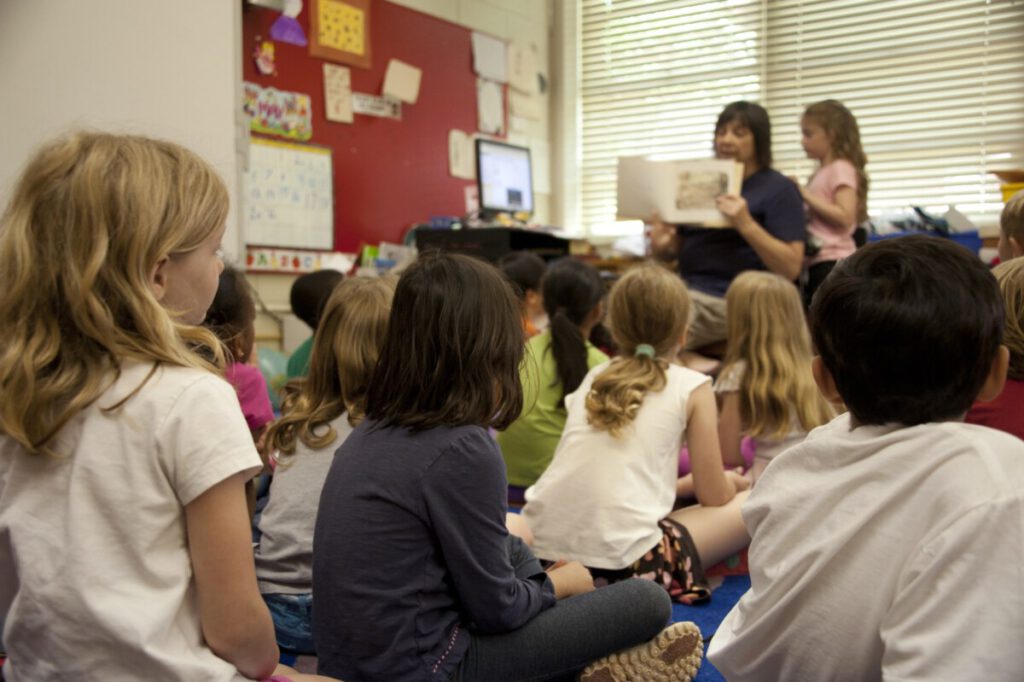
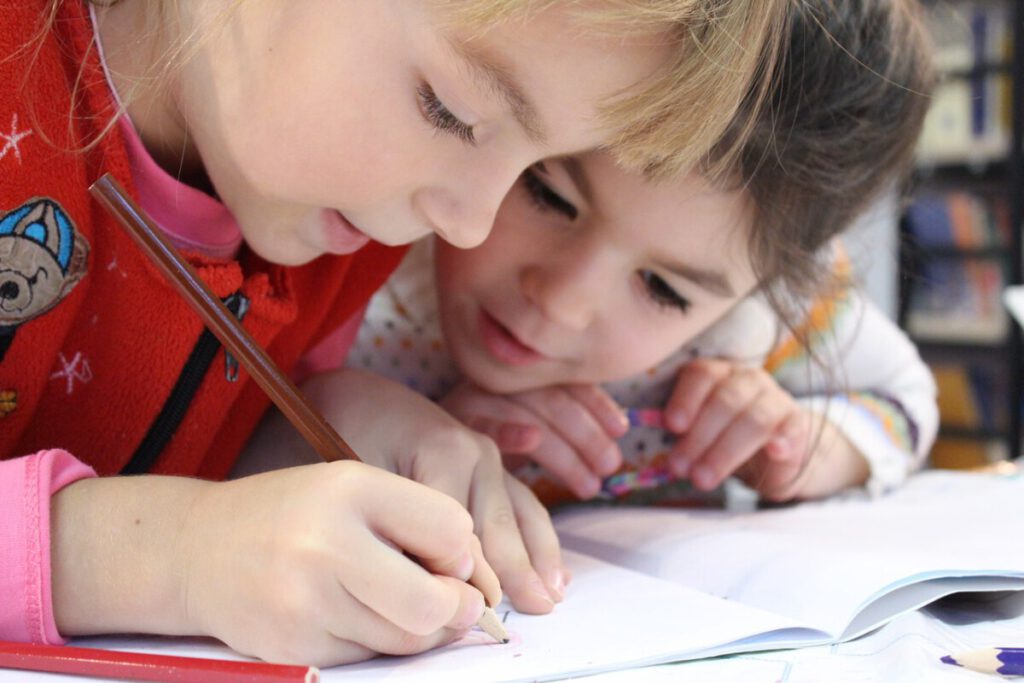
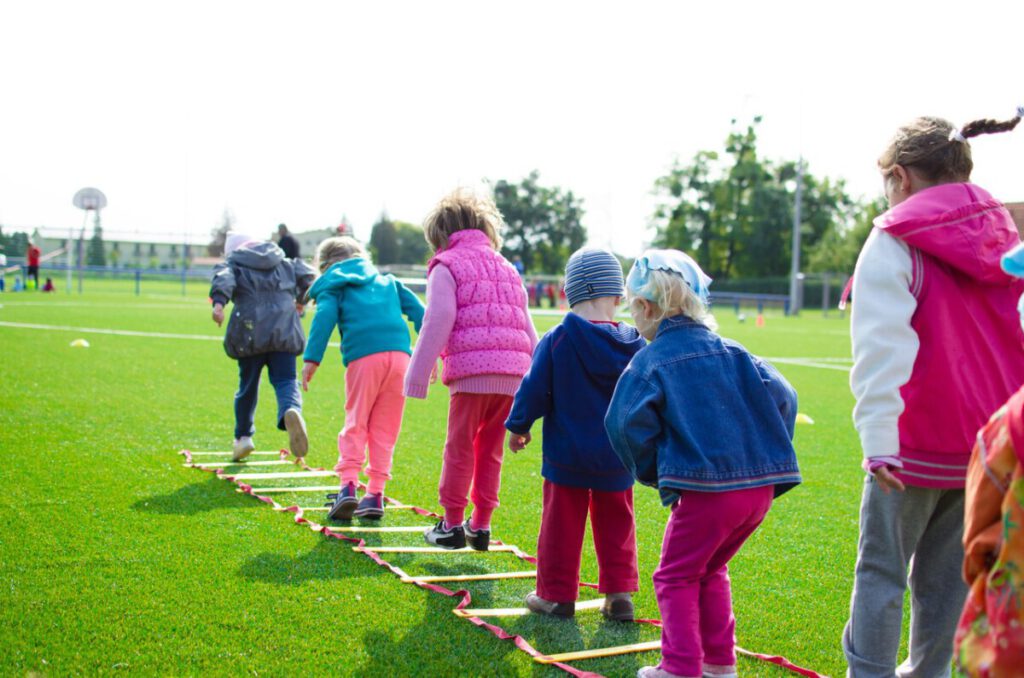
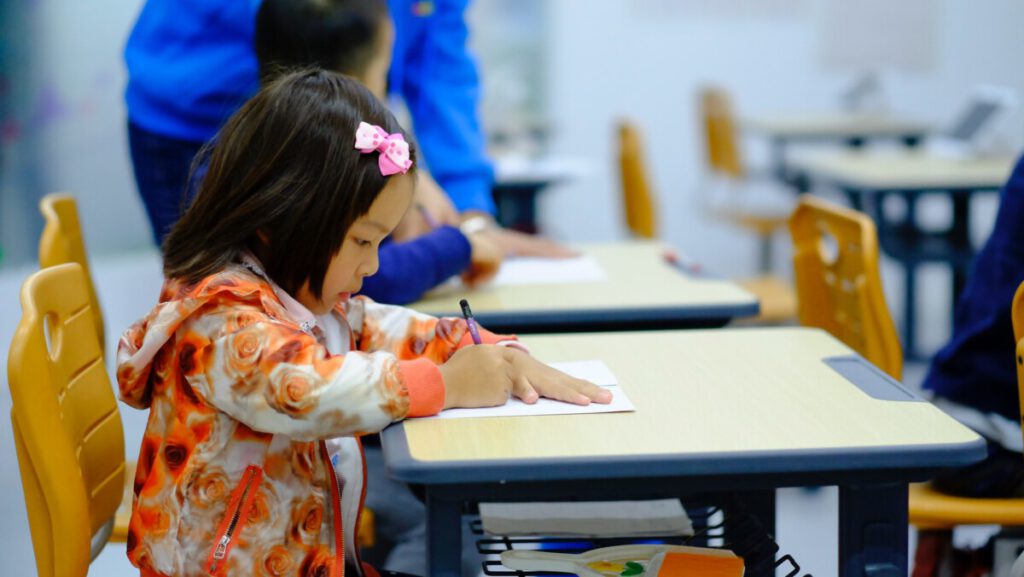
Education in the Netherlands is considered to be of high quality, but negotiating the system can be somewhat confusing. This article looks at the ins and outs of primary schools (basisscholen) and all you need to know before you enrol your child.
My family and I arrived in the Netherlands, shortly after my son turned three and it was a bit of a shock to learn that we had missed the enrolment process for schools. You can forgive my confusion, as we are from New Zealand, where children start school at five (only compulsory from six). We also lived in London, where they all begin together in September, the year they turn four. We would quickly learn that in the Netherlands, things are done a bit differently.
A parent’s guide to Dutch primary education
The formal primary school system offers a wide array of school choices based on religious and pedagogical preferences. When our frantic hunt for a school started, I visited many schools, checked their details and statistics on Alle Cijfers, and became that helicopter mother on social media gleaning inside information from parents with children in the various schools.
In Haarlem, specifically, I was told to breathe and choose a school based on its proximity and its pedagogical approach as there are, and I quote, “no bad schools in Haarlem.” This gave me some solace but also cloaked me in further confusion: what the heck do the different approaches really mean?
Hopefully, what I’ve learnt may help fellow confused parents.
Finding a primary school in the Netherlands: the lottery system
The application process for primary schools differs slightly from one municipality (gemeente) to another. Sometimes, you can register as early as when a child is born. In other cities, it may be from ages two to three.
Your municipality may have different time slots for registration based on the child’s date of birth. The schools where you have a preference will be determined by your zip code. Check with your city, and for more detailed advice, contact Young Expat Services (YES).
Generally, parents receive a letter and school application form from the city council. Parents list a choice of six to eight schools and drop this form off at their first-choice school.
Around 10 days later the parents can expect another letter from the municipality with confirmation of their enrolment, which is often their first choice, but not always. Schools give priority to children who live in close walking proximity or who have an older sibling already attending. This priority system does not include free schools (i.e. vrije/Steiner/Waldorf) nor Islamic religion schools.
The website Scholen op de Kaart is a good starting point to find schools in your area. Some municipalities have a website with more information on their specific process and the voorrang scholen (priority schools) according to your address. For instance, in Amsterdam, Schoolwijzer and in Haarlem, Naar school in Haarlem, are handy tools.
Finding a primary school for your child can be tricky in the Netherlands. Image: Aaron Burden/ Unsplash.
In the Netherlands, children start school the day after their fourth birthday, which is not compulsory but a cultural convention. Of course, if your child turns four during the summer holidays, they will start in the new school year. In preparation, these preschoolers attend school at least three or four days before their birthday, spread over a few weeks. This is referred to as wennen (settling in).
Children must attend school, from the ages of 5 to 18 when they are “leerplichtig,” meaning, “of school age”. This can be reduced to 16 years old with a startkwalificatie (basic work qualifications). The Dutch education authorities take this seriously. I recently learned that a parent has the grace of five hours per week to keep their child (under the age of five) home — without illness or permission — as long as they report their absence. As a family, we make use of this loophole, as, after six, there is little chance of playing hooky!
Primary years are usually from a child’s fourth birthday up until they are 11 or 12.
The onderbouw is the kindergarten or reception years, for Groep 0 to 2 with ages ranging from four or five to six or seven. The children are called kleuters (toddlers), and the focus is on social-emotional development and play-based learning. For the littles ones in Groep 2, a little more structure in preparation for reading and writing are introduced.
Generally, in the new school year after students turn six, most kleuters move onto Groep 3, which is a big adjustment. Formal schooling — learning how to read, write, and do arithmetics — starts. The middenbouw is the collective name for age groups six to ten (Groep 3 to 5) and the bovenbouw houses the big kids and tweens; ranging between ages 8 to 13 (Groep 6 to 8).
The age range in each school year can differ as it depends on when a child started school and whether a child was held back (blijven zitten) as they were not ready for the next year. When a child is kept back, it is done in the best interest of the child. It is not frowned upon or shamed, which I find refreshing.
Most schools have a single year group per class, except for Jenaplan and Montessori schools, who mix two to three age groups per class.
Creativity and socialisation are encouraged. Image: Andrea Piacquadio/Pexels
The most significant distinction between openbare basisscholen (regular schools) and bijzondere basisscholen (special schools) is that special schools are run by their own boards while regular schools are government-run. Both regular and special schools are subsidised by the government.
Most schools do ask for a voluntary parental contribution, which varies between schools. Regular schools are always secular, but special schools can have a religious grounding (confessioneel) or be non-religious (algemeen). Both religious and non-religious schools may follow a particular pedagogical method.
Religious primary schools in the Netherlands
Religious schools vary from strictly following a doctrine to only observing certain holy days. Often, these schools are open to children who do not practice a specific faith as long as they abide by the school’s related ethos and observances. Religious schools can be Christian (Protestant, Catholic, or Ecumenical), Islamic, Jewish, Hindu, and Humanist.
Even though special schools follow a particular educational approach, they still need to shape their schooling within the framework of the overall Dutch education system. For instance, children in their final year (Groep 8) complete a national year-end test, which is an aptitude test used as part of the streaming process to secondary schooling.
The government approved five tests: Centrale Eindtoets (CITA), Route 8, IEP Eindtoets, Dia-eindtoets, and the AMN Eindtoets. This process of streaming and the breakdown of secondary schooling in the Netherlands requires an article of its own.
Dutch primary schools and disability: Speciaal Onderwijs schools
According to the Inclusive School Act (Passend Onderwijs), all children with disabilities or additional learning needs have the right to attend a school in their neighbourhood. It is the school’s responsibility to create a learning environment suited to the child’s needs, which may include hiring an external, specialised SEN teacher.
Unfortunately, schools’ ability and expertise to uphold this policy differ, and when a school feels it does not have the resources or knowledge to fully support a child, they refer the child to a dedicated special needs school. The family will be supported by an SEN consultant (onderwijsconsulent) during this transition. Speciaal Onderwijs schools (special needs) are categorised into four clusters, according to the challenges a child is living with:
Blind or visually impaired
Serious communication difficulties
Physical disability, learning delays and difficulties, and chronic illness which prevents a child from attending school
Serious mental health or behavioural issues
All the schools I visited emphasised that they are child-centred, utilise play-based learning, and encourage social development, especially in the first two years. They further stated that they encourage and nurture independent and inquiry-based learning and work according to a child’s ability.
Particulier schools refer to fee-paying private Dutch schools. Annual fees range from €13,800 to €19,000.
In addition to the SO schools, there are also speciaal basisonderwijs (SBO) schools available for children who need extra support but less than in an SO school.
International, immersive, and bilingual Dutch primary schools
If you decide to go ahead and enrol your child in school, there are multiple options available to you. Let’s got through them!
There are a number of international schools in the Netherlands, which range from fully private (with fees starting from €15,000 per year!) to subsidised international schools (with fees starting around €4,500 per year). The Dutch government is one of only a few in the world that subsidises international schools.
A more international approach to teaching is becoming increasingly popular in the Netherlands. Image: CDC/ Unsplash.
Immersive or “newcomer” schools in the Netherlands
When a child over the age of six (and in some cities, ages four to five) who cannot speak Dutch arrives in the Netherlands, it is a requirement to first attend an immersive or newcomer school. These schools enable children to learn Dutch before assimilating into a normal Dutch school.
The schools follow the Dutch curriculum while helping children to become fluent in the language. Children can attend these schools for up to a year. Many municipalities have such schools, and the organisation LOWAN (Ondersteuning Onderwijs Nieuwecomers) is a great resource to find the closest one to you.
Early Foreign Language Schools (VVTO): bilingual schools in the Netherlands
Dutch schools are required by law to teach English as a subject from Groep 7, at the latest. In Early Foreign Language Schools, or vroeg vreemdetalenonderwijs (VVTOs) as they are called in Dutch, children are taught in a foreign language from Groep 1.
This is becoming increasingly popular in the Netherlands. Currently, there is a nationwide pilot at 17 schools where English is taught earlier (age four), and at least 40% of instruction is in English. Tests and projects are still in Dutch. This pilot will run till 2023 and if successful, may roll out to more schools.
Pedagogical approaches to primary school in the Netherlands
Disclaimer: these are only simplistic descriptions, as I understand them, and would seriously recommend doing more in-depth research into the pedagogical approaches that tickle your fancy.
Dutch Montessori primary schools
The Montessori method, or, “help me to do it myself” method, is based on the research of the Italian physician and educator Maria Montessori. It focuses on self-directed activity, hands-on learning, and cooperative play. A child is given freedom, while guided by the teacher to develop at their own pace. Teaching is based on five elements: practical life, sensorial, mathematics, language, and culture. Classrooms tend to have mixed age groups to nurture mentorship and cooperation.
Different approaches can be used to meet a child’s needs. Image: Pexels/ Pixabay
Jenaplan teaching in the Netherlands
The Jenaplan teaching method was founded by the German pedagogue, Peter Petersen. It is based on 20 principles. These principles include the appreciation of a child’s unique identity, viewed holistically and the importance of treating each person with the utmost respect. These schools foster independent learning, cooperation, communal life, and shared responsibility between teachers, children, and parents.
Dalton primary schools in the Netherlands
Dalton schools were developed by Helen Parkhurst (1908) in the United States. The method has broadly two principles: freedom and cooperation. Freedom fosters independent learning and creativity, as it uses the child’s interests as a starting point. Collaboration helps children to develop social skills and responsibility toward others through their interaction.
Dutch education systems encourage cooperation. Image: Lukas/ Pexels
The Freinet school system in the Netherlands
In the Freinet school system, children can choose what they want to learn, as this nurtures their intrinsic motivation to discover. The teacher guides the children to learn and explore concepts experientially, instead of being told how things work. The teacher gives structure and helps the child to deepen their new knowledge. Children cooperate and learn to organise their group, class, and school democratically. The french pedagogue and teacher, Célastine Freinet started this movement in the 1920s. There are seven Freinet school in the Netherlands.
The Vrije/Steiner/Waldorf approach to Dutch primary teaching
Rudolf Steiner, the founder of anthroposophy, also developed this educational method. Waldorf education takes a holistic approach and aims to integrate and develop a child’s intellectual, artistic, and practical skills, regularly involving nature. Nurturing creativity and imagination through art, music, stories, and plays is central in these schools.
Nuts or “utility” schools in the Netherlands
Within this educational framework, values of respect and equality stand central. Its goal is to develop a child into a full member of society based on their unique set of abilities and limitations. It offers a stimulating learning environment, with a focus on innovation in education. Differences between children are acknowledged and respected and cooperation is encouraged.
Children’s individual abilities are nurtured. Image: Jerry Wang/ Unsplash.
Dutch schooling options that you may not have heard of
The following three types of schools are less known across the Netherlands; I only learnt about them while writing this article: experiential-orientated (ervaringsgericht onderwijs -EGO) and developmental-orientated (ontwikkelingsgericht onderwijs – OGO) are educational philosophies and methods similar to ICP.
I find these both intriguing, along with flexible (flexibele) schools, or basically, year-round schools, which may be on the rise as homeschooling is not a realistic option in the Netherlands.
Proximity to home: a consideration for parents
In the Netherlands, proximity to home often plays a key role in deciding which school to pick. I am fond of the Dutch’s love affair with their agendas (must be my Dutch ancestry); great was my surprise that children do not uphold this way of life. Quickly into starting school, my son invited friends and was invited on impromptu playdates directly after school, so being close to the school is a great benefit.
Also, once they are bigger and it is safe to do so, children love to cycle or walk to school by themselves, and the closer to school, the more parents can relax about their precious bundles proudly displaying their independence.
Homeschooling in the Netherlands: consider before you enrol
One thing I wish I knew before enrolling my child in primary education was that once your child is in the school system, it is next to impossible to homeschool. I was not actively pursuing homeschooling, but after this strange year we call 2020 and the coronavirus pandemic I gave it serious consideration.
Homeschooling is — in most other countries at least — a legitimate educational choice. I find this strict policy on homeschooling archaic and not something I expected from a nation valuing their civil liberties; a country I mostly view as progressive. I am perplexed about why home birthing is encouraged, but homeschooling is not.
Homeschooling in the Netherlands warrants more research and its own article, but suffice to say that if you plan on homeschooling your child, do not register them into the formal education system. Of course, you would still need permission to homeschool, once your child turns five.
Coronavirus has changed learning methods for many. Image: Julia M Cameron/ Pexels.
10 Dutch words for primary school parents
Klassenouder
Meaning “class parent”, somehow, I earned this title this year, which amused me, as I am just about the only non-Dutchie parent in the class. I am sure my numerous Dutch faux pas entertain the other parents too. Luckily, I share duties with another Dutch mum. In practice, it means that we relay messages between the teachers and parents and help to organise events, such as outings or school plays.
Studiedag
In New Zealand, I knew this as “teachers-only day”, which means there is no school at all on that day, as the teachers have training. It is usually clearly marked in the school calendar, to give parents time to organise childcare. If you forget, it may lead to an impromptu “bring-your-child-to-work” day. There are a few of these dotted across the school year.
Infobulletin
Meaning “info-bulletin”, this one is essential. Most schools use digital communication system and school calendar, such as Social Schools. Before I figured this out, I felt like the only kid not allowed into the clubhouse, as I repeatedly missed things! At our school, each class also created a parent WhatsApp group, which could be a great resource.
IB’er (Intern begeleider)
An IB’er is an “internal supervisor.” This specially trained staff member helps a teacher to support a child who may be experiencing learning difficulties, adjustment issues, or who is displaying disruptive behaviour. For instance, in our case, the IB’er tested my son’s passive and active Dutch language skills to advise the teachers how to best support his Dutch language development, as a non-Dutchie.
This is the pupil monitor system to identify any learning difficulties (e.g. dyslexia) early on (Groep 2 or 3), and to give the child additional support if needed. The results are also used to evaluate the quality of education at the school.
As a parent in the Netherlands, you may be asked for a 10-minute chat or “gesprekken.” No need to fear, these parent-teacher discussions usually happen twice a year, where parents meet the teacher to discuss their child’s progress. My tip is to go in well prepared, as, depending on the teacher, 10 minutes is not an abstract concept.
Leerkarcht-leerling-ouder (LLO) gesprek
Meaning “teacher-student-parent conversation”, these meetings usually start in Groep 4, when children are able to reflect on their development and behaviour at school.
Overblijven (Stay over) or TSO (tussenschoolse opvang)
Generally, primary schools have four full days and one half-day. On the long days, they enjoy a fruit break (kleine hap) around ten o’clock (10-uurtje), and during the school lunch hour (grote hap), children can go home for lunch. If they stay at the school, an external organisation (often staff from the connected BSO or volunteering parents) looks after them while the teachers take their break. This is referred to as overblijven or TSO. Children bring their own packed lunches. Some schools prefer to have a shorter lunch break but finish the school day earlier (i.e. continuerooster)
BSO (After School Care)
Each primary school is required to offer parents after school care options, called buitenschoolse opvang (BSO). Staff will pick children up from school and entertain them at an after school centre, where parents will pick them up. Parents pay for this service but can apply for a childcare allowance (kinderopvangtoeslag) from the tax authority.
Luizenmoeder (lice mother) and Luizenzak or Cape (lice bag)
Ah, yes, headlice! Dutch schools and parents approach this in a very practical way. There is no shaming nor panicking, simply a call out to parents, via the class parent, to either check their children’s hair at home or to organise a luizenpluis session at school, where a few parents volunteer to comb through each child’s hair. I have seen a luizenzak, but only at the BSO. Apparently, children hang their jackets in these bags to prevent the little critters (lice not kids) to spread.
Handy Resources
New2NL — independent education consultant for international families
No education system, no matter how innovative or strong, is without problems. The 2020 report by the Inspectorate of Education highlights the issues (for example, the desperate shortage of qualified teachers and the decrease in reading ability) and how the government plans to address these.
What do you think of the Dutch primary school system? Let us know in the comments below!
Editor’s Note: This article was originally published in June 2020 and was fully updated in January 2021 for your reading pleasure.
Feature Image: Pixabay/ Pexels.
Reading lets you travel during a time of travel bans and allows you to meet exciting new people, regardless of social distancing. Seeing as lockdown in the Netherlands has been extended to the 9th February, and a curfew will be in place as of tomorrow night, what better way to escape the pandemic than through some Dutch literature?
Not sure where to begin on your journey to discover some Dutch reads? No problem, here’s a handy little list of five great — and translated — Dutch novels for the eager international!
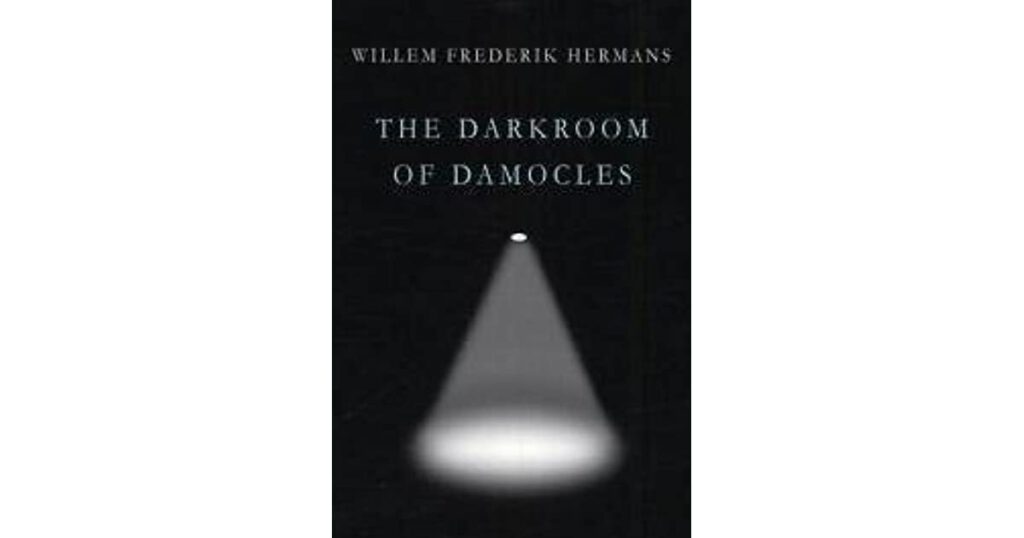
De Donkere Kamer van Damokles (The Dark Room of Domocles) – Willem Frederik Hermans
A morally ambiguous Dutch novel. Image: Goodreads.
If you’re in the mood for a journey back in time, The Dark Room of Domocles, based during the German Occupation of Holland during World War II, is definitely for you.
The book is about a tobacconist, Henri Osewoudt, who joins the resistance by helping British agents kill collaborates using various (and any) means. Morally ambiguous, high-paced and exciting, this novel will definitely provide a release from the mundanity of lockdown.
Translated by Roy Edwards as The Dark Room of Domacles. Published 2007 by Overlook Press (first published 1958.)
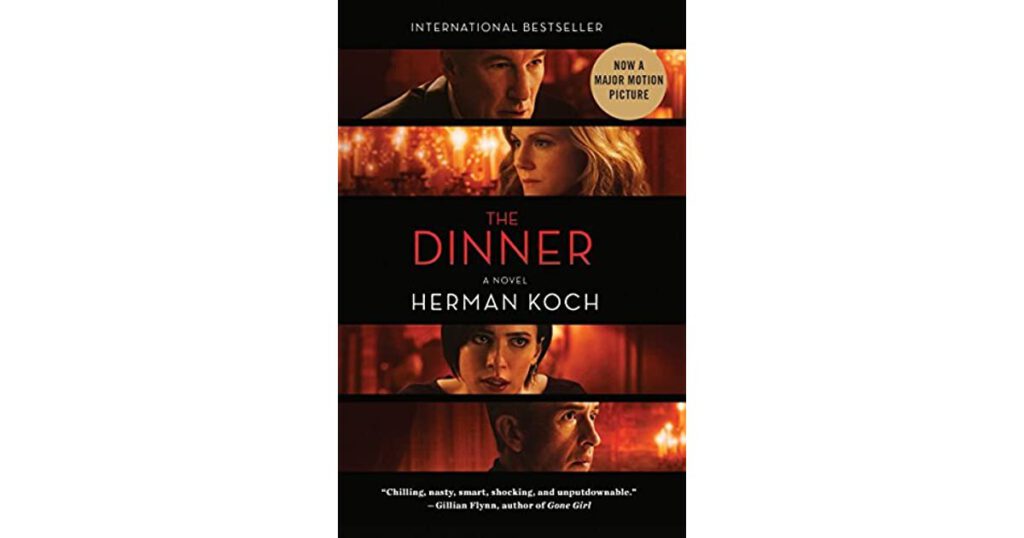
Het Diner (The Dinner) — Herman Koch
Now a motion picture too! Image: Goodreads.
Translated by Sam Garrett and published 2013 by Hogarth (first published 2009), this novel is set in Amsterdam. The novel initially focuses on two couples meeting at a restaurant to bond over everyday life banalities. Both couples have the same-aged sons who, drawn together by committing a horrific act, shatter their ordinary Dutch families’ tranquillity.
If you’re feeling overwhelmed by house-bound boredom, this novel will surely put your worries into perspective.
Heren van de Thee (The Tea Lords) — Hella S.Haasse
Look at how beautiful the cover is! Image: Goodreads.
Translated by Ina Rilke and published 2010 by Portobello Books (first published 1992), The Tea Lords follows the life of a man named Rudolf.
Leaving his comfortable life in Delft, Rudolf takes a ship to Java to manage his family’s estates. As he moves around the plantations, he tries to understand the local’s interpretation of Islam and their innate love for their land.
Perhaps not surprisingly, this colonist falls in love with a teenage girl during a visit to the country’s capital. The ensuing story follows the strained relationship of two cultures trying to co-exist under unique and challenging circumstances.
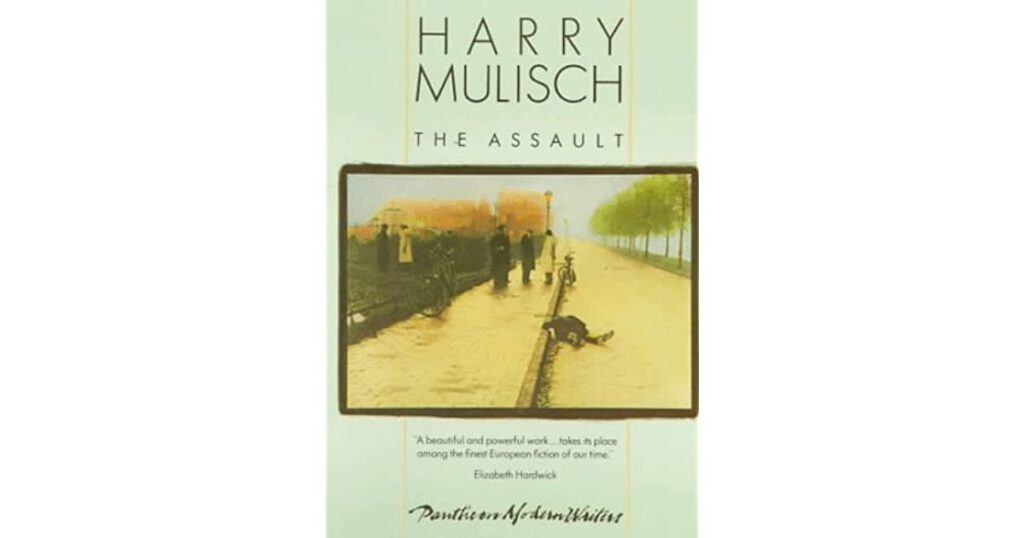
De Aanslag (The Assault) – Harry Mulisch
A great piece of historical fiction. Image: Goodreads.
Another novel based on the dark days of the German occupation of Holland during World War II, this story follows the death of a cruel and brutal Naxi collaborator who is murdered on a bike ride home.
In retaliation, the Nazis burn down two innocent families’ homes, killing everyone but Anton — a lone survivor. This twisted story follows Anton’s life as he struggles to forget this event which moulded him, and ultimately shows how the past returns no matter how deeply one tries to suppress it.
The novel was translated by Claire Nicolas White and published in 1986 by Pantheon (first published 1982.)
Erik of Het Klein Insectenboek (Eric in the Land of the Insects) – Godfried Bomans
A great children’s book. Image: Goodreads.
Translated by Regina Louise Kornblith and published 1994 by Houghton Mifflin, this feel-good, light-hearted children’s book follows the adventure of nine-year-old Eric, who disappears into the landscape painting of insects hanging in his bedroom.
Realising that the bugs’ land is remarkably similar to that of his real-world, Eric reminds us of the naivety, innocence and beauty of the childhood imagination. Although in the genre of children’s literature, this fantastic little story is a must-read for those wishing to immerse themselves in the Dutch culture.
So, what are you waiting for? Now is the perfect time to grab a book and familiarise yourself with the stories that the Netherlands has to offer!
Have you started reading during quarantine? Does your list include any Dutch authors? Let us know if you have any recommendations in the comments below!
The plant-love extends to everyday people, who adorn their homes, sidewalks, and really anywhere they can squeeze in a tulip bulb, with a colourful array of flowers. But these abundant bright beauties wouldn’t be possible with the unsung heroes who work hard behind the scenes — the insects that pollinate them. Here in the Netherlands, the humble bee is finally getting its due credit.
Gardening glory
You know a culture loves its plants when tuincentrums (garden centres) are crowded even in the dead of winter. From decorative butterflies, gnarled pompoen (pumpkin), kabouters (gnomes) and even gargoyles, there are more accessories for gardens than for the average fashionable human.
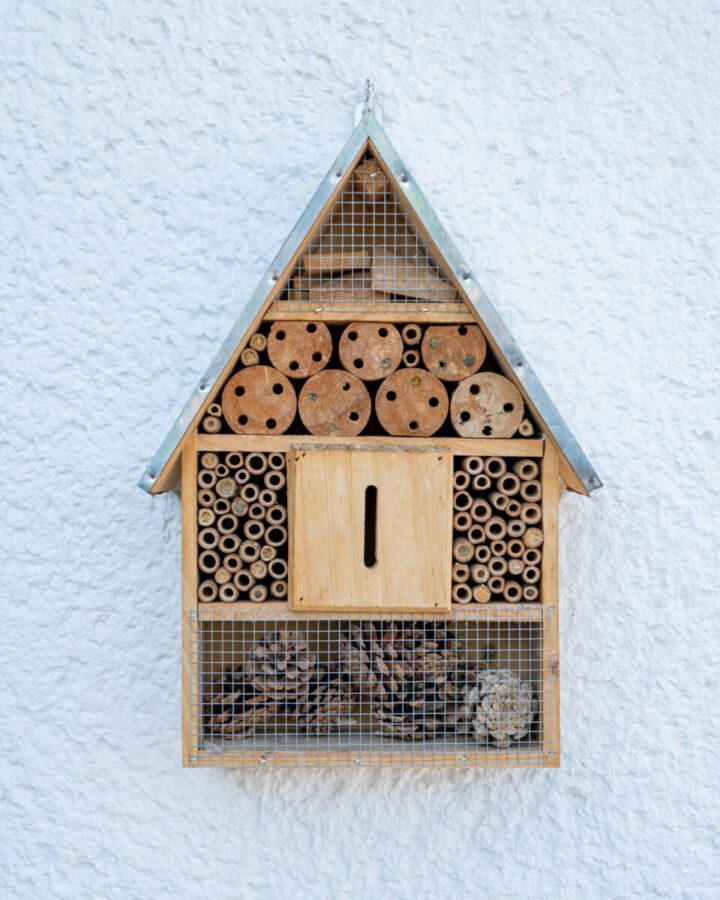
Come spring, most garden centres and Action outlets burst with garden necessities (and unnecessities). But of late, something else has made a presence in their racks — insectenhotel (insect hotels). These tiny wooden houses filled with hollow reeds, pinecones and perforated blocks of wood are now haute. They symbolize ecological awareness, help shelter pollinators through winter, and of course, add a rustic charm.
As scientists emphasize and reemphasize the importance of bees and other pollinators, never has the Netherlands’ love for flora been more appreciated. The EU, after years of being nudged and pushed, finally banned the use of bee-harming pesticides. Now, the Netherlands is committed to saving the bees and proliferating them.
So how do Dutchies keep green spaces alive with creepy crawlies? Simple. They let strips of the land grow wild and additionally scatter wildflower seeds. Native plants and flowers are quick to take advantage, push through the soil, and in turn, bees and other pollinators swarm to feed.
While the United States lost 40% of its bees in a single year, Amsterdam alone has seen a spike of 45% (since 2000) in its bee population! Rotterdam and Utrecht have started adorning bus stops with bee-friendly flowers. The government even launched a “Bed and Breakfast for bees” programme, and beyond that, organizations like Friends of Bees are busy campaigning to save these important insects.
Beekeeper-turned-savior
Everyday citizens are taking things into their hands too. Deborah Post is a certified biodynamic beekeeper whose bees started to decline in number. She did the only logical thing to keep them alive — plant flowers.
What started as one person’s effort in her own neighbourhood has now spread across 110 kilometres. She has re-flowered highways (A4, A2, N15, N14, etc), and railway stations in Gelderland, Schipol, Delft-Zoetermeer and more. This is collectively called the Honey Highway and is now helping bees, and Dutch farmers, as well as hobby gardeners.
And just like that, native flowers and plants came back in vogue. Despite the increasing warmth of summers, the plants survive and so do the buzzers. Municipalities identified bits of land to sow these low maintenance plants and soon others began repeating this success story across the country.
The nature-loving Dutch
Like some person (possibly Dutch?) once said, the best things in life are free. This is the belief with which generations of children are brought up and it has come to be useful in this particular context.
Dutch children are in tune with nature. They run unhindered and barefooted through the grass and scalding sand. They make bouquets of wildflowers. Collecting shells, pinecones and autumn leaves are favourite activities. Feeding obese ducks in the canals is a national pastime. Biking through photogenic cycling routes and picnicking in fields of tulips and daffodils is another adventure. This way, they learn the importance of nature and thus our responsibility to conserve it.
Holland might not have ‘natural’ nature spots, but what they do have is a lot of respect for Dame Nature and great skills to copy her. Thanks to that, almost every neighbourhood has green wilderness and even bustling cities have dedicated forest space filled with greenery, solitude, pollinators and poo. Perhaps that is a part of the natural experience. So maybe it is time to proliferate dung beetles?!
What’s your take on the buzz around bees in the Netherlands? Tell us in the comments below!
According to the new curfew rules issued by the cabinet, “If you have to be outside during curfew, you will need a completed form.” Here’s where you can find the form and everything else you need to know about it.
The cabinet confirmed yesterday that a curfew (avondklok) will be implemented throughout the country over the hours of 9 PM to 4:30 AM, in effect from Saturday, January 23.
The Rijksoverheid (central government) has created a self-declaration form that must be filled out and on your person if you have to be out during the quiet hours. “You must have this with you and be able to show it to the police or special investigating officer (BOA),” states the website.
How it works
The self-declaration form is currently ready to download in Dutch but will soon be available in 11 languages. You can either:
Print it and fill it out by hand;
Download the form, fill it out digitally, and then print it;
Fill out the form on your phone or tablet and show it there;
Or, fill out the form on your computer and show it on your phone or tablet.
The simple form requires your address, date of birth, and your reason for being outside during curfew.
When are curfew exceptions made?
There are a handful of exceptional situations that would require a person to be out during the curfew hours:
In case of an emergency;
If you, another person in need, or an animal needs urgent medical help;
If your employer requires you to go out for work;
Travelling abroad or to the Caribbean part of the Netherlands and returning to the Netherlands;
Walking a dog on a leash;
If you are on the road in connection with a funeral and can prove this;
If you are on the road in connection with a summons from a judge, public prosecutor, or objection and appeal committee and can prove this;
If you are on the road in connection with an exam that you have to take for your education at the MBO, HBO, or WO and you can prove this;
If you’re on the road because you have been invited to a live evening program and can demonstrate this with an invitation from the broadcaster;
In the event of an emergency, you don’t need to have the form. You also won’t be required to carry it when walking a dog or returning from abroad. However, if you are coming to the Netherlands from abroad, you must show proof (a ticket, for example) and explain why you’re travelling during the curfew.
Employer’s declaration curfew
If your work requires you to be out during curfew, you will still need the self-declaration form, in addition to an employer’s curfew declaration. Your employer will need to fill in their name, function, company name, address, and phone number.
Only people with the following professions are exempt from this mandate: police, fire and ambulance workers, train conductors, metro and tram drivers, bus drivers, taxi drivers, and aircraft crew, and passenger shipping crew.
What do you think of the Netherlands’ new curfew? Tell us your thoughts in the comments below.
Wednesday’s press conference left many of us in the Netherlands on the edge of our seats. Will there or won’t there be a curfew? Our questions have now been answered — the Dutch parliament has given the seal of approval for the “avondklok.”
Following a debate that lasted most of today, the Dutch parliament has decided that a curfew will be in place throughout the Netherlands from the hours of 9:00 PM to 4:30 AM. It will be implemented within the next few days (by Saturday, at the earliest) and last until at least February 9.
This comes as little surprise, with Rutte all but confirming that the curfew will be approved by parliament during yesterday’s press conference. “Nobody wants a curfew — but we’re getting it.”
The curfew will now come into effect a half an hour later than initially expected, yesterday, it was believed that the curfew would begin at 8:30 PM. As a result of the debate, Rutte has now decided to accept the slightly later starting time.
Who will be exempted from curfew?
Not everyone will have to abide by this new restriction, for example, your work may be deemed essential during these hours. However, if this is the case you will need to prove it. Below are the list of those who may be exempted from following the Dutch curfew:
Your work has been deemed essential/necessary. In this case, your employer will be required to prepare a statement explaining why it is necessary for you to be out after curfew — for example, you may need to be on the streets after curfew to commute to/from your workplace.
Assisting a person in need of help. You may also break curfew if you are required to assist someone in need. This has been deemed “informal care.”
Medical help. If you or your pet are in need of medical help then you may break curfew to receive care.
To attend a funeral. You may also break curfew in order to attend a funeral.
To sit an exam. If you’re expecting to take any late night exams, fear not. You will be exempted from curfew in order to attend the exam as long as it concerns practical education, secondary education, vocational education or higher education.
A necessary trip abroad. You may break curfew if you are taking a necessary trip abroad. In this case, the trip must be due to instances such as family circumstances and not leisure.
Taking part in a live evening TV programme. Perhaps the most bizarre of all exceptions, the curfew may be broken if you are taking part in a live TV show.
If you are a member of law enforcement or emergency services such as the fire brigade and ambulances. People who work in these areas will be automatically exempt from curfew and will not need to carry a form.
Travelling from abroad. If you are travelling from abroad during curfew hours you will be exempt so long as you can prove that you are currently travelling and that you must be on the streets at this time.
If you are homeless. It goes without saying that if you do not have a home to remain inside, you will not be fined for breaking curfew.
Walking your pet. You may break curfew if you need to take your pet outside for some exercise/to have a bathroom break.
In the case of a personal disaster. This one remains quite broad. If you or someone in your family is in an emergency, or if there is a serious family circumstance, you may break quarantine.
How do you feel about a curfew? Do you think these exceptions are justified? Tell us your thoughts in the comments below!
KLM plans to cancel between 50-60% of their flights, and staff are concerned that the Dutch aviation company is heading for bankruptcy.
After cabinet’s announcement yesterday that rapid negative tests will be required to travel back to the Netherlands, and connections between the UK, South Africa and South America are banned, KLM has decided to stop all long-distance flights.
A negative PCR test — which must be no more than 72 hours old upon arrival in the Netherlands — was already a requirement for anyone travelling to the Netherlands. But now the additional rapid test, which takes just 15 minutes to give a result, is creating new problems for KLM.
Stranded employees
The company’s main concern is that with the additional testing requirement, employees who test positive for COVID-19 will be stuck in faraway countries for days, reports RTL Nieuws. “As a good employer, we never leave crew behind abroad,” says KLM.
Flights to European destinations where staff are required to stay overnight in a hotel will also be cancelled for the same reasons, reports NU.nl.
The union president Reinier Castelein agrees with this decision, referring to destinations like Nairobi and Abu Dhabi. “There you cannot leave a 30-year-old flight attendant who does not speak the language alone,” he says. “And with an even stricter lockdown you might not return for weeks.”
Panic among employees
The Union represents around 2,300 of the 13,000 KLM ground workers and says they have been getting many desperate calls from worried employees fearing for their jobs. “But I also get a lot of calls from worried and even crying flight attendants and pilots,” says Castelein. “There is panic.”
KLM had pleaded with The Hague to exempt company workers from the rapid test requirement, but they were refused. Castelein says the Netherlands is the only country asking this of flight crew and that “the government is killing the entire sector in this way.”
Unclear exactly which flights will be chopped
KLM is yet to announce exactly which flights they will be cancelling, or when the planes will be grounded. “There are going to be a number of things, but we are currently coordinating which flights are involved,” a KLM spokesperson told NU.
How will the banning of long-distance flights affect you? Tell us in the comments below.