Home Blog Page 559

Major Dutch retailers confirm they won’t force shoppers to wear face masks

0

From December 1, face masks will be mandatory in all public spaces around the Netherlands, including in shops. But although the Dutch Retail Council (RND) has confirmed that all employees will be wearing masks, they will not be fighting with customers to do the same, reports NU.

Retail chains HEMA, Albert Heijn and Kruidvat, among others, have expressed their desire to avoid violent confrontations between staff and customers.

A spokesperson for Albert Heijn said that they will not be forcefully removing customers either. “We can already see that things are going well. We have no reason to assume that it will suddenly be different from Tuesday.”

But although retail workers will not be forcing customers to wear masks, they will still be recommending it. Different chains may choose to refuse customers with no mouth masks, as HEMA has indicated they will do.

“It is mandatory for our staff and we request it from the customers,” a spokesperson for HEMA said. “The staff may talk to the people, refuse them or call someone in like a boa. We don’t want it to end in a brawl, that benefits nobody.”

Representatives of Kruidvat claim that 80-90% of their customers are already wearing face masks and that all of their staff have been doing so “from the start”. “Maybe this is the last push for that last group of customers.”

Full face shields

While retail employees will be allowed to wear the plastic full-face shields so that they don’t have to wear a face mask for eight hours, RND is urging the public to wear face masks in stores unless unavoidable. Again, they won’t be enforcing this, but they will certainly be recommending it.

In regards to Albert Hijn, customers will need to prove that they have a medical reason for not wearing a face mask. A personal shopper can also be arranged in this case.

It is unclear as to whether employees will need to wear a face mask if they are behind a plexiglass screen.

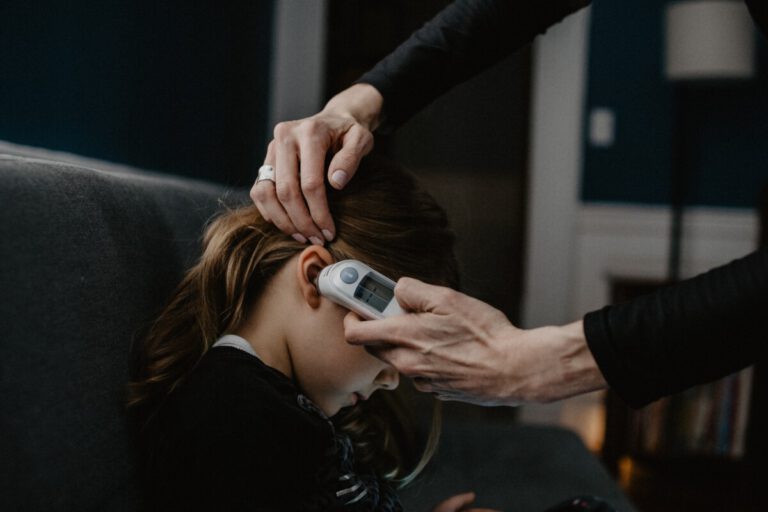
Feature Image: Anna Shvets/Pexels

The healthiest city in the Netherlands, revealed

0

Of all the major cities in the Netherlands, Groningen has been voted the healthiest, according to research agency Arcadis.

Meanwhile, Rotterdam and Zaanstad (northwest of Amsterdam) are tied for the least healthy.

Arcadis took a look at 20 municipalities to measure health, based on a 2016 study by the RIVM that defined the characteristics of a healthy city.

The main research question was how the physical environment affects the overall health of the city. This was assessed by looking at five areas: mobility, outdoor space, natural environment, built environment, and community.

While Groningen takes the cake, next in line is Nijmegen, followed by Maastricht. Most in need of improvement are Zaanstad and Rotterdam, with Tilburg in hot pursuit.

Here’s how the cities ranked:

1. Groningen
2. Nijmegen
3. Maastricht
4. Almere
5. Amersfoort
5. Apeldoorn
7. Emmen
8. Terneuzen
9. Breda
9. Haarlem
9. Leeuwarden
12. Utrecht
13. Eindhoven
14. Arnhem
14. Den Haag
16. Enschede
17. Amsterdam
18. Tilburg
19. Rotterdam
19. Zaanstad

What’s so great about Groningen?

The study shows that Groningen has “a rich past when it comes to health.” The natural and built environments have supported residents through the plague, smallpox, and cholera pandemics, using the physical environment to prevent suffering. In 1872, for example, the “Handbook for Public Health Regulations” was created, which “formed the impetus for a healthier city.”

Over the decades, city plans have been prioritising the quality of life for residents when making important decisions regarding the physical design of the city. This has been shown through many examples, such as the closing off of the city centre to cars, and the promotion of bicycle use — in which Groningen is the leader in the Netherlands.

Further, Groningen’s “Healthy Aging Vision” includes a range of priorities that shine throughout the city. From loads of accessible green spaces, access to healthy food, and a focus on climate change and air quality, it’s no big surprise that the city is at the top of the list when it comes to health.

Overall national health is high

John Boon of Arcadis emphasises that “Globally, our cities score well when it comes to health.” He points to the high life expectancy and the number of years people live in good health in the Netherlands.

Boon says that because the municipalities are large and varied, there is a challenge in arranging the built environment in a way that benefits the wellbeing of the residents.

Plans must take into account whether cities are growing or shrinking, as well as factors such as the income and education of neighbourhoods, and work in cooperation with the residents to make the environment healthier. Arcadis finds that “The main conclusion is that good policy matters!”

Are you surprised by how any of the cities rank on this list? Tell us what you think in the comments below!

Feature Image: Bert Kaufmann/Wikipedia Commons/CC2.0

Dutch temperatures plummet in first frost of the year

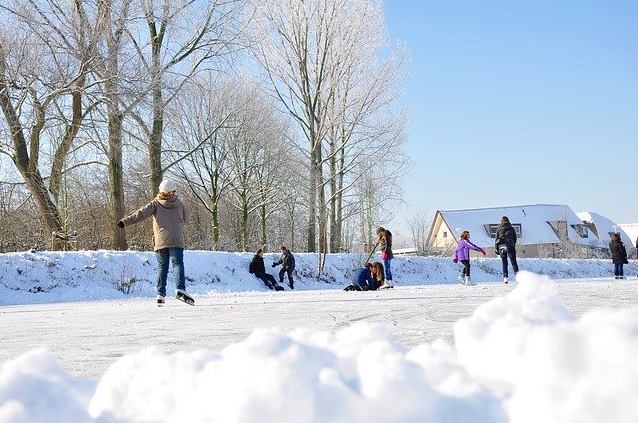
As the Netherlands perches on the cusp of winter, (so long, autumn!), a drop in temperature has appeared almost right on cue. 

If you found yourself reaching for the thermostat a little more often over the weekend, you weren’t alone. The weather in the Netherlands has reached freezing temperatures for the first time since the end of March.

The southeast and east of the country were particularly hard-hit, with the mercury dropping below -5 degrees.

In response, the KNMI (Royal Netherlands Meteorological Institute) issued a warning this morning of slipperiness. Motorists are urged to be alert, particularly on bridges and viaducts.

Chilly today

Today, the west and north will be cloudy with a light drizzle, but the sun may appear in the east and southeast this morning.

Enjoy it, because by the afternoon the whole Netherlands will be under cloud cover, the rain will start to enter from the west, and then a southerly wind will start to blow. Brrr!

Winter begins tomorrow

Tomorrow, December 1, marks the start of the meteorological winter — and boy is it coming in strong. Temperatures will reach 8 to 10 degrees tomorrow, and that’s the hottest we can expect this week.

Bring an umbrella in the morning, but we may see some sun break through every now and then.

Wednesday and Thursday forecast

Settle in for a steaming cup of gluhwein coffee on Wednesday and Thursday morning because it will be mostly cloudy outside.

Temperatures won’t be excessively cold on these days with 6-8 degrees, and a little rain is expected on Thursday.

Sinterklaas will wear his winter coat

Friday and Saturday will really mark the cold season. An easterly wind will send a chill directly into the Netherlands, so temperatures will top out at just five degrees during the day. Nighttime may see us drop below zero.

While the weather services are predicting some precipitation, there’s only a small chance it will be wet snow — instead, rain, rain, rain is likely. Surprise, surprise!

Are you looking forward to winter in the Netherlands? Tell us in the comments below!

Feature Image: Guillermo Casales/Unsplash

Second wave in the Netherlands may last through March, says RIVM

0

The RIVM has lost optimism for an early end to the second wave of coronavirus in the Netherlands. Jaap van Dissel, head of infectious disease control, and Jacco Wallinga, responsible for the calculation modelling, say we may well be riding this wave through March, in an interview with the NOS.

The RIVM representatives say the government cannot solely be responsible for containing the spread of the virus, and that citizens should take more of “a co-ownership of the problem of coronavirus spread.”

Wallinga says it is “very realistic” that it will be March by the time we see virus levels back down at the “watchful” level. “Last time we looked at mid-January, with fairly large uncertainty. It could also be December or even March.” He continues, “Now that has all been pushed back, but the uncertainty is also greater.”

“Sense of urgency is diminishing”

Van Dissel explains that the decline is happening so slowly in part due to people’s reluctance to work from home. “It is busier on the road than it was in March. Ultimately, this translates into the number of contacts that partly determines how many infections there are.”

“You also get the feeling that as soon as favourable messages are reported, people’s sense of urgency diminishes,” says Van Dissel, pointing out the busy shopping streets and groups of people walking around in public.

When asked whether the autumn holidays may have been a factor in the initial decline in new infections, Wallinga replies that it is indeed possible. “It coincided, so it is very difficult to distinguish the effect of the lockdown and what the effect of the autumn holidays was.” He says that in general, holidays are associated with fewer infections because “children do not go to school and people are no longer at work.”

“Italian lockdown”

The NOS inquires as to whether a two-week “Italian lockdown” would help, meaning people would only be allowed to go outside for necessary shopping.

“In general, that’s a very good idea,” says Wallinga. “If everyone stays at home for two weeks, you will get rid of a lot of infectious diseases.” But he continues that it’s “very heavy” and the economic and psychological costs are high.

Spreading through schools

Wallinga isn’t certain whether schools are a major factor in the high rates of infection, although he notes that the group with the most infections is now 15 to 20-year-olds. “That could be the older high school students.”

The RIVM has seen a decline in infections among the 24-year-olds, which may be attributed to the closure of the restaurant industry. But Wallinga says that closing schools may not have the same transparent effect.

“With people in their twenties, we had a clear idea where most infections took place.” Wallinga says it’s also clear for some other age groups. For example, with 50 to 60-year-olds, “We clearly know where they contracted infections: either in their own home or at work.”

Van Dissel adds that in tracking the virus, only 8.5% of infections can be traced back to schools as the source, though there is still much uncertainly around the exact locations of transmission. Among school-aged children, “the question is whether they don’t visit each other elsewhere,” says Van Dissel.

“But of course we have always consciously said that we would prefer to see schools open because they have a very important function,” Van Dissel explains. “And that we as a society should want to prefer that to other measures.”

Mass testing

Both experts are reluctant against mass testing. While widespread testing in Slovakia may have had positive results, Wallinga says it was likely also attributed to additional rigorous measures.

Van Dissel adds that groups were also widely tested in Luxembourg and they now have some of the highest infection rates in Europe. “…you have to integrate it into a whole package of measures and you have to think carefully about how often you want to perform those tests.”

Wallinga emphasises that “in itself, testing is not a control.”

What do you think of experts’ opinions of the spread of coronavirus in the Netherlands? Are stricter measures needed? Tell us in the comments below.

Feature Image: engin akyurt/Unsplash 

Black Friday mania: Dutch cabinet denies being asked to ban the sales

0

This weekend saw crowds of Dutchies flooding the shopping streets, hunting for the best bargains over the Black Friday sales period. Mayors from around the country had to force shops to close earlier when it became clear that keeping the 1.5-metre distance was impossible.

The streets we indeed crowded across the country this weekend, from Maastricht to Groningen. “I have just issued an emergency order,” the Dordrecht mayor Wouter Kolff tweeted on Saturday. “It is much too busy in the centre of Dordrecht. Don’t go there anymore!” The mayors of Amsterdam, The Hague, Eindhoven and Apeldoorn urged people to stay away from the city centre, while the mayor of Maastricht announced ‘code red’ on Sunday due to the number of people in the centre.

Request to ban Black Friday ignored by cabinet

Rotterdam mayor Ahmed Aboutaleb claims that 25 mayors of the Security Council recently urged the cabinet to ban Black Friday sales in the Netherlands, reports De Volkskrant. But according to Aboutaleb, the cabinet did not deem this necessary. “When you see that certain things could mobilize many people, it is obvious to say: maybe not so sensible,” Aboutaleb told the TV program Buitenhof.

The mayor of Roermond, a well-visited city thanks to its designer outlets, expressed similar concerns. “What worries me most is that large groups of people cannot suppress their urge to bargain at this time,” said Mayor Rianne Donders. “You may therefore wonder whether the cabinet should not have allowed Black Friday only online.”

Cabinet denies ever being asked to ban Black Friday

The Dutch cabinet claim there were never such requests to ban Black Friday in the Netherlands, reports NOS. Regardless, a spokesperson says it would have been legally difficult to implement such a ban, especially when mayors have the power to intervene already.

Hubert Bruls, chairman of the Security Council, says the situation is more complicated than Aboutaleb suggests. Bruls, who is also the mayor of Nijmegen, says there were discussions over December crowds with the cabinet. “Several options were on the table during these consultations. For example, the option to temporarily close shops was also mentioned, but this was not desired by the Safety Council.”

According to Bruls, the cabinet did take some actions to discourage Black Friday sales. “The line was to try to discourage people from seeking out the hustle and bustle in the shopping streets. The cabinet has also consulted with the retail trade about the distribution of the crowds.”

Should the Dutch cabinet have banned the American sales frenzy? Tell us your thoughts in the comments.

Feature Image: Kevin Dowling/Unsplash

New plan to deter tourists from Amsterdam post-COVID

2

Amsterdam is empty of tourists — and they like it. The city is looking to implement measures that will deter tourists once the pandemic calms down.

These changes could include taxing day-trippers, discount cards for Amsterdam residents, and a ban on holiday rentals like Airbnb.

Amsterdam & Partners, the former city marketing agency, have made recommendations to put such measures in place with the goal that by 2025 tourists will not pose such a hindrance on Amsterdam residents.

Geerte Udo, director of Amsterdam & Partners, explained that many Amsterdammers often felt alienated from their own city due to the enormous quantity of tourists prior to the pandemic.

“As a result of coronavirus, we as Amsterdammers, are experiencing first-hand what we normally miss, due to the visitors staying away, but also how nice it is to be a customer, guest or visitor in our own city,” she told Het Parool.

Tourist Tax

Currently, a tourist tax is in place which must be paid by tour guide companies and hotels. Normally, this tax yields almost €200 million per year, and targets tourists staying for longer periods of time.

However, there is currently no fee for those visiting Amsterdam for just the day.

“On average, half of the tourists are day visitors. We don’t think it’s okay that the pressure is now almost entirely on the hotels and shipping companies,” says Udo.

“This does not mean that you have to levy a toll on everyone who comes from outside, but our advice is to investigate whether a city ​​tax can have a guiding or discouraging effect.”

Favouring Amsterdammers

Amsterdam & Partners has urgently recommended the immediate banning of holiday rental homes, like Airbnb, throughout the city.

Not only will this reduce the influx of tourists, but it will relieve the pressure on the housing crisis in Amsterdam.

Airbnb is already banned in the historic city centre, and is heavily restricted throughout the city.

The Red Light District is another large drawcard for Amsterdam, which the marketing agency want to reorganise.

Large amounts of tourists travel to the city only for prostitution, and so the agency has argued for redesigning the open-window prostitution setup.

Similarly, Udo wants to change how coffeeshops operate, so that day-trippers no longer travel to Amsterdam for weed.

Finally, Amsterdam & Partners want the residents of Amsterdam to benefit more from the tourist industry. Introducing a resident’s pass is one way to do this, in which locals can get discounts and benefits at museums and shops around the city.

“Seduce residents to make more use of the city and to enjoy the enormous offer, so that entrepreneurs and the culture become less dependent on visitors,” says Udo.

What do you think of this new initiative? Tell us your thoughts in the comments below!

Feature Image: redcharlie/Unsplash

Appel-y ever after: the Dutch love affair of apples and potatoes

Enter any HEMA cafe, there is always at least one person digging into a piece of discounted appeltaartje along with a cup of tea.

The scene is as Dutch as the tall gentlemen riding their bikes on footpaths. Every autumn, even as the whole globe goes into a pumpkin frenzy borrowed from the US, the Dutch shrug at pumpkin spice and give their hearty apple pie a knuffle instead.

New neighbours? Greet them with an appeltaartje. Supermarket sale? Be sure to stock up on apple pie (frozen is better). Classic Dutch day? Bake some love — appeltaartje.

READ MORE | 7 Dutch foods you need to try before you die

Which came first: the appel or the aardappel?

Holland is obsessed with its appels and aardappels (potatoes). But it is rather like the classic question of which came first, the chicken or the egg, the appel or aardappel?

I spent an hour in Albert Heijn exploring this cultural phenonemon. Vegetable names are nothing like their English counterparts, but the fruit names might well be unidentical twins.

Apple is appel, pear is peer, melon is meloen.

Ultimately I realized that apple is the undisputed king, for even oranges are named after them. Consider these names:

  • orange — sinaasappel,
  • pomegranates — granaatappel, and
  • potatoes — aardappels.

An apple by any other name

The appel boom (tree, so yes, pun intended), is quintessentially Dutch.

Perhaps no one has exploited apples as much as these people. Apple pie is nothing unique, but has the world heard of appelbollen, appel kruimel vlaai and appelflappen? They’re flaky, taste sweet, cinnamony, buttery, and… all apple pie in disguise!

photo-of-appelflap
Crunchy, sweet, and filled with apple-goodness, appelflap is a Dutch favourite. Image: Mark Craemers/Pixabay

Moving on to another level of apple-love, who else could have put apples to a non-culinary use? Fresh apple deoderant spray, anyone? Or toilet freshener that leaves an apple aroma? Apple gets flattered in the Dutch kitchen, toilet and even under Dutch arms!

The a-peeling potato

Imagine my delight (as a vegetarian who abhors most vegetables) to discover that classic Dutch cuisine glorifies the soul food of picky eaters: the humble potato.

Of course, I still won’t drown my fries in a mixture of mayonnaise but I can live on friet for the rest of my life. Mashed potatoes, smashed potatoes, roasted potatoes, creamed potatoes are all music to my ears.

A dozen varieties of earthy potatoes and a dozen other ways of eating them — that is the luxury Holland has to offer.

READ MORE | The Dutch food dream: 13 unmissable dishes in the Netherlands

Mr Appel and Mrs Aardappel

The Dutch are also famous for the brilliant (or not) marriage of their two great loves — apples and potatoes. Are you ready to scarf down:

  • Hete bliksem — mashed apple and potatoes,
  • Appel-aardappel salade — apple and potato salad,
  • aardappel en appel met rode kool — apples and potatoes with red cabbage

Some toddlers (and adults) go a step further and use apple sauce as a condiment for their fries!

Of course, there are some who argue that Dutch cuisine is just a collection of readymade supermarket meals and deep-fried meat.

Not a potatoes and apple fan? Let’s focus instead on some other Dutch dishes: stroopwafels, tompoezen, stamppot, hutspot, herring and kibbeling — which of these is the apple of your eye?

Do you share the Dutch love for potatoes and apples? Tell us in the comments below!

Feature Image: DutchReview

Know your coffee: where to find a good cup (or two) in Amsterdam

Be it a hungover Monday morning or Saturday brunch with friends (or just with your favorite book), a good cup of coffee can brighten up the day.

If you are a true coffee lover, you would want to catch hold of that crisp, aromatic and flavorful cup. And if you are coffee crazy like me, you may end up going places to places or countries to countries in quest of the best beans, perfect blend and hangout place. Of course not just to explore coffee but also travel around, but we will keep those details for some other day.

The situation has changed and world travel is not the same, so the coffee lover in me decided to explore brilliant coffee world, locally, in & around Amsterdam.

My personal favorite coffee to try is a fresh brew, primarily because I get to taste the varied hints of the beans and enjoy the aroma. But I won’t be biased here as every kind of coffee is amazing, be it the breakfast cappuccino or the anti-afternoon-dip espresso or the summery cold brews.

But where can you find a good cup of coffee in Amsterdam? Here are some of my favorite coffee places:

Coronavirus Update: Many Cafés remain open for to-go coffee only during the current restrictions. We will indicate anywhere that we know to have closed during this time.

Monks Coffee Roasters — Dutch bakery anyone?

Monk's-Coffee-Roasters-Amsterdam-photo-of-coffee
For the perfect aromatic cup and treat. Image: Swati Manocha/Supplied.

Monks Coffee Roasters is a super cute café in West (and the best!) part of the city. They are Amsterdam based roastery and offer various blends. And if you are little hungry, you can also get a good breakfast/lunch here. I also love the interiors and is nicely suited for that next date.

Where to find it: Bilderdijkstraat 46, 1052 NB Amsterdam

Bocca Coffee Roasters — a buzzing central experience

My absolute favorite coffee place in heart of the Amsterdam. Needless to say Bocca Coffee Roasters is always bustling because of the variety of coffee served here.

This is my ideal place to take a pause whenever I am out shopping in the city, though finding a seat may be bit challenging (pre-covid) as it attracts many coffee lovers.

Where to find it: Kerkstraat 96H, 1017 GP Amsterdam Website: https://www.bocca.nl/

Lot Sixty One — a café and a canal

Photo-of-to-go-cup-from-Lot-61-Amsterdam
Or just get a to-go cup! Image: Swati Manocha/Supplied.

Lot Sixty One is a tiny corner side café in west, with a canal view. I like the coffee here, but LOVE the aroma when I step in the café to order one. I tried the coffee here after hearing great feedback from a lot of people and it didn’t disappoint me.

Where to find it: Kinkerstraat 112, 1053 ED Amsterdam

Rum Baba Bakery and Roastery — cake and coffee

Photo-of-coffee-at-Rum-Baba-Bakery-Amsterdam
For the perfect bean. Image: Swati Manocha/Supplied

I am not an oost person but I make exceptions for good coffee (& whiskeys!). This is a cute café in the east-side of the city. Rum Baba offers good coffee and also some amazing cakes to go along with it. They claim to roast the selected green coffee to a perfect bean, and I wouldn’t doubt that even for a sec!

Where to find it: Pretoriusstraat 33h, 1092 EX Amsterdam

Blue Amsterdam — become part of the skyline

photo-of-view-from-Blue-Amsterdam
Check out that view! Image: Blue Amsterdam/Facebook.

This is not really a coffee roastery, but Blue Amsterdam is an amazing café in Kalverpassage with spectacular views of Amsterdam.

Now, Amsterdam is not a really high-rise skyscraper city, but you sure get an amazing 360-degree view of the city from this third-floor café. And what better if it comes with a good coffee. My favorite coffee to order here is the cappuccino.

Where to find it: Winkelcentrum Kalverpassage, Singel 457, 1012 WP Amsterdam

Coronavirus update: Blue Amsterdam is currently closed due to the recent restrictions.

Café Vanaut — the most beautiful Café in the west

Photo-of-Cafe-Vanaut-Amsterdam
Image: Café Vanaut/Facebook.

This is, so far, the most beautiful coffee place I have come across in west-side of the city. More than coffee, I was charmed by Café Vanaut’s ambience and the friendly barista.

I went there to try coffee but enjoyed sitting there for hours, reading a book with some great jazz playing in background. They also serve varied chai lattes — but my heart still goes to coffee.

Where to find it: Postjesweg 55, 1057 DW Amsterdam Website:

Caffènation Amsterdam

Caffènation Amsterdam had to be in my list as it’s my go-to coffee place during my afternoon walks. Not just because it’s super close to my home but it serves great coffee and is right at the end of Rembrandt park.

I personally love to get my coffee from here, sit in the park and often wonder what a great life (or coffee) it is. Isn’t it?

Where to find it: Warmondstraat 120, 1058 KZ Amsterdam Website:

Jones Brothers Coffee Company

photo-of-Jones-Brothers-coffee-cup-Amsterdam
Support small coffee businesses. Image: Swati Manocha/Supplied.

This is my recent discovery and I am very happy that I ended up here during one of my breaks. Jones Brothers Coffee Company is not really a café but rather a coffee company, which happen to serve house blends to their regular customers.

I had a great chat with the owner, who impressed me with the details that the company puts in bringing the right beans. Well it’s a good thing that I could validate all that when I tried one of their fresh brews. Amazing!

Where to find it: Sint Willibrordusstraat 54, 1073 VC

Always remember, no matter what, life is too short for bad coffee! So give some of Amsterdam’s aromatic coffee corners some love — even if it’s in the form of a to-go cup.

Do you have any favourite coffee spots in or around Amsterdam? Tell us your thoughts in the comments below! 

Feature Image: Ketut Subiyanto/Pexels

Coronavirus and the unexpected Dutch puppy crisis of 2020

1

As the coronavirus pandemic swept across the globe this spring, it left a trail of isolation and loneliness in its wake. To fill the void left behind by lockdown and unemployment, I decided to get a dog.

As it turns out, I was not the only one who thought it a great idea to get a canine friend. The rest of the Netherlands did too.

Quarantine: the perfect opportunity to get a dog

Lockdown restrictions have required people to work and stay at home while all of our regular pastimes (like drinking and traveling) are forbidden. Many have found that this is the perfect opportunity to introduce a new furry friend to the household.

Some have acquired a canine companion to fill the silence of living alone, parents as a way of distracting homebound children, others to remove tension from a relationship strained from too much interaction. People seem to have realised that the foreseeable future will hold less travel, fewer social gatherings, and a more animal-friendly lifestyle.

The result: a scramble for puppies

Animal shelters across the Netherlands are reportedly empty, and waiting lists for puppies are long. People have been refreshing Marktplaats, hoping to be first in line for a freshly posted pup like it were a Beyoncé ticket. (There was even a Reddit thread with a woman complaining about dogs being snapped up left and right in Amsterdam, asking for help in getting her hands on one.)

photo-of-puppy-bought-in-scramble-for-puppies-in-Netherlands
The Netherlands has seen a rush for puppies this past year. Image: Anna Dudkova/Unsplash.

And if you did manage to get your hands on one, the next issue is how to raise it. Most dog schools in Amsterdam are fully booked for months.

As a non-Dutch speaking dog owner in Amsterdam, it has been impossible to find a trainer for my puppy. The only English speaking dog school in the capital is fully booked until January. At six months old, I have finally been able to teach my dog to sit (sometimes).

A global issue

The rapid increase in animal owners during the pandemic is not unique to the Netherlands. Shelters across the globe have experienced a higher demand for dogs that they have been unable to fulfill. In England and the US, there has been a shortage of puppies. In Australia, prospective dog parents have had to wait for months to rescue a dog.

The demand for dogs has gotten so extreme that the organization Lost Dogs in the UK has reported the worst ever year for dog thefts. With high demand and soaring prices, criminals are capitalizing on a newfound market.

Not all countries are having to battle the issues of empty animal shelters. On the contrary, Voice for Paws in Malaysia reported a 60% increase in dogs in need of rescue since coronavirus. People have feared contracting the virus from their pets. Some blame the financial insecurities left in the wake of the pandemic.

If you think that your dog has a questionable cough, fear not — the Dutch Health Ministry has announced that the chance of contracting coronavirus from your pet is considered to be very small.

A high demand remains for dogs in the Netherlands

So far, in the Netherlands, while less intense than six months ago, the dog-frenzy appears to have not yet subsided. At the time of writing, there are only a dozen dogs left for adoption at DOA Amsterdam, and only one of them is a puppy.

The question is, will it last? We don’t know how long the pandemic will drag out, but someday in the future, we will return to work, start traveling again, and enjoy a cold biertje at a borreltje in that gezellige style we all love so much. Will animals adopted during the pandemic be returned to shelters when they are no longer needed? Only time will tell.

Preparing for a post-lockdown world

One thing, however, is for sure: animals appropriated during lockdown will get the shock of their lives when they realize that it is not normal for their human friends to be home all day, every day.

photo-of-dog-in-quarantine-the-Netherlands
Now, many dogs don’t know what a day without their human is like. Image: Gabriel Sadrack/Unsplash.

My 6-month old puppy struggles with separation anxiety whenever I take a shower and jumps with excitement when I return from the loo. The transition will be rough on him and his fellow dogs around the world.

Adopting or buying a dog in the Netherlands

If you are finding yourself yearning for a four-legged fur baby, you need to consider whether you want to adopt or buy a new puppy. Adopting a dog in the Netherlands will cost you around €120 in adoption fees. If you are looking to adopt a dog DOAmsterdam, Ikzoekbaas, and Verhuisdieren are great places to start.

If you want to buy a puppy, you need to consider what breed you want. Depending on your choice of breed, a new dog can cost anywhere from €250 and up to several thousand euro. A great place to find breeders in the Netherlands is at houdenvanhonden.nl.

You can also find puppies for sale on Marktplaats, but it is a breeding ground for puppy mills. Always check the conditions the dogs are bred under before purchasing a puppy.

Have you found yourself longing for a new furry-friend? Or have you already given in and found one? Tell us about your experience in the comments below!

Feature Image: Berkay Gumustekin/Unsplash

Dutch hospitals disregard WHO’s advice, continue to use remdesivir on patients

The virus inhibitor, remdesivir, also known as the “corona drug” will continue to be used to treat Dutch coronavirus patients. However, the World Health Organisation (WHO) has issued advice against the practice. 

The WHO’s advice has been issued for a week now. However a Dutch foundation that specialises in the use of antibiotics in the Netherlands (SWAB) and the Federation of Medical Specialists (FMS) see no reason as to why WHO’s statement should change the way remdesivir is currently used in the Netherlands.

SWAB and the FMS have referred to WHO’s advice as a “weak, conditional recommendation” that adopts “a global perspective, taking into account, among other things, proportional representation from different types of countries.”

Use on patients

Remdesivir is only used on coronavirus patients in nursing wards who suffer from breathing difficulties. According to SWAB and FMS, the drug is not life-saving, nor does it prevent a patient’s health from deteriorating to the point that they end up in ICU.

However, they do say that “a significantly faster recovery has been observed” in patients who are administered with the drug. However, according to WHO, the drug has “no significant effect” on patients.

WHO’s recommendation

In the British Medical Journal published last Friday, the World Health Organisation advised that “remdesivir not be administered in addition to normal care for the treatment of patients admitted to hospital with COVID-19, regardless of the severity of the disease.”

However, SWAB and the FMS have found no justification for this in WHO’s data and have instead found a different conclusion.

SWAB and FMS’s conclusion

The two expert groups have determined that “whether and how much the hospital stay and recovery period in the current Dutch situation can still be relevantly shortened by administering remdesivir, and whether that is cost-effective, is still unknown.”

However, they also conclude that the data on which the WHO bases its recommendation does not align with the advice to discontinue use.

“As long as this insight is lacking, the FMS-SWAB group does not recommend against the use of remdesivir in the above patient group, but considers it an option.”

What do you think of the Dutch response to WHO’s recommendation? Tell us your thoughts in the comments below!

Feature Image: DutchReview/Canva