In mid-January, test situations of football matches, cinemas and concerts will be set up in order to see how larger audiences can once again become a possibility in the Netherlands.
The industries are looking to experiment with how events can be organised safely with larger groups of people. Fieldlab Events, who arrange business, public, cultural and sports events, initiated the program in collaboration with TNO and TU Delft, reports NOS. Their goal is to collect data on the risk of contamination in various group set-ups.
Performing the trials
The researchers will be carefully monitoring the behaviour of test subjects, the air qualities in the buildings, the use of masks, disinfectants, and the impact on vulnerable groups.
Program team manager of Fieldlab, Pieter Lubberts, said, “We can test in advance and take such security measures, so that we know that visitors to theater performances, cinemas, business seminars or concerts are not infected and meet all safety requirements.”
They plan to perform the first trials with people who have tested negative for corona, and the test subjects will be asked to stay out of contact from vulnerable groups for two weeks after the trials.
Conditions
However, none of the trials will go forward if certain requirements are not met. State Secretary for Economic Affairs and Climate Policy, Mona Keijzer, made it clear that the trials must take place in a region with a risk level of one, and so far none of the Dutch regions have achieved this.
She has also specified that test subjects must be seated, which is why festivals and concerts where people can walk around will not be undergoing any trial tests yet.
However, Keijzer is optimistic about what these trials mean for the country. “This is good for the Dutch population,” she said. “They long to go to the movies or an event together again.”
What do you think of these trials? Tell us your thoughts in the comments below.
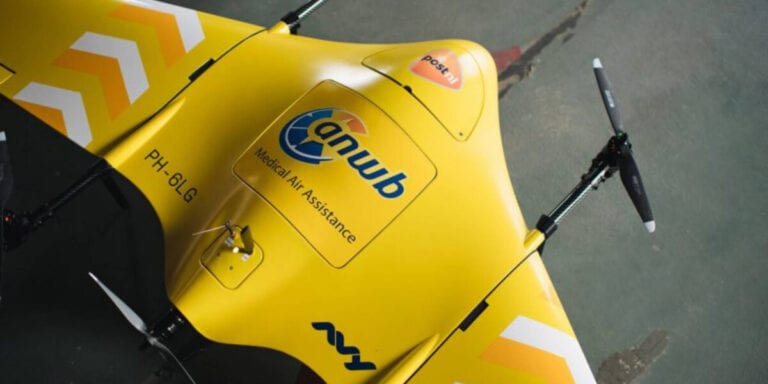
Test flights for emergency medical transport by drone will be starting in the coming months. The drone flights will take place over sparsely populated areas between Isalas hospitals in Meppel (Drenthe) and Zwolle (Overijssel).
According to a press release from ANWB (the Royal Dutch Touring Club), the drones will make transportation of emergency medical supplies “faster, safer, and cleaner than by road, and will contribute to supporting the right care in the right place.”
This work is made possible by a massive collaboration between Medical Drones Services Initiative, ANWB, and PostNL, along with medical partners Erasmus MC, Isala, Sanquin, and Certe, with technology partners Avy and KPN.
Together, the companies are investigating and investing in the use of drones to improve care and service to patients. Over the next three years, research will be conducted into how drones can safely and reliably improve the speed and delivery of such emergency medical shipments as blood, medicines, and diagnostic samples.
Plan
Testing will take place over the Meppel-Zwolle route until mid-2021. The flights will only take place on working days, flying a distance of 15 kilometres and landing in a meadow to the north of Zwolle. The test flights have been approved by the Human Environment and Transport Inspectorate.
The flights serve only to collect information for further development of the service, and will not be transporting medical items.
ANWB says safety is paramount in the flights. They will not fly over houses or farms, and all flights will be monitored.
Drone design
The quiet, electrically-powered drone has a wingspan of 2.5 metres and is controlled remotely by a pilot on the ground. It takes off vertically and flies horizontally at an altitude of around 100 metres. The drone flies at a speed of 75 kilometres an hour. The journey between Meppel and Zwolle takes 15 – 20 minutes.
What do you think of the Netherlands incorporating these new medical drones? Tell your thoughts in the comments.
This is when civilians attempt to take justice into their own hands by hunting down people they believe to be paedophiles.
The man was left badly beaten after being attacked by a group of youths on Wednesday, October 28. The attackers fled the scene and the man later died from his injuries.
To meet a 15-year-old boy
The group of teenagers who attacked the man apparently pretended to be a 15-year-old boy in a chat room for homosexuals. The man responded to a call to meet the boy for sex, however, it is unclear at this time whether or not the man was actually a paedophile.
Once the man arrived at the agreed meeting point he was met by the group of youths. Jamil Roethof, the lawyer for a 15-year-old suspect, tells AD that things then “got out of hand.”
“They wanted to confront him with the fact that he wanted to have sex with an underage boy. No more. Then it got out of hand. The victim also fell badly. I don’t think there was a preconceived plan to abuse him.”
The lawyer’s client was not involved in the assault, however, he was present when the group made the call to the man and when the man first arrived.
Police urge “pedo-hunting” to stop
The Police Chief Oscar Dros has urged the public to stop hunting down people they believe to be paedophiles, AD reports. “Our message to citizens is: stop pedo-hunting. Stop persisting. Stop provoking. Leave this to us.”
He says that while civilians may believe they have enough evidence to convict a person, in reality much more work is needed. “I don’t know of an example in my police unit that led to the conviction of a child molester,” says Dros.
A common occurrence
According to Dros, there have been 250 incidents involving “pedo-hunters” since July of this year. “That varies from underrun to assault, threats and publicly pillorying people on the internet. These are only the incidents of which we know. There are probably many more.” As a result, the police have had to help known paedophiles to go into hiding.
Dros says that the time spent investigating “pedo-hunters” should be put to better use. “We have hundreds of vice detectives who are passionate about their work. The criminal behaviour of “pedo-hunters” takes a lot of time, which we prefer to invest in preventing child abuse.”
Follow DutchReview on Facebook for the latest news and updates.
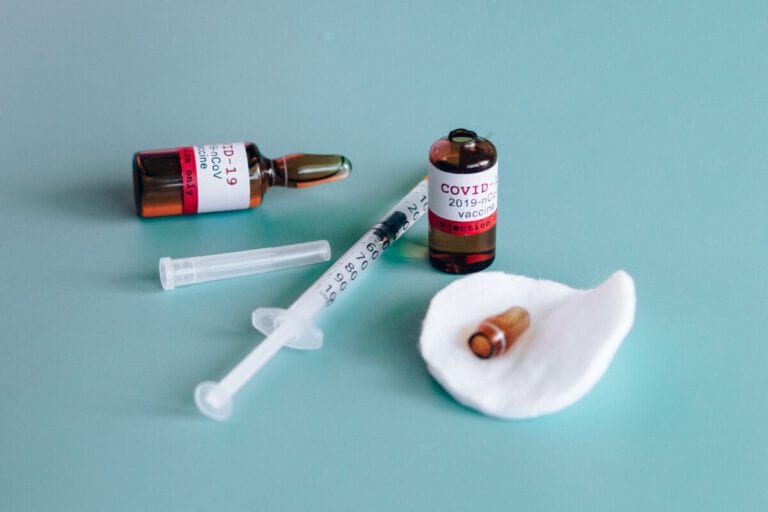
The Netherlands has ordered millions of doses of the new Pfizer vaccine for corona, which are due to arrive in December. The Ministry of Health say that as soon as the shots arrive, vaccinations will begin immediately.
The Ministry’s vaccination strategy will be announced later this month, reports RTL Nieuws. Millions of needles and syringes have been purchased in advance, and arrangements have been made for distribution and storage of the vaccine.
Vaccinating the Dutch population
Pfizer have said that they will have the vaccine ready by December. However, the company warns that there are still some final steps of approval that the vaccine needs to pass, so nothing can be guaranteed. Hans van Vliet, manager of the National Immunization Program of the RIVM, predicts that once we have the vaccine, it will take at least a year to vaccinate the Dutch population, reports NOS.
The Ministry of Health intends to vaccinate the elderly and vulnerable groups first, but whether this will be done with the Pfizer vaccine is yet to be determined. The Oxford vaccine from AstraZeneca and the Janssen vaccine from Leiden are also expected to be ready soon.
Different vaccines will be designated for certain demographics of the nation, depending on which vaccine is most suitable for the elderly. Van Vliet explains that this is why initially people will not be able to choose which vaccine they have access to.
Lagging behind our neighbours
The Ministry of Health has referred to the Netherlands as a “well-oiled machine” in that the Dutch have a lot of experience with large-scale vaccination programs. They expect everything to be ready in the first months of 2021.
The UK and Germany, meanwhile, have already announced their vaccination strategies. From December 1, GPs in England will be vaccinating the public seven days a week at 1,200 locations. Germany has called in its army to help prepare 60 large vaccination centres around the country.
No such plans have been announced yet in the Netherlands, as the Dutch intend to use existing facilities and systems. “We want to vaccinate as much as possible in places where this is normally done,” said Van Vliet. He described a vague combination of using GPs and sports halls, but what the exact role of the GPs and other organisations will be is unclear.
The Dutch vaccine strategy
The Health Council will present its recommendations to the Minister of Health, Hugo de Jonge, next week, including who should receive the vaccine first. It is expected that the elderly, vulnerable and health care workers will be of the highest priority, but it is unclear whether they will advise for children to also be vaccinated.
Will you be up for getting vaccinated for the coronavirus? Tell us your thoughts in the comments below.
Are you thinking of moving to the Netherlands to reunite with family or your partner in 2020?
If the answer is yes, first, you’ll need to establish whether you need a family reunification residence permit. Then you need to see if you are eligible and can receive this permit. There are many hoops you have to jump through to get to this point, so we’ll go into detail one by one.
Before we begin, it’s important to note that in most instances, you’ll need to have any necessary documents translated and legalised before moving to the Netherlands to reunite with family. They can be in Dutch, English, German or French. To learn more about the visa process, you can find that here.
Moving to the Netherlands to reunite with family isn’t always a walk in the park. Image: KatyVeldhorst/Pixabay
Where you’re from and your circumstances majorly affect your visa process. You must also meet other conditions if you are a Turkish national. We’ll touch a bit on all of this now. So, what is there to do before moving to the Netherlands to reunite with family?
I am an EU citizen
If you are an EU citizen then do not have to worry about a permit. As I just said, due to freedom of movement, you can move to the Netherlands providing you register and abide by the law.
My partner/family member is an EU citizen
If your partner/family member is an EU citizen and you are not, don’t panic. You’ll be eligible to apply for the Application for Verification against EU Law (certificate of lawful residence) that will allow you to both live and work in the Netherlands. It will last for five years (but you can extend it). This certificate of lawful residence ensures that you can stay and work in the Netherlands legally. You should only apply for this if you are planning on staying in the Netherlands for more than three months and if your spouse, partner, grandparent or child under 21 is an EU citizen.
Surprisingly, if they are a Dutch citizen, then it will be harder as you will not be able to apply in this way. In this instance, you must apply for the usual residence permit. The only way this is not applicable is if you lived together in another EU country beforehand. If this is the case, you will be able to apply. Complicated, huh? But what if neither of you are EU citizens?
Moving to the Netherlands to reunite with family? Image: OctavY/Pixabay
Getting a family reunification permit in the Netherlands
The family reunification permit application will cost you € 171.
You can apply for this permit online if you already have a valid residence permit here in the Netherlands. You must do this through your DigiD. You can also apply online if this is your first time. However, if you have a temporary permit you must do it the traditional way through pen and paper (urgh, I know).
Moving to the Netherlands to reunite with family should be done as soon as you can. Image: Sasint/Pixabay
Note: If you are over the age of 18, you will not be allowed to move the Netherlands on the basis of staying with your parent/s. You must be here for a reason other than that. For example, to study or because you’ve got a job. If you’re under 18, they also must be able to support you for at least 12 months and you must be single.
Certificate of lawful residence in the Netherlands
As we said previously, you will be eligible for a certificate of lawful residence if your partner or family member is an EU citizen. The cost is a 50 euro non-refundable fee, with up to a six-month wait. But how can I apply for it?
First of all, you need to fill out a form that you will find on the IND website. You will have to take this, along with many other documents with you to your appointment. The documents you will need to take with you are:
Valid ID;
Proof that your partner/relative is lawfully staying in the Netherlands – this can be their proof of registration;
Proof that you’re registered to the Netherlands;
The proof of your relationship with said partner/family member — this can be a marriage certificate other proof of relationship and/or a tenancy agreement from when you lived together for at least 6 months;
Proof that they can support you financially.
Once you’ve been accepted, this document will last for 5 years. This can be extended if necessary. You must inform the IND if your circumstances change (such as a separation), however, this does not mean that you won’t be allowed to stay. If you have been together for at least three years and spent at least one of these years living together in the Netherlands, then you will be allowed to stay.
How to obtain a Dutch residence permit
If you are an EU citizen, you will be able to move to the Netherlands as usual, due to freedom of movement. However, if you are a non-EU citizen, you will have to get a residence permit.
The same goes if you are moving to the Netherlands with your partner and neither of you is an EU citizen — you will both need to apply for a Dutch residence permit.
In order to qualify for a Dutch residence permit, you will need to meet the following conditions:
You have a valid ID (such as a passport);
You will undergo a tuberculosis test once you arrive in the Netherlands (you can be exempt from this following further conditions);
You have signed an antecedents certificate, which is where you provide information about your criminal record;
Both you and your partner are over the age of 21 (unless you are a Turkish national)
You and your partner are going to live together immediately;
You and your partner are married to one another OR are in a registered partnership together. You can even be unmarried, as long as you have a long-term and exclusive relationship together;
You have passed the civic integration examination (unless you are exempt);
Your partner declares that they are your sponsor;
Your partner has a sustainable income;
Your partner must have a valid permit/right to stay in the Netherlands. If it is a temp permit, then they must have been in the Netherlands for a least a year, which is not applicable if they are highly skilled or study.
Obtaining a residence permit through the TEV procedure in the Netherlands
If you want to obtain a residence permit this way, then you must do it through your consulate in your own country or the Dutch embassy. The non-refundable fee will be 233 euros for a partner and 50 euros per child.
To do it yourself you must fill in the form and send it to the IND. You can also opt for the partner/family member to do it if you’re not in the Netherlands yet. This should be done as soon as possible because it can take 90 days or more.
To do this, you will need these items from your partner/parents:
Copy of their valid ID;
Copy of the marriage certificate or similar;
Copy of their residence permit;
A declaration from the sponsor;
Proof of income.
Moving to the Netherlands to reunite with family is possible. Image: Jarmoluk/Pixabay
How to obtain a permit if you are a family member of a refugee in the Netherlands
If your family member has a temporary asylum residence permit in the Netherlands and you are either the parent of the child or their partner, then you will be able to apply for the dependent asylum residence permit. You will not need to pay for this.
You will need to meet these conditions:
They are your family member and they have a temporary asylum residence permit in the Netherlands;
Both of you are 18 or older;
Both you must prove your identity and relationship to each other;
This family member must be either your partner (exclusive or married – one partner), you are the biological mother or father or adoptive or foster parent up if they are under 25. For over 25, normal ties need to still be there — they then need to claim that they are your sponsor;
You must have arrived in the Netherlands before them, or at the same time, not afterwards or you have submitted your application within 3 months of their permit;
You have been mentioned when your family member went through the asylum procedure;
You do not have a criminal record;
If you are travelling as a child, your other parent has given permission for you to come to the Netherlands;
You need to sign a non-impediment if you are over 15 years old.
Gaining a permit for your adopted or related foster child in the Netherlands
If your child is an EU national, refer to the start of the article, these conditions apply. If they are an EU national, there should be no reason for them not being able to live in the Netherlands with you (much easier). The following is if they are not an EU national.
This application will cost €57.
If you are looking to bring over an adopted child then you must meet these conditions:
You are a Dutch citizen OR an EU citizen OR you have a valid residence permit for the Netherlands;
You have proof that your adoptive child does not have any chronic mental and physical illnesses;
You must declare that you are a sponsor of the child;
Your adoptive child must have some form of ID and other means of identifying them;
You can prove that the biological parents have their rights waivered and the country has allowed you to take the child from that country and allowed you to adopt them;
You must have a ‘beginseltoestemming‘ from the Central Authority for International Children’s Affairs of the Ministry of Justice and Security, along with a Statement of Approval.
In the case of a related foster child you must meet these conditions:
You’re a Dutch OR EU citizen OR you have a valid residence permit;
You are either the grandparent, (half) sister/brother, sister/brother in law or aunt or uncle of the child;
Your related foster child has no good future in their country;
Your related foster child is under 18;
You have proof that your relative foster child does not have any chronic mental and physical illnesses;
You have custody of your foster child;
You must have permission to be looking after the child;
You declare that you are the sponsor of the related foster child and have sufficient income and care/education for the child.
As you can see, there are a variety of different processes to go through, depending on your circumstances. It’s best to get this sorted as soon as you can if you’re moving to the Netherlands to reunite with family.
Any other info or tips about moving to the Netherlands to reunite with family? Let us know in the comments!
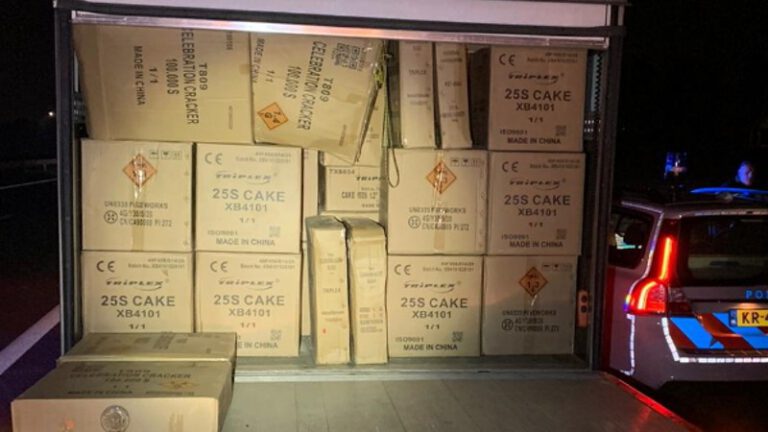
Police have arrested a 23-year-old man from Enschede, in the east of the Netherlands, after discovering a “highly explosive load” of about 5,000 kilos of fireworks.
On Tuesday, a road inspector from Rijkwaterstaat (Dutch Public Works and Water Management) noticed a vehicle without lights, and with a flat tire along the A50 near Sint Oedenrode.
The inspector stopped to help the man but attempts to jack up the vehicle were unsuccessful because of the small truck’s heavy load. A towing company arrived but could not lift the vehicle either.
While the Enscheder insisted the truck was only filled with old refrigerators, the inspector was suspicious. When he glanced into the cargo hold, he suspected he saw fireworks.
The inspector notified the police, who rushed to the scene and charged the driver with the offence. The passenger fled with an excuse to “go get another car.”
Police have confiscated around 30,000 kilos of fireworks so far this year.
Are you surprised by this type of fireworks smuggling? Tell us your thoughts in the comments.
It isn’t the 5th of May and Trudeau hasn’t said anything nice about us this weekend, but it’s not like we need a reason to post a big up shout-out to our Canadian friends 😉
If you’re looking to move to the Netherlands, you may need to catch up on all the insurances that are available to you. Some are more obvious than others, and some are downright compulsory.
But there’s no need to panic, let’s quickly run through all that you need to know about insurance in the Netherlands.
While some countries will happily let their citizens stumble around without insurance *throws a judging glance in the general direction of the United States* the Netherlands is not about that life.
Insurance is often fairly priced, and those who struggle to pay can even avail of toeslagen (government aid payments).
As well as this, certain insurances — such as health insurance and car insurance — are downright compulsory, meaning almost every citizen you come across in the Netherlands is covered should they need help in life.
Insurances you need when moving to the Netherlands
The answer is obvious to many, life happens no matter where you are, and life involves illness, accidents and — to spice it up — sometimes a dash of grand theft auto. If you’re willing to take the risk and not insure yourself, think again; sometimes you have no choice in the matter.
Health insurance: an absolute must
Certain insurances, such as health insurance, are compulsory in the Netherlands. If you come to the Netherlands to work or live here for the long term, you are required to take out health insurance.
If you’re lazy or feather-brained and don’t take anything out within four months, you will receive a letter from the Dutch Healthcare Institute (CAK) asking you to take out health insurance within the following three months.
Health Insurance is compulsory in the Netherlands. Image: Bret Kavanaugh/Unsplash.
If this letter is ignored, you must pay a penalty and are given a further three months, and if this fails to kick you up the tush, you will receive a further penalty. The government will assign an insurance policy to you at this point, and the monthly premium will always be higher than if you had just set up the insurance yourself.
Once you find a suitable policy, you will pay a monthly premium (determined by what exactly you want covered) that usually amounts to around €100-€120 per month. If you struggle to pay this premium, you can always apply for the zorgtoeslag, an allowance that helps people below a certain income to cover their premiums.
Contents insurance
What would you do if someone ran into your house and took a baseball bat to your brand-new flatscreen?
There’s no need to worry if you take out contents insurance. Not sure what contents insurance is? You can learn more about this type of insurance and its coverage below.
Under contents insurance policies, your household items are covered for any damage caused by vandalism, fire, and water damage.
Need to escape the miserable Dutch weather? That’s understandable. Certain types of home contents insurance will take care of your valuables even if they get damaged while you’re on holiday. Hopefully, your bad luck won’t haunt you whilst you’re soaking up the sun, but if it does, it’s good to know you’re covered.
It’s probably not the first thing that springs to mind when you think of moving to the Netherlands, but insuring your household items, and not just your house, is definitely worth considering — especially when it’s so affordable.
How affordable, you may ask? Insurance companies can offer contents insurance starting from as little as two euros per month! Think of all those cappuccinos you buy: sacrifice one per month to better judgment and cover your precious household items, just like a real adult.
Insure your phone against damage and theft
Did someone walk into your house, look at your phone longingly and decide that if they can’t have it, no one can — before taking a hammer to it?
Some contents insurance policies can also be extended to cover your phone. Your phone is covered against things such as fire, windstorm, and vandalism.
And some companies also offer an anti-theft add-on for their contents insurance. This will cover your items, including your phone, that are stolen both inside and outside of the house.
Did a pickpocket make a run for it with your iPhone? Don’t bother endangering yourself (and others) by hopping on your bike in hot pursuit — it’s already covered.
Bike coverage under contents insurance
Speaking of bikes, if there is any crime that is most likely to affect you upon arrival in the Netherlands, it’s bike theft. Dare I say, you haven’t been truly integrated if your bike hasn’t been stolen. It’s like an initiation to the Netherlands.
Bike theft is extremely common in the Netherlands. Image: Conor Luddy/Unsplash
Thankfully, you can always opt to take out bike insurance to protect your beloved ride.
Of course, this is provided that you use a decent lock — more specifically, an ART-approved lock (ART is a foundation that rates bike locks) which has been given at least two stars. Didn’t lock your bike at all? Well, honey, that’s on you.
Home insurance
What’s also important is to note the difference between home insurance (opstalverzekering) and contents insurance (inboedelverzekering.)
Let’s picture your favourite apple pie (bear with me while I explain.) Home insurance (opstalverzekering) covers the structure of your house, like a pie crust. Whereas contents insurance (inboedelverzekering) covers items that would usually be left in your home — like the delicious filling.
This means that basically anything you can pick up and take with you if you were to move house, will be covered by contents insurance — but not the actual house. You need home insurance for that.
Home insurance covers the various structures that make up your house — such as the chimney, the roof and the windows. If a particularly bad storm sends a tree trunk flying through your roof, for example, the damage would be covered by your home insurance.
In the Netherlands, home insurance or opstalverzekering is not technically compulsory. However, very often, if you’re applying for a mortgage, it is required that you take out a policy. Sneaky, but smart.
Car insurance
Car insurance is also legally required in the Netherlands. When you own a car in the Netherlands, you are required to cover it for at leastany damage or injury that you may inflict on others. This is called third-party insurance or, as the Dutch call it, WA-verzekering.
Unlike some countries, in the Netherlands you insure the car, not the driver. This means that your friend can legally drive your car — provided they have a licence, of course! However, you would be the one to pay up should they cause any damage, as it would be your name under the car’s insurance. Capeesh?
Car insurance is also a must in the Netherlands. Image: JESHOOTS.com/Pexels.
You can also insure your car further by taking out WA Plus, which insures it for damage caused by fires, storms, theft, vandalism or — dare I say — collision with animals.
If you’re worried about any damage that youmay cause to the car, you’ll need to take out an all-risk policy (allriskverzekering). This will cover you for all damage, including yours, should you accidentally take the car for a dip in the canal.
Life insurance
Life insurance is not compulsory in the Netherlands, but if accidentally nosediving a vehicle into a canal is something you often worry about, then life insurance may be something to consider.
There are multiple variations of life insurance, enough to warrant their own article, but on a basic level, life insurance will offer your family/partner financial compensation in the event of your own death.
Taking out life insurance is not technically required, but aside from the obvious benefits, life in the Netherlands can certainly be easier if you have it. This is especially the case if you are looking to take out a mortgage, for example. Some mortgage providers require that you take out life insurance to ensure that the mortgage can be covered in the event of your death.
Other insurances in the Netherlands
The above are some insurances that you’ve likely already heard of, but did you know that you can insure your bike against more than just theft? Or yourself for certain damages you may cause? Here are some helpful little extras that you may not have known about.
Liability insurance
Liability insurance is also something you should consider taking out when moving to the Netherlands. Are you ready for those cycle paths? “Sure”, you say as you fail to indicate which way you’re turning for the 15th time today.
In spite of your confidence, sometimes those cycle paths — and the people on them — aren’t ready for you. One day, you may cut across someone on a mobility scooter. Next thing you know, you have a broken side mirror to pay for.
Lemonade offers contents and liability insurance for a reasonable price. Image: DutchReview/Supplied
This is where liability insurance can help. Liability insurance in the Netherlands will cover you for damages done to someone or their property.
Bike insurance: cover your bike against more than theft
Your brush with death — or to be a little less dramatic, your brush against that mobility scooter — may have also left your bike with some damage. Whilst your bike may be covered for theft under certain contents insurance policies, if you want full coverage, you’re going to need bike insurance. And boy, have you come to the right country for that.
There are many insurance companies that found it was worth their time setting up bike insurance policies for those living in places such as the Netherlands, Luxembourg and Belgium. Most policies offer coverage against theft, damage and breakdown.
For these policies, you usually pay an annual fee instead of a monthly fee. Prices range from €30 to €60, depending on your bike and what it is you want covered.
Learning the ropes of adulthood can be difficult, especially when it comes to setting yourself up for insurance. Fortunately, the Netherlands offers plenty of accessible insurance policies for expats. So what’s stopping you? Get yourself covered!
More than 70% of mayors in the Netherlands have asked for a ban against the sale of knives to minors. The Dutch cabinet is in agreement and is now pushing for a new law to be implemented.
This follows a significant increase in the number of stabbing incidents involving minors in the past few years. According to the NOS, the number of stabbings involving underage suspects and victims more than doubled between 2017 and 2019.
In 2017, there were 160 young people suspected of involvement in stabbing incidents. In 2019, this number had risen to 380. A similar increase was seen in the number of underage stabbing victims, which doubled from 100 to 200.
The NOS also reports that police confiscated significantly more knives last year. In 2017, 454 minors were found with knives on their person. This rose to 1,286 in 2019.
Law is unclear
Currently, it is illegal for minors to carry knives. However, police say that the law is not clear, making it difficult for officers to intervene quickly in dangerous situations.
At the moment it is still legal for shops to sell knives, such as kitchen knives, to people under the age of 18. However, some shops such as Xenos and IKEA have already stopped doing this.
The new law is still being worked out by ministers, as there are some cases where minors are required to have knives on their person, for example, at work.
More strict
Minister for Justice and Security, Ferdinand Grapperhaus, has called for a stricter punishment against those who are caught in possession of a knife. He proposes that any minor caught with a knife will be punished severely and may even face imprisonment.
Responsibility should not fall solely on the minor however. The Ministry of Justice and Security is considering holding parents accountable as well. A fine against those whose children are involved in a stabbing incident is being considered by ministers.
What do you think of a knife sale ban amongst minors? Tell us your thoughts in the comments below!
I’ve been fortunate enough to have many different guests come to visit in 2019, with more on the way before the end of the year. Some even coming two or three times. It can seem hectic, but it’s also a great way to re-experience the best parts of the Netherlands and introduce your guests to a home different from their own.
I remember when I had my first visitor I was stuck on what to do, there were almost TOO many things to do. Things to do can also entirely depend on what season it is, especially if your guests have booked well in advance, so it’s good to look at your options now. So hopefully this simple, yet sassy expat guide with places to visit in the Netherlands will give you some ideas. I’ll try and keep it as short and as sweet as I can.
*Warning, anyone who know me, knows that I like puns… puns and memes ahead.
Places to visit in the Netherlands; Autumn
In my opinion, Autumn is one of the best seasons in the Netherlands. The canals and streets are coated in shades of brown leaves. The place just looks sort of magical when this happens. I’ll keep this one to a minimum, seeing as autumn is almost over.
If your guests are into house music, ADE (Amsterdam Dance Event), is an awesome event to go to in the Autumn (Mid-October 2018). It involves 5 days of artists playing in various locations in Amsterdam. It’s hugely popular and attracts guests from all over the world. Nestled amongst this period is also AMF (Amsterdam Music Festival), held in Amsterdam Arena.
Annually, different cities in the Netherlands hold a museum night. In Amsterdam it’s the first Saturday of November. This involves around 50 different museums opening from 7pm – 2am, putting on workshops, tours, concerts and other special events. One museum ticket gains you access to all of these museums all night. It’s a great way of doing them all on the cheap.
Eindhoven GLOW is a free event held in November in Eindhoven (this year 11th – 18th Nov). It is a lightshow, which involves over thirty light sculptures (mainly outside), which illuminate Eindhoven as you walk through the city. It’s a really cool event, and probably not something your friends and family have seen before (plus, like I said, it’s FREE).
Winter in the Netherlands
Not meaning to go all Christmassy on you – but lets be honest, that’s the best part about the winter season.
Valkenburg holds an amazing Christmas market and it’s close to the border of both Germany and Belgium (from 17th Nov – 23rd Dec). It’s in a cave! It’s a must visit during the Christmas period, as it’s so unique. It’s perfect for gifts and has all the Dutch favourites, like a load of cheese stalls, so your guests will have lots to bring home.
Another beautiful place for a Christmas market is held in Heemskerk (situated between Alkmaar and Haarlem). It’s held in the castle grounds of Assumburg Castle. The perfect place to enjoy a mulled wine and Dutch doughnut treats (between 7th-10th Dec).
If you are after something a bit different, in Deventer on the 16th and 17th December, there is a Christmas market and Charles Dickens festival. This is to celebrate the British authors most loved characters. More than 950 of his characters come to life, with music, market stalls and other high street shops being open all day.
Enough about Christmas…
Similar to Eindhoven Glow (but on a much smaller scale), Amsterdam also holds it’s own light festival (1st Dec – 22nd Jan). These lights are spread all over the centre of Amsterdam – in the canals, on buildings, in parks and more. It’s the perfect excuse to explore Amsterdam at night.
New Year’s Eve!
How could I forget. It’s probably worth mentioning that New Year’s Eve can be different to other countries. One main point being that there is a national ban on the purchasing on fireworks, apart from three days leading up to New Year’s Eve (with the exception of professional displays). As a result you will see more fireworks than you have probably ever seen in your life. I’m from a city in England which hosts the British Fireworks championships, so I thought I was well prepared. I wasn’t. It’s definitely something for your guests to experience at least once!
Also don’t forget to introduce them to the tradition of eating Oliebollen at midnight. They are a delicious food not to be missed out on.
Obviously celebrations will be held everywhere in the Netherlands, but if you are looking from something bigger, then look no further. Here are my top three:
Amsterdam: Being the obvious choice, the capital has a lot of celebrations going on. The official celebration takes place at Oosterdock, with VOC The Ship Amsterdam as the perfect backdrop for a firework display. Lots of fireworks are set off all along the main canals and squares unofficially by the visitors and locals too, and the whole city sky is just flooded with light.
Rotterdam: Rotterdam holds a spectacular New Year’s Eve (being the 2nd biggest city and all), with a professional firework display being held on the iconic Erasmus Bridge. Outside there is music and bars and the atmosphere is top. There are also lots of after parties in nearby clubs.
Scheveningen: Held on Scheveningen beach, is one of the largest New Year’s Eve bonfires. It was so big in 2015 that it was a Guinness World Record. So it’s certainly impressive to go and see, especially if you are after something a bit different from the other main cities.
Spring in the Netherlands
Spring the Netherlands is just how you imagine it. Tulips! Every year the Keukenhof in Holland opens its doors to the public throughout March until May (2018: 22nd March – 13th May). This is basically a huge garden full of tulips and spring flowers and is especially gorgeous on a sunny day. This is a must visit, and is close to Amsterdam, so it is easy to get to. This is also a perfect opportunity to take a car, bike or train ride around this part of the country – the fields are filled with rows and rows of different coloured tulips.
A lot of people don’t know about Kings Day (unless you’re Dutch or live here of course), so if your guests are after a party, then here it is. You can either go to the capital, or another Dutch city to watch the celebrations from the streets, or go to a large event such as Kings Land (if they are into house music). If you’re reading this and have no idea what I’m talking about, Kings Day is the celebration of the Kings birthday. Most of us have a day off and we attend parties throughout the country to celebrate (and wear lots of orange).
Party with Willem-Alexander
2 weeks before the official dates of summer begin, the European Championship Sand Sculpture Festival begins. This is held from June all the way through to the end of November. It showcases impressive sand sculptures all around Zandvoort aan Zee. It’s a spectacular event, so a must see.
Summer in the Netherlands
If your guests are after a ‘Dutch’ experience, visiting Gouda cheese market would be a perfect way to fill that void. This is available in both spring and summer. Every Thursday morning From 6th April – 31st August, Gouda town square, goes back in time. People are dressed in clogs, there are ‘cheese girls’ and cheese farmers and traders negotiating cheese prices. There is music and lots of market stalls. What more could you want?
If your friends and family are into fireworks and couldn’t make it for New Year’s Eve, then there is another opportunity to watch a spectacular firework display. Scheveningen International Fireworks Festival is a firework festival which showcases displays from different countries in competition with one another. What makes it even better is that it is held just off the shore, so everybody sits on the beach and watches. I ended up taking guests, and they all loved it. Here is a photo I took this summer. It really captures how amazing it was!
It really went out with a bang 😉
Whether you are a fan of flowers or not, Corso Zundert is an amazing display of moving sculptures, made almost entirely out of flowers. It follows a route all around Zundert, and the streets are lined with visitors watching as the floats go past. I’ve been for the past two years and it really is an impressive scene.
On during the same weekend as Corso Zundert (first weekend of September), is World Port Day in Rotterdam. This is to strengthen and celebrate the bond between the port and the country. During this period there are many market stalls, behind the scenes tours of the operations of the port, demonstrations on the Maas River and then a firework display. It’s definitely worth a visit to Rotterdam (totally not being biased seeing as I live there).
Day trips
Holland is the most popular province to visit and therefore probably the most likely place that your guests would want to go to (with the obvious choice being Amsterdam). This is somewhere everyone should visit at least once, as it is so different from the rest of the country – even if it isn’t your cup of tea. This is also a great time of year to do it too, as the summer season has just finished so the city isn’t so rammed with tourists. You can also get hold of Anne Frank tickets easier (you don’t have to queue all day, like in the summer). Another good time to go is just after Christmas, as this is another quieter period to do all of the touristy things. It’s important to remember though, that there is a lot more to the Netherlands than just Amsterdam, so hopefully this article gave you a few ideas on what to do.
*Despite all of the events listed (it’s impossible to list every event in the country!!) there are dozens of places to visit within the Netherlands for a day out. These include: Amsterdam, Rotterdam, The Hague, Scheveningen, the Island of Texel, Leiden, Delft, Groningen, Utrecht, Eindhoven, Maastricht, Amersfoort, Giethoorn, I could go on…
If nothing goes to plan, there are always coffee shops and trendy bars after all.