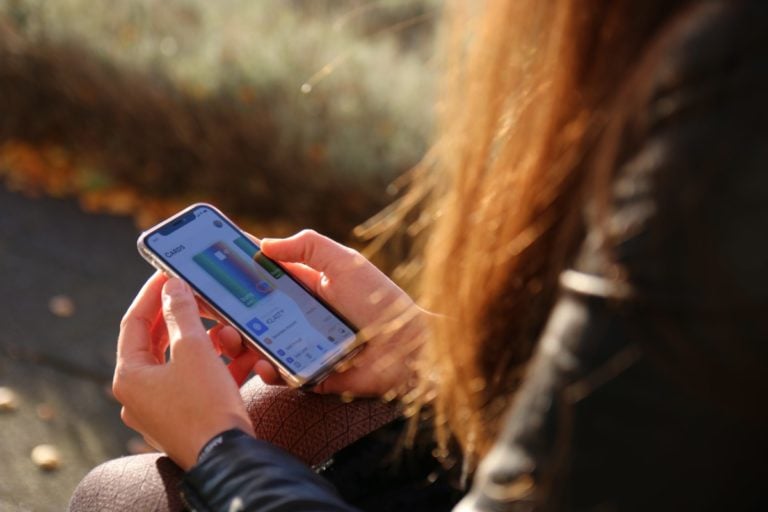
Paying online in the Netherlands is getting just a bit easier for bunq bank users — the online banking platform is now supporting Google Pay.
bunq’s new Google Pay service has previously been available in on Android phones in a handful of other European countries. Starting today, it’s now also available in the Netherlands and Portugal.
Google Pay is a type of digital wallet that allows you to make payments via many online platforms and contactless payment systems — something not always simple in the Netherlands.
Pay contactless with speed and security! You can now use Google Pay with your Android device anywhere in The Netherlands and Portugal. Simply connect your bunq cards and spend carefree.
For Apple users, this is not such big news, as bunq has supported the comparable Apple Pay method for over a year now.
Larger Dutch banks still not on board
Also jumping on the Google Pay train, two other foreign banks, N26 and revolut, are making the service available to users in the Netherlands, reports NU. Larger Dutch banks are still not ready to come aboard.
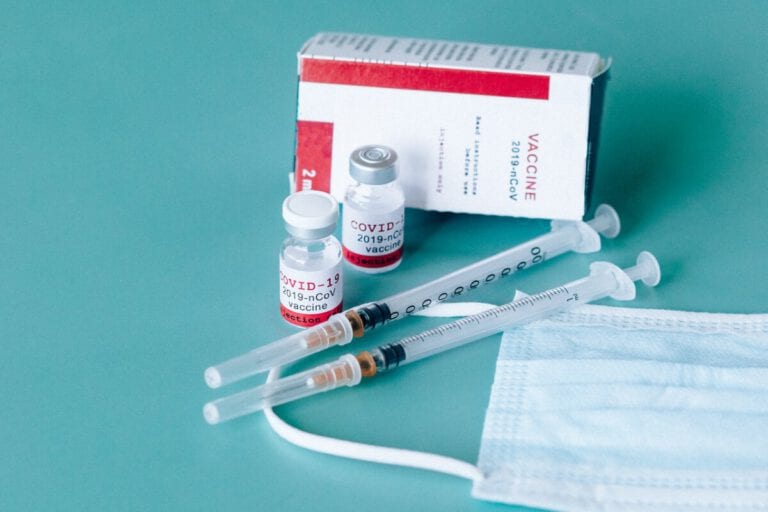
Last week, it was the Pfizer vaccine that announced its successful results, and now another company, Moderna, has come out with a promising coronavirus vaccine.
Pharmaceutical company Moderna say that interim results show that their vaccine is 94.5% effective, reports NOS. The study involved 30,000 people, half of which received two doses of the vaccine and half received two placebo doses. The only participants to be diagnosed with COVID-19 had received placebos. Moderna can now take their vaccine into the final stages of development.
Advantages over the Pfizer vaccine
Pharmaceutical companies Pfizer and BioNTech claim that their interim results showed a 90% effectiveness rate for their coronavirus vaccine. This means that preliminary results would suggest the Moderna vaccine is more effective, but professor of vaccinology Cécile van Els of the RIVM is not too concerned. “These are preliminary results, which may change. But at least this says that a large proportion of the vaccinees are protected against COVID-19. Above 90 percent I find impressive,” he told RTL Nieuws.
Both the Moderna and Pfizer vaccines must be stored frozen, but the Moderna vaccine can be thawed and stored in a fridge for 30 days. This is an advantage over the Pfizer vaccine, which must be stored frozen for longer and is thus more complicated to distribute.
However, in many ways the vaccines are similar to each other and so confirm the results of each other. “This is very good news and actually an independent confirmation of the good news from Pfizer last week,” professor of immunology at Amsterdam UMC, Marjolein van Egmond, says. “They have very similar vaccines, the results are very similar, which suggests that it’s all true. This news also makes Pfizer’s results more reliable.”
Accelerated Assessment
The European Medicine Agency (EMA) announced today that they will begin a rolling review of the Moderna vaccine, meaning that the results of the vaccine will be assessed extra quickly.
Usually, the results of vaccine studies are not submitted to authorities until all testing phases have been completed. But in extraordinary circumstances, pharmaceutical companies can request a rolling review, in which the authorities analyse the interim results — a process which normally takes eight months is cut down to just four weeks. Rapid assessment procedures are also underway for the Pfizer and Oxford University vaccines.
160 million doses
The European Union has ordered 160 million doses of the Moderna vaccine, but has also made deals for six other up and coming vaccines expected to show good results soon. However, the Moderna vaccine is likely to only be ready for distribution in the new year. “At the earliest it will be January,” says Van Els. “But of course we cannot all be vaccinated yet. Vaccination will be done step by step.” The elderly, vulnerable and healthcare workers are expected to receive the first vaccines available in the Netherlands.
Would you be willing to take one of these corona vaccines once they become available? Tell us your thoughts in the comments below.
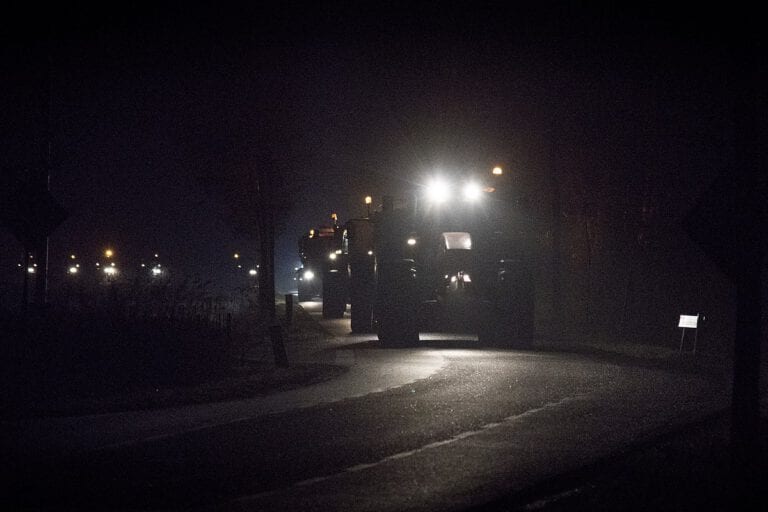
The Farmers Defense Force (FDF) action group has begun a protest this morning in The Hague along with several other Dutch cities.
By 5 AM this morning, around 100 tractors from North Brabant had arrived in The Hague, and hundreds more have since joined.
The FDF initially wanted to demonstrate at Paleis Huis ten Bosch, in order to deliver a letter to King-Willem Alexander, according to NU. The letter would have been a plea for help, but this was not allowed.
Instead, the protest is taking place at the Koekamp (a forested park in the city).
Opposing the Environmental Act
The farmers oppose the Environmental Act, which was passed in parliament four years ago.
The government wants to purchase agricultural businesses surrounding Natura 2000 areas to preserve the existing nature.
The Environmental Act merges the current regulations on spatial planning, construction, nature, environment, and water, and reduces permit requirements, with the intention of minimising red tape and bureaucratic hassle.
The law has yet to take effect, as it has seen a series of delays in recent years. The intention is now for an introduction of the policy to take place in early 2022.
The FDF is concerned that under the new Environmental Act, farmers’ permits will expire. Although, the Agriculture and Horticulture Organisation (LTO) Netherlands states that existing permits and laws under the Environmental Act will not change.
The farmers fear that under the cabinet’s new purchase scheme, they will have no option to start a new business elsewhere once their farm has been bought up.
Requesting the king
The reason the FDF is reaching out to the king is that he is the last hope for a change in the new law — the law is only valid once it’s been signed by the head of state.
The farmers’ campaign, coined “Code Oranje”, also aims to prevent the House of Representatives from signing off on the government’s nitrogen plans.
Hundreds of farmers are expected to demonstrate for two hours this morning, from 9 to 11 AM. The municipality of The Hague has approved a demonstration for 759 farmers. Coronavirus measures will apply.
What do you think of the farmers’ protests? Do you agree or disagree with their position? Tell us your thoughts in the comments.
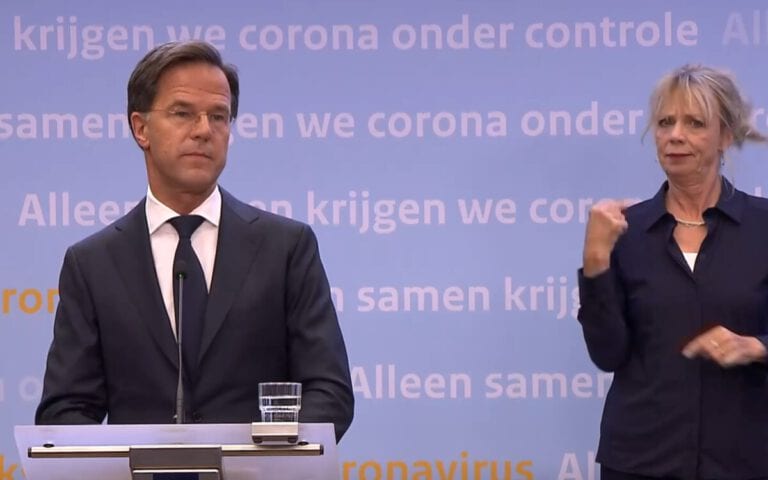
Tomorrow evening, Dutch Prime Minister Rutte and Health Minister De Jonge will once again hold a press conference on coronavirus measures in the Netherlands. Questions are arising over what measures will look like for the Christmas holidays.
Minister De Jonge expressed his hopes for allowing people to celebrate together, but noted that Christmas is still a long way away, reports RTL Nieuws. “I do not think we can give clarity about that tomorrow. The numbers are much lower than they were, but still much higher than they should be.”
Two weeks of stricter measures complete
As promised, the measures announced two weeks ago will come to an end, meaning that group gatherings will be expanded again. Public buildings like museums, libraries, zoos, concert halls and amusement parks will once again be open. They will have the same measures put in place prior to the stricter two weeks. However, measures are not expected to relax more than this.
Catering industry
The cabinet is discussing whether to open the catering industry again tomorrow, but this is unlikely. Clearer measures for the hospitality industry are expected to only be announced around the beginning of December. However, a potential experiment with 25 restaurants may go forward this week.
Downscaling plan
As of now, the government only has plans in place for reducing the spread of coronavirus as quickly as possible. There are no clear plans for how the Netherlands will ease out of coronavirus measures once a vaccine is available, or when numbers drop enough. It is unlikely that a downscaling plan will be announced tomorrow either.
What do you think of the two weeks of stricter measures coming to an end? Tell us in the comments below.
The Dutch and Vaccination – how are the Netherlands doing when it comes to vaccines and vaccination?
Vaccines prevent transmissible, or communicable, illnesses. Some of these illnesses can lead to disability or death, either in susceptible individuals (such as people, including children, who medically cannot take certain vaccines) or even healthy people, depending on the infection. So how are the Netherlands doing on the vaccination front?
The Dutch and Vaccination: Agoraphobic? Another reason to avoid crowds
Recurring news clips appear almost yearly about preventable outbreaks:
In Canada, measles outbreaks have fortunately been few and small, yet public health agency reports suggested that there was a “a sizeable outbreak in a non-immunizing religious community.”
In The Netherlands, measles outbreaks were also problematic in 2013-14 (and earlier as well). Conclusions from those investigations noted that “the vast majority of reported cases were unvaccinated (94%, n = 2,539), mostly for religious reasons (84%, n = 2,135).” In this study on the Dutch and vaccination, it was noted that orthodox Protestants (1% of the Dutch population) made up the majority of those both unvaccinated and affected by the outbreak. On the other hand, a survey of Dutch parents about a new childhood vaccination program suggested that higher education and a lack of religion were among risk factors for fully negative attitudes towards vaccination in the Netherlands.
Interestingly, a global survey of 67 countries showed that the European region has the lowest confidence in vaccination, with the French topping that list. On the opposite end, Bangladesh is the most accepting. The Dutch as a whole ranked reasonably well in this survey regarding confidence in vaccine safety and effectiveness, and also ranked among the top European countries that responded that vaccination is compatible with religious beliefs.
Global vaccine confidence in 2016. Source: https://www.ncbi.nlm.nih.gov/pubmed/27658738
Looking back to 2002, the National Institute for Public Health and the Environment (RIVM) reported that the National Immunisation Program (Rijksvaccinatieprogramma, RVP) had a vaccination rate of more than 95%, but this was declining gradually over time. This would seem consistent with the observation that a drop in vaccination and more outbreaks were occurring. After all, the RIVM stated that a rate of vaccination over more than 90% of the population needs to be maintained in order to prevent vaccine-preventable infectious diseases.
Vaccination in the Netherlands – Believe it or not?
And, the controversy will probably never be completely resolved. Why? Because it boils down to a fundamental argument of which is more valuable to someone: individual choice, or benefit for society? Of course, the spectrum of beliefs is neither linear, nor is it black-and-white.
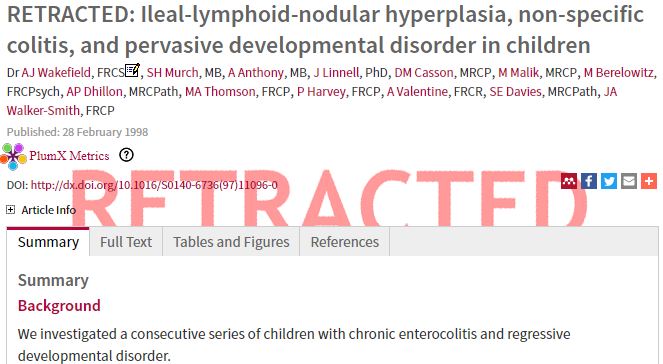
Screenshot from The Lancet
Admittedly, I’m all for vaccination. When it comes to a “quick fix,” I think vaccines qualify. I want to protect myself, my loved ones (including any future hypothetical offspring), and my community from transmissible illnesses. For example, I’m traveling to India this winter, and also visiting my newborn niece in the U.S. Basically if I don’t vaccinate, then either I potentially suffer (just say NO to acute hepatitis or typhoid, thank you very much) or someone else might (I definitely don’t want to give my baby niece the flu or whooping cough, when she is still too young to be vaccinated).
Vaccines for me personally are mandatory, and if the government is willing to provide them at no cost, then all the better. Learn more about the Dutch National Immunisation Program here.
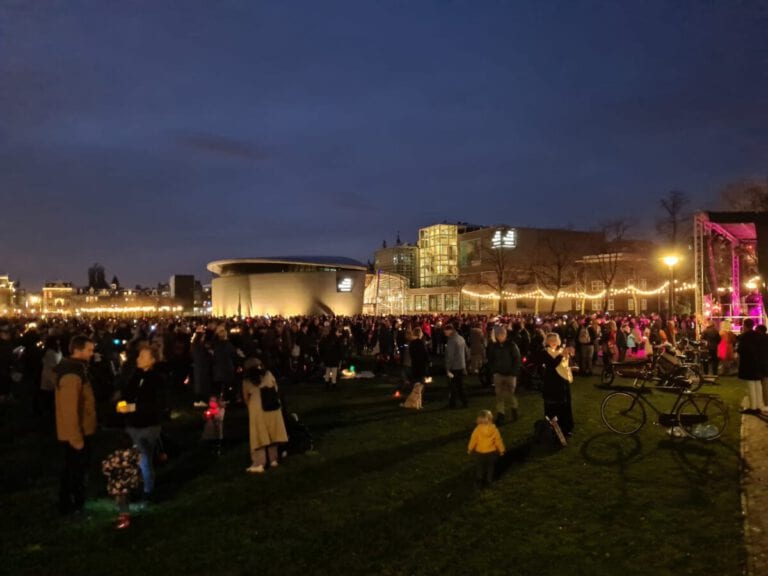
The Vrouwen voor Vrijheid (Women for Freedom) group organised a demonstration on the Museumplein in Amsterdam on Saturday evening. Police say they ended the protest early, but the organisers disagree.
The group held the protest because they believe that their freedoms as individuals are under threat from coronavirus measures, reports AD. Approximately 1000 people attended the gathering, but police say that attendees failed to keep their distance from each other.
Permission was granted by the municipality for the protest to last until 7 PM, but it only went until 6 PM. While police claim that they ended the protest, attendees say it was the scheduled ending of the programme.
Diverging stories
Romy Quint, leader of the demonstration, insisted that the demonstration was brought to an early finish on purpose, “so that the police wouldn’t hurt us in the end.” Vrouwen voor Vrijheid planned a programme that would finish around 6 PM, but police understood that it would go on until 7 PM.
As a result, when police had to order the organisation to turn off the music around 6:20 PM, they saw it as “termination” according to a police spokesperson. The music and speech were causing unrest and participants were not adhering to corona measures, police said.
The police’s story caused outrage on social media, as demonstrators argued that the event was already over when police supposedly intervened. “That was just a farewell song that was used afterwards, as background music while people left,” says Quint.
Technicalities
Quint emphasizes that police contact during the demonstration went well, and is disappointed that the municipality is presenting the protest in a negative light. A spokesperson for the municipality says their information is based on that from the police. “We weren’t there, the police were. As far as we know, the meeting ended on the initiative of the police.”
A police spokesperson later tried to clarify the confusion. “The last speech ended at 6:05 PM, then music was put on. We then went to the group to say that it had been good, they agreed. That was around 6:20 PM. According to the request, the demonstration was scheduled until 7 PM, so that’s where the words ‘terminated’ come from.”
What are your thoughts on this corona protest? Let us know in the comments.
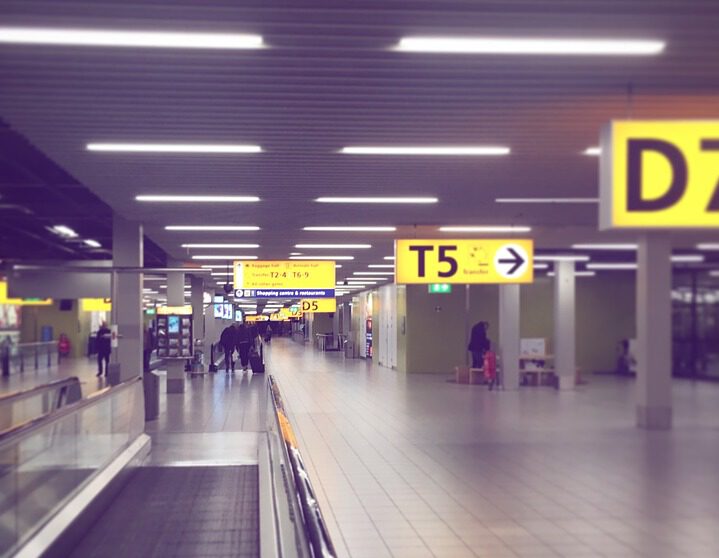
On Saturday, a 32-year-old Georgian man infected with coronavirus was arrested for attempted aggravated assault at Schiphol airport.
The man had flown into Schiphol from Georgia and wanted to board a flight to Malta. He was checked by an airline employee at the gate, who found he was carrying a letter stating he’d tested positive for coronavirus.
The Royal Netherlands Marechaussee wrote on social media, “The man was immediately quarantined and arrested by the police officer.” The Public Prosecutor North-Holland is currently leading an investigation into the case.
Due to the rising number of coronavirus cases in Curaçao, the government has announced stricter measures. As of today, restaurants and bars are closing early, non-urgent medical operations will be cancelled, and a curfew has gone into effect.
The popular holiday destination for Dutchies has been listed as “code yellow” for coronavirus — it’s one of the few places the Dutch cabinet has approved for holiday travel. This has led to a sharp rise in the number of flights booked to the island over the coming months, as Dutch holiday seekers try to make a break for it this Christmas.
But now, things have taken a turn for the worse on the small Dutch-Caribbean island. Prime Minister Eugene Rhuggenaath told the public on Sunday that the record number of infections and the situation in the hospitals require that they take new measures.
New measures
Disappointed travellers will arrive at the island to find all shops and restaurants closing at 8 PM and a curfew from 9 PM to 4:30 AM.
A face mask mandate is also in place inside shops and other indoor public spaces for anyone over the age of 18.
Gatherings in groups of over four people are prohibited (including at the beach) and people are asked to stay home as much as possible. “If there is no reason to go outside, stay at home,” says Rhuggenaath.
For now, the country is remaining open for tourists, with restrictions. Visitors from lower-risk areas must submit a negative PCR test, while those from higher-risk countries will need to quarantine for fourteen days.
Do the new measures in Curaçao surprise you? Does this news interrupt any of your holiday plans? Tell us in the comments below.
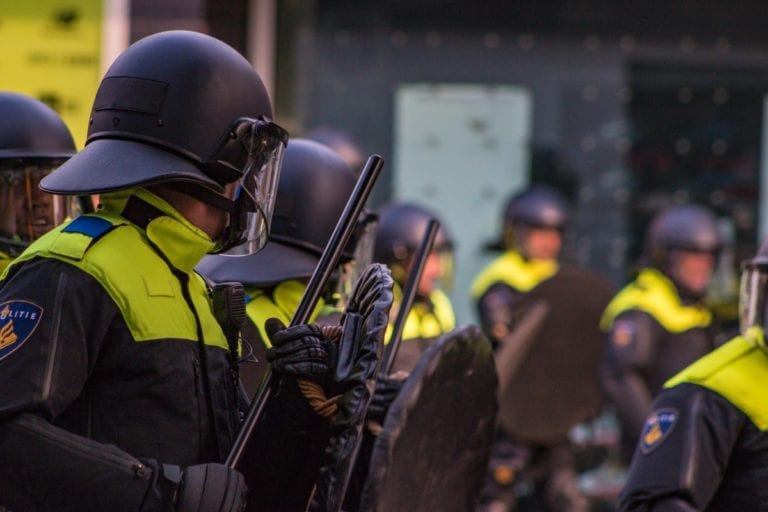
On Saturday afternoon, a planned demonstration against Zwarte Piet in Maastricht was disrupted by counter-protesters. Tensions at the scene escalated, leading to violence and police intervention.
The action group Kick Out Zwarte (KOZP) had a permit from the municipality to demonstrate against the blackface character on the Vrijthof (a central square). But when counter-protesters gathered and the atmosphere became threatening, the police mobile unit had to intervene.
They used horses and dogs to keep the counter-protesters at a distance. The police were pelted with fireworks.
KOZP spokesperson tells NU that demonstrating at the second scene was impossible. “That place was almost next to the Vrijthof. There were a lot of threats and a lot of violence. People threw things and there was shouting. We, therefore, stopped our action prematurely.”
Violence at the second location
The demonstration was moved to a new secret location, a nearby shopping area, under police escort. But the effort was to no avail — the peaceful protesters were soon surrounded again by hundreds of counter-demonstrators.
About an hour and a half later, when Zwarte Piet protesters decided to end the demonstration, the police helped facilitate a safe ending.
Maastricht Mayor Annemarie Penn-te Strake is disappointed the police had to intervene. She says, “Demonstration is a fundamental right, so a demonstration cannot simply be prohibited. It is our duty to protect that fundamental right, even in this corona time, because demonstrations are an exception. It is hard to justify people who wanted to disrupt the demonstration.”
What do you think of the Zwarte Piet protests and counter-protests? Tell us in the comments below.
A whistleblower has revealed that the US intelligence agency, NSA, has been taking advantage of an agreement with Denmark for years to spy on the Netherlands and other surrounding allies.
Danish military service FE tapped Danish internet cables with the help of the Americans in 2008, for which they made an agreement. Through this agreement, the NSA was given access to cables running to Eastern Europe. FE collaborated with the NSA to process data in a data centre near Copenhagen Airport.
But unbeknownst to Denmark, the NSA used their access to these cables to spy on Denmark, Sweden, Germany and the Netherlands, reports NOS.
The whistleblower
A former employee of the Danish service FE was concerned about the Danish-American cooperations and wrote an internal report. When this report was ignored, he leaked the reports to a supervisory authority. An investigation was then launched and the whistleblower put several FE officials on temporary suspensions in the summer.
Sources at the Dutch secret service are reluctant to share how much they knew about the situation. “Everyone spies,” an employee told De Volkskrant.
What do you make of this dubious move by NSA? Tell us your thoughts in the comments below.