All books depicting Zwarte Piet are being removed from libraries across the Netherlands. Representatives of library organizations say the character is no longer considered acceptable and that removing the stereotypical depiction is a good thing.
Doing so has been discussed for some time, as Zwarte Piet has become increasingly controversial over the years. As the Dutch consider swapping out Zwarte Piet for Grijze Piet, and social media platforms ban images of Zwarte Piet, library organizations have finally decided that it is time to remove the character from their shelves.
The books will be sold for a small fee, or go to Koninklijke Bibliotheek in The Hague as historical artifacts, reports RTL Nieuws. Tineke van Ham, director of a consultancy organization for libraries, celebrates this as a turning point.
A changing zeitgeist
Van Ham explains that the change is also about the demand from parents, who are increasingly against books with Zwarte Piet being presented to their children. “It doesn’t matter for white kids if Piet looks a bit different, but black kids don’t like [traditional Zwarte Piet] and that’s what is the problem.”
Anton Kok, director of the Association of Public Libraries (VOB), said, “Everywhere there is a growing realization that Zwarte Piet creates a stereotype of a certain part of the population and the libraries are moving along with this.” In doing so, he says, libraries are moving with the “spirit of the times”.
Support for Zwarte Piet falls considerably
Far fewer Dutchies are in favour of Zwarte Piet this year compared to last year, according to a survey by EenVandaag. Only 55% think the appearance of Zwarte Piet should not be changed, in comparison to 71% last year. The survey included 29,000 participants, many of whom now believe the character should be changed to the Sooty Piet.
What do you think about libraries removing the Zwarte Piet character? Tell us your thoughts in the comments below.
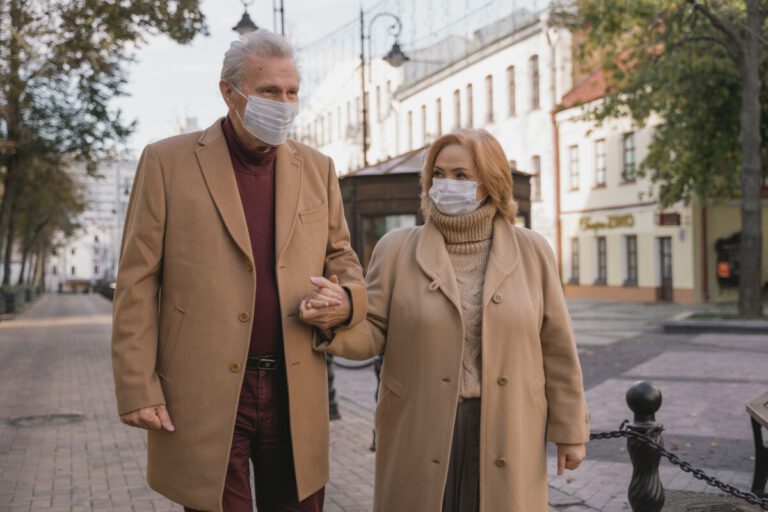
The Ministry of Justice and Security has confirmed to NU.nl that not wearing a mask in indoor public spaces will cost a fine of 95. The fine is expected to be brought in by December 1.
Whilst announcing the latest coronavirus measures last month, Prime Minister Mark Rutte had initially told the public that the wearing of face masks in public spaces was urgently advised.
He explained that, for the time being, face masks could not be made mandatory due to legal issues. However, the cabinet has now made way for a mandatory face mask law under corona law.
Corona law
Initially, the government’s actions towards coronavirus were being implemented through emergency regulations. The new corona law, which has been implemented for three months, allows a new legal basis for coronavirus regulations.
The Lower House will receive the new regulation this Tuesday. It is expected that the fine will apply to those who fail to wear a face mask in indoor public spaces.
No criminal record
In the Netherlands, any fine above €100 will leave the recipient with a criminal record. For this reason, many corona fines are expected to amount to €95. This way, someone who breaks corona law will not be left with a criminal record.
The government believes that it wouldn’t be fair to leave someone with such a serious consequence for a minor offence such as not wearing a face mask.
What do you think of a face mask fine? Tell us your thoughts in the comments below!
When police followed a lead to a supposed cannabis farm in Geleen (Limburg), they were quite flummoxed by what they discovered. No evidence of marijuana was found on the scene, but instead, buckets of chicory, reports 1Limburg.
Police received an anonymous tip on Monday about the possibility of cannabis cultivation. It was thought to be linked to stolen electricity, as measurements in the area indicated that the house in question may have tapped in illegally.
When officers arrived on the scene, they noticed a PVC pipe coming from the basement, giving them further cause for interest. When they approached the surprised resident, they were invited into the house without issue and allowed to poke around.
A classic case of chicory trickery
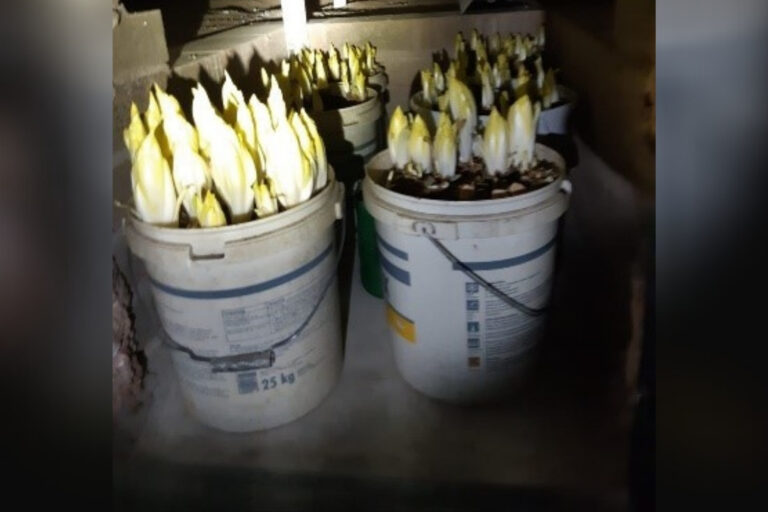
Upon entry into the basement, one officer caught sight of a wooden structure near a crawl space. He removed it, expecting to find the hiding place of the cannabis plants. But rather, he discovered a number of buckets of chicory.
It was “a special sensation for the police,” the police wrote on Facebook. As it turns out, the homeowner was a big fan of chicory, and grew is as a hobby — a detail he didn’t think to mention sooner.
Nothing else of suspicion was found in the house, including any suspicious activity regarding stolen electricity.
What do you make of this unexpected find? Have you ever heard of growing chicory this way? Let us know in the comments.
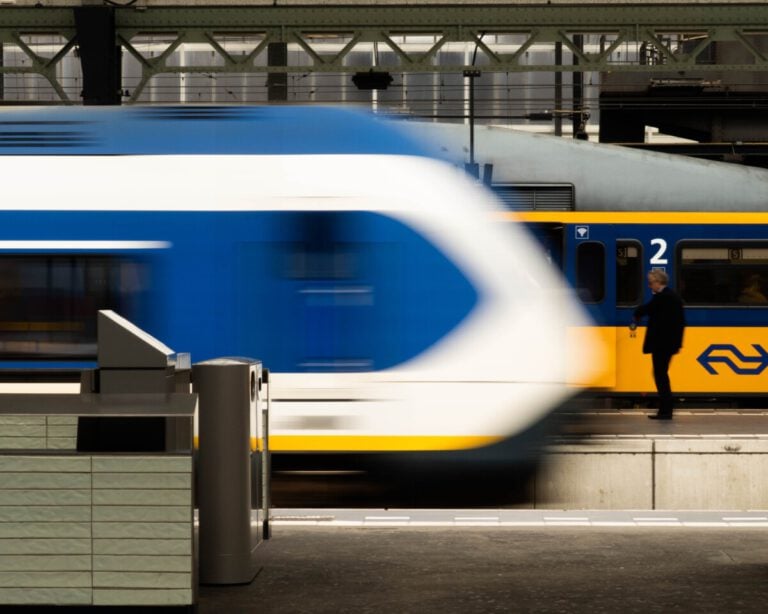
NS wants to help avoid crowds by asking travelers to register for their trips in advance. According to the Dutch Railways operator, this will allow them insight into what times the trains are busiest, reports NOS.
NS has built into their app a special function called Train Guide. This allows passengers to register their journey starting from today. The rail operator emphasises that registering is voluntary and will stay that way in the future.
Far fewer passengers
The rail operator has seen a vast decline in passengers since the onset of the coronavirus pandemic. The carrier says that 90% of their trains are still running, but with only 30 to 35% of passengers still riding them.
“Some people have the perception that the train is sometimes too busy. With the registration function, we want to allay those concerns a bit. For example, we can send an email if the train seems to be too busy or fails,” says the NS.
Gathering data
The rail company hopes to better predict traveler patterns through these advance registrations. By looking at historical data, they’ve always been able to estimate travelers’ movements, but that has been less successful this year. “Now that people travel less and at other times, we have on much less on all that data at the moment,” says the NS.
The registration service the rail company is now incorporating was tested last summer. They tried it out on the busiest route to the beach, from Haarlem to Zandvoort, which is often congested on hot days or during festivals.
At the time, not many people were able to find the service and it was not widely-used. “We learned from that trial that we must make the function accessible, it must be simple. That is why it is now more visible in the app,” said the NS. This time around, there will be campaigns to increase traveler awareness.
Use beyond the pandemic
The rail company hopes that the function will be used not just during times of coronavirus, but continue to be useful in the future. “First of all, people will hopefully be able to travel more again. In the app you can then see exactly when you can avoid the crowds,” a spokesperson says.
The NS does not wish to disclose the number of passengers who would need to register their journeys for the company to make a sound prediction. A spokesperson for the rails says, “There is no target.”
Will you be willing to register your travel journeys in advance? Let us know in the comments.
The recent promising results of a coronavirus vaccine, developed by American and German companies Pfizer and BioNTech, has led to the Netherlands and other EU countries ordering almost 200 million doses from the companies. Questions over vaccine strategies are now arising.
The Dutch cabinet have ordered 8 million doses of this vaccine, as well as doses from other vaccines still under development. When this particular vaccine is ready for distribution in the Netherlands, it will be the responsibility of Health Minister De Jonge to decide who should receive the vaccine first.
The Health Council will be discussing this issue in the coming week, and De Jonge hopes to announce a vaccine strategy by the end of next week.
Different rules for those unvaccinated
In the meantime, De Jonge has expressed that there will likely be different measures in place for those who have been vaccinated compared to those who have not, reports Het Parool. “You should see it this way: that certain measures may apply longer for people without vaccination,” De Jonge said. “But we are really going to work all of that out, that is still to come.”
The Health Minister explained that the strategy will also depend on which vaccine is available for distribution first. Although the Pfizer/BioNTech vaccine appears to be the closest to distribution, it is still unclear as to how well it protects vulnerable groups. If indeed it does effectively protect vulnerable groups, this will impact the measures implemented on all parts of society.
Who’s first?
It is probable that healthcare workers and the elderly will be the first to receive the vaccine, says Maarten Postma, professor of Global Health Economics at the University of Groningen. “You can further specify older people: for example, people over 80 first, then people over 75, and so on,” Postma explained.
But regardless of how De Jonge chooses to distribute the vaccine, it will take a while to achieve group immunity. “To get our old life back, I estimate that 80 to 90 percent of the population should get vaccinated with a near-perfect vaccine,” Postma said. He predicts that at first only hundreds of thousands of vaccine doses will be available, and that there will be some who are not willing to take the vaccine.
Minister De Jonge predicts that it will take “months and months” to vaccinate the Dutch population in the appropriate order. The good news is that with this new vaccine, infection rates will begin to drop and our lives can begin to return to the “normality” of pre-corona.
How do you think the vaccine should be distributed in the Netherlands? Let us know in the comments below.
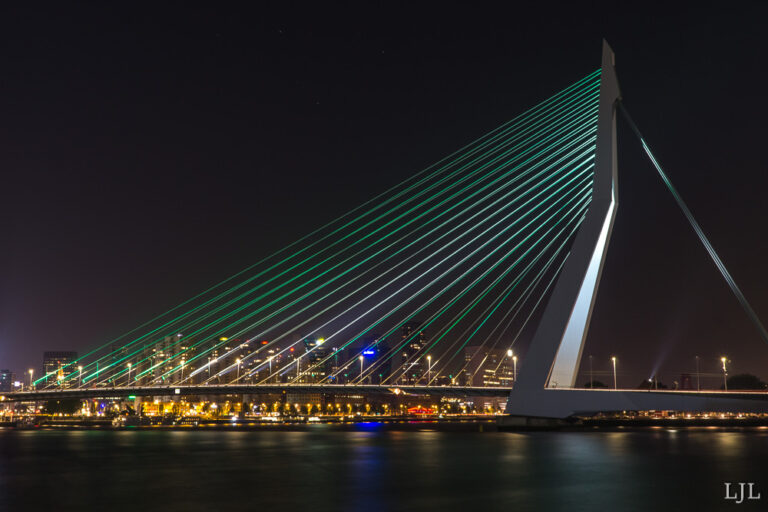
The Erasmus Bridge in Rotterdam is famous for its colour-changing lighting. As it turns out, until yesterday afternoon, anyone was able to change to the colour, as the system that controls the colour palette was not password protected, reports Rijnmond.
A Rotterdam resident made the discovery after seeing a report by Rijnmond last November, in which a manager used an iPad to control the lighting of the Erasmus Bridge. The city changes the colour many times a year for special occasions such as King’s Day and Liberation Day.
Having taken a special interest in this observation, the keen resident found via search engine results for “unsecured devices Rotterdam” that he too could change the colours of the bridge, and also the Hofplein fountain.
A concerning lack of security
The Rotterdammer reported his finding to RTL tech journalist Daniël Verlaan, who finds the gaps in security concerning. “I was surprised that this was possible. It scares me,” says Verlaan.
The Rotterdam municipality is now investigating similar types of security systems to see if additional risks are present. They write in a statement: “Of course it is not the intention that the decorative lighting can be adjusted by third parties. We are in contact with the supplier of the system to see what adjustment is necessary to prevent this from happening in the future. Until then, the new control system will be out of use.”
What do you make of this curious lack of security in Rotterdam’s bridge control? Let us know in the comments.
Looking for information on marriage and parental rights for same-sex couples in the Netherlands in 2020? Well, you’re in the right place…
Marriage for same-sex couples in the Netherlands
The Netherlands is known for its tolerance and openness to ‘be who you want to be.’ That’s why (despite many countries still not allowing this), the Netherlands was the first country in the world to allow same-sex marriage. This was made possible in 2001 and since then thousands of same-sex couples have married in the Netherlands.
In many other countries, despite it being 2020, 19 years after the Netherlands, they are no closer to legalising gay marriage. This is important to take into account if you choose to get married, as it may not be legally recognised in another country (even in Europe).
Get keyed up on marriage and parental rights for same-sex couples in the Netherlands. Image: Briannad26/Pixabay
Parental rights for same-sex couples in the Netherlands
So, you’ve decided to get married, but what about the whole ‘starting a family’? What rights you have, and what you have to do to become parents? What’s important to know is that it’s totally possible in the Netherlands.
When a child is born, they are assigned to someone for parental responsibility, either through birth, marriage, adoption, or guardianship. This gives them the right to bring up the child and look after them. How this process works all depends on many factors: if either of you are the biological parents, if you are a female or male couple, and what role the sperm donor plays in the pregnancy. This all determines how to go about becoming legal parents in the Netherlands.
Co-mothering in the Netherlands
Co-mothering has been an issue in many other countries where same-sex marriage is allowed, but the child would only have on a legal parent. The partner would have to ‘adopt’ the child through the court. Since 2014, it was possible for co-mothers to both becoming the legal parent. This means that if a woman is married to another woman, they will automatically have joint responsibility for that child, so long as there is no legal father. This is possible when the child was the result of a sperm donor who is not wanting to bring up the child. These conditions must be met for this to happen:
You are married or a registered partner to the mother.
Once the birth is registered officially, a declaration needs to be sent from the Artificial Fertilisation Donor Information Office directly to the Registrar, to let them know that it was a sperm donation (who does not want to be the father).
Parental rights for same-sex couples in the Netherlands: Make sure to prepare yourself beforehand. Image: Satyatiwari/Pixabay
Becoming a legal parent through acknowledgement
This changes slightly if the donor is from a known person. If you are married or registered partners to another woman and you know who the donor is, you can become the child’s legal parent through acknowledgement. This can happen before or after the birth. Most people choose to do it before because that means as soon as the baby is born, you will be the co-mother automatically. You do this through the Registrar of Births, Deaths, Marriages, and Registered Partnerships.
The only exception to this is if the sperm donor acknowledges the child before birth. This means that the co-mother will not have parental responsibility. However, if this happens after the birth, then he will not automatically acquire parental responsibility, so you will have more rights to co-mother. It’s important to be in discussion with the donor to prevent any of these issues happening, as it can start to get extremely complicated and messy.
Male couples and parental rights in the Netherlands
Currently, for two males, the adoption route still applies. This means that if the child is theirs, but the other partner is not, then that partner would have to submit an application to a family court. If the child is not theirs biologically speaking, then both of them would have to apply to get joint responsibility. After that, they will be legally responsible for the child.
Parental rights for same-sex couples in the Netherlands: Male partners need to go through a different process to become a dad(s)! Image: PublicDomainPictures/Pixabay
Same-sex couples acquiring guardianship in the Netherlands
It’s possible to get guardianship, other than parental responsibility for same-sex couples in the Netherlands. This means that although you may not be the parent, you are responsible for that child (as a guardian). You basically take over the rule of a parent, without actually being the parent. It’s the same process as if you were going through any other sort of guardianship and it is completely possible if you are a same-sex couple (this will not affect anything). So going down the guardianship route should be as easy for you as it is for anyone else.
So, there you have it. All you need to know about getting married as a same-sex couple and also acquiring rights over children born (or brought up) into same-sex marriages or partnerships. For any other info, don’t forget to check out the government website. If you’re unsure, don’t forget to reach out and ask them.
Have we missed anything? Do you have any experiences that you’d like to share with us? Let us know in the comments.
Rotterdam-Rijnmond, Zuid-Holland-Zuid and Twente were potentially facing the closure of secondary schools and regional curfews. There were also discussions about restricting retail shops. However, Dutch Health Minister Hugo de Jonge has announced that these measures are no longer under consideration.
De Jonge explained that numbers are rising less quickly in these areas now, so stricter measures will not be necessary, reports NOS. However, he says there is still a long way to go. “We have turned a corner, but the decrease [in cases] is not enough yet,” De Jonge said.
Catering
Cabinet announced at the end of October that the catering industry would be closed until at least December. De Jonge has now announced that this will probably last until mid-December.
This means restaurants and bars could potentially open again over Christmas, but whether this will happen or not is yet to be decided on by cabinet.
Two-week measures come to an end
Certain measures intended to last only two weeks will not be renewed at the end of this week. Libraries, cinemas and museums will therefore be open again next week.
However, Prime Minister Rutte and Health Minister De Jonge will be holding another press conference on Tuesday. De Jonge warned against too much optimism. “We must first hold on to the decline and remain vigilant because the number of 4,700 new infections per day is still much too high.”
What do you think about the cabinet’s decision to cancel additional regional measures in high-risk zones? Tell us your thoughts in the comments below.
Dutch political parties D66, DCA, and ChristianUnie want the EU to enforce an arms embargo against Turkey, reports NOS. It would be a punitive measure toward the NATO ally for their involvement in armed conflicts in Libya and the Eastern Mediterranean.
During today’s budget debate with the Ministry of Affairs, the parties will be tabling a motion regarding the desired embargo. The Turkish government has been in violation of international law with its regional conflicts and illegal drilling of oil belonging to Greece.
Also likely lingering in the minds of Dutch MPs is Turkish President Erdogan’s history of inciting military violence, rather than promoting stability. For instance, Turkey’s attack against the Syrian Kurds last year, who have been staunch allies in the fight against ISIS, was openly condemned in the Netherlands.
“We must protect innocent civilians”
Some Dutch MPs believe the cabinet should push for an EU-wide arms embargo. Martijn van Helvert from CDA says that “It is bad that we have to, but we want the EU to impose an arms embargo on our NATO ally. We must protect innocent civilians.”
“Time and again Turkey has crossed the line,” says ChristianUnie MP Joël Voordewind. He continues, “It is time for firm measures.”
D66 member Sjoerd Sjoerdsma agrees: “If Erdogan foments military conflict instead of promoting stability, we must draw a clear line: no more weapons to Turkey as long as this continues.”
What do you think of the coalition parties’ idea for an arms embargo against Turkey? Let us know in the comments?
Coronavirus in the Netherlands is significantly declining, with 43,624 new positive tests reported to the RIVM in the last week, compared to 64,036 in the previous week.
This means that the number of new infections has dropped by 32%, even better than the 5% drop we saw last week. Daily figures have reduced, with 4,695 new cases reported in the last 24 hour period. This is six fewer infections than the previous day.
Hospitalizations are also down, as 1,520 patients were admitted in the past week compared to the 1,966 hospitalized the week before. This week also reported fewer ICU patients than last week’s 321, with 275 patients admitted in the last seven days.
But despite the decline in infections, the number of people who died from the coronavirus increased. According to RIVM, 565 people passed away from COVID-19 in the past week compared to 435 the previous week.
Crowds of Dutchies in the streets and parks
This weekend, despite new measures asking people to stay at home as much as possible, Dutch streets and parks were overcrowded. Some parks issued a “code red” due to the crowds, indicating that people needed to go elsewhere. Rick van Baaren, professor of behavioural change at Utrecht University, explained that it is human for people to need to go outside. He says that unless certain things are banned, people will continue to do what is still technically allowed.
Netherlands ramps up testing
Meanwhile, new XL testing streets were set up around the country this week, doubling the previous testing capacity of the Netherlands. These streets are set to open at the end of November or beginning of December. “With this approach, we want to ensure that every Dutch person is within a maximum radius of 45 minutes to visit a test location,” the government wrote in a document.
Dutch fraudsters selling fake COVID-19 results
Virus-free declarations are now needed to enter many countries, and since the GGDs only test people with symptoms, taking a COVID-19 test can cost up to €150 from private companies. Scammers have been taking advantage of this need, and have been selling fake corona results over social media for a fraction of the price. This means many Dutch people have been travelling with fake papers. Police are investigating the issue.