Home Blog Page 608

Coronavirus update: 78 new cases as nursing homes determine their own visiting hours

0

The RIVM has published the latest count of coronavirus cases in the Netherlands for today, June 29.

The newest count reveals an additional 78 cases in the Netherlands. Ever since the outbreak began back in February, there’s been a total of 50,223 cases.

Severe cases of coronavirus still lead to people ending up in the hospital, with three new people being hospitalized.

Unfortunately, the virus continues to claim lives. Since the latest count, two more people have passed away, and nationwide, the virus has claimed the lives of 6,107 people in total.

The RIVM will discontinue daily updates starting July 1, as the number of cases has stabilized. They will do weekly updates instead.

Nursing homes to determine their own visiting schedules

The nationwide ban on visits to nursing homes has lead to distressing situations, NOS reports. Institutions must therefore be allowed to determine their own visiting schedules. This is the main recommendation from Leiden and Groningen experts who commissioned the Ministry of Health to research the coronavirus approach of 41 different institutions.

The study revealed that employees of nursing homes have been under a lot of mental stress due to the crisis. They had high exposure to the coronavirus, a high workload, and in some cases, were not allowed to sleep at home. Some employees were even threatened because of the visit ban.

Follow DutchReview on Facebook for the latest coronavirus news in the Netherlands.

Feature Image: DutchReview/Canva

84% of Dutch people think there are no mitigating circumstances for rape

0

A survey by I&O Research has shown that one in five Dutch men under 35 think that it is a mitigating circumstance for rape if a woman does not explicitly say no.

The survey was commissioned by Amnesty International, and asked 2000 Dutch respondents about their attitudes to and experiences with sexual violence in the Netherlands.

Currently, Minister for Justice Ferdinand Grapperhaus is working on introducing a new law to parliament, which would make it easier for people who commit sexual assault to be prosecuted. Currently, the burden of proof which lies on the person who is assaulted is very high: if, for example, the victim freezes and does not say no to their attacker, it is often impossible for rape to be proven. In order for someone to be convicted of rape, coercion has to be proven.

The new bill will make it easier for victims of sexual harassment or sexual assault to be protected. This sounds good on the surface, but campaigners for victims of sexual assault, including Amnesty International, object to it.

The problem with the new law

This is because the law creates a new offence, “sex against someone’s will” but does not label this as rape. “Sex against someone’s will must always be treated as rape. There must be no new offense. The rape offense must be adjusted,” head of gender program Martine Goeman tells NOS.

This potential new law was what motivated Amnesty International to commission this survey. It showed that 19% of young women have experienced someone having sex with them against without consent. 76% of those surveyed said that sex without mutual consent is rape, with or without the use of force. 84% feel that there are no mitigating circumstances for rape.

However, 11% of the men surveyed believed that if the victim does not clearly defend themselves or say no clearly, that should be considered a mitigating circumstance for rape. For men between the ages of 16 and 35, 20% believe this is the case.

What are your thoughts on Minister Grappenhaus’s proposed law? Let us know in the comments below.

Feature Image: Free-Photos/Pixabay

Aphid shortage pushes Dutch ladybirds to bite beachgoers

0

This weekend, beachgoers noticed a large number of ladybirds wandering around, reports RTL Nieuws. It is unknown what their exact demands are, but a spokesperson for the ladybug association has asked for help to locate aphids.

Joyce Walkier, an assistant manager at a beach club in Noordwijk, saw hundreds of these critters while at work.

She opened an umbrella which had dozens of them inside. “There were more and more throughout the day. At the entrance there was a lot of flying around, we had ladybugs on our shoulders and guests too. They were everywhere.”

Some of the guests were less than enthusiastic of the ladybugs invasion, but many responded positively. Joyce herself took the sight as a moment of nostalgia from her youth.

Mysterious disappearance

The very next day, the ladybugs disappeared without a trace, to Joyce’s disappointment. Scientists are now using a microscope to analyse the farewell letter some of the ladybugs left behind, but without any substantial conclusions yet.

Vincent Kalkman from Naturalis explained why he believes the ladybugs appeared in such large numbers only to disappear. Depending on the year, ladybugs build up large populations. “Then you get very large numbers. And in the places where they live there is a lack of food. They then think: we are hungry, we have to go. Then they sometimes fly en masse.”

As ladybugs can only fly downwind, they sometimes end up on the beach, as they are tired of flying and just wanna chillax, eat aphids and make people either really nervous or glad to see them.

However, as they can’t usually find aphids on the beach, they’ll bite people too. Don’t take it personally, they’re just a tiny bit hungry. If nothing there is to eat, they’ll continue on flying, usually leading to an untimely demise in the sea. Such is the circle of life.

Have you seen any of the ladybugs this past weekend chillin’ at the beach? Let us know in the comments!

Feature Image: Jerzy Gorecki/ Pixabay


37 people arrested at Malieveld protest against coronavirus regulations

0

For the second Sunday in a row, demonstrators gathered on the Malieveld to protest the current coronavirus regulations in place.

In comparison to last weekend, where thousands of people showed up and around 400 people were arrested, yesterday’s protest was relatively mild. That was, at least in part, because it was banned.

Mayor Remkes forbade the demonstration, but originally, the organisers of the protest, Viruswaanzin (Virus Madness), urged their followers to gather anyway. They withdrew this request on Saturday.

Nonetheless, 200 people arrived in The Hague yesterday anyway. Police kept the protestors away from the Malieveld and arrested those who did not leave: which turned out to be 37 of them.

The protestors are against the regulations that have been put in place to slow the spread of coronavirus: at this point in time, their main objection is to the 1.5m society. On July 1, the Netherlands will enter the “watch phase” of its relaxation of coronavirus rules. Under this phase, large gatherings will be permitted, and public transport will be reopened to all.

The demonstration was forbidden by Mayor Remkes because of the riots that ensued last Sunday. That protest was also forbidden, but when people turned up anyway, Remkes decided to allow it. It dissolved into chaos later in the day, when police officers asked demonstrators to leave after their allotted protest time came to an end.

You can follow DutchReview on Facebook for more news about the Netherlands.

Feature Image: DutchReview/Canva

Coronavirus update: grim milestone as Netherlands crosses 50,000 infections

The RIVM reports that 96 people have tested positive for coronavirus today, bringing the Netherlands past the milestone of 50,000 cases.

As has been the trend over the past weeks, deaths and hospitalisations related to coronavirus remain low.A further three people have passed away in the last 24 hours, and six have been hospitalised. The Dutch coronavirus death toll now stands at 6,103.

From July 1, the RIVM will stop giving daily updates on coronavirus in the Netherlands. Figures will then be published weekly.

Restaurants avoid distance fines

Guests at restaurants who do not keep their distance rarely result in a fine for the establishment. A sample from AD of 56 municipalities shows that in the first three weeks of June, no fines were issued — although 141 warnings have been given.

Restaurants and bars have been allowed to open for dine-in guests since June 1 — provided the 1.5-metre rule is followed. Municipalities have noticed guests are not adhering to the rules, but don’t see a need to fine the businesses they attend. “We are not striving for a tape measure society,” a spokesman for the municipality of Uithoorn told AD.

KLM to receive 3.4 billion euros in support

Dutch airline KLM will receive 3.4 billion euros as a support package from the government. Finance Minister Hoekstra announced the boost this morning. The package is made up of a 1 billion euro state loan, and a 3.4 billion euro guarantee from the government for a private loan KLM procured itself.

But the government funds don’t come without conditions: KLM must waive bonuses, employees will have their salaries cut, and the airline is banned from paying dividends. Hoekstra has not ruled out the possibility that more aid may be given if the 3.4 billion is not sufficient.

Follow DutchReview on Facebook for more information about coronavirus in the Netherlands.

Feature Image: DutchReview/Canva

8 huge differences between the Netherlands and Australia

There are multiple differences between The Netherlands and Australia that might come in handy at the weirdest times. Are you an Aussie about to arrive in The Netherlands? Or a Dutchie about to travel to Australia? Then you are probably wondering what you are about to encounter. Here are some irrelevant, but (possibly) intriguing differences between the Netherlands and Australia!

When I arrived in the Netherlands at age 25 from Australia, I was so excited but had absolutely no idea what to expect. I remember constantly looking around me and comparing everything to what I knew from my home country. There are many differences between these two countries. Of course, there are obvious differences like speaking different languages and driving on different sides of the road, but here are some others that I found a bit peculiar!

Differences between the Netherlands and Australia: visiting the grocery store

Coming from Australia, I was used to huge supermarkets with endless aisles of products. It was like walking into a massive food hall, full of everything you could ever need for cooking your perfect meal! When you approach the counter, all you need to do is empty your trolley and then you can relax, take a breather and have a little chat to the check-out person (if you feel like it). The employee (standing) behind the counter will pack everything up for you nice and neat in bags- perfect and off you go!

After arriving in The Netherlands, grocery stores appeared miniature to me in comparison to Australia. I quickly noticed that I often needed to visit up to four different grocery stores to find all the ingredients I needed for one recipe! I also learnt quickly, that I must get my game face on in the grocery store because the employee (sitting) behind the counter was not going to pack my bags!

Dutch grocery store employees simply scan the item – and that is it. So, after my first visit, I began quickly rushing. Sweating and trying to get all my items bagged before it became time to pay. Now, I have mastered this and have my bags ready, my pin card in my pocket ready. I am ready to pack, go and get out of there as quickly as possible!

So Dutchies in Australia, enjoy and relax! For the Aussies in the Netherlands- hurry up and get packing!

Differences between the Netherlands and Australia: making a doctor’s appointment

In Australia, when you need to make a doctor’s appointment you call and schedule a time and that’s pretty much it. You arrive at the doctor’s, give your name and take a seat. After I arrived in The Netherlands, making my first doctor’s appointment was not what I was used to!

differences between The Netherlands and Australia

When I made the call to schedule an appointment, which is already awkward because I did not speak Dutch. I was asked by the person on the phone “why I needed to see the doctor?” I was confused because I thought this was supposed to be private and between a doctor and patient. However, it seems there are no secrets in this country. You need to say exactly why you are needing to visit the doctor.

Not only that, when you arrive at the counter of the doctor’s surgery, they will also ask you (again) “why you are here to see the doctor” After my first experience with this, I turned around to all the people sitting in the quiet waiting room and felt the blood rush to my head, “um… because…” Dutch culture is open and honest, and this also includes your visits to the doctor!

Differences between the Netherlands and Australia: store signage

Signage in Australia is huge, loud and proud and you will probably be able to spot a store from at least half a kilometre away! If you are looking for a doctor’s surgery, it will have a few huge signs out the front on a few different angles ad different text (For example; BULK BILLING/ OPEN 7 DAYS/ BEST SURGERY IN TOWN)!

The Netherlands is definitely different with signage. The first time I went looking for my doctor’s surgery there was a tiny sign, about 5cm X 10cm, that I didn’t even notice! This wasn’t handy when I couldn’t even read the 20+ letter street names yet. This is the same for many other stores in The Netherlands, the signage is small, and you may just walk past a place and not even realise what it is.

Differences between the Netherlands and Australia: beaches

Australia and the Netherlands are both lucky to have awesome long stretches of sandy beaches. When I think of a beach in Australia, I think of lifeguards, surfers, nature and relaxing.

After visiting my first beach in The Netherlands (Bloemendaal), it was clear the use of beaches were very different than in Australia. The Dutch make full use of their beaches during the summer by setting up a long line of beach houses. These beach houses are fully equipped with terraces, restaurants/ cafes and amazing places to party.

heatwave in the netherlands
Suns out, Dutchies out. Image: ikroeker/Pixabay

If the sun shines in the Netherlands, everyone flocks to the beaches and these beach houses are full and pumping with beats! Of course, there are plenty of beautiful quiet nature beaches in The Netherlands as well, but even they have beach parties too!

Differences between the Netherlands and Australia: price of beer

There is a huge difference between the price of beer between these two countries, the difference being the Dutch get a bargain price. A crate of beer in the Netherlands is sold for around 20 euros and in Australia around $60 AUD. This price difference is huge but very good for Australian’s in the Netherlands!

Differences between the Netherlands and Australia: rental houses

When you rent a property in Australia, you need to sign a contract which basically says you will leave the house the same way as when you moved in. This means you can not hang anything on the wall, paint or touch anything. Being used to this it was a shock coming to The Netherlands.

When I moved into a rental, it was completely empty, I mean stripped to the bones! There are no lights, no floor, no oven, nothing. This is awesome because you can decorate and make the place how you like, but on the other hand, gives you a lot more to do. Obviously, there are also private rentals in The Netherlands which you also can’t touch, but I love that there is an option. I have learnt how to DIY and now pride myself on being a fine painter!

buy or rent a house in amsterdam
Wanna rent? NAH SORRY YOU CAN’T. Image: djedj/Pixabay

Differences between the Netherlands and Australia: outlook of the weather

After living in The Netherlands for longer, and visiting my home country recently, it is obvious there is a different approach when it comes to the weather outlook. The Dutchie’s just won’t let the weather dampen their plans.

I guess due to all the appalling weather the Dutch must face means they have a strong backbone when it comes to the rain (although it doesn’t stop them complaining). However, when I was back in Australia recently, it was evident that as soon as there was (actually)(finally) a rainy day, everyone wants to stay home and cancel all plans. It is cute, but if Dutchies had the same mentality I think the country may fall apart!

rain, netherlands, dutch
Prepare for the Dutch rain!

Differences between the Netherlands and Australia: pastry and sauce

Both Australians and Dutch love pastry! They have their own speciality items such as kaas broodjes (cheese pastries) for the Dutch and for Australians, well, we love pies! I found it interesting how the Dutch love to coat their fries in a ton of sauce, like Aussies do their pies. Except, it seems, for kaas broodjes. 

When it comes to kaas broodjes (cheese pastries), the Dutch eat it dry with no sauce. The first time I ate one of these Dutch delights, I was confused. Is there no offering of tomato sauce to cover that pastry up? How am I going to eat this? I am still wondering why kaas broodjes are eaten without sauce. I believe sauce would only enhance that cheesy pastry goodness!

So, there are 8 intriguing differences between The Netherlands and Australia that I have encountered since moving here! Have you experienced any others? Let us know in the comments below!

Feature Image: Canva

Unidentified Flying Pizzas: Dutch drone test proves pizza from the sky is a possibility

Pizza falling out of the sky (a la the cinematic epic Cloudy With a Chance of Meatballs) has always been a dream of mine. While 2020 may have missed the target on many fronts, it’s coming bang-on with this one: drone pizza delivery. 

For a long time, I had relegated this dream to the ‘will never happen box’ (also joined by doing a proper slam dunk in basketball and becoming a millionaire as an internet writer). But high holy days, today is a dream come true: pizza from the sky is a go. I repeat: pizza from the sky is a go.

Dominoes have successfully completed a test of using drones for food delivery on Zandvoort beach. If you want sky pizza, the magic of technology will guide your base, sauce, cheese and desired toppings to your exact GPS location.

Image: Domino’s/Supplied

Necessity is the mother of invention

“We are testing with drones as a future solution to get to difficult or more remote places, such as on the water,” says the chain. The company explains that demand is growing to deliver to different locations — like on a beach.

“But having a bicycle on the beach is a bit more difficult. And we do like innovation, hence the test with a drone,” explained the company.

We know the real question on your mind is: “Can I dial in a pizza from the heavens yet?” But sadly, the answer is no. “We love innovation, so as far as we are concerned, delivery by drone is definitely an option in the near future,” says Marianne Kemps, spokesperson for Domino’s Netherlands. “When we can actually deliver with drones depends, among other things, on legislation.”

For now, sky pizza must wait. But one thing’s for sure: we’ll be ready.

Would you order a drone pizza? Tell us in the comments below!

Feature Image: Domino’s/Supplied

6 outdoor sports to try this summer in the Netherlands

As the sport halls, hockey fields and gyms begin to reopen some of us may be wondering how we are to navigate the sports we love whilst maintaining the 1.5 metre social distancing rules and remaining hygienic and healthy.

Some of us may not be able to get back on the football fields, into rugby scrums or even finish off our dance season, but there are some sports you can still do with friends whilst remaining safe. Here are a few fun facts about the solo-ish sports that can get you out and about this summer.

Archery

Archery (boogschieten) is definitely not a sport that I ever saw myself trying, but then last year I gave it a go and loved it. There is a real art and discipline to it.

This is the sport I liken to boxing without actually hitting your opponent. Instead, you can imagine someone who annoyed you that day as the target.

This sport allows you to focus on the activity and you can unwind from a tough day. All the days issues fall away and the focus is on the bow, arrows and targets. In a year that has seen many cooped up inside, archery is a way to escape the computer screen and get outside and breathe. You either hit the target it or you miss it.

This sport is great for summer and although this year’s competitions are cancelled, walking through the fields and forests whilst shooting targets from many different distances really adds to the comradery of this lesser publicised sport.

Golf

Fancy being the next Tiger Woods or Rory McElroy? Why not take up golf this summer? You can still socialise whilst keeping that all important 1.5 metre distance.

The historic routes of golf have much been debated. Some say 15th Century Scotland, whilst others date it back to the ancient roman game of paganica. But we do know that is was banned by King James the second as he felt it a unwelcome distraction to boogscheiten.

If that all sounds a bit boring to you (I know it does me) there is always crazy golf. Now who doesn’t love a bit of crazy golf?

SUP boarding

Stand-up paddle boarding (SUP), traces back to thousands of years, across many continents, but its current form and popularity originated in Hawaii in the 1900’s.

It was originally thought that the Peruvians began SUP boarding as a way of getting around, fishing and visiting other tribes. But SUP boarding really took off when it was taken from Hawaii and made big in LA.

If you aren’t the biggest water baby, then this sport could well be for you. Unlike surfing, where you gotta get that body wet, in SUP boarding you can remain standing up and wetsuit-free. But you might not want to be fully clothed as, on occasion, you can fall in.

It is definitely one I’m set to try out this summer.

Racket sports

Tennis and badminton are great sports to try this summer. Both can be played indoors and outdoors and if the lovely weather continues, they’re really the perfect option. Played in singles and doubles this is the perfect sport to try now that you can meet up with a few friends.

I’ve spied a few clay tennis courts in my local sports halls in Hoorn, but if you wanted to try lawn tennis (like good old blighty), then you may have to travel a bit. There are two I found.

Larense Lawn Tennis Club near Hilversum and HLTC in Haarlem. Both offer the option to play on grass. But like with everything post lock down, you’ll likely need to book a court so many days in advance, so its advisable to check the websites or call ahead.

Parkour

Parkour is an activity that can be practiced alone or with others and is usually carried out in urban spaces, though it can be done anywhere. (Although we do recommend finding a reputable club, don’t be crawling on your buurman’s rooftops!).

Using a mixture off running, crawling, climbing and vaulting this is a great sport for those who love high energy sports and want to try something without the restrictions of abseiling or rock climbing ropes. This is the ultimate in freestyle.

Horse Riding

Us Brits call horse racing “the sport of kings”, so I guess you could say horse riding is its distant cousin. There are an array of horsey related disciplines that you could try. From dressage, to jumping to eventing and polo.

If you are trying riding for the first time I would recommend going to a reputable yard and having some lessons. Build a rapport with your trusty steed and I’m sure you’ll be cantering through the autumn season in no time.

Have you tried any of the sports listed above?  What other solo sports should we try this summer? Let us know in the comments below. 

Feature Image: Julian Schiemann/Unsplash

Dutch government agrees on €3.4 billion support package for KLM

1

After two months of negotiations, the Dutch government has agreed on a €3.4 billion support package for KLM.

The support package is divided into two parts: a €1 billion loan from the government, and a €2.4 billion government guarantee for a commercial loan, which KLM has acquired itself. Back in April, the government announced that they were looking into a support package of between €2 and €4 billion for the airline.

In this morning’s press conference, Minister for Finance Wopke Hoekstra said that the support package is intended to help the airline survive the coronavirus crisis. He also said that further support has not been ruled out, given that the aviation industry has been harmed more by the crisis than was originally thought.

The government is attaching some conditions to the loan. KLM needs to reduce its costs by 15%, reduce the number of night flights it does, and make an “active contribution” to sustainability. A “state agent” has also been appointed, to supervise the use of the money.

The support package took this long partly because it also needed to be talked over with the French government. KLM is part of the Air France KLM group, and the Dutch government did not want Dutch taxpayers’ money ending up in the French wing of the airline.

What are your thoughts on the support package? Should the government have put more conditions on the loan? Let us know in the comments below.

Feature Image: corgaasbeek/Pixabay 

Amsterdam’s old city centre will be Airbnb-free from July 1

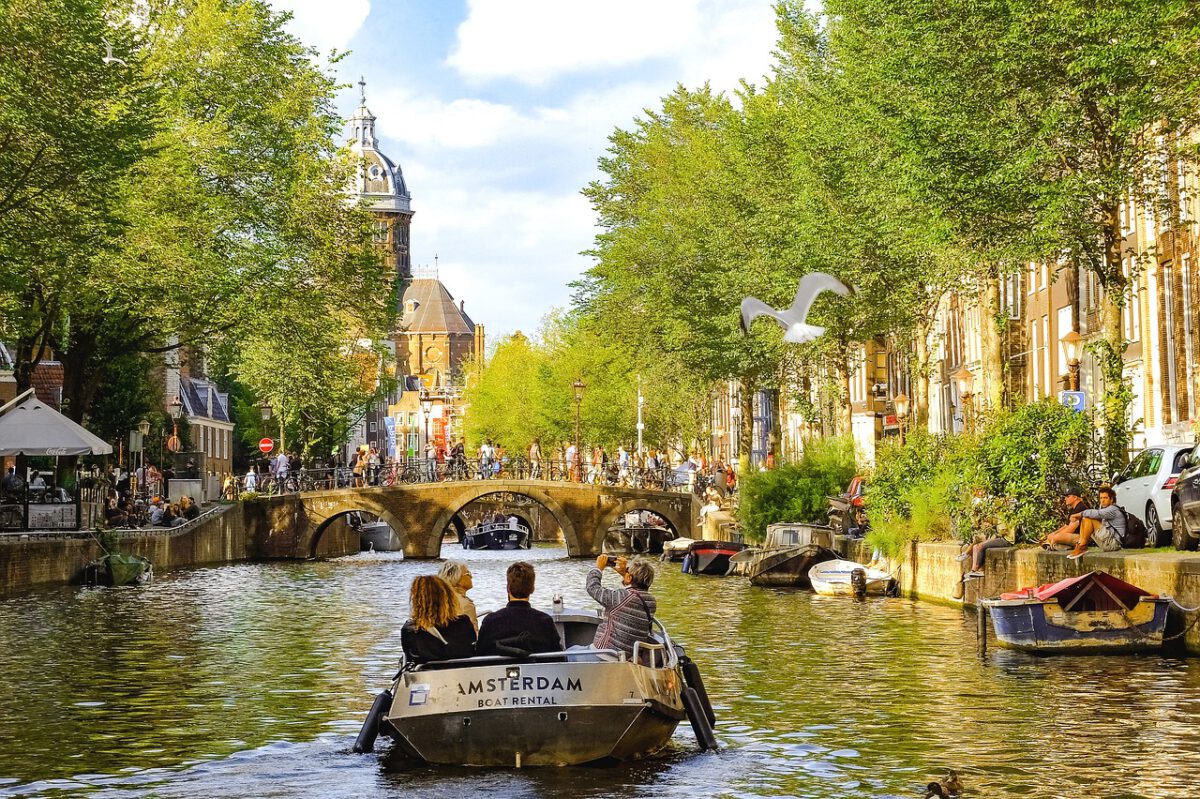
Amsterdam has decided to ban Airbnb vacation rentals in the city’s old centre, and will limit them in other areas of the city as well. The measure comes into effect on July 1. 

Over the past years, concerns about over tourism have grown in the Dutch capital, as they have in many capital cities across Europe. The prevalence and popularity of the home sharing site has meant that locals are pushed out of city centres. In Amsterdam, for example, one in 15 homes have been listed on a website for vacation homes.

The three areas that make up the old city centre include the 500-year-old Red Light District, and most of the inner city canal ring.

In other neighbourhoods in the Dutch capital, homes can still be rented out to tourists through Airbnb, though only under certain conditions. The owner of the house will need to apply for a special permit, and they can only rent the house out as a vacation home for 30 days of the year, to groups of no more than four people.

Although the left-wing Amsterdam city council has been clear on its position on over tourism for a while (it’s not a fan), this ban on Airbnb rentals in the city centre has widespread support. Over 75% of the 780 inhabitants and organisations the council surveyed were in favour of this change.

Amsterdam residents have finally been able to experience Amsterdam without tourists during the coronavirus crisis, and their response was overwhelmingly positive, with some saying that they’ve finally been able to get to know their neighbours.

What are your thoughts on the ban? Let us know in the comments below. 

Feature Image: na4ev/Pixabay