Drug trafficking or drug use are witnessed by a quarter of the Dutch population, according to new figures from the Central Bureau of Statistics (CBS).
The new CBS report indicates that 24.3% of people aged 15 and older have drug use or trafficking occurring in their neighbourhoods. Just 4% of respondents said they experienced the drugs as a nuisance.
The report is based on data from the 2019 Safety Monitor, in which 135 thousand residents were asked questions about drug nuisance (among other things), in their neighbourhood.
Large cities most affected
Drug use and trafficking are most often seen in large cities. The CBS evaluated the regions with the most police activity as the baseline for the figures. This included the areas for the Netherlands’ 167 regional and local police teams.
The numbers vary greatly between regions. For example, drug use and trafficking are only seen by 14.1% of the population in the Groningen-South base team region, versus the 78.8% in Centrum-Burgwallen, Amsterdam-Noord.
Seen also in border areas
Drug trafficking and use are also reported to be above average in areas near the German and Belgian borders. Half of the residents of Kerkrade (in southeast Limburg) report the occurrence.
Heerlen and Maastricht also see high numbers, with 4 in 10 indicating drug use or trafficking in their neighbourhood.
A nuisance in Amsterdam
In addition to reporting the highest levels of drug activity, Amsterdam reports the most nuisance. Over a quarter (27%) of Amsterdammers indicate that they are bothered by the drug use they see. This is nearly seven times higher than the 3.9% average in the Netherlands.
Of those who experienced drug activity as a nuisance, almost half (46%) also say that the quality of their neighbourhood has deteriorated in the past 12 months. The same people are also more likely to indicate other forms of nuisance, such as drunk people or young people loitering.
Over half of the GGDs in the Netherlands can now no longer provide tests within 48 hours as promised. This is largely due to an influx of people wanting tests who have no complaints or symptoms at all.
Many people returning from Orange-zoned areas return to the Netherlands and want to be tested despite seeming totally healthy. Young people returning from travels are impatient to quarantine at home for 10 days, so apply for tests to shortcut this. GGD director Sjaak de Gouw added: “or people who want to go to a wedding or are going on holiday soon. People come with all kinds of reasons to get tested”, reports NOS.
De Gouw is concerned that with waiting times for tests increasing, those with symptoms will decide to go to work before receiving their test results. Increased waiting times have caused many nurses and teachers to stay at home longer, delaying important healthcare and education services.
Increased capacity
The GGD director has attributed funds towards increasing testing capacity, but warns that even so, if too many without symptoms continue to get tested, the system will not cope. MKB-Nederland also wants to help expand testing capacities and wants to create speedy testing for business communities in particular.
It is crucial for testing times to be as short as possible in order to contain the coronavirus. De Gouw is therefore urging the public to only get tested if they show symptoms.
Facebook removes the biggest Zwarte Piet pages from its platform. The social media giant announced a few weeks ago that it would be banning images and videos of Zwarte Piet, with exceptions for material that was oppositional in nature.
So far, the pages affected have been those with thousands of followers, such as Zwarte Piet enthusiasts (with over 52.2 thousand likes), Action Group Zwarte Piet (44.6 thousands likes), and Red Zwarte Piet (30 thousand likes), reports NU.nl. These pages have been taken down, and people visiting will receive a notification that the content is not available.
Facebook has allowed some Zwarte Piet pages with fewer followers to remain. For example, the private group PRO Zwarte Piet page, with 17.3 thousand members, is still available. Other still-existing pages have even fewer followers. Members can report images that violate the blackface policy.
A movement to end blackface
The Zwarte Piet ban was part of a global approach to addressing blackface, aiming to stave off harmful stereotypes. Facebook stated in its ban that “plain black face paint or make-up that has been used to darken the colour of the face, along with other stereotyping features such as a wig with curls or large lips’ will be prohibited.”
Computerised reporting
For now, Facebook relies on users to report content featuring the banned character, but that is expected to change. A Facebook spokesperson said the goal is to “eventually use artificial intelligence for blackface policy, as we already do a lot for other house rules.” The technology still has a way to go, and Facebook wants to ensure that that freedom of expression isn’t compromised.
PVV leader Geert Wilders has been on trial for the past six years following a question he asked back in 2014.
Wilders asked his supporters if they wanted “more or less Moroccans” following the 2014 municipal election results, and the crowd responded with a chant of “less.” Wilders followed this response with, “then we’ll arrange that.” Wilders had apparently made similar statements a week earlier at a market in The Hague.
This public interaction incited 6,474 people to report Wilders to the Public Prosecution Service (PPS) for discrimination, which has resulted in a six-year trial.
A controversial figure
Labelled as a populist and far-right politician by the media, Wilders is a controversial figure, well-known for his campaigns against the “Islamisation of the Netherlands” and the immigration of people from Muslim countries.
Indeed, Wilders has gone to court for similar offences in 2010, in which he was accused of inciting hate and discrimination. He was not found guilty in this case. In 2016, Wilders was found guilty of inciting discrimination and hate against Moroccans but he was not punished for this offence.
The question of free speech
What makes this trial against Wilders so difficult is that it deals with the question of free speech. The PPS decided to prosecute Wilders for his speech in December of 2014 but Wilders and his legal team quickly appealed the ruling of the judge.
The judge had found Wilders guilty of group insults and indictment to discrimination but not of hate speech. This led to the PPS also appealing the ruling.
Wilders has argued that he was only referring to problems and solutions that were in his election manifesto and that he clarified that he meant not all Moroccans shortly after the chanting.
In the appeal, which took place in 2018, Wilders argued that another politician, Alexander Pechtold should also be on trial given that he said similar things of Russians.
A conviction will be difficult
Reporter Mattijs Van de Wiel has told the NOS that conviction will be difficult today and it is unlikely a judgement will be given. “Because this case touches the boundaries of freedom of expression, it is complicated and there are few court rulings on what the court can fall back on. That is why there is a good chance that this case will not come to an end this afternoon.”
At 5pm yesterday, a train on route between Weert and Roermond in Limburg collided with a truck at an intersection. The train route will be shut down until at least 2pm today.
Police reported that the truck driver, who jumped from the vehicle before the collision, was unharmed. Two of the train passengers have minor neck injuries and are being cared for, but most of the damage was to the truck and train. Police are still investigating the cause of the incident.
Below is a video taken of the collision:
Vrachtwagen botst met trein tussen Roermond en Weert.
Het treinverkeer tussen Roermond en Weert ligt donderdagavond stil door een aanrijding tussen een vrachtwagen en een trein.
Het ongeluk gebeurde rond 17.00 uur op de spoorweg aan de Brandeweijer in Roermond. pic.twitter.com/SLRrrljDKw
ProRail employees worked through the night to repair the damage, but the rail company reported that the damage is “greater than expected”. The rails, level crossing installation and the catenary portals were all extremely damaged and must be totally replaced, reports NOS. The train and truck of course received the brunt of the damage, and were removed from the scene last night.
Route closure
As a result, no trains will run between Sittard and Weert until at least 2pm today. In the meantime, buses will be provided for passengers travelling through this region of Limburg.
Hold onto your hockey sticks, a new UNICEF study shows the Netherlands is the best place to be a kid. Dutch children rank highest for happiness.
The UN children’s rights organisation conducted a study about the mental health, physical health, and academic and social skills of children aged 0 – 18 in the 41 wealthiest countries. The research shows the Netherlands is the number one place to be a kid — it received the highest overall score, followed by Denmark and Norway.
Ranking highest also in life satisfaction, children in the Netherlands are a whopping 93% satisfied with their lives. Mexico and Romania follow, with 86% and 85%, respectively. In the majority of countries, children are under 80% content. Children are the least satisfied in Turkey, with 53% reported satisfaction.
Nobody’s perfect
But it can’t be all sunshine and tulips. The Netherlands came in 9th place for children’s physical health. While that’s still in the top ten, a quarter of Dutch children are overweight. However, the UNICEF report emphasises that no country ranks high in each category.
In social and academic skills, the Netherlands gets the bronze, and UNICEF Netherlands says the country can do better. “We know from our recent Geluk Onder Druk study that Dutch young people experience the most stress due to school pressure. As the school pressure increases, young people experience more emotional problems and less life satisfaction,” says Suzanne Laszlo, director of UNICEF Netherlands.
Have you noticed that children are happier in the Netherlands? Why do you think makes them so happy?
Today, the house of representatives will debate an initiative that wants to ban legal prostitution. The CDA has proposed that the act of paying for sex should become a criminal offence.
CDA member Anne Kuik will file a motion today in which she will ask that the cabinet investigate what is needed to criminalise the act of paying for sex. This motion is expected to be supported by other governmental parties such as the SGP and ChristenUnie, who have argued for years now that paid sex should be banned.
However, Kuik has argued that her reasoning is not based on religious grounds, reports AD.nl.
It’s not about religion, it’s about female emancipation
The CDA member has said that she hopes to tackle female inequality through the banning of prostitution.
“For me it’s about emancipation and protecting women in a vulnerable position. Prostitutes, mostly women, are treated unequally. Which woman thinks it is fantastic that dozens of men come by one day and do whatever they want with her? Stop it. Nobody wants that.”
Kuik has pointed out that whilst most Dutch parents would not like to see their daughters become sex workers, they are happy to let women from poorer regions of the world do the work. “Look at the Red Light District, 95 percent of the prostitutes come from poor areas in Eastern Europe.”
The CDA MP argues that this is hypocritical and indicates that only women with few financial options will actually do sex work. “Most prostitutes wouldn’t really want to have sex with the man in front of them. But it still happens, because it is paid. The consent is therefore bought off, the woman is a product.”
Only arrest the buyers
Kuik will argue for the implementation of a model of criminalisation that is similar to Sweden’s current “equality model.” In Sweden, only the buyer is arrested and not the worker. The Swedish government claimed that in 2010, the amount of street prostitution had been halved.
The CDA MP believes that criminalisation will lead to quicker detection of human rights abuses. “There is no gray area anymore, it is simply not allowed. As a police you can therefore intervene more quickly. And it deters criminals: you can now see that in Sweden too, human traffickers bring fewer prostitutes to that country.”
However, the Dutch government fear that in criminalising prostitution, the work will only go underground and therefore become less regulated.
Not likely
For this reason, the chance of criminalising paid sex in the Netherlands is very low. Both D66 and the VVD believe that it is best that the act of paying for sex remain legalised. This way, the conditions of the workers are more accessible to authorities.
However, Kuik has argued that the legalisation of prostitution has not helped prevent abuses against workers. Workers can still fall victim to abuse and trafficking at the hands of those who run the brothels.
“You have to be realistic. Abuses and prostitution will continue to exist, but as a government you must do everything you can to prevent it. And make no mistake, a lot is already happening in the Netherlands in illegality.”
The debate surrounding the legalisation of sex work in the Netherlands has been a long one and has attracted much attention from other countries. Some would argue that sex work should be treated like any other job, and that the act of choosing to sell your body is an act of female emancipation, others argue that it should be criminalised.
Where do you stand in this debate? Let us know in the comments below!
Customs at Rotterdam port have found everyone’s favourite three dinner foods, shrimp, wine, and cocaine, nicely nestled alongside each other on a ship coming from Ecuador.
Now obviously, it’s the shrimp that’s the problem (why do people willingly eat food that looks like fat worms?), but the customs officials have decided to focus instead on the cocaine.
The shrimp, cocaine and wine were all discovered in two refrigerated containers, which were bound for a business in Rotterdam. According to customs, that business doesn’t seem to have anything to do with the cocaine.
In total, customs came across 260 kilos of cocaine, across two separate containers. It was divided into 1-kilo bags.
The Public Prosecution Service in Rotterdam, customs, FIOD and seaport police are all looking into the origin of the cocaine, which has since been destroyed. Unfortunately, the shrimp are fine.
You can follow DutchReview on Facebook for more updates on news in the Netherlands, or for more shrimp hatred – whichever floats your container ship.
Research agency Ipsos recently conducted a survey that revealed that most Dutchies want to be vaccinated if an effective vaccine becomes available. But there are some that don’t want any vaccine, and some that are still on the fence about it.
According to the survey, 13% of the Dutch do not want to be vaccinated, and 16% are unsure. That means a majority of 70% of Dutch people want to be vaccinated when a suitable vaccine in available, reports AD.
The main reasons for those choosing not to take the vaccine are concerns over safety and effectiveness of the vaccine, as well as a fear of the side-effects. Almost half also opt out based on fundamental considerations, besides religious ones.
Of those who are against vaccines in general, 87% would also refuse to take a coronavirus vaccine.
Prototype vaccine
Leiden University Medical Center, PRAHealthSciences in Groningen and the UMC Utrecht have started testing a potential new vaccine. 135 people have volunteered as test subjects, who will receive three injections of the vaccine.
Marc Bonten, medical microbiologist and principal investigator of the Utrecht part of the research, was pleasantly surprised by the number of participants. “The mailbox was overflowing with messages from people who want to participate in the study. We therefore have enough participants. It’s great to see that people are willing to cooperate so quickly in the testing of a vaccine.”
The prototype vaccine will be tested in two phases. Phase one will take place in Belgium and the US, and will test for the safety of the drug. In phase two, healthy people are vaccinated and followed for a year to monitor possible effects.
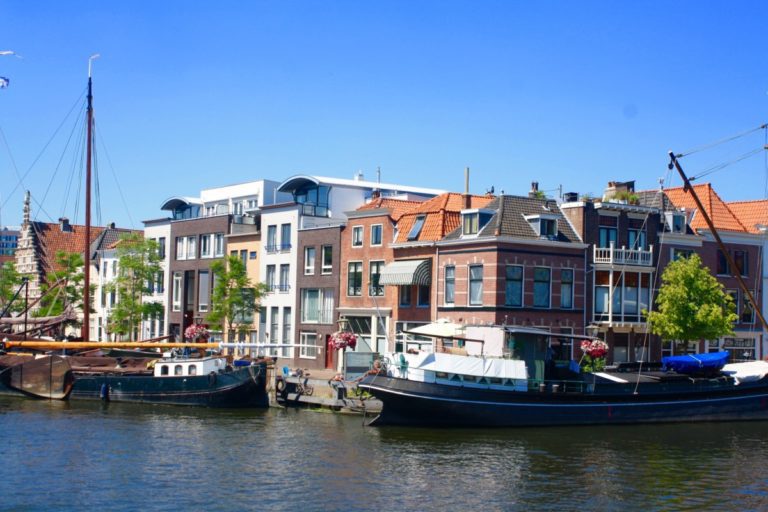
Do you want to check out a beautiful Dutch city that isn’t Amsterdam? Are you eager to prove to your friends you travel “off the beaten path”? Or do you simply want respite from touristy and crowded cities? Then consider Leiden! We have all the tips and tricks on where to shop, eat and drink to ensure your trip to Leiden is a good one.
Leiden is a bustling and picturesque town centrally located in between Amsterdam and The Hague. Leiden University, which is nearly 435 years old, attracts students from all over the world who are eager to learn at one of the Netherland’s top universities. The fresh faces that arrive each university year keep this historic town young and vibrant.
The Heineken factory is located not far from Leiden and the delicious beer is consumed in many of the bars and restaurants that spill onto cobbled stone pathways and border picture-perfect canals. The appeal of this quaint town is enhanced by its proximity to the North Sea and the many lakes with abundant sailing facilities — all of which are within cycling distance.
Before we get going with this guide to Leiden, you might be thinking ‘I want to move to Leiden!’. Well, luckily for you, we have all the info you’ll need upon arrival to this beautiful student town.
Visit Leiden — Here to get your journey started
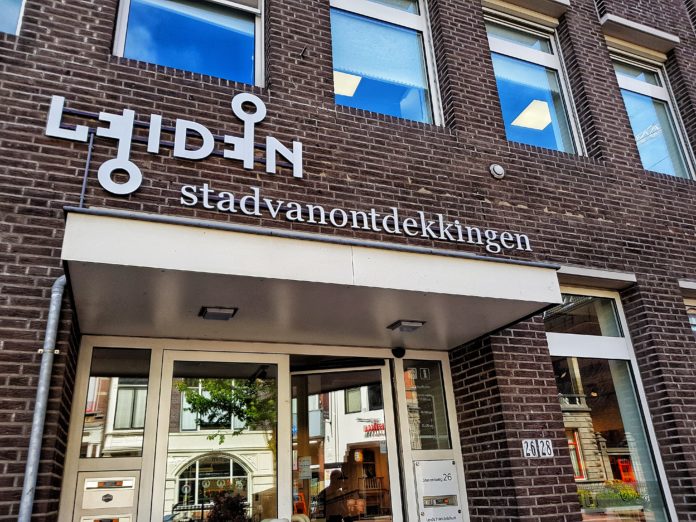
For all other questions regarding where to shop in Leiden and such, we can’t recommend enough to check in with our friends at Visit Leiden! If a digital visit isn’t enough, then you also visit them physically, they are located right in front of the Leiden Station if you need them (Stationsweg 26). They’re in the same building as the Tourist Information Center of Leiden, so that’s handy.
Pop on over to Visit Leiden for some touring tips! Image: DutchReview/Supplied
Best Bars in Leiden: where should you grab a drink?
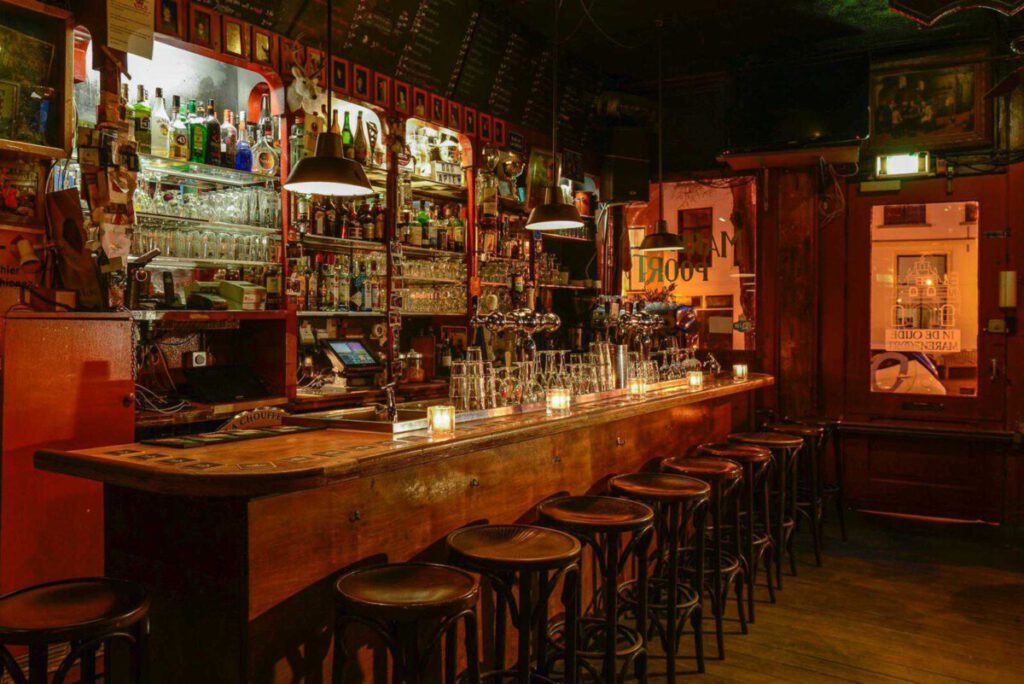
Café in de Oude Marenpoort — for a true Dutch drinking experience
The first place we recommend trying is Café in de Oude Marenpoort (or De Mapo, as locals call it.) Head here if you’re looking for an authentic Dutch experience. Not only will you find a cosy and classic Dutch interior, but you are also guaranteed to find some cheerful, jolly Dutchies and to become equally jolly yourself in no time (4 delicious G&T’s and you’ll be spinning till well into the following afternoon.)
Look at how cosy this is! Image: John Brussel/Supplied
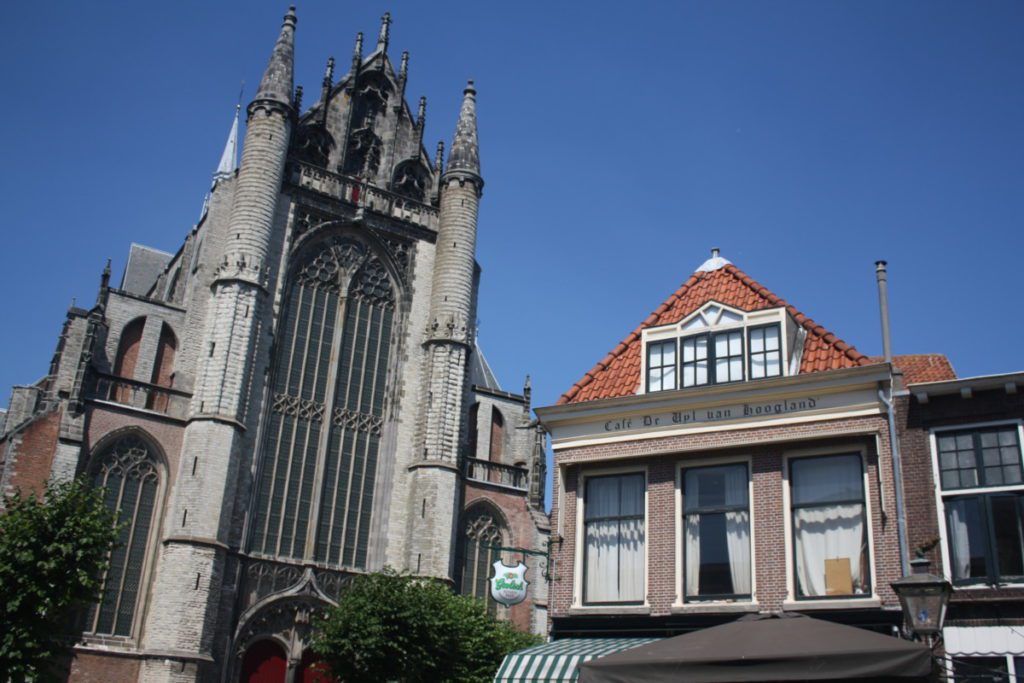
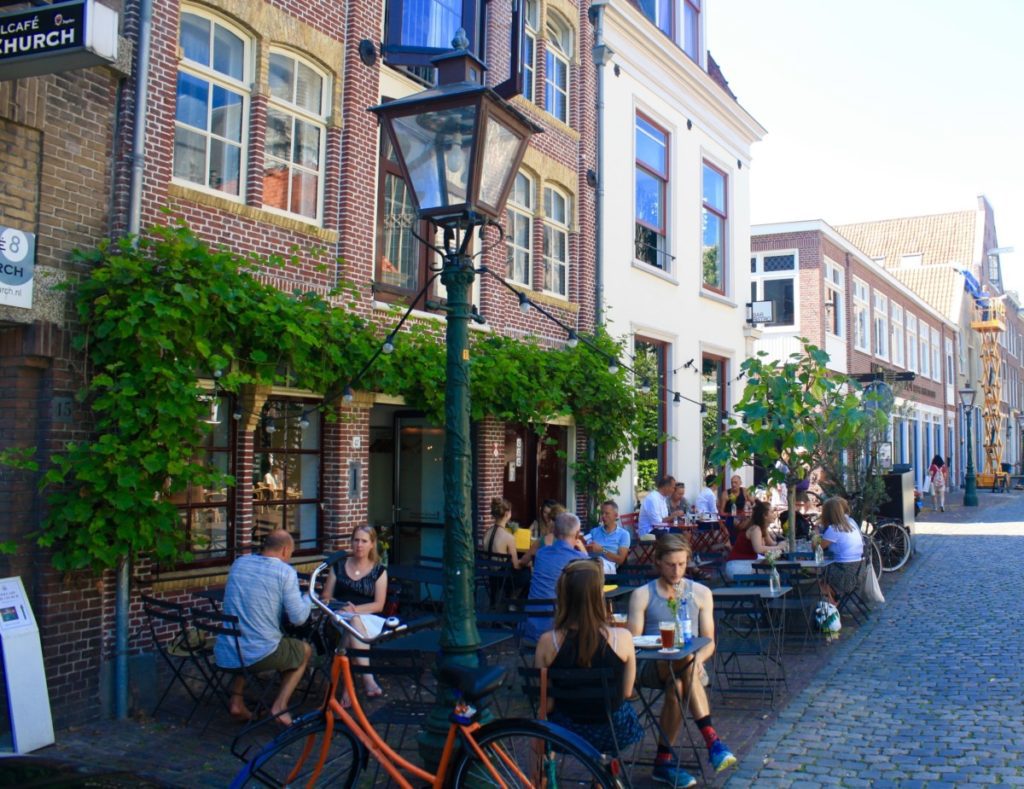
Cafe De Uyl van Hoogland – If you’re looking to drink next to a church
De Uyl is located on Nieuwstraat 28 in the historic centre of Leiden and boasts a terrace that overlooks the Hooglandse church. This bar, which has been around for about 40 years, keeps growing in popularity. Order a cheese platter and a delicious beer and watch the world go by.
Look at that view! Image: DutchReview/Supplied
Proeflokaal 1574 — For the fancy folk
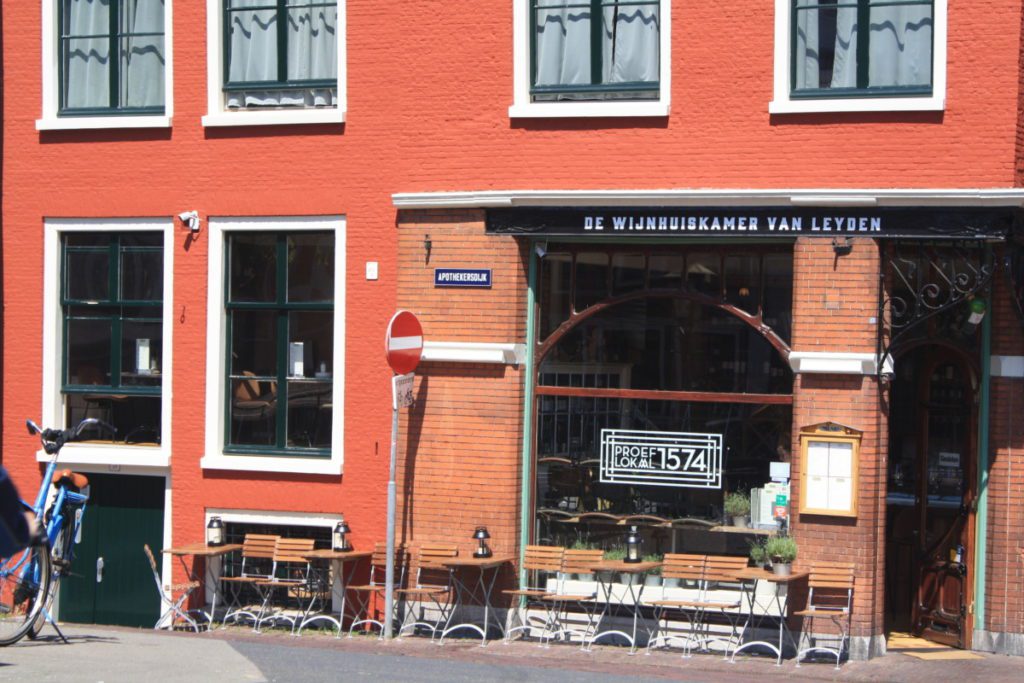
Located at Apotherkersdijk 38, three friends teamed up and put their vast experience in the food industry to use when they opened Proeflokaal 1574 in 2018. This bar is known for its lovely atmosphere and top quality wines that they scoured while touring Europe searching for the best wines.
This charming wine bar will blow away your taste buds. Image: DutchReview/Supplied
Cafe de Bonte Koe — the cosiest of them all
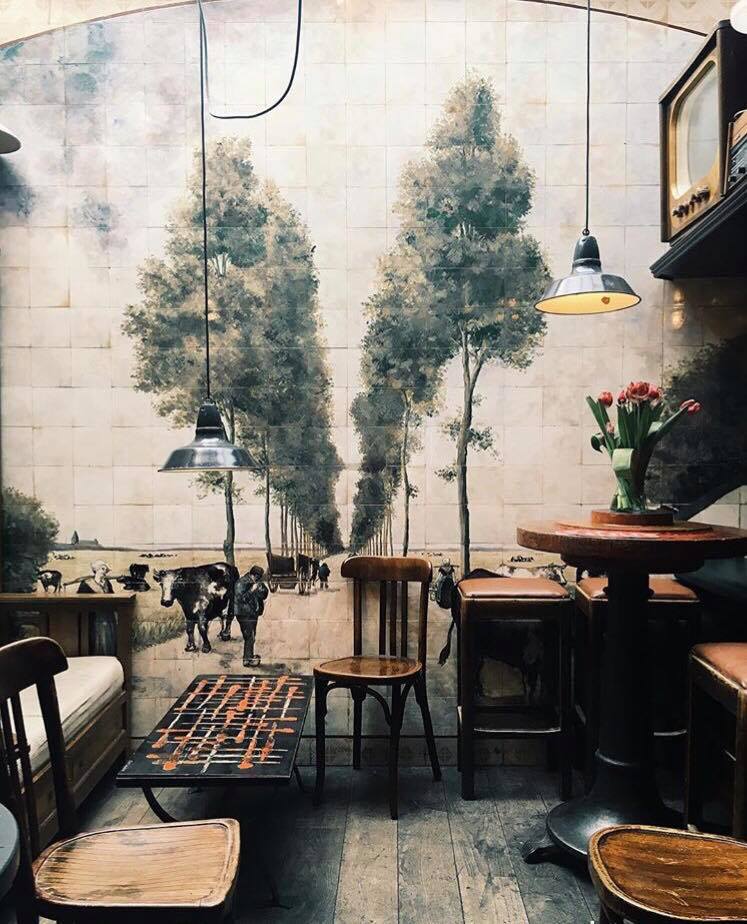
You’ll find Cafe de Bonte Koe at Hooglandsekerk Choorsteeg 13. The interior of this bar was originally designed for a butchery that never came to be and has remained unchanged ever since. Such a well-preserved 19th-century building with tiled walls is rare in the Netherlands.
Check out that interior! Image: gypsyfloral/Instagram
Cafe de Bonte Koe source all their beers independently and are not in contract with corporations such as Heineken which gives them the freedom to source top-quality products from smaller companies. They have nine tap beers, speciality bottled beer and a range of wines.
Twee Spieghels — drink and enjoy some great live music
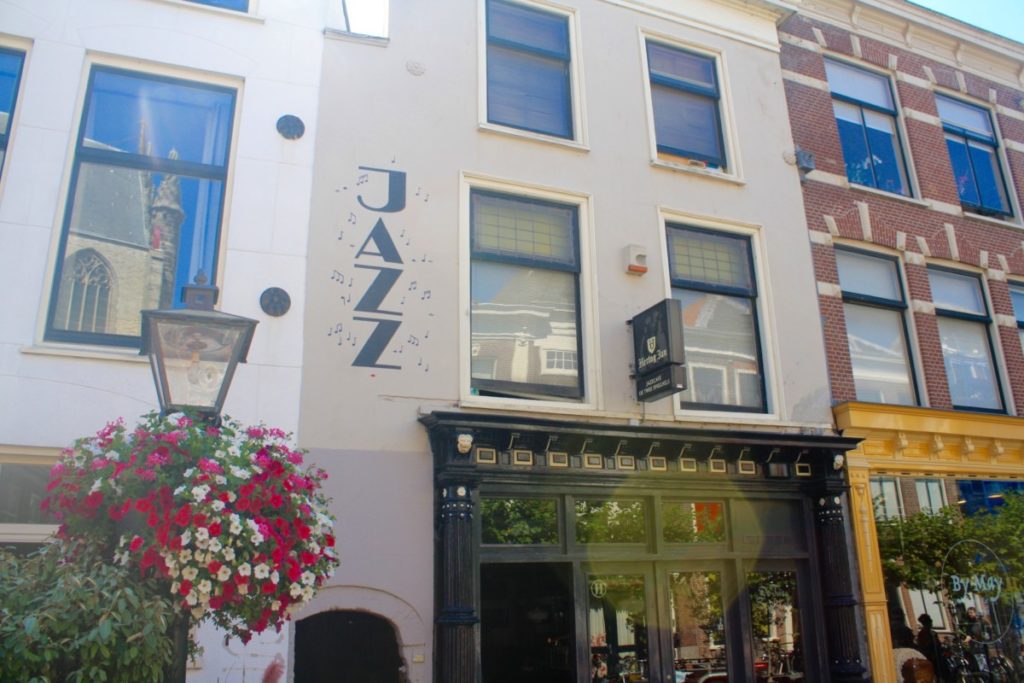
Up for something different? Grab a few friends and head along to De Twee Spiegels. This charismatic cafe is one of the finest jazz and wine bars in Leiden. You can find it right next to the Hooglandse Kerk on Nieuwstraat 11. They have free live music every Monday and host regular shows by fantastic musicians.
D’ya like jazz? Image: DutchReview/Supplied
Einstein — both a Dutch and international treasure
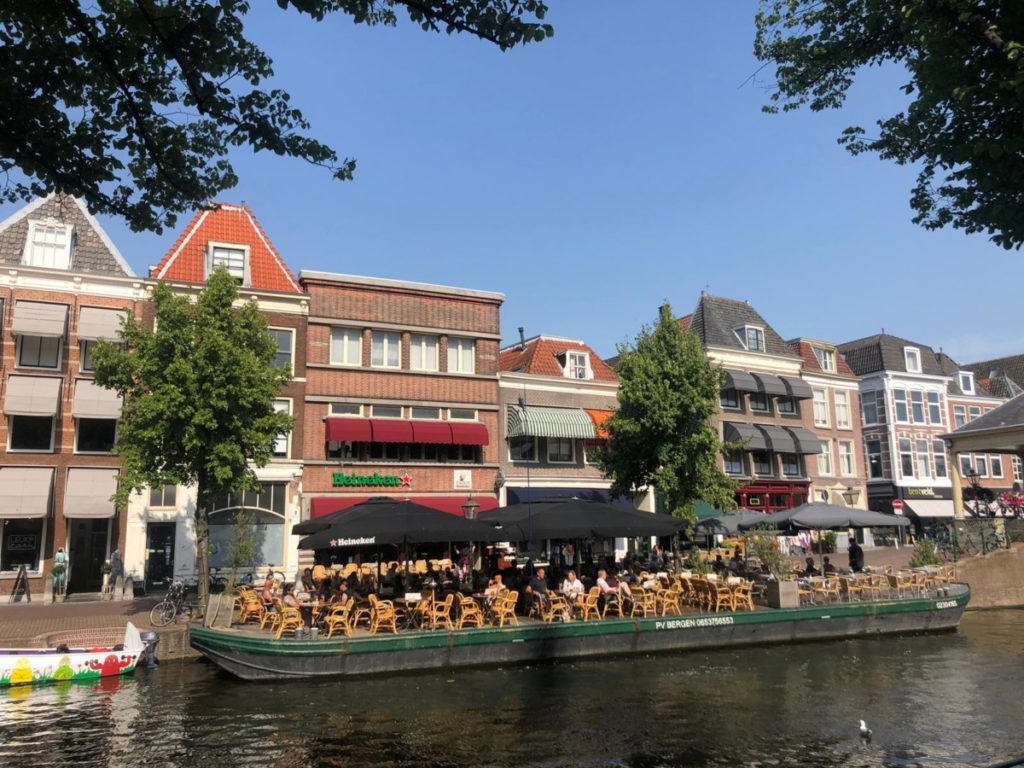
Named after Einstein who lived in Leiden for a couple of years. Einsteins are centrally located at Nieuwe Rijn 19 and have a primely located terrace next to the canal. Here you can sit and read a book and watch the world go by. Or if you’re feeling something a little wilder, it also hosts an international student drinking night every Wednesday that starts at 10 pm and if you don’t care about your Thursday university classes, then stay on until 3 am!
Don’t feel like sitting inside? Chill on the canal! Just watch out for seagulls. Image: DutchReview/Supplied
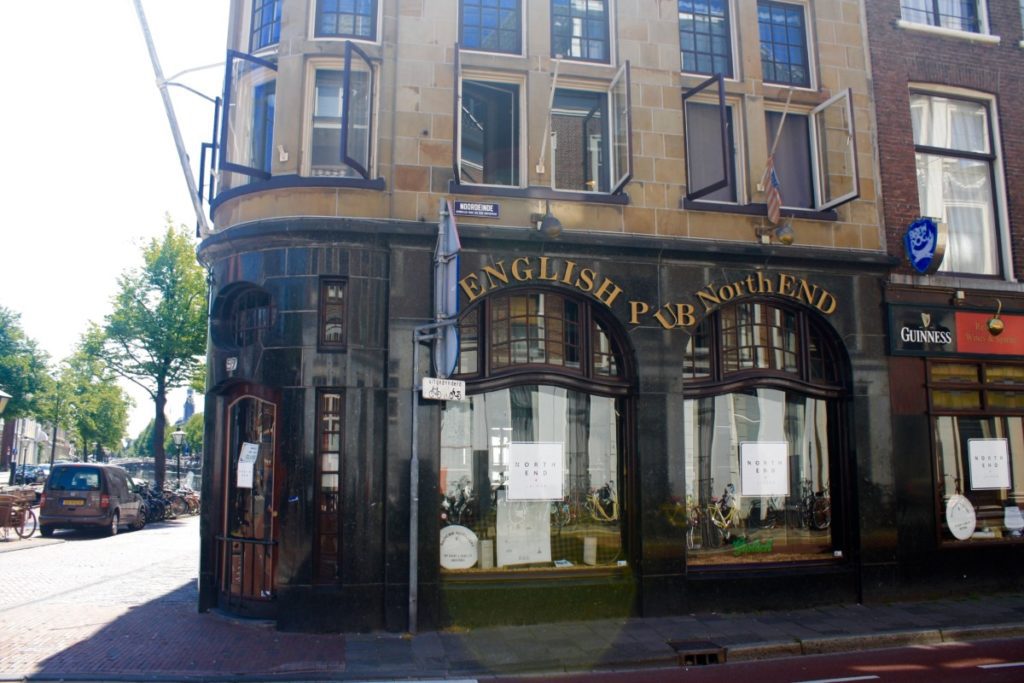
North End — for any homesick Brits
Head here for a British experience. Image: DutchReview/Supplied
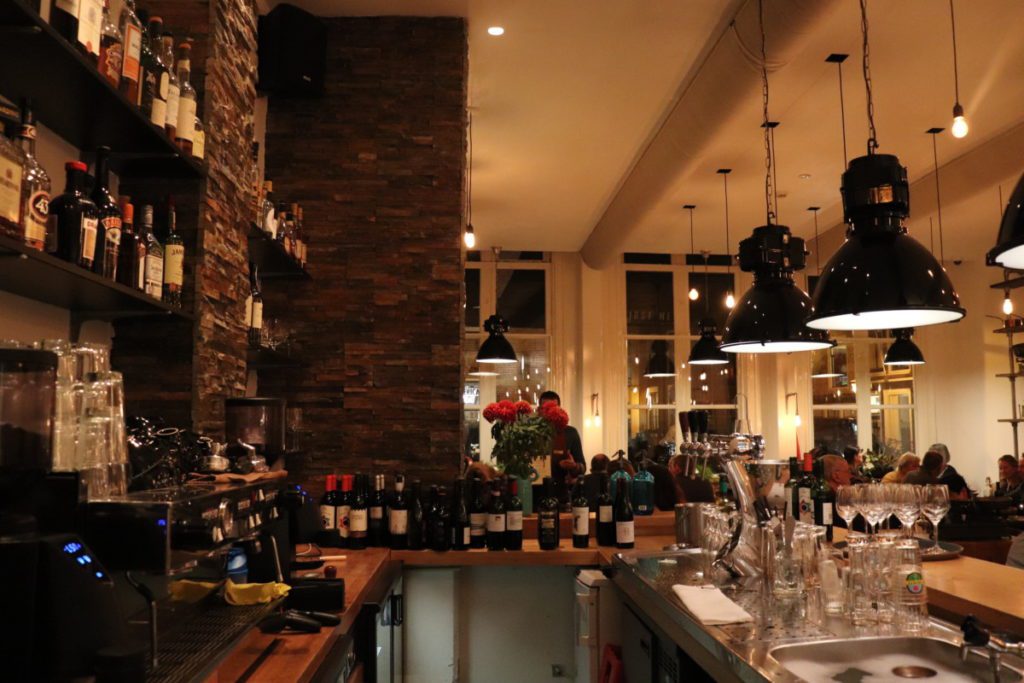
Know a Brit that is coming to the Netherlands? Do they want grubby pub food instead of being cultured and trying Dutch food like bitterballen or frikandel? You can take them to the North End on the similarly named Noordeinde 55, where they can satisfy their British cravings with a carpeted floor and shepherd’s pie.
Stadsbrouwhuis — for some unique craft beers
Located at Aalmarky 1-3, this bar and restaurant opened its doors in 2016 and is a fantastic place to come if you want to momentarily step away from Heineken. Stadsbrowhuis has over 20 unique beers on tap — I had the delicious Kick-Start stout.
The staff are exceptionally knowledgeable and can go into detail about each and every one of the beers so you will definitely find something to satisfy your personal taste. On the menu, you can even find a rating next to each one of the beers which are generated from an app where customers have ranked the tastiness of the drinks.
Lot en de Walvis — drink on the water
This is a classic in Leiden nowadays. Given any sunny day, the excellent terrace of Lot en de Walvis (Lot and the whale) is packed. It has a gorgeous boutique-like terrace which catches a lot of sun all day long, with great views of the little marina next to it.
You’ll find this beautiful place at Haven 1 near Zijlpoort and it is here that you will spot some quintessentially Dutch activities. Many people from Leiden swing by with their boats and dock up to enjoy a drink or even dinner – which is also totally a good idea.
So yeah, there are eating options here too — Lot en de Walvis also could have made it to our next list of places to eat in Leiden!
Best places to eat in Leiden
Had a few drinks too many drinks with your friends and need to soak up the alcohol? Or do you have the munchies and want to try some delicious food? Then here are some of the best places to eat in Leiden.
Just Meet — for the meat lovers
Just Meet is located at Breestraat 18 in a fabulous building. There are two large atmospheric dining rooms, divided by a hallway with a large piano in it and one of the best classic staircases you’re going to encounter in Leiden. The meat is delicious and you can even select what knife the chefs prepare your chosen dish with!
Just look at this fancy interior! Image: DutchReview/Supplied
This restaurant is all about the meat experience, you can see them hand-pick your meat from the curing cabinet, which makes the experience very unique. It is slightly on the pricier side but if you have some extra euros then it is worth a visit.
Aan de Rijn – for the Dutch interior and food
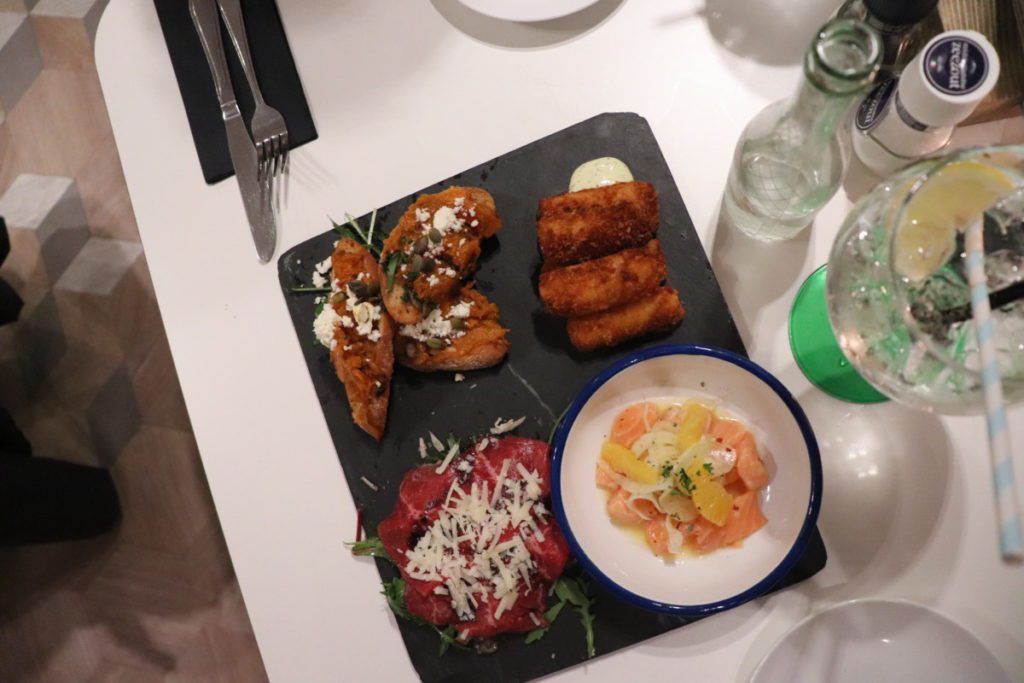
If you’re vying for the classic canal views of Leiden, this is the place to be. Located on the Nieuwe Rijn 37, Aan de Rijn also offers a cosy, modern interior so it’s also perfectly nice to sit inside when it’s raining (as it often does in the Netherlands). Shared dining is the thing here, and they mean it. The idea is that you select a couple of small dishes for a round and they serve it on a wooden board. I recommend the shrimp croquettes (served with a lemon and parsley mayo) and the Buddha bowl.
Mmmmmmmmm. Image: DutchReview/Supplied
Bar Lokaal — great for the vegetarians!
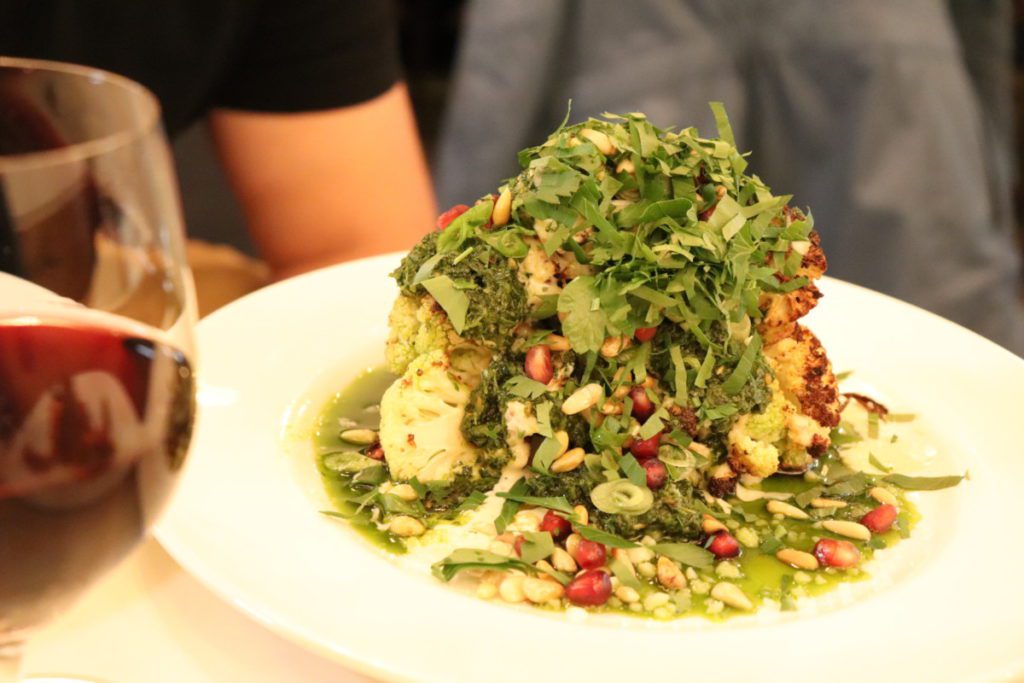
Bar Lokaal is one of the best places for deluxe veggie dishes. But fear not meat-lovers; they’ve got some top-notch cuts and meats as well. The portions (and prices) are a bit larger than Aan de Rijn, so you should be satisfied if you order between four and six dishes. Their cauliflower dish (pictured) is making a name for itself as it tastes spectacular. You can find this little treasure at Hartesteeg 13.
Look at that terrace! Image: DutchReview/Supplied
Try and make a reservation if you want to be sure to have a table there for dinner – this place is packed most of the time. Luckily they do breakfasts and lunches as well.
Image: DutchReview/Supplied
Pizzabakkers in Leiden — for affordable dining
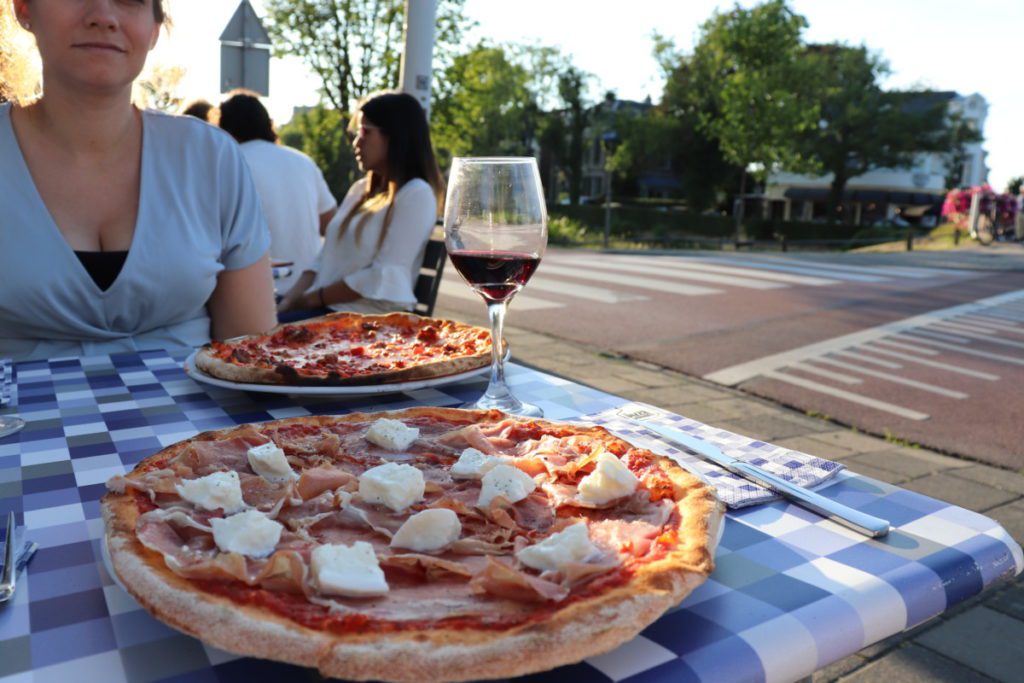
Pizzabakkers is a small and up-and-coming franchise. A few of them are popping up throughout the country (this one popped up at Herenstraat 1 in Leiden) but do not worry! The quality of a delicious pizza is not compromised. The prices are more reasonable as well if you can’t afford to splash out.
Mamma mia! Image: DutchReview/Supplied
I ate the Napoletana and the Prosciutto pizza — both of which were delicious! This place also has a terrace so it is a wonderful way to devour traditional wood-fired pizza while watching the world go by!
The Rooftop at PLNT— A terrace with an incredible view
Isn’t the DutchReview office at PLNT? It sure is! And you might have spotted the rooftop in our instagram stories and posts (we might be a little biased but it is honestly one of the best views of Leiden in the city).
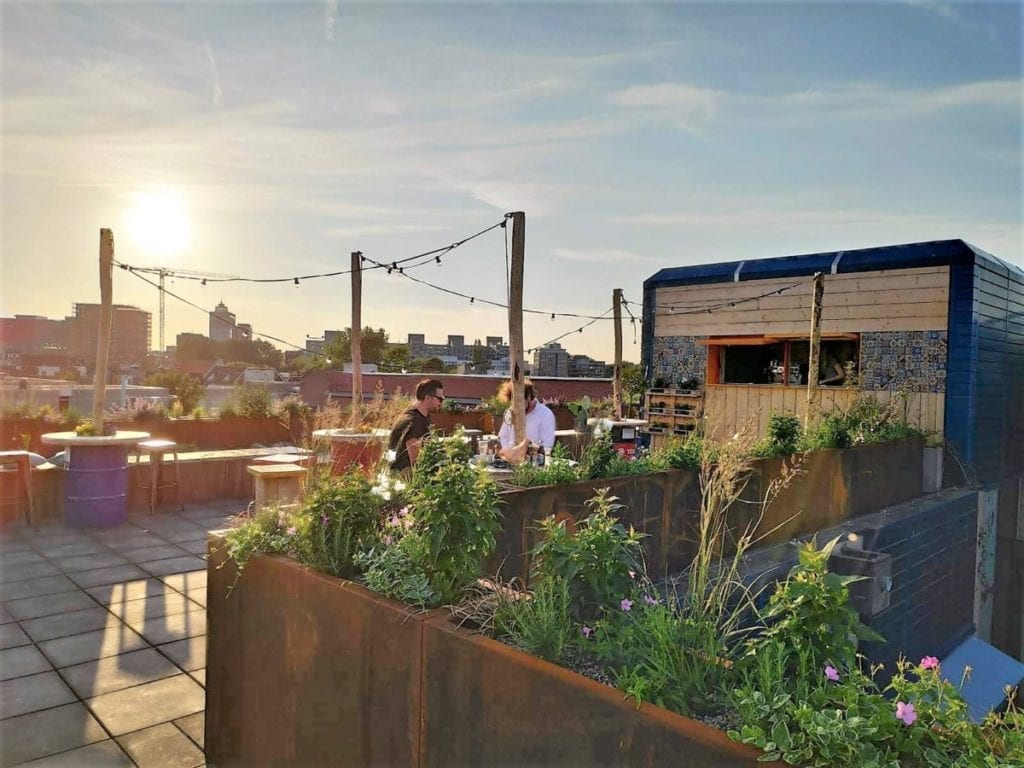
Located at Langegracht 70, the Roof at PLNT is a unique place in the heart of the city and in the middle of the Singelpark. It is covered with beautiful flowers and greenery and boasts stunning views over Leiden and yes, even a chicken coop!
Head on over to our HQ! Image: DutchReview/Supplied
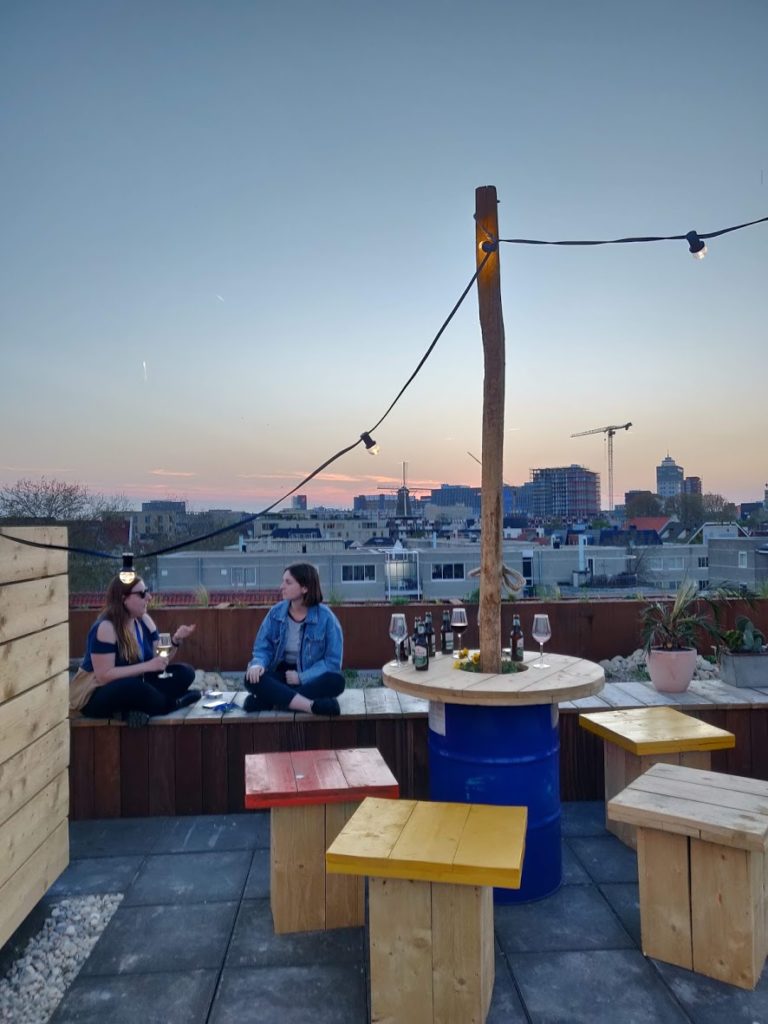
There are events coming up regularly, and whenever there’s good weather (aka no rain) the rooftop is opened from two o’clock in the afternoon. Both at the roof and the indoor binnentuin have plenty of healthy and delicious options and prices are very economical. Given the fact you might just run into us, doesn’t that make a trip here worth it in and of itself?!
Head up for a drink later in the evening. Image: DutchReview/Supplied.
Van der Werff — Close to the station and delicious!
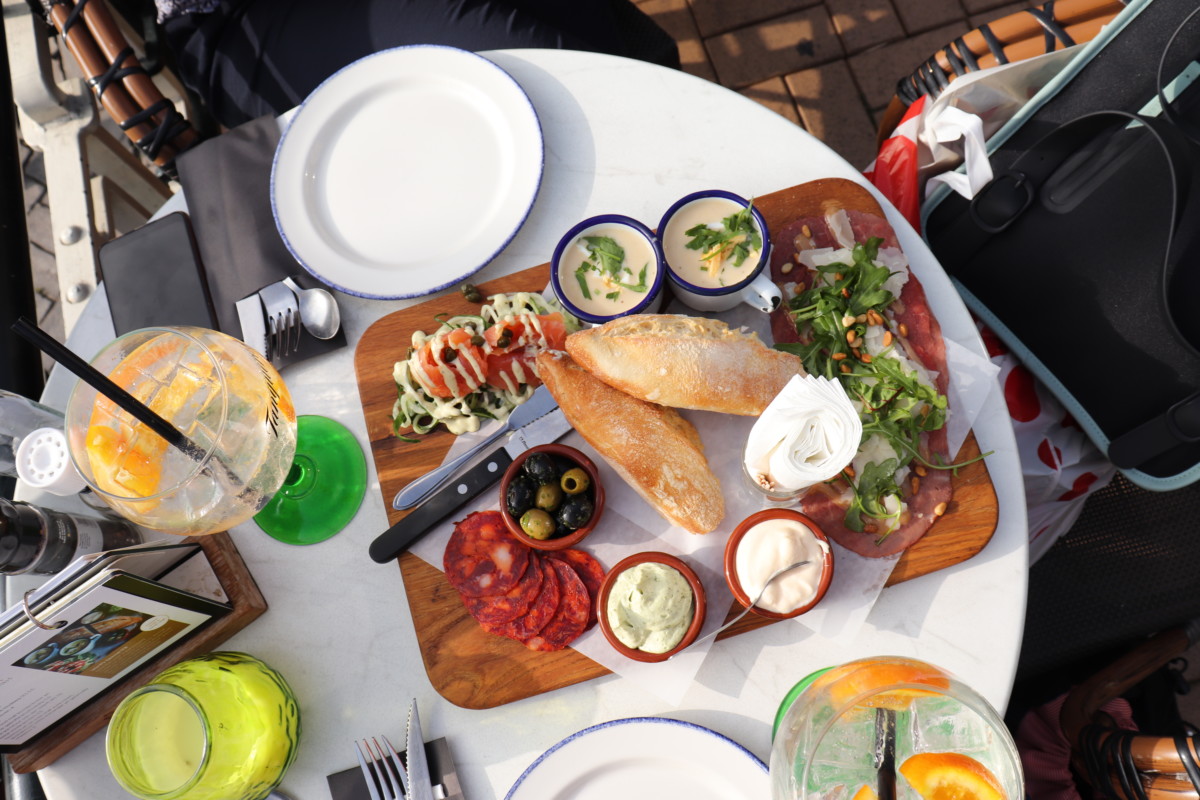
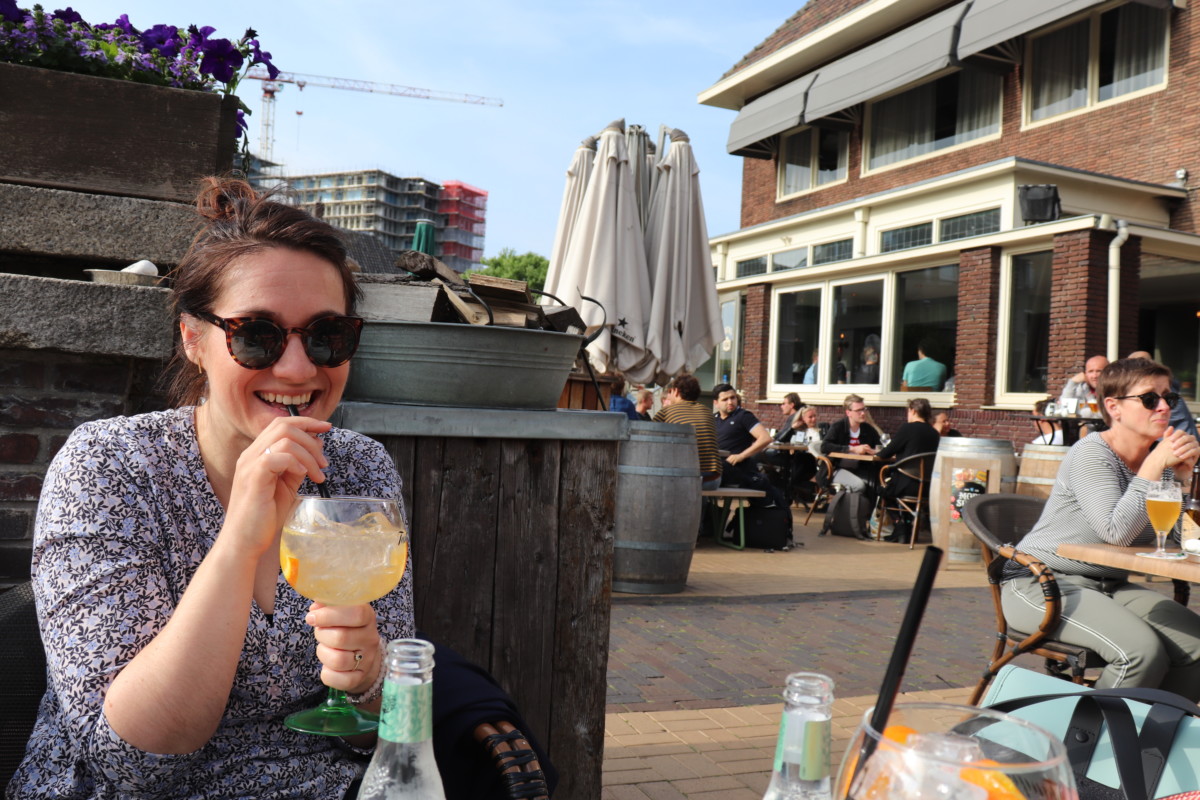
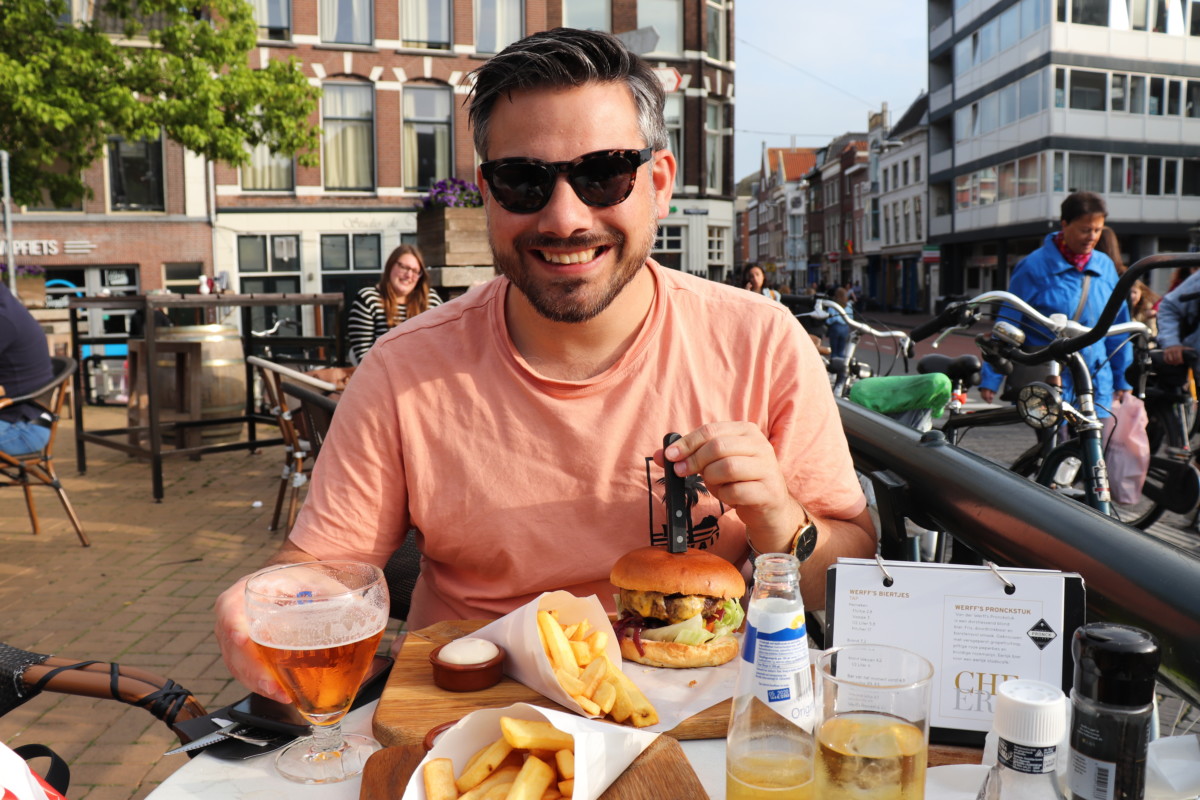
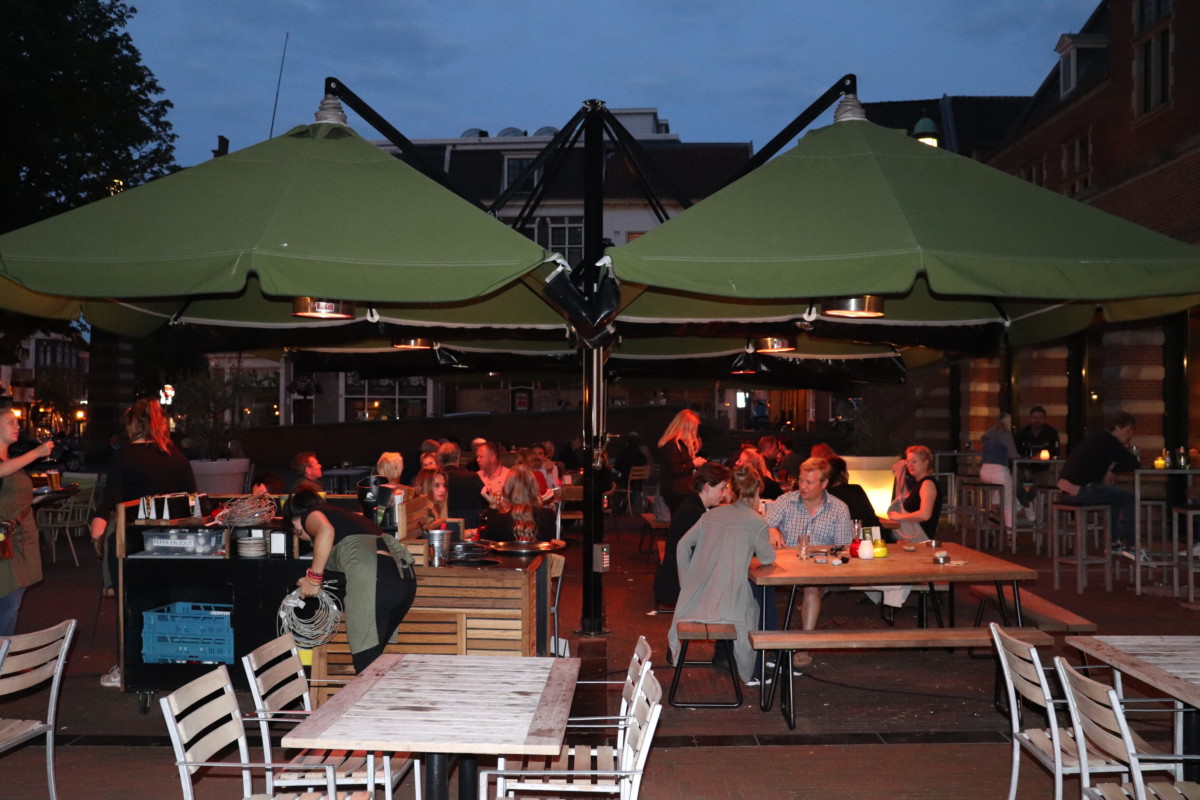
This restaurant offers a big terrace, but also plenty of seating indoors. Located near the station at Steenstraat 2 with a great offering of drinks and some straight-forward-and-delicious stuff on the menu — what more could you ask for? Stadscafe Van der Werff is always a good idea to go if you’re looking for a place to eat or drink in Leiden. Pretty tasty stuff to be had too as you can see in the following pics:
Lekker! Image: DutchReview/Supplied.With some great drinks too! Image: DutchReview/SuppliedLook at that burger! Image: DutchReview/Supplied
Cityhall — eat at the centre of the city
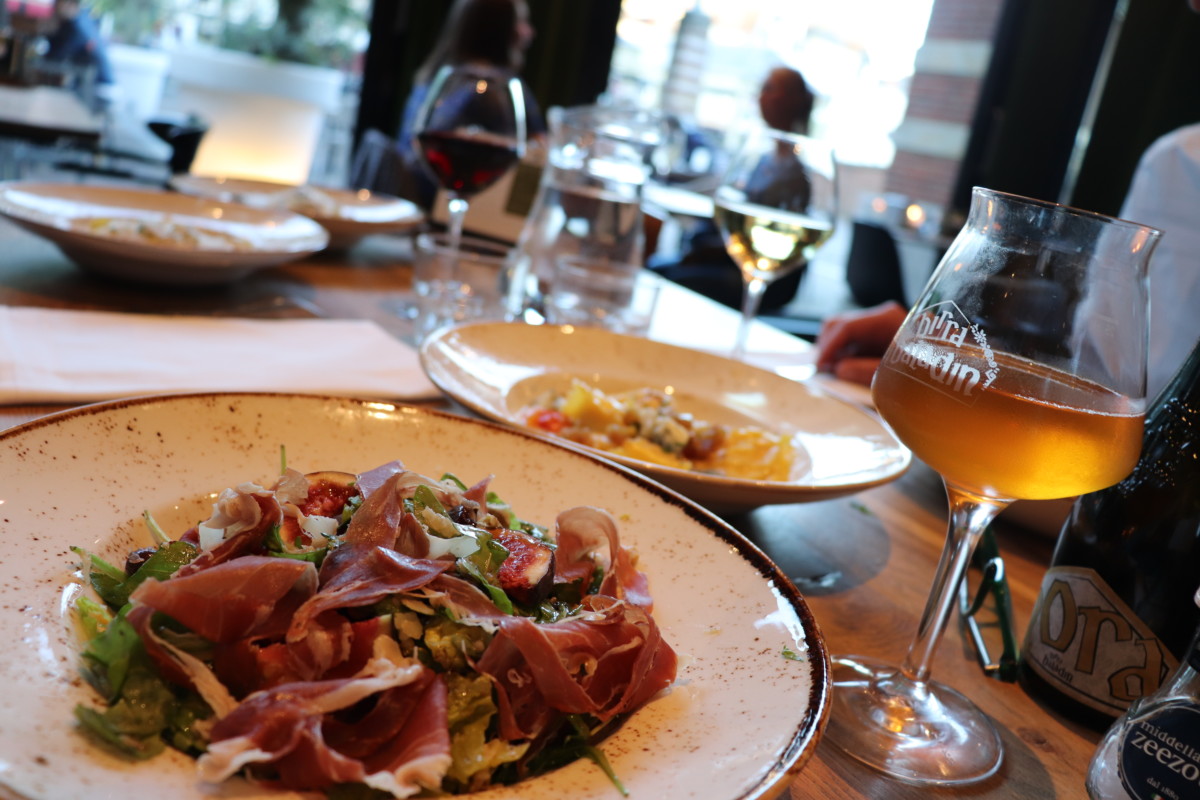
Cityhall is located in the centre of Leiden, right at — you guessed it — the city hall of Leiden (which is something you need to see in Leiden anyways). It has a beautiful terrace, a big indoor area and loads of excellent Italian food to enjoy. Cityhall also has plenty of drinking options available on their menu, so this one could have also easily been under the “where to drink in Leiden” tab.
Chill in the centre of Leiden. Image: DutchReview/SuppliedI am so hungry. Image: DutchReview/Supplied
Vet Gezond — A great place to enjoy good food at reasonable prices
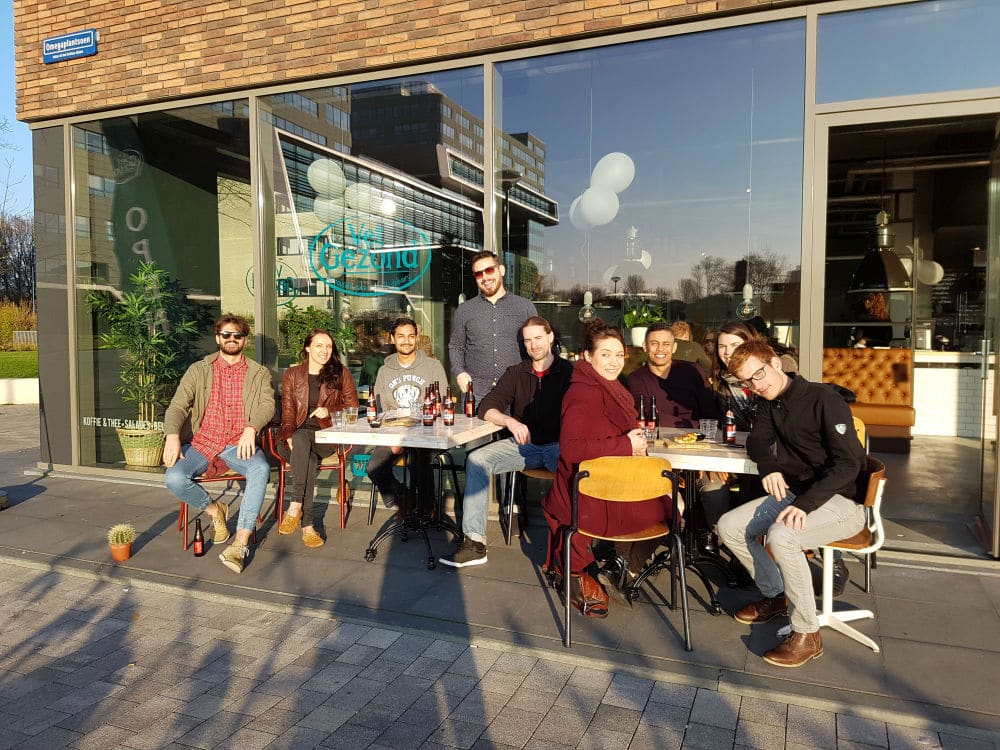
Located near Leiden Lammenschans at Omegaplantsoen 4, the vintage-looking Vet Gezond brings you an excellent selection of both greasy “Vet” and healthy “gezond” food. And all for financially-healthy prices too! All of that makes it a perfect spot to grab some casual dinner on a week-day or have a student meal without succumbing to a heart attack when you see the receipt. You can also follow their Facebook page for some sweet deals.
A great place to just chill. Image: DutchReview/Supplied.
Time for some history! Museums in Leiden
Leiden and Rembrandt
Do you know Leiden is actually the birthplace of Rembrandt? The “Young Rembrandt Studio” is a great museum where you can learn all about Rembrandt and his life.
The Lakenhal museum
This gorgeous and recently renovated Lakenhal Museum has everything from Rembrandt paintings to beautiful dresses made from fabric manufactured in Leiden. We also really enjoyed a stained glass window showing how a newspaper was made- pretty relevant for us, right?
Shopping in Leiden: Where to go and what to buy
After you’ve filled your head with history, why not break up the day by going shopping? Everything in moderation after all, right? Here are our recommendations for a great and unique shopping experience in Leiden.
Babooka — the weirdest bookshop in Leiden
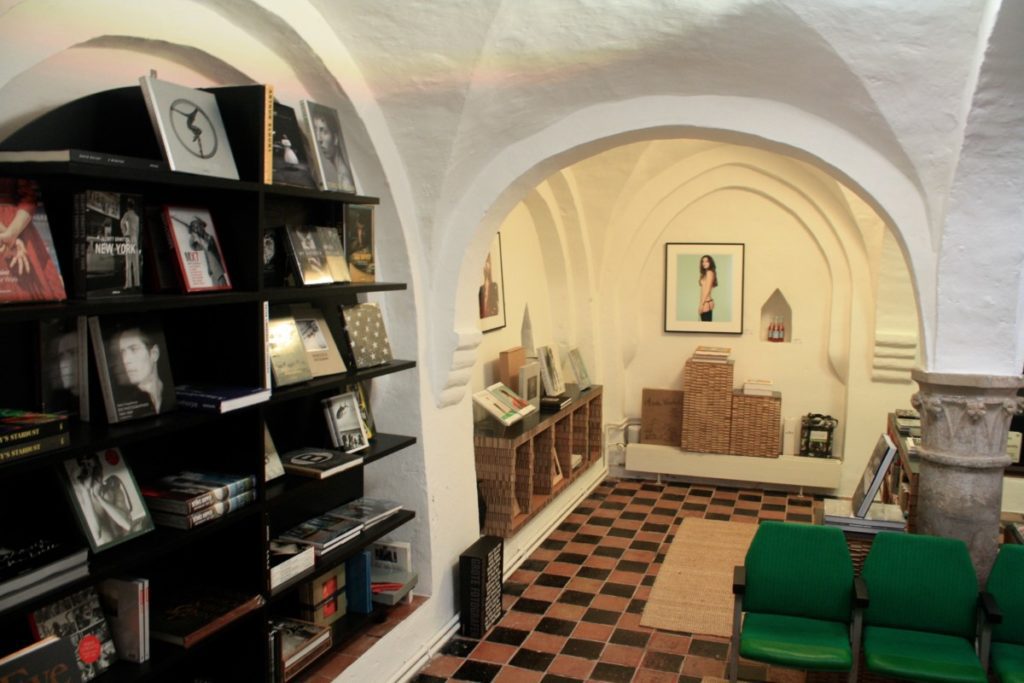
Babooka is a bookstore situated on Breestraat 113 opposite the grand Leiden City Hall. This architecturally beautiful building boasts a plethora of attractive and interesting coffee table books. Themes range from Warhol, to contemporary houses, to vintage bicycles. So you are sure to find something that piques your interest. Head along to this bookshop and have a look.
Check out these wacky books and wacky interiors! Image: DutchReview/Supplied
VNTG — for those who love a good haul
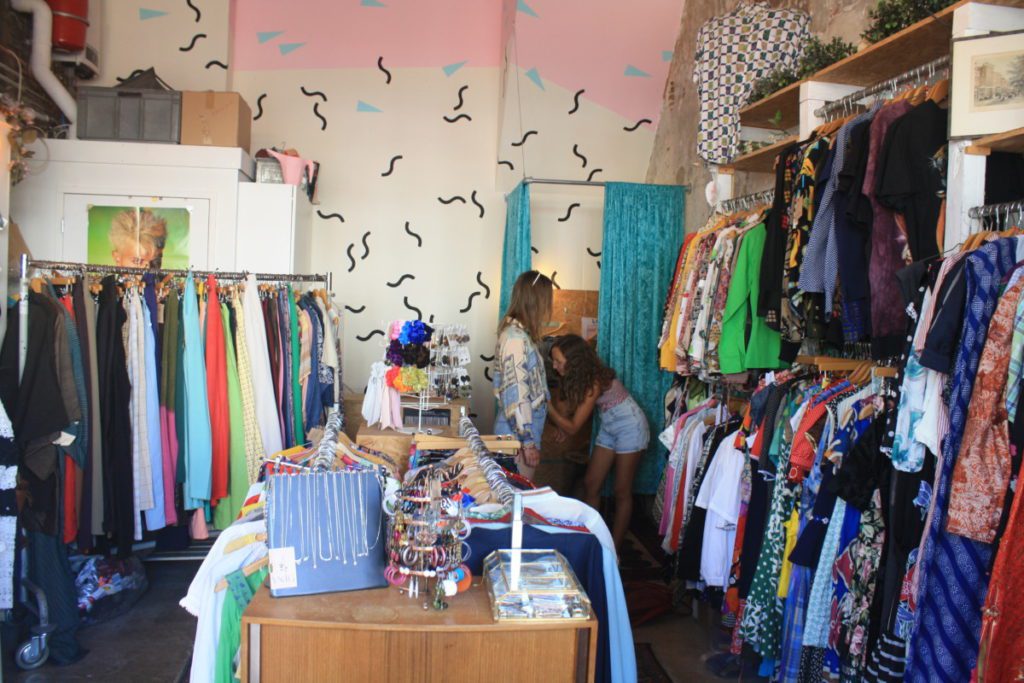
VNTG is cheap vintage shop that has everything from leather bags to funky earrings and patterned shirts. The store tries to source sustainable clothing and up-cycles, reuses and donates when possible. Find it at Botermarkt 11, it’s a fun place to explore even if you are not on the look-out for anything in particular.
Check out Leiden’s vintage scene! Image: DutchReview/Supplied.
Pluum — Looking to buy some gifts?
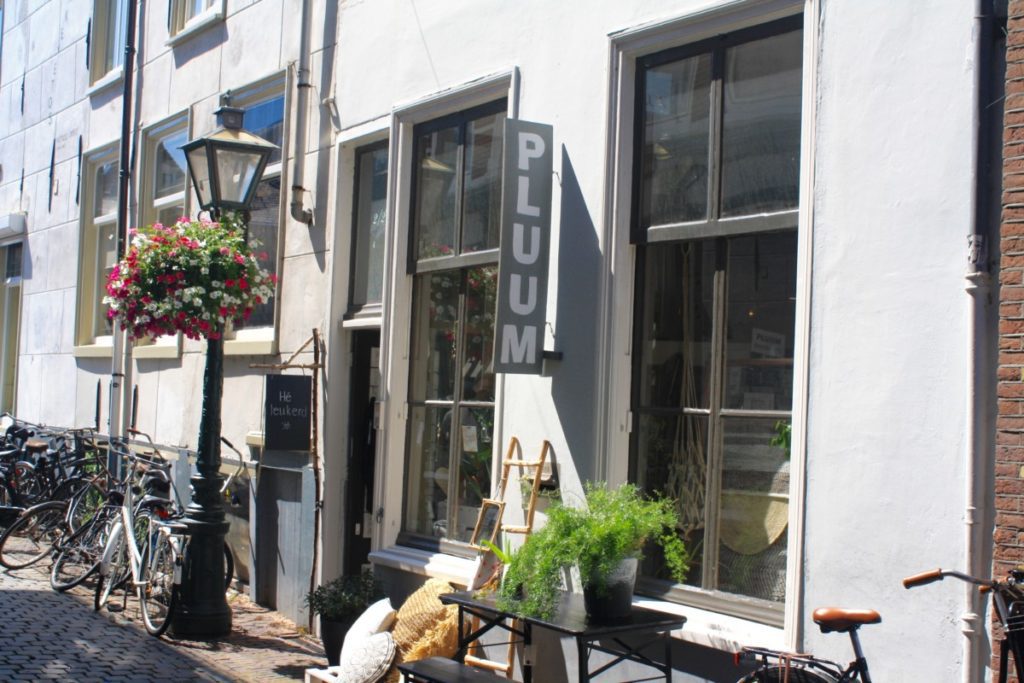
An eclectic store full of Scandinavian-styled assortments that are minimalist, contemporary and stylish. Head to Pluum if you’ve forgotten your friends birthday and need a last-minute gift — you’re bound to find something. It is located at Urgsteeg 2, down a cute street very near Einstein and Twee Spieghels.
This is a great place to pick up some gifts. Image: DutchReview/Supplied.
Wonderful Nature — for the strangest objects nature has to offer
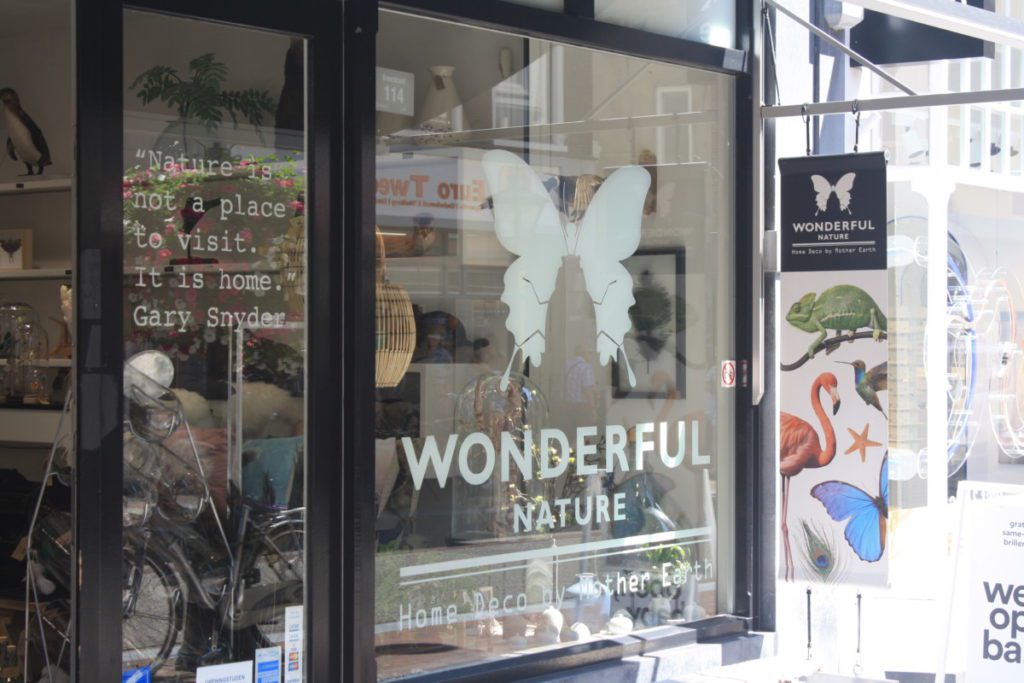
Wonderful Nature offers an array of all things nature such as stuffed animals, polished seashells, fossils and ceramics. There are taxidermy animals in the store (see lion pictured) but the shop assures customers they have been bought and killed in a responsible manner. The protected animals such as baby rhinos were only bought after dying a natural death (I certainly hope so).
Yes, they have a stuffed tiger. Image: DutchReview/Supplied.
Located at Breestraat 114C, it is also possible to have an animal commissioned (is taxidermy an ode to nature or for those who have a superiority complex?) Regardless, you’re bound to find browsing this shop intriguing.
Eduard — a sustainable shopping experience
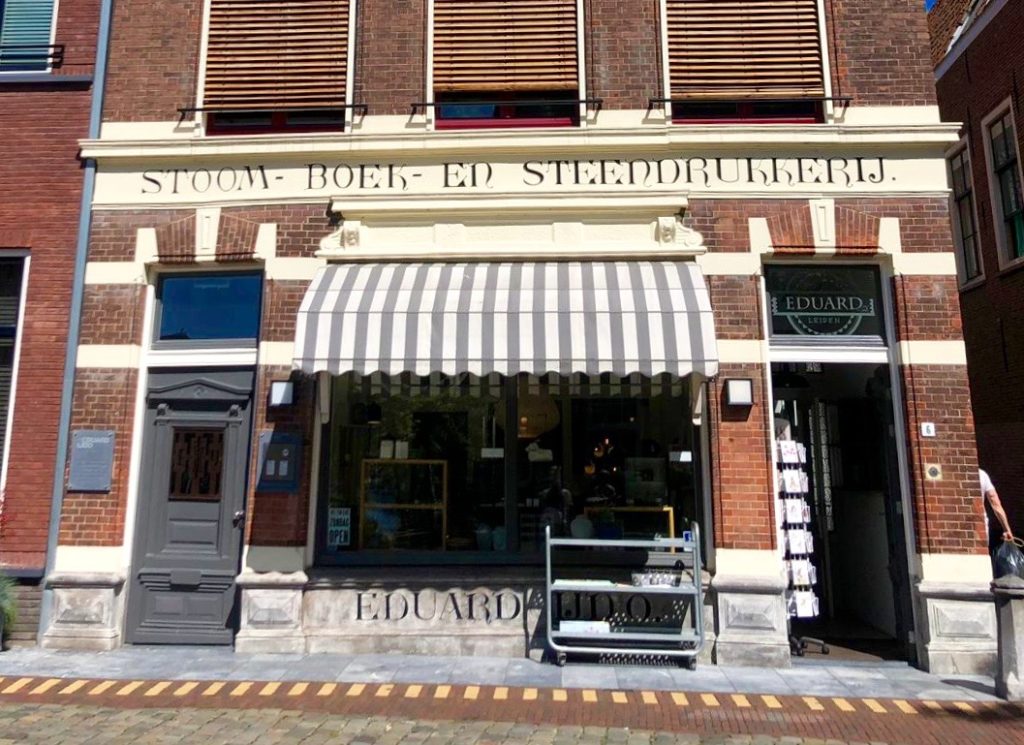
Eduard is a cute shop situated at Hooglandsekerkgracht 6, in between the Hooglandse Kerkgracht canal and the Oude Rijn canal. The shop is filled with beautifully crafted items such as wallets, office supplies, ceramic bowls, watches, jewellery and so much more. They aim to source sustainably and from artisan companies who are experts in their field. They also have bags by the brand FREITAG which are renowned for being stylish yet durable. Head to this store to browse amazing items!
Straight out of a storybook if you ask me. Image: DutchReview/Supplied.
The Leiden Street market — for anything and everything
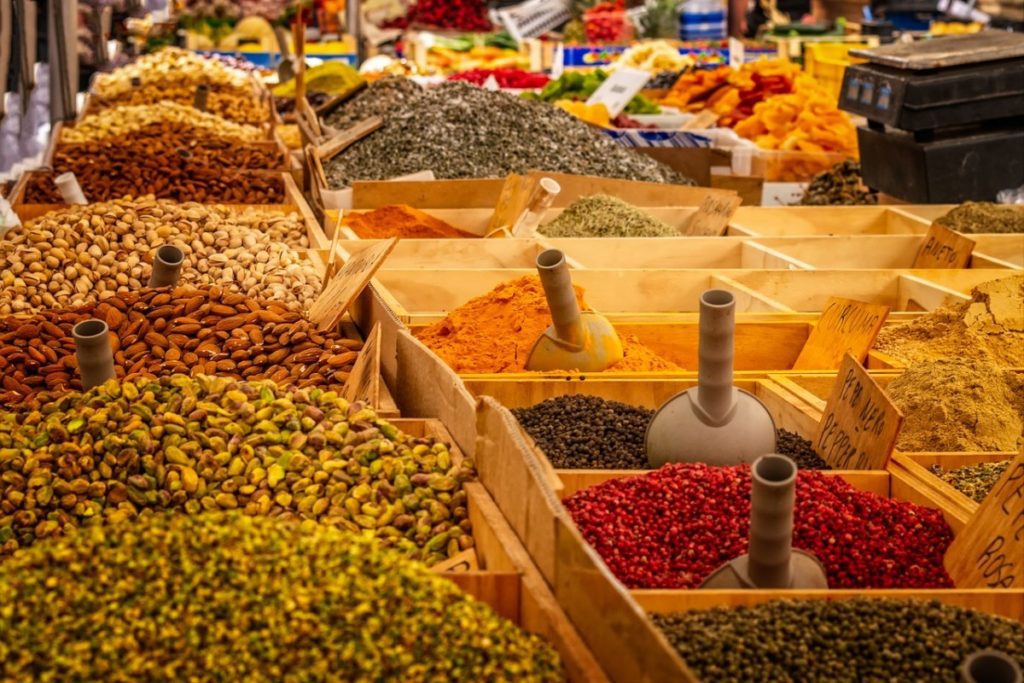
If you happen to be in Leiden on a Wednesday or Saturday, then make sure you check out the market along the Nieuwe Rijn. You can buy organic vegetables, fresh fish, delicious fruit, flowers, clothes and delicacies and exotic spices from all over the world. The Leiden street market runs from 8 am until 5 pm.[td_smart_list_end]
Head to the market for a variation of food. Image: Tama66/Pixabay
Body and mind in Leiden
Get a massage with Alexandra from Alexmassage
Alexandra set up the first mobile massage business, Alexmassage, in Leiden. Now she travels throughout Leiden and the surrounding villages giving top quality, extremely relaxing massages in each of her clients’ homes. Not only does that mean that you don’t need to brave the disgusting Dutch weather post-massage, it also means you get to save time and know that any money you pay is going directly towards the quality of the experience.
Talk your problems out with Roy from BrightMind
Roy is a clinical and organisational psychologist working in Leiden who grew up in Israel. After his masters at Leiden University, he set up his practice, BrightMind in this beautiful city. He uses an integrative approach with a focus on cognitive behavioural interventions, interventions from mindfulness-based approaches, schema-therapy, and psychodynamic methods.
Are you ahead of the game and already shopped, ate and drank it all? Want something fresh to do?
Why not plan a day trip to another beautiful Dutch city? Leiden’s central location makes day trips to a myriad of different cities and locations more than feasible. Rotterdam, The Hague, Utrecht, Amsterdam and Haarlem are all less than an hour journey away.
Or perhaps you could educate yourself by visiting one of the many interesting museums Leiden has to offer – there are over 13! Or maybe a friend is visiting and you both fancy a deep chats while meandering around the city? Check out the Singelpark which is Leiden’s equivalent to the New York “High Line.”
This walk will allow you to get lost among the pretty sights of Leiden – there are so many quaint and beautiful buildings that will leave you mesmerised! An added bonus is you won’t have to compete with endless tourists and selfie sticks to snag a great photo!
So there you are — the ultimate guide to beautiful Leiden. Where to eat, drink, and shop — you have it all! Have you ever been to Leiden? Are there any shops, bars or restaurants you think are worth a mention? Let us know in the comments below!
Feature Image: DutchReview/Supplied. Editor’s Note: This article was originally published in August 2019 but was updated for your reading pleasure in August 2020.