Home Blog Page 732

Trump administration slaps a 25 percent import tax on Dutch cheese

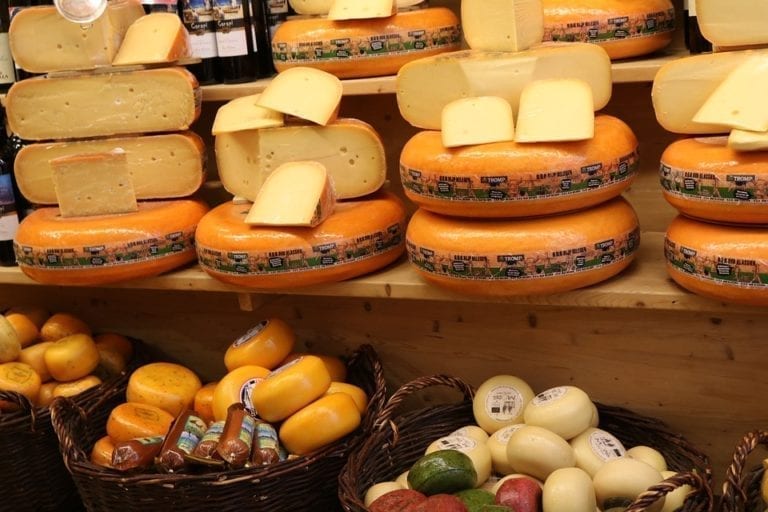
The US will be putting a 25 percent import tax on a range of European foodstuffs, including Dutch cheese. This is a result of the illegal subsidy given by the EU to Airbus, and possibly Trump’s plan to take over the world with spray cheese. 

According to an announcement by American trade envoy Robert Lighthizer, pork, cheese and butter from the Netherlands can expect to be taxed at 25 percent whenever they enter the US. Pears and mussels, from the Netherlands and other European countries, will be subject to the same tax.

Why would Donald ban cheese?

Our personal theory at DutchReview is that Donald Trump is gradually banning all cheeses, except for American spray cheese. Which is also definitely what his hair is made from (you heard it here first).

The resemblance is clear. Image: Mike Mozart/Flickr

Gouda and Edam are exempt

Moving on: this tax will not actually be as big of a deal for the Netherlands as you might expect, because Edam and Gouda cheese are exempt. The vast majority of cheese exports from the Netherlands to the US are of Gouda, according to nu.nl. In an earlier publication by the US, these cheeses were specifically listed on the goods to be taxed.

French wine and Scottish whiskey will also be taxed

In addition, the US also is also introducing taxes of 25 percent on French wine, Spanish olive oil and Scottish whiskey, among others. This follows the WTO approving the import duty of 25 percent on Wednesday. This will amount to 7.5 billion dollars of European goods.

Why would anyone do this?

The reason for this tax (apart from Donald’s plan to make spray cheese the official symbol of the US) is to respond to the illegal subsidy granted by the EU to Airbus, the aircraft manufacturer. According to the WTO, taxing cheese is an appropriate response.

Have you ever tried spray cheese? And do you think an American cheese smuggling industry is about to take off? Let us know in the comments below!

Feature image: foto-augenblick/Pixabay
Demand for student housing is increasing because of international students

0

The demand for student housing in the Netherlands will continue to increase, according to the annual report from the National Student Housing Monitor, published on Thursday by Kenniscentrum Studentenhuisvesting (Kences). 

The increase in demand is mainly a result of an influx of international students. An additional 14,900 students will be living away from home over the next four years- but this isn’t because Dutch students are leaving home more often. On the contrary, 12,600 fewer Dutch students will be living outside the family home over the same period. The increase is purely due to an increase in international students in the Netherlands, says NRC.

Extra development needed

Dutch students usually rent housing from private individuals, and have a longer period of time to look for it. For international students, the time frame they have to search in is much shorter, so their need is a bit more pressing. It can be a real nightmare to find student housing! Generally, they find housing through educational institutions and housing associations. “That requires extra development,” says Kences director Paul Tholenaars.

Impact of abolished grant

The student housing scene has been experiencing many changes over the last couple of years, particularly since the basic grant was abolished. The number of students, both international and Dutch, living away from home in the Netherlands has decreased since the grant was taken away- from 56 to 53 percent. During the same time period, the housing costs have risen, by about 10 percent (this number is adjusted for inflation). The good news is that the abolition of the grant has not stopped students from studying, or to change where they study. It seems to purely have affected when they leave home. If you’re a bit lost and confused when it comes to the dynamics of the student scene in Holland, check out our guide to studying in the Netherlands!

High rents stop students from moving out

Of course, the affordability of student housing plays a major role in whether a student can live alone or not. Half of the students living at home say high rents are the reason for staying at home. 16 percent of students have no need to live away from home, and 17 percent want to, but cannot find (affordable) housing. If you’re in search of a cheaper apartment, check out our guide to cheap housing in the Netherlands!

Are you a student? How have you found the housing market in the Netherlands? And should the grant come back? Let us know in the comments below.

Feature Image: Image: 0805edwin/Pixabay. 

Dutch households are wasting less food!

0

According to a study published by the Ministry of Agriculture, Nature and Food Quality, Dutch households are wasting less and less food. In 2019, Dutch people are expected to waste 34.3 kilos of food per person, a decrease of 7 kilos since 2016.

Dutch people have wasted less fruit, vegetables, dairy and bread in particular over the last few years. Almost half of discarded food currently is “unavoidable food loss”, like peels, cores and bones. Currently, 9.5 percent of purchased edible food per person per household is wasted. This amounts to about 120 euros worth of food each year- which sounds like a lot. However, back in 2016, this was 145 euros per year. So there’s definitely a massive improvement going on here.

Less drinks wasted, too!

There was also less waste when it comes to drinks. Far fewer liquids such as coffee, tea, milk and soft drinks were flushed down the sink or the toilet. The amount of wasted drink is estimated at 45.5 liters per person: almost 11 litres less than 2016! All that Dutch stinginess has a good side apparently.

130 households surveyed

So how was this information gathered? First of all, 130 households in 13 different municipalities were studied. In addition, over 1000 people were given a survey about food and another 1000 about drink waste.

Minister wants to halve food waste

The Minister for Agriculture, Nature and Food Quality, Carola Schouten, wants to halve food waste. She believes that the extra attention given to food waste has been a major factor in the decrease the survey shows. However, by 2030, she wants to halve food waste (in comparison to the amount wasted in 2015). “It is unjustifiable that food is lost, whether it is in the chain or in people’s homes,” the minister said to nu.nl in an interview. Households are responsible for around 23 to 32 percent of the total waste in the food chain.

Have you been trying to lower the amount of food you’re wasting? And how can we all do better with food waste? Let us know in the comments below. 

Feature image: USEPA/Flickr.

Amsterdam is introducing free transport for children to reduce traffic in the city

0

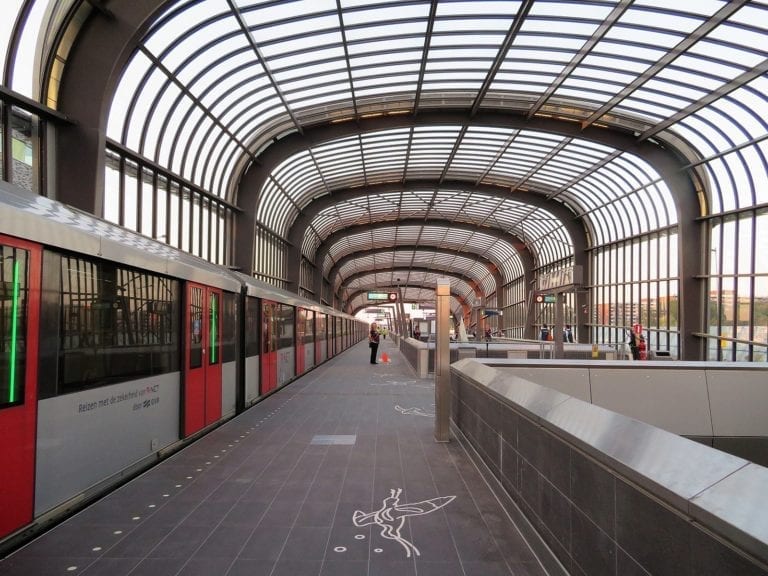
The College van B&W has proposed 27 measures to decrease car traffic and improve accessibility in Amsterdam- the most striking of which is the introduction of a free OV for children from 2021.

Children under 12 will be able to travel for free on Wednesday afternoons and during the weekend. Alderman for Traffic and Transport, Sharon Dijksma, hopes that by offering people attractive alternatives to car, the city can reduce car traffic, according to NOS. “By allowing children to travel for free by public transport on weekends and on Wednesday afternoons, we hope to be able to entice many more people to use the high-quality public transport network that the city has.”

Other initiatives proposed by the College van B&W include a trial of a night metro, a reduction in the number of parking permits, the removal of around 10,000 parking spots, and an expansion of the number of Park and Rides in the city. Metro stations will also get shareable bikes, like NS stations currently have. By 2030, the city hopes to be emission-free: something that going car free will obviously help with. The city is also prioritising keeping things accessible. The changes proposed are expected to cost 500 to 700 million euros. They will be discussed in the city council next year.

So, if you have a child, get planning all your outings for Wednesday afternoons and the weekends! And if you don’t, get ready to enjoy a far more sustainable and calm city centre in Amsterdam.

What do you think about these measures? Are you looking forward to the night metro, or free public transport for kids under 12? Let us know in the comments below. 

Feature Image: Marion Golsteijn/Wikimedia Commons

Dutch court will hear case of relatives of Dutch colonial victims

0

The relatives of Dutch colonial victims will have a day in court for their compensation claims to be heard. The five men and one woman are represented by Liesbeth Zegveld.

The relatives of five men, who were summarily executed in Indonesia as Dutch colonial rule there ended, will have their case heard in court, after a groundbreaking decision to lift the statute of limitations.

What is the statute of limitations?

The statute of limitations is a legal document that puts a limit on the amount of time after an event that claims can be made. In the Netherlands, this is five years- so usually, offences committed during colonial times would not be eligible for reparations now. The Dutch state had previously attempted to evade responsibility for these 1947 executions due to the time that had passed. Following this ruling, the government has stated that it is going to consider its options before deciding what to do next. Legally, it could further appeal the ruling to a higher court.

Relatives could be eligible for compensation

However, the Court of Appeal in The Hague found that there was enough evidence of language differences and social disadvantages stopping claims from being made against the Dutch state for the statute of limitations to be ignored. According to the judge, “The court of appeal is of the opinion that especially the extraordinary seriousness and the high degree of culpability of the violence used stand in the way of limitation.” If the claimants are able to prove that they are relatives of the victims of Dutch colonial violence, they will be eligible for compensation- enough to reimburse their cost of living.

The Dutch fought Indonesian nationalists for four years after WWII. Image: C.J. (Cees) Taillie/Wikimedia Commons

Why did these executions take place?

The executions in question took place in 1947, during so-called “cleansing actions” on South Celebes, now called Sulawesi, which is an island east of Borneo. During the second world war, Indonesia (then known as the Dutch East Indies) was invaded by Japan. After the war ended, Indonesian nationalist leaders Sukarno and Hatta proclaimed the Republic of Indonesia on 17 August 1945. The Dutch fought Indonesian nationalists to continue their 350-year-long colonial rule for four years after that.

Feature Image: John Pinkerton/Wikimedia Commons

The Ocean Cleanup’s plastic catcher has just collected its first plastic at sea!

0

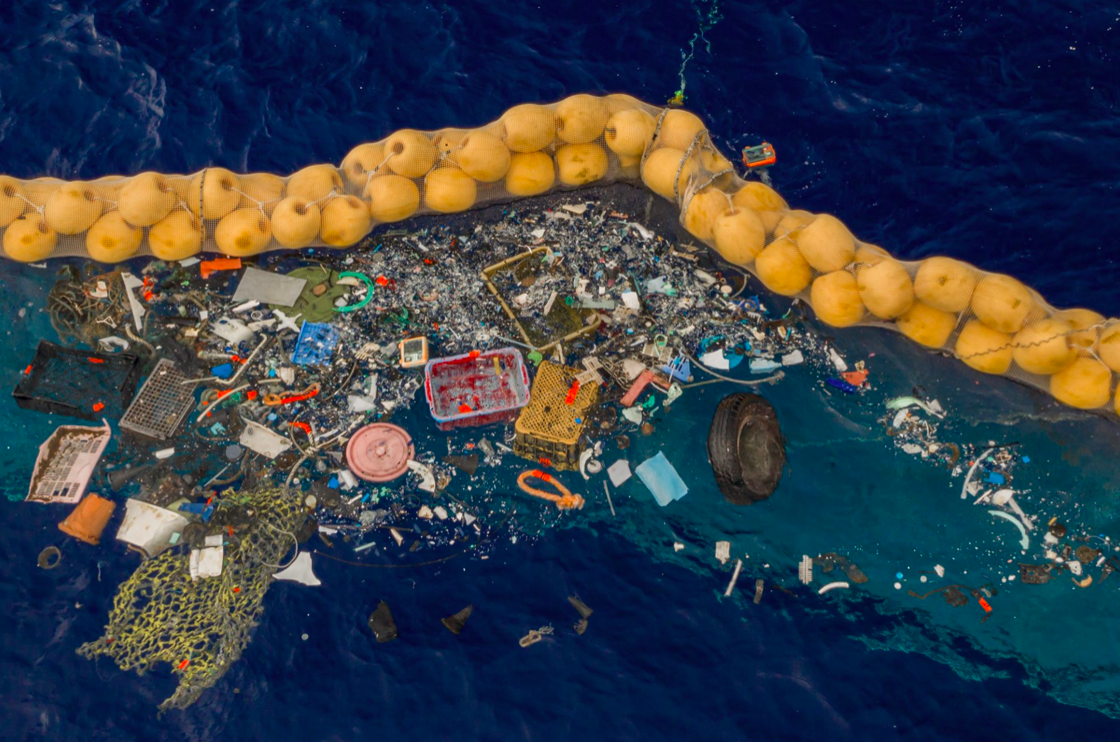
The Ocean Cleanup, a Dutch initiative, has successfully fished waste out of the sea with its newest prototype of the plastic catcher. The trial took place between the American island group Hawaii and the state of California, about 2000 kilometers off the coast.

Previous iterations of the plastic catcher had failed to hold the plastic it caught properly- waves had flushed the plastic back into the ocean after a few hours. “The problem was that we couldn’t control the speed difference between plastic and the system,” said spokesman Joost Dubois. “You need a serious speed difference to hold the plastic.”

Happily, the newest prototype has overcome this problem, and successfully fished plastic out of the ocean!

New prototype solves two earlier problems

The Ocean Cleanup solved their earlier speed difference problem by creating a sea anchor in the form of a parachute. This slows the plastic catcher down enough for it to be able to hold the plastic. Small plastic, and even microplastics which are about a millimetre in size, are caught in the plastic catcher.

The new prototype has solved another problem: before, plastic would tip over the edges of the catcher. Now, The Ocean Cleanup has made the edges ten times higher, and uses larger floats for the device.

The plastic catcher has higher edges to prevent plastic spilling over. Image: The Ocean Cleanup.

A second plastic catcher next year

Dubois notes that this prototype is still in the experimental phase- it was put together rather quickly to check how a number of options were working. It needs to be trialed in the ocean for a longer period of time, and a second plastic catcher is due to be implemented next year.

The idea of the company is to try to halve the Great Pacific Garbage Patch, the enormous plastic soup that floats between California and Hawaii.

Feature Image: The Ocean Cleanup 

Badly wounded boa constrictor found in Amsterdam container

0

It’s not often you feel bad for a snake, but this is one of those times. A badly wounded boa constrictor was found in an underground container in Amsterdam on Tuesday. It was found by a garbage collector, according to Dierenhulpdienst Nederland. 

The snake had a complicated double fracture in its lower jaw, and several broken and bruised ribs. It has been cleaned and has received antibiotics. However, it is too injured to recover and will be put to sleep this Thursday, NU.nl reports.

The garbage collector found the snake on Tuesday when he was attempting to dump some new trash, and saw something move in the container. The snake had probably been dumped in the container and been there for some time before it was discovered.

Sadly, boa constrictors are quite regularly abandoned like this: they are often bought when they are young and small, and then grow too large to manage. They often live for 25 to 30 years.

What would you do if you stumbled across a boa constrictor while putting your trash out? Are you scared of snakes? Let us know in the comments below!

Feature Image: Esteban Alzate/Wikimedia Commons. 

Had enough of the rain? Sorry, Hurricane Lorenzo is on its way.

0

After a week of pretty much solid rain, you would hope that the Netherlands’ changeable weather would, you know, actually change. And it will- but not in the way we were hoping for. Hurricane Lorenzo is on its way, and should arrive as a very mild storm on Friday morning. 

Today and tomorrow will be chilly, windy, and wildly variable: there will be some sunny periods and plenty of rain. Because of the wind, the temperature of 13-14 degrees will feel a lot colder, so enjoy deciding between a warm jacket and a rain jacket every time you leave the house. You can expect heavy showers around rush hour this evening in most of the country, so that’s fun, and slightly less wind tomorrow- though if you’re in a coastal area like The Hague you could still experience gusts of 80km/h.

Hurricane Lorenzo on its way: tie down your feathers

Hurricane Lorenzo will arrive on Friday, and like all of us, it will have lost its will to live by then. According to weeronline.nl, it most likely won’t even be a storm by the time it hits the Netherlands, but it will cause clouds and (surprise, surprise) rain across the country.

The Netherlands will experience Hurricane Lorenzo as rain. Photo: Flickr/Chris Goldberg

The weekend: get your sandals out, it might reach 15 degrees!

Saturday and Sunday will be pretty chilly, between 11 and 15 degrees. Saturday should be cloudy and sunny (and maybe rain free) while Sunday will be cloudy and at least somewhat rainy- how much so is yet to be determined. Exciting!

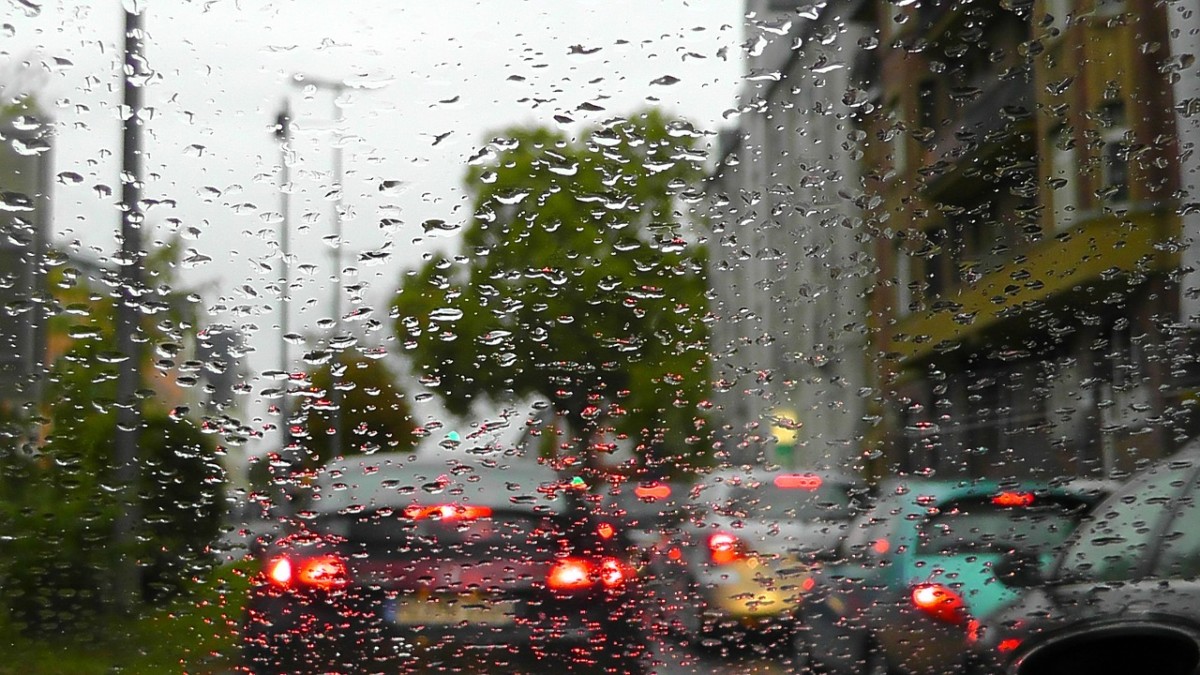
Rain_Traffic_Jam_Holger Schué_Pixabay
The weekend should also be rainy! Yay! Image: Holger Schué/Pixabay

Next week: daily dose of rain to continue

The following week will continue in the same exciting, tropical manner, with showers every day and more clouds than sun. Maximum temperatures are expected to be around 15 degrees, in line with the normal yearly averages.

Feature Image: Floris Oosterveld/Flickr. 

Police are using smart traffic cams to catch phone users from today

0

New smart cameras, optimised to catch people using electronic devices while driving, will be used by police from today onwards.

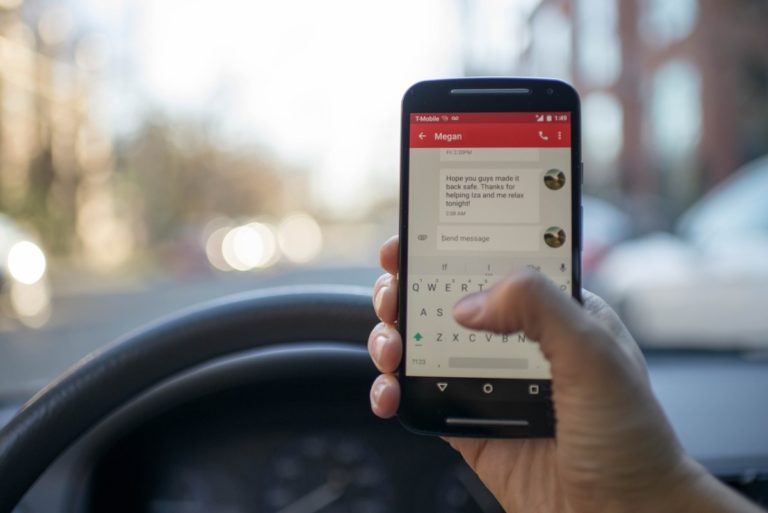
Texting drivers will have a greater chance of getting caught, as the police are now using special cameras, optimised to recognise the shape of a mobile device in someone’s hand, to catch them.

The cameras will record the person’s face and the licence plate of the car. A police officer will then assess the image to make sure the camera is correct, before sending a fine to the owner.

If the owner of the car was not the one driving, they can pass the fine onto the offender by identifying them to the police (like a snitch). Last year, 80,000 fines were given out for calling while driving.

At the beginning of this year, the police had announced a trial of these smart cameras.”It is a very new device, specially developed to look through the windshield,” the National Police then told RTL News.“With smart software you can see if someone is holding a phone or another electronic device.”

Getting caught holding an electronic device, such as a phone, tablet, or navigating device, is enough to receive a 240 euro fine. Currently, the smart cameras are only  being used by the national police unit and the Central Netherlands police unit. The police will also be continuing to check that motorists are obeying the rules of the road in the usual way.

“Too many deaths and injuries still occur in traffic in general and by distraction in particular,” says project leader Egbert-Jan van Hasselt.

Are you in favour of smart cameras to catch people using electronic devices while driving? Let us know in the comments below.

Feature Image: StockSnap/Pixabay

Raid on aldermen in The Hague on suspicion of bribery and corruption

The National Criminal Investigation Department searched the offices of two aldermen and the workplaces of a number of civil servants in the City Hall of The Hague. They are under investigation for official corruption, bribery and violation of official secrecy.

Groep de Mos aldermen under investigation

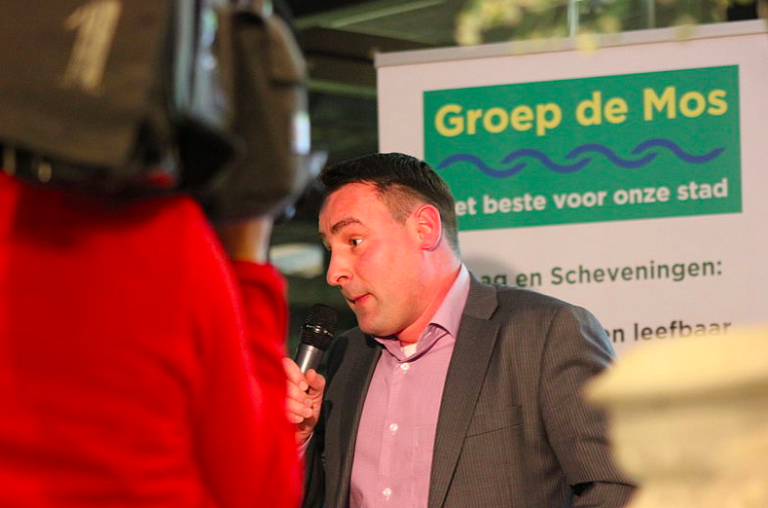
The two aldermen in question are Richard de Mos (alderman for Economy, Sport and Outdoor Space and 1st deputy mayor) and Rachid Guernaoui (alderman for Finance, Integration and Districts). They are suspected of arranging permits in return for payment, among other things. Both aldermen are members of the political party Groep de Mos / Hart for The Hague.

Homes of aldermen searched

As well as their workplaces, the homes of the two aldermen and the addresses of three entrepreneurs in The Hague who are suspected of bribery were searched. The investigation is being overseen by an examining magistrate from the Rotterdam District Court. Dozens of government investigators and two prosecutors are also involved.

Several entrepreneurs under investigation

One of the entrepreneurs under suspicion is also a candidate for the De Mos group. He is under suspicion for have supported the party financially in exchange for, among other things, confidential information from the city council.

The mayor of The Hague has announced that he will release a statement later today.

Feature Image: Groep de Mos/Wikimedia Commons