

While Silicon Valley shouts about disruption and innovation, the Netherlands just gets on with it — building the machines that power your phone, advancing life-saving biotech, and treating remote work like the grown-up practice it should be.
The Dutch approach to technology isn’t flashy. It’s quiet but effective.
From the semiconductor machines behind every modern device to actually finding a balance in life, here are four ways the Netherlands is pushing tech forward without the fanfare.
1. With ASML: the company behind basically everything digital
If you’re reading this on any device with a screen, there’s a good chance ASML had a hand in making it possible.
Based in Veldhoven, ASML builds the world’s most advanced lithography machines.
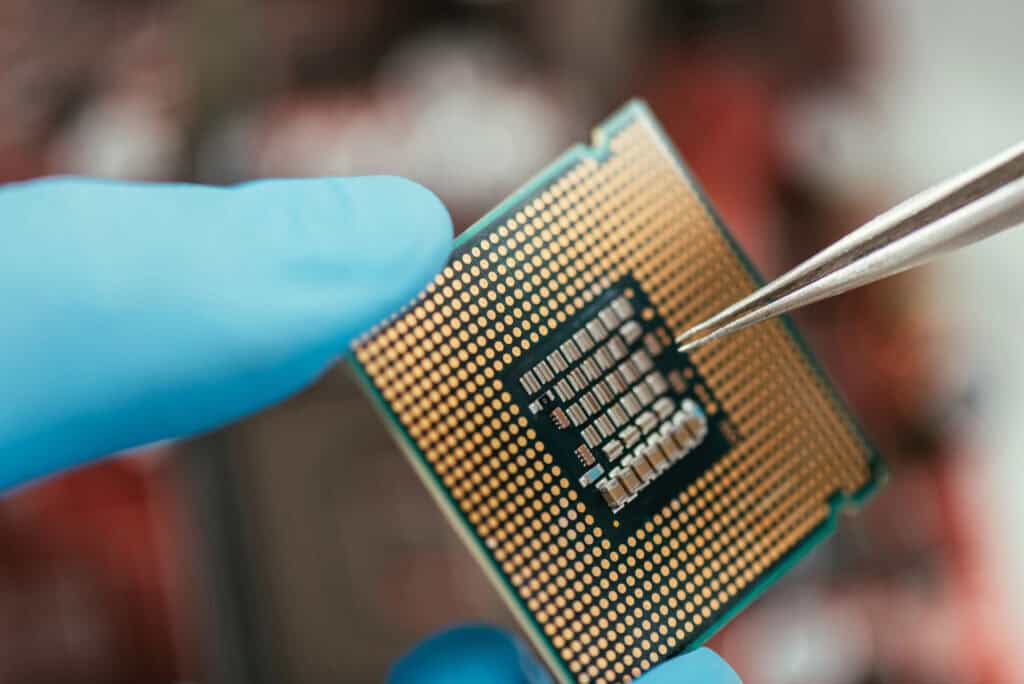
These machines print microscopic patterns onto silicon to create computer chips, and the EUV (extreme ultraviolet) ones are so specialised that there’s currently no serious alternative supplier anywhere on the planet.

That makes ASML one of the most important tech companies in the world. Without its machines, modern processors, AI hardware, and advanced smartphones simply wouldn’t exist.
The company itself lays out just how critical this technology is in its breakdown of EUV and chip production, and it reads less like marketing and more like a reminder of how fragile the global tech supply chain really is.
2. In Leiden: Europe’s underrated biotech powerhouse
When people think of biotech hubs, they usually name Boston or Basel. But Leiden deserves a seat at that table too.
The city is home to the Leiden Bio Science Park, one of Europe’s leading life sciences clusters.
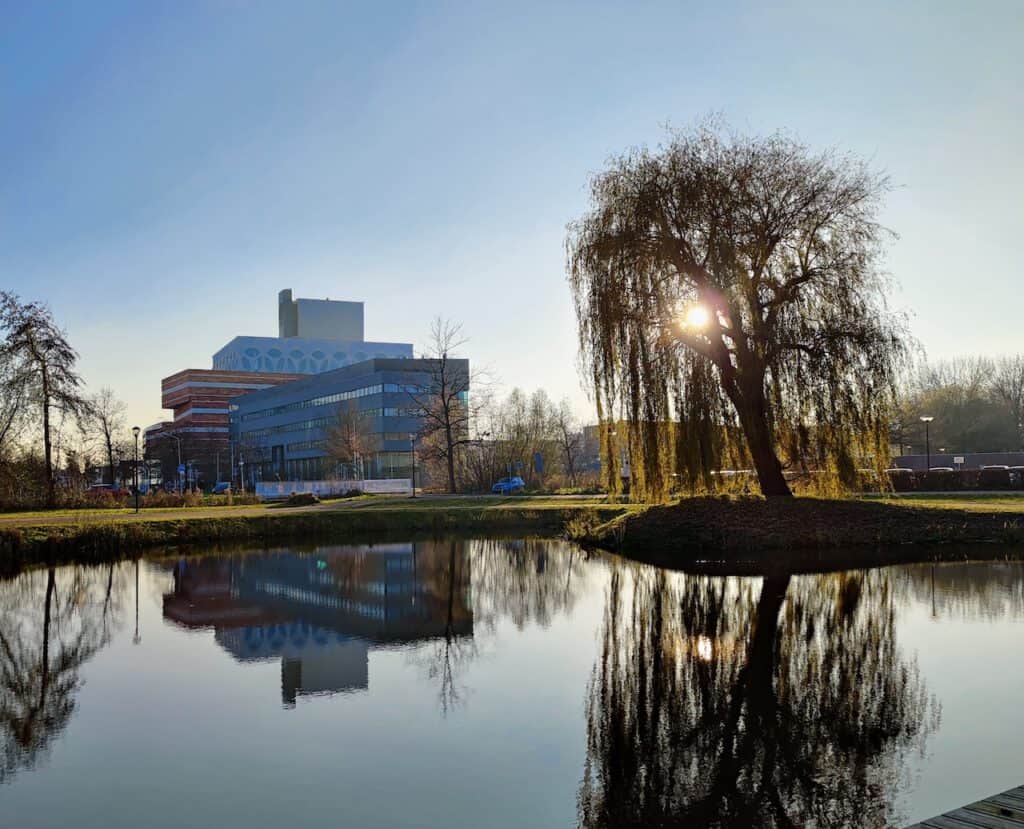
The park brings together Leiden University, medical centres, startups, and global pharmaceutical companies in a compact, collaborative ecosystem.
The result? Research that moves faster from lab to real-world application. Think vaccine development, cancer therapies, and diagnostics.

According to Leiden University, the park hosts more than 200 organisations and tens of thousands of jobs in life sciences alone.
It’s highly specialised, research-led, and built on cooperation between universities, startups, and pharmaceutical giants, all working in close quarters.
3. By treating remote work like actual infrastructure
This one doesn’t look like technology at first glance, but it functions very much like it.
Remote work and working from home are widely accepted in the Netherlands, especially in knowledge-intensive sectors such as tech, finance, and media.
Dutch companies tend to focus on output, trust, and clear expectations rather than rewarding long hours spent visibly at a desk.

And no, people aren’t just at home playing on live casino 711 during work hours. Remote work here is supported by solid digital tools, structured workflows, and a legal framework that treats flexibility as a serious part of working life.

According to Statistics Netherlands (CBS), more than half of all workers in the Netherlands work from home at least part of the time, one of the highest shares in Europe.
The long-term effect? Fewer burnouts, higher retention, and tech teams that can stay productive without an always-online culture. Radical, we know.
4. By looking at the cycling infrastructure as a living tech lab
Cycling in the Netherlands isn’t just transport, it’s a system. And systems generate data.
Because so many people cycle daily, Dutch cities have a constant flow of real-world information about traffic patterns, safety, and behaviour.
That data is increasingly used to design smarter intersections, adaptive traffic lights, and safer routes.

The “technology” here isn’t just e-bikes or apps, but infrastructure that responds to how people actually move through cities. Cyclists are treated as default road users, not an afterthought, which, frankly, is how it should be.
The Dutch government and municipalities regularly test and scale these ideas through pilot projects, refining them before rolling them out nationwide.
READ MORE | 19 things the Dutch did to make cycling easy and attractive
What ties these examples together isn’t disruption for disruption’s sake. Dutch tech progress is practical, precise, and people-focused.
ASML pushes physics to its limits, Leiden turns research into healthcare, remote work is treated as a serious operating model, and cycling infrastructure evolves like a product that’s never quite finished.
It’s not flashy. But it quietly shapes how the rest of the world lives, works, and connects.
Which of these Dutch tech innovations has impacted your life the most? Let us know in the comments below.