
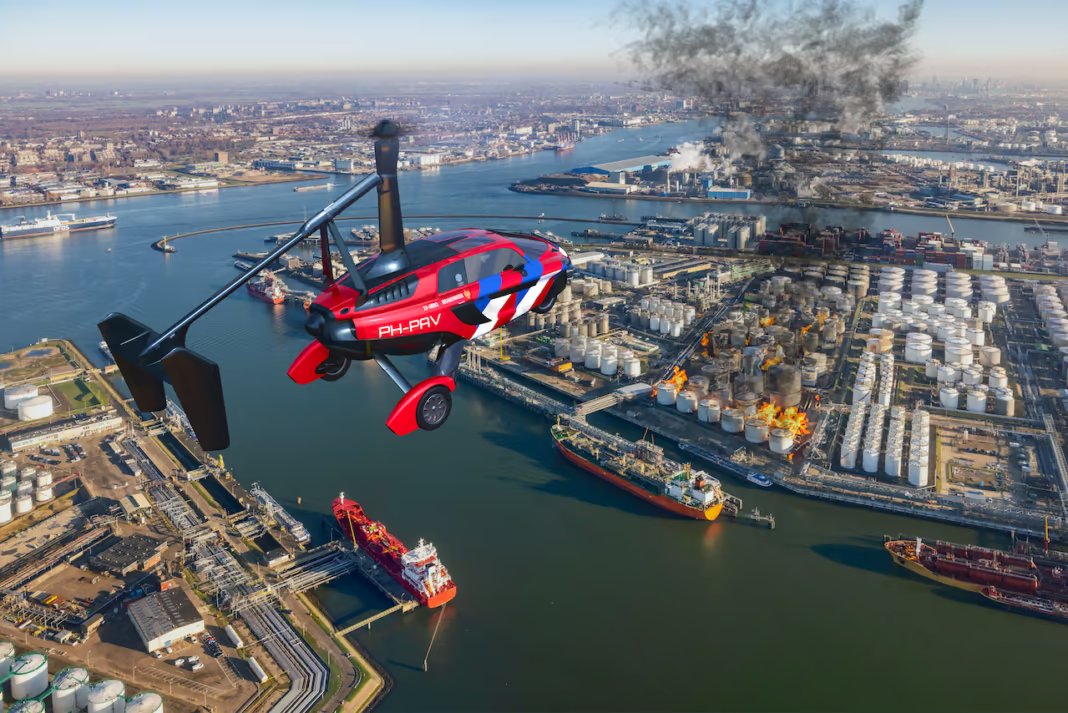

After years of struggling with Dutch bureaucracy (we can all relate), the European Aviation Authority (EASA) has finally given Dutch company Pal-V the green light to produce flying cars.
And believe it or not, the first round of flying cars may take to the skies as early as 2028.
Sounds like the future all those sci-fi movies promised us (instead of the reality we currently face), so let’s embrace it a bit and explore how exactly these flying cars will work.
People are already ordering them
The cars not only sound like something out of the future, but they look like it too.
Speaking with NOS, Robert Dingemanse, General Director of Pal-V, explains that the cars are intended to transport people, “for example, emergency services that need to get quickly to a hard-to-reach area.”
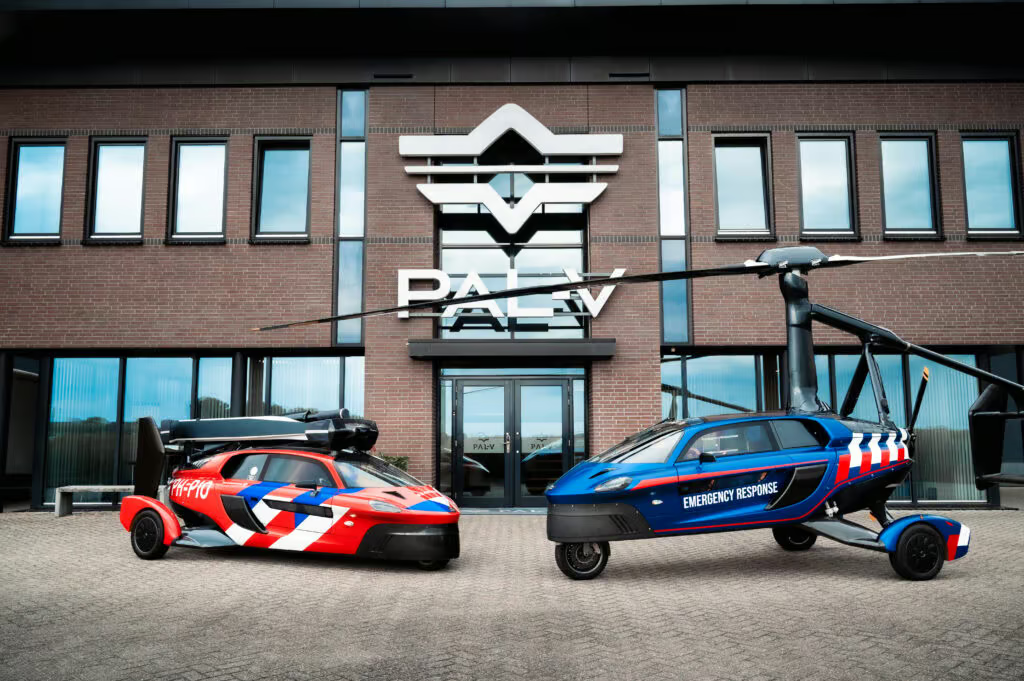
Indeed, Dingemanse says that emergency services make up half of the first 250 orders. Among those emergency services is the Dutch fire brigade; however, many orders also come from abroad.

Aviation expert Joris Melkert also spoke with the NOS, explaining that “in the Netherlands, we have a good road network, but that is not the case everywhere. In Norway, for example, it is sometimes impossible to get to the other side of a fjord quickly.”
And what about the rest of the orders? According to Dingemanse, “the rest are from specialists who need to be on site quickly for their work, such as maintenance personnel. And there are a few orders for private use.”
The cars will cost between €299,000 and €499,000.
Will they really be ready in 1.5 years?
Pal-V has been seeking approval for its flying cars since 2020. Since then, the Netherlands Vehicle Registration Authority (RDW) has given permission for the cars to be on the road.
The company hoped to launch its first vehicle in 2021, but this was then postponed to 2025, then 2026. However, Pal-V now has the approval of the EASA.
According to Dingemanse, this means they just have to complete one more test to demonstrate again that they comply with guidelines — which will take 1.5 years.

So flying cars are just going to be… on the road?
If you’re struggling to picture it, you’re not alone.
The flying cars have three wheels and two rotors, which fold in while driving. And yes, they can fit on a road alongside your car.
Aviation professor Jacco Hoekstra tells NOS that “the major advantage is that they are also allowed on the road. Due to the design, little space is needed for take-off and landing.”
However, as you can imagine, flying car owners won’t be able to just shoot off into the air when the traffic gets bad.
“You can’t just fly anywhere,” Hoekstra says, “and Dutch airspace is quite crowded. Other companies are running into this as well, for example, those that want to have packages delivered by drones.”
READ MORE | 7 great Dutch inventions you never knew were Dutch

For example, take-offs and landings can only occur on dedicated airstrips in the Netherlands — and there are only about 20 of such strips across the country. So, what would this mean for flying cars?
According to NOS, Pal-V is already considering installing airstrips next to gas stations.
Looks like we’re finally living in the future…
Want the latest Dutch news to come zooming through the internet to your inbox? Dat kan! Subscribe to DutchReview’s weekly roundup 📮