
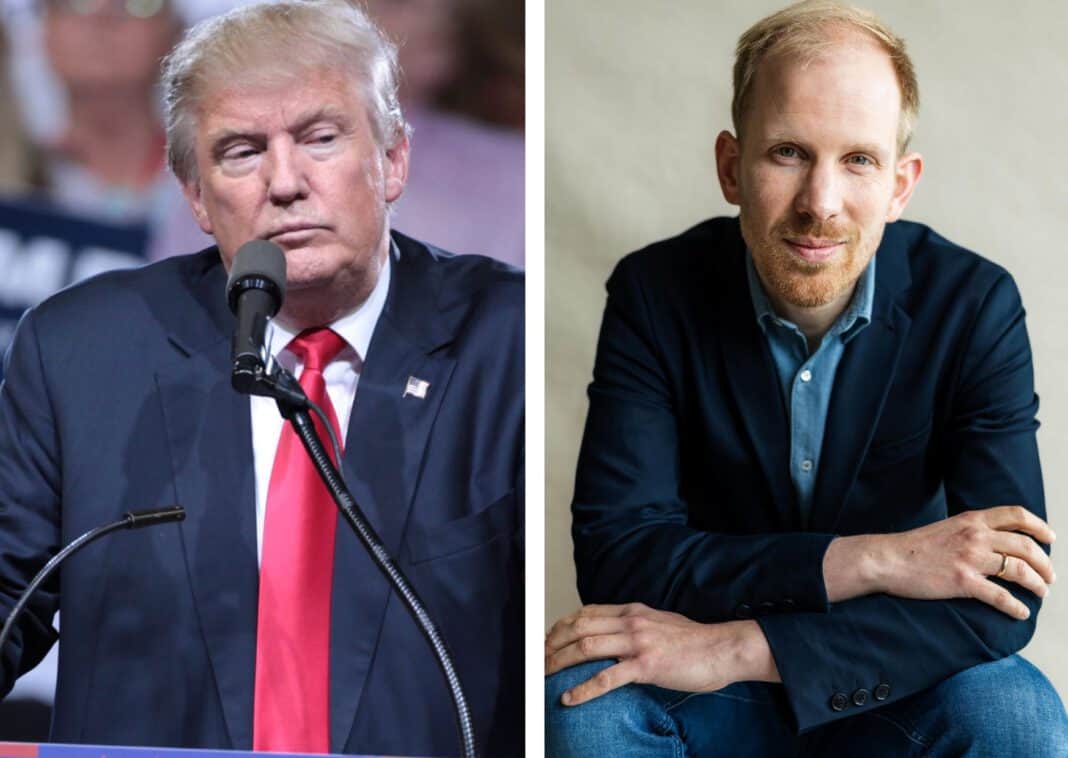

Dutch historian and author Rutger Bregman has publicly accused the BBC of censorship, claiming the British broadcaster removed a segment from his prestigious lecture series in which he called Donald Trump “the most openly corrupt president in American history”.
The alleged edit was made to the first episode of Bregman’s edition of The Reith Lectures, titled “A time of monsters”, which aired on BBC Radio 4 on Tuesday morning.
A prestigious platform with strings attached?
The Reith Lectures are no small deal. Each year, the BBC invites a prominent figure to deliver a series of radio talks aimed at contributing to “the intellectual and cultural life of the nation”.
This year, Bregman was chosen to discuss weighty topics: the rise of authoritarianism, the failure of elites across the political spectrum, and the urgent need for what he calls a “moral revolution”.
The first of four episodes was broadcast on Tuesday morning and briefly made available online before the BBC took down the webpage entirely later that day. A transcript, however, is still floating around.
I wish I didn’t have to share this. But the BBC has decided to censor my first Reith Lecture.
— Rutger Bregman (@rcbregman) November 25, 2025
They deleted the line in which I describe Donald Trump as “the most openly corrupt president in American history.” /1 pic.twitter.com/Z0oRPqX7RW
“The decision came from the top”
In a video posted to his social media on Tuesday, Bregman didn’t mince words. He said he’d been told that the decision to cut his remark about Trump came from “the highest levels of the BBC”.

He stressed that the broadcaster commissioned the series themselves and that all episodes “went through the full editorial process”. The lecture was recorded weeks ago in front of a live audience of 500 people at the BBC Radio Theatre in London.
Bregman described himself as “deeply disturbed” by what he sees as an act of “self-censorship driven by fear”, specifically, fear that Trump might sue the BBC. “This isn’t about left or right,” he said. “This is about the health of our democratic institutions.”
A media storm brewed by The Daily Mail
The controversy kicked off last week when British tabloid The Daily Mail claimed, based on a single anonymous source, that Bregman had called Trump a “monster” in his lecture.
Writing for De Correspondent, Bregman dismissed this as a “self-invented story”, just the latest manufactured outrage in what he called “the soap opera of the BBC versus Trump”.
The BBC has been under intense scrutiny in recent months, particularly after incorrectly quoting Trump in a documentary, a mistake that drew sharp criticism and threats of legal action.
British libel laws put broadcasters on edge
It’s worth noting that UK media outlets operate under some of the strictest defamation laws in the world. The burden of proof for any statement lies with the publisher, which means broadcasters like the BBC can face significant legal risks for even mildly contentious remarks.
Still, Bregman argues that caving to that pressure threatens something bigger than one broadcaster’s legal safety. “This concerns all of us,” he said.
The BBC has not yet responded to Bregman’s allegations.
What do you think? Is self-censorship a growing problem for public broadcasters, or is the BBC just playing it safe in a legal minefield? Let us know in the comments.


You are right about the UK defamation laws. I heard the Reith Lecture this morning on BBC Radio 4. It was an interesting and challenging listen.
A key question for the BBC is, before you edited “the most openly corrupt president in American history” did you ask for the evidence for such a statement?
I, and I expect many others, would be interested in the answer.
Is it possible the BBC received an answer that did not convince them they were legally ‘safe’?